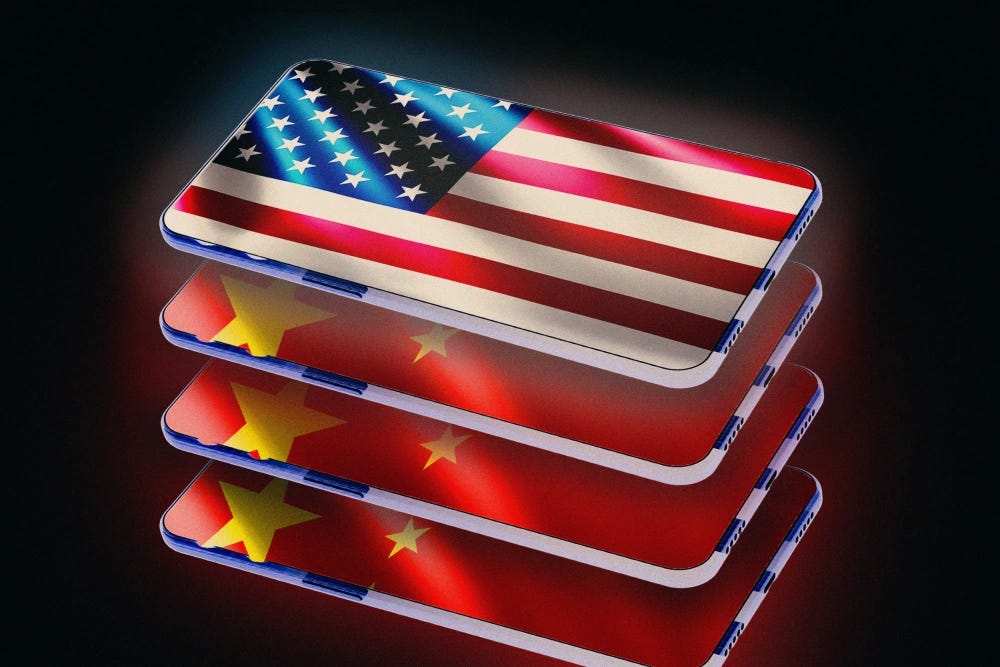
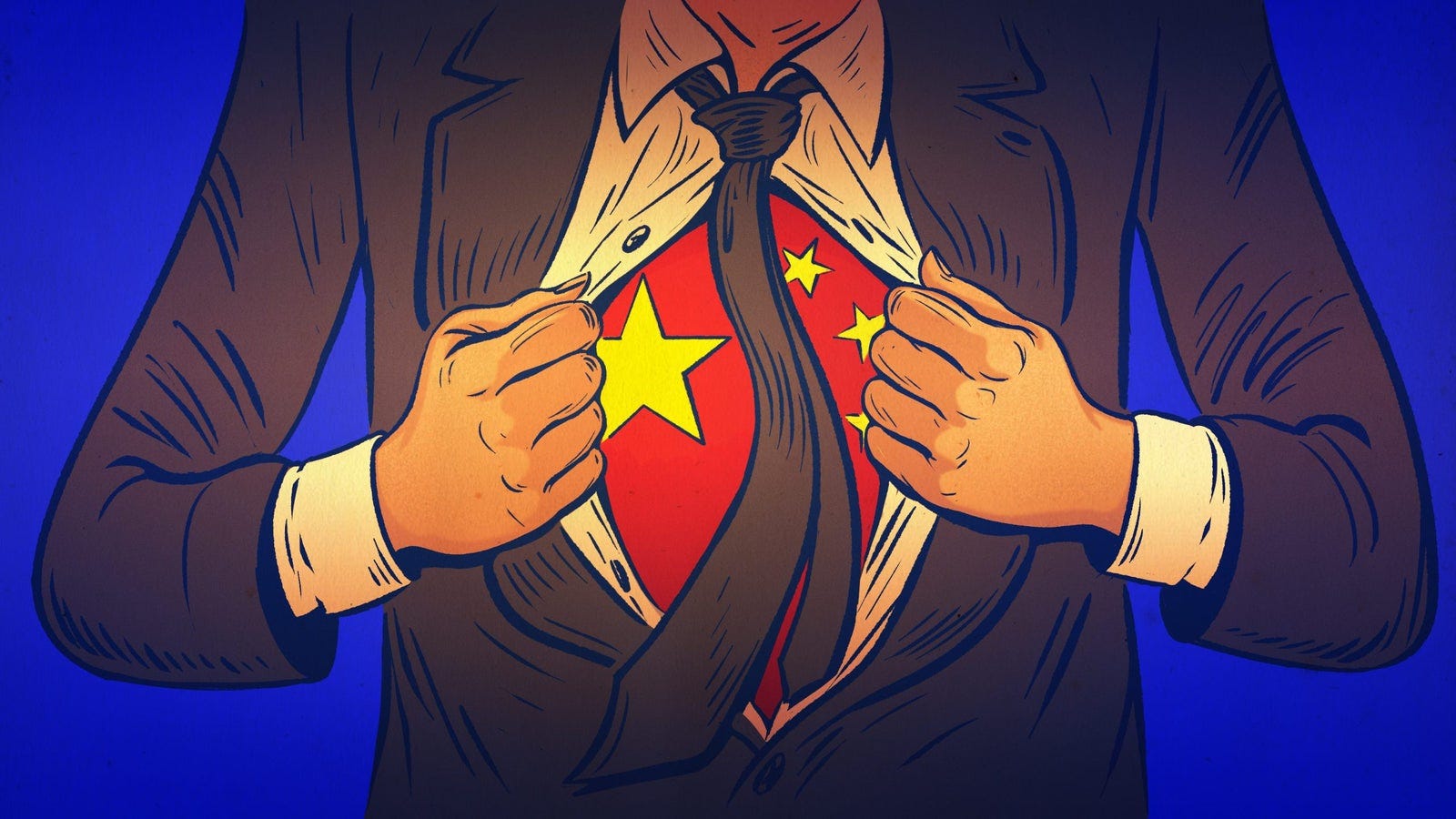
And China’s DeepSeek and other AI companies have pressed the pedal to whatever AI metal they could get their hands on, to stay close to performance vs the leading frontier AI models from Anthropic and OpenAI in particular. And US companies have also been leaning into the open source AI models from China. Despite ongoing US/China AI machinations.
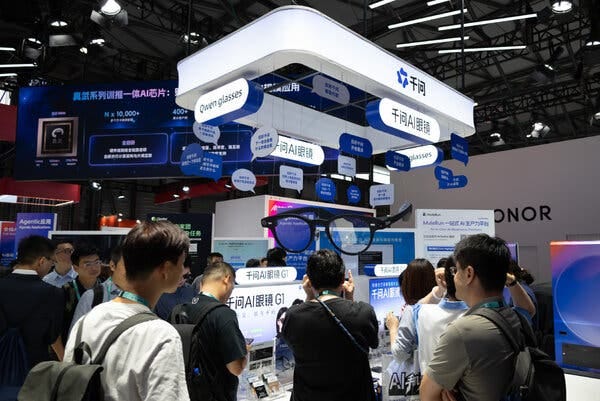
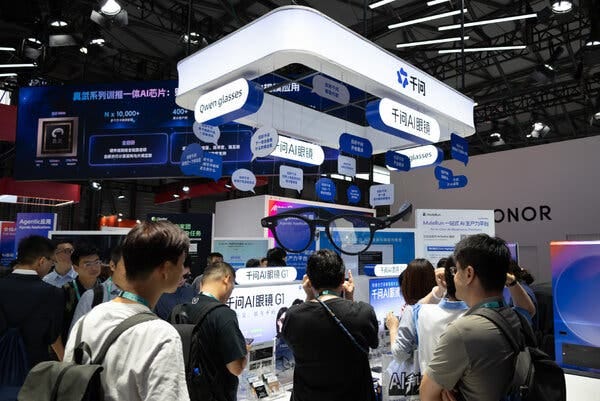
The leader in open source AI from China of late has been Alibaba with its Qwen open source modesl. And their strategy between open and closed has been shifting. Echoing some of the moves by Meta in the US in particular.
This is a shift worth noting, as Alibaba’s challenges are a ‘canary in the coal mine’ type of moment for the world’s leading AI companies, be they in China or the US.
“Alibaba became one of China’s most valuable companies on the strength of its globe-spanning e-commerce business. But in recent years, it has been outmaneuvered by lower-cost rivals at home and has struggled to expand overseas. After Mr. Ma faded from public view, a new generation of executives took over, adopting a lower profile while emphasizing Alibaba’s role within Beijing’s broader technology policies.”
“In hindsight, Alibaba had gradually laid the groundwork to become an A.I. heavyweight. As its online shopping and logistics businesses expanded, the company built data centers capable of processing vast volumes of customer data worldwide.”
Alibaba over the last 25 plus years can be seen as an Amazon of China, with more of a B2B ecommerce focus in its early decades. But like Amazon with AWS on the cloud side, it has also expanded on that opportunity at stake.
Additionally, Alibaba has been a fast follower to DeepSeek’s world-shaking open source model debut in January of 2025, and echoed Meta’s ramp a couple of years ago with open source Llama AI models.
“It also borrowed a page from Amazon, parlaying its e-commerce success and technological infrastructure into a major cloud computing business, giving Alibaba two essential ingredients for building artificial intelligence systems: data and computing power.”
“Alibaba introduced its family of A.I. models, Qwen, in 2023 and quickly made them open source. When DeepSeek, an A.I. start-up, burst into the spotlight with claims that it had built a powerful model for a small fraction of the cost of Western competitors, global investors rushed to capitalize on the excitement around China’s open-source A.I.”
“China has made open-source technology a pillar of its drive to become an A.I. superpower. Nearly all of its leading A.I. systems are open source.”
“By January, Qwen had become the world’s most downloaded open-source A.I. system. Its models were being downloaded about one million times a day, according to data from Hugging Face, which hosts many open-source A.I. projects.”
Then there’s the gnarly issue of AI monetization.
“But that reach has not translated into big money. In the first three months of this year, Alibaba reported $1.3 billion in revenue from A.I.-related products — less than 4 percent of its total revenue. That pales in comparison with the company’s plan to spend more than $55 billion by the end of next year to build out its A.I. infrastructure.”
“The push to turn its open-source success into a profitable business has quietly fractured the team behind Qwen.”
That’s meant some hard internal decisions that led to the departure of key people who favored the open vs closed strategy. The one with less near-term AI monetization.
“In March, Lin Junyang, Qwen’s lead engineer, announced that he was leaving Alibaba. Several other key engineers left around the same time. Two people familiar with the team said it had become divided by disagreements over how best to commercialize Qwen.”
“Alibaba had long kept its largest, most advanced models proprietary, while releasing leading open-source models alongside them. Now, the company is signaling a broader shift away from widely used open-source models and toward closed ones that customers must pay to use. In April alone, Alibaba released three proprietary models within days of one another.”
And they have their work cut out for them vs the US frontier AI companies.
“The Qwen team remains focused on keeping pace with the leading models coming out of Silicon Valley, but there is a growing recognition that technological leadership will not be enough if the company doesn’t make money, said a member of Alibaba’s A.I. research lab, which includes the Qwen team and others, who spoke on the condition of anonymity because the person was not authorized to discuss internal matters.”
Investors of course have noted all of this already.
“The challenge for Alibaba is apparent in its stock price. While A.I.-related stocks have surged in markets worldwide, Alibaba’s stock has fallen 37 percent this year in Hong Kong, where the broader market has declined 12 percent.”
“Building a top-performing A.I. model is expensive, requiring enormous investments in hangar-size data centers filled with computer chips that consume copious amounts of electricity.”
“Chinese A.I. companies face an additional hurdle: U.S. export controls limit their access to the most advanced chips. China’s leading A.I. start-ups and researchers routinely say shortages of computing power are the biggest thing holding them back, and they are spending heavily to secure it.”
“Those exorbitant costs are heaping financial pressure on Chinese A.I. companies. Start-ups like MiniMax and Z.ai have gone public to raise money from investors, and Alibaba is increasingly steering customers toward proprietary models even if that strategy upsets some of its top talent.”
““It is a tough choice to make, and one that every open-model lab has to make at some point,” said Kevin Xu, the founder of Interconnected Capital, a hedge fund that invests in A.I. technologies.”
Alibaba in particular is a visible target for US attentiom at all levels.
“Alibaba’s A.I. business faces mounting external challenges. The Pentagon recently placed the company on a blacklist of firms that it says support the Chinese military, a designation that Alibaba argues has already harmed its business. In a statement, Alibaba said it was not affiliated with the Chinese military.”
And the US frontier AI companies have also directed their ire at Alibaba and its China peers.
“Anthropic and OpenAI have also accused Chinese companies, including Alibaba, of improperly harvesting data from their A.I. systems to accelerate the development of their models.”
“Last month, Anthropic sent a letter to Senators Tim Scott, Republican of South Carolina, and Elizabeth Warren, Democrat of Massachusetts, accusing Alibaba of “brazenly” and “illicitly” trying to copy its technology using 24,000 fraudulent accounts. Alibaba declined to comment on the allegations.”
The current monetization travails echo of course earlier tech cycles. I discussed this trend in AI Ramblings Daily (ARD) podcast #114 this week, titled “AI’s Pricing Umbrella getting larger”.
“Many in the technology industry compare today’s A.I. boom to the early days of the dot-com era, when internet companies were flourishing but no one had yet figured out how to build durable businesses around the technology.”
“Richard Lin, a vice president at the Silicon Valley company Datastrato who has long been involved in China’s open-source community, said China’s leading A.I. companies were all fighting for survival.”
“There isn’t an A.I. company with a sustainable business model right now,” he said. “It’s not a healthy industry.”
The whole piece is worth a full read for additional details.
But the core takeaway is that Alibaba’s geopolitical path as a leading tech and AI company, with a global public ownership profile, is an important ‘canary in the coal mine’ for AI businesses open and closed.
And we’re going to see similar examples on these dynamics this AI Tech Wave, both in China, the US and the rest of the world.
Alibaba just happens to be one of the first going through this transition turbulence. Stay tuned.
(NOTE: The discussions here are for information purposes only, and not meant as investment advice at any time. Thanks for joining us here)
Markets U.S. stock returns are rarely normal. (ofdollarsanddata.com) Betting against U.S. stock has historically been a loser. (optimisticallie.com)...
Happy Friday. All eyes are on Elon this weekend as Tesla delivers early access robotaxi invites. Starting Sunday, select users in Austin will get access...