
AI: Anthropic & OpenAI dominate Weekly Summary. AI-RTZ #1081


-
Anthropic’s AI Compute deal with SpaceX/xAI: Anthropic’s latest AI compute constraint mitigation move is the most unexpected AI “frenemies” deal of this AI Tech Wave thus far. The company announced a partnership with Elon Musk’s SpaceX/xAI that gives it access to all compute capacity at SpaceX’s Colossus 1 data center. It’s described as more than 300 megawatts of new capacity and over 220,000 Nvidia GPUs. It enabled Anthropic to double its hugely popular Claude Code five-hour rate limits for Pro, Max, Team, and seat-based Enterprise plans. Thus removing peak-hour reductions for Claude Code Pro and Max, and raising Opus API limits (Anthropic). And it was timely since Anthropic could announce it at its first Developer conference for Claude Code. This is a deal of convenience, necessity and irony all at once. Anthropic needs the tokens, SpaceX/xAI has the AI data center capacity, and the AI race increasingly rewards whoever can turn scarce compute into faster Claude, Codex, Gemini and Grok user experiences with fewer artificial rate-limit frustrations. Anthropic in my view is increasingly a sleeper consumer AI company as much as an enterprise AI company. Claude Code and Claude Cowork are pushing it beyond the original API and enterprise-safe Claude framing, with founder/CEO Dario Amodei publicly proclaiming that growth could have been 80x and not the current 10x pace. This outpaces OpenAI, which is scrambling to catch up. More here.


-
Anthropic & OpenAI’s $1+ trillion AI Compute Backlog: The OpenAI vs Anthropic ‘Coke vs Pepsi’ AI race is increasingly about securing enough AI compute to support the enterprise and consumer growth stories each company needs ahead of their mega-AI IPOs.The latest numbers are eye-popping: the two companies together now account for roughly half of the $2 trillion cloud revenue backlog across Amazon, Microsoft, Google and Oracle. Anthropic alone is reportedly committing $200 billion to Google Cloud over five years, on top of major Amazon, Microsoft/Nvidia and other AI infrastructure commitments. The key point is that the AI boom is now being underwritten by massive future compute commitments from two still cash-burning frontier AI startups. Great for cloud providers and Nvidia for now, but it also makes the circularity, margins, power needs and revenue growth assumptions worth watching closely. This is the AI mainframe stage in full force. The cloud companies like Amazon AWS have ‘spared no expense’, but the devil as always is in the details. More here.
-
OpenAI & Anthropic deploy ‘Forward Deployed Entities’: The AI ‘Forward Deployed Engineer (FDE) of Palantir fame, ’is becoming the Forward Deployed Entity driven by the two major LLM AI companies. OpenAI and Anthropic are no longer just selling models, APIs and AI Agent tools into the enterprise. They are now building institutional deployment arms, backed by private equity and alternative asset managers. The objective is to help customers actually put AI into production across data, workflows, security, governance and vertical operations. This is the logical ‘forward deployment’ phase of the enterprise AI Tech Wave. The idea is to accelerate deployment beyond AI pilots. Enterprise AI deployments at scale are hard. It’s another reason OpenAI announced its Frontier Alliance recently to work with major consulting firms like McKinsey, Bain and others for similar FDE exercises. And probabilistic AI systems need far more hand-holding, integration and services support than deterministic software ever did. So the AI industry’s most software-like companies are discovering that the services layer is not going away. It is being rebuilt around AI Agents, enterprise workflows, and forward deployment of engineers and other employees, at a much larger scale. . More here.


-
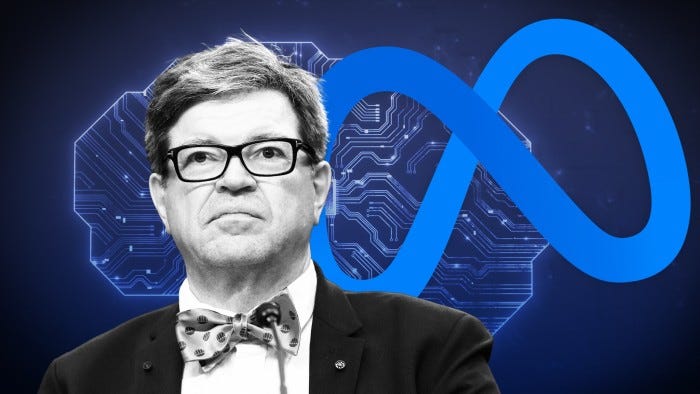
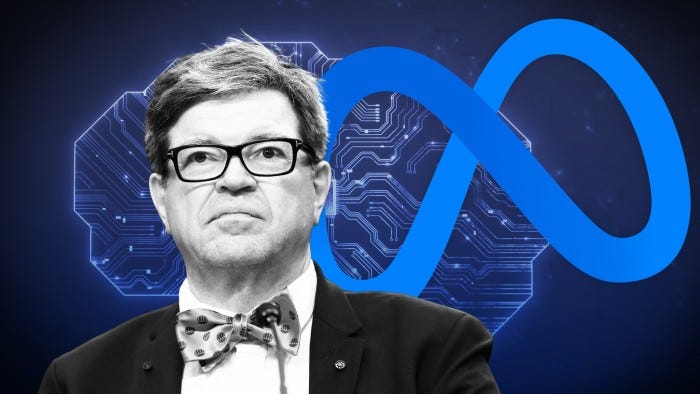
Yann LeCun’s Common Sense AI Takes: Given the current atmosphere of fear and hype around AI at both ends of the spectrum, it’s useful to see something that paints the more practical reality in the middle. I’m referring to ‘AI Godfather’ Yann LeCun’s blunt advice that cuts across the extremes at both ends of the spectrum in the headlines. LeCun’s view is that today’s AI systems are still not very good at reasoning. That human-level AI is not around the corner. In particular, he stresses that young people should not make life-altering school and career decisions based on exaggerated AI claims from CEOs selling AI products. His most practical point is that AI will make everyone a different kind of worker through boss. Workers will increasingly work with a wide array of AI Agents that will over time better assist on tasks personal and professional. But it will likely make human strategy, judgment, direction and durable skills more important, not less relative to the AI tools. In other words, it’s more of a Common Sense take on the AI ramp ahead of us. Needed at a time when AI is more feared than most other tech waves this early in their cycle. More here.
-
Huawei’s China inroads vs Nvidia: Huawei is gaining real ground in China’s AI chip market despite being behind Nvidia’s best AI chips. The reason is not that Huawei has caught Nvidia technologically. It is that US export controls, Chinese industrial policy, and Beijing’s push for domestic sourcing are creating a market where Huawei becomes the default national AI chip champion by necessity. The caveat remains important. Huawei still trails Nvidia on chip performance, CUDA-style software maturity, manufacturing yields, training-scale reliability and global ecosystem depth. But China’s AI market increasingly needs available domestic inference silicon, clusters, networking and software catch-up more than theoretical access to Nvidia’s best chips. The US may have succeeded in limiting China’s access to Nvidia’s frontier chips. But it is also accelerating China’s self-sufficiency push in the world’s second-largest AI market. That strategic tradeoff is at stake in the upcoming US/China trade talks this month. Nvidia’s Jensen Huang has already warned that its revenues in China may go to zero in the current environment. More here.
Other AI Readings for weekend:
-
OpenAI planning an AI Smartphone. More here.

-
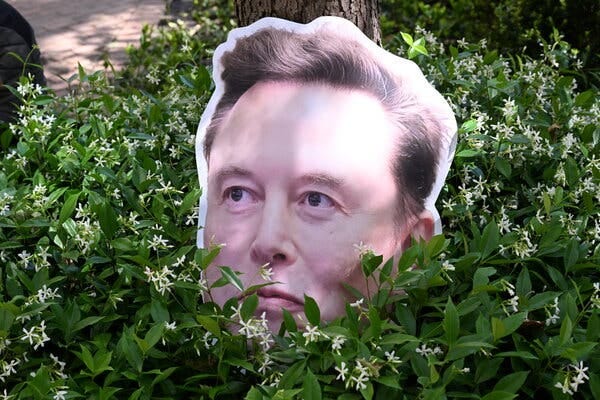
Week two of Elon Musk’s OpenAI lawsuit. More here.

(Additional Note: AI Ramblings is now a weekday Daily podcast called AI Ramblings Daily (ARD). Different content than AI-Reset to Zero (AI-RTZ), which remains a daily morning substack with now over 1070 ‘MY TAKES’ on key AI events and issues turbulently flowing by. AI Ramblings Daily is a typically a 20 minute afternoon podcast on my take on additional AI developments of the day. Both daily substack and podcasts typically discuss different AI issues and items. And are free to subscribe. Try this week’s series with ARD Episodes # 68, 69, 70, 71 and 72 here:)
Up next, the Sunday ‘The Bigger Picture’ tomorrow. Stay tuned.
(NOTE: The discussions here are for information purposes only, and not meant as investment advice at any time. Thanks for joining us here)