It now looks like Apple is potentially stepping up its chip ambitions to include possible acquisitions, and larger ones at that. Big implications indeed for the AI Tech Wave . And that is a BIgger Picture worth discussing this Sunday.
The Information explains in “Apple Hunts for AI Chip Acquistions”:
“Apple seeks AI chip company acquisitions to enhance server capabilities.”
“The company’s in-house M2 Ultra chips haven’t prove sufficient for running advanced AI workloads, forcing Nvidia reliance.”
“Apple’s CFO signals shift to allow larger acquisitions for growth.”
“Apple is on the lookout for acquisitions of chip companies to boost its efforts to build server chips for running AI, said people familiar with the company’s efforts.”
“In recent months, the iPhone maker has talked with bankers about possible deals. It has also approached semiconductor startups to gauge their interest in selling themselves, the people said. Apple’s hunt for chip acquisitions comes as the company struggles with the performance of its own internal AI servers, which currently run on internally designed M2 Ultra chips.”
In particular, Apple is thinking more expansively and potentially ‘out of the Apple box’ on server side expansion for its Apple Intelligence and related AI ambitions.
“The company is using that chip to run some AI tasks in its own data centers, while relying on Nvidia chips in Google Cloud to run more demanding workloads—for example, a version of Google’s Gemini model, which will power a revamped Siri personal assistant. A future version of Apple’s AI server chip, code-named Baltra, was originally supposed to ship this year, but it has been delayed, people familiar with the project said.”
“Historically, Apple has avoided big acquisitions, preferring to strike deals in the hundreds of millions of dollars. But this year the company has started to show signs that it has a bigger appetite these days for large deals.”
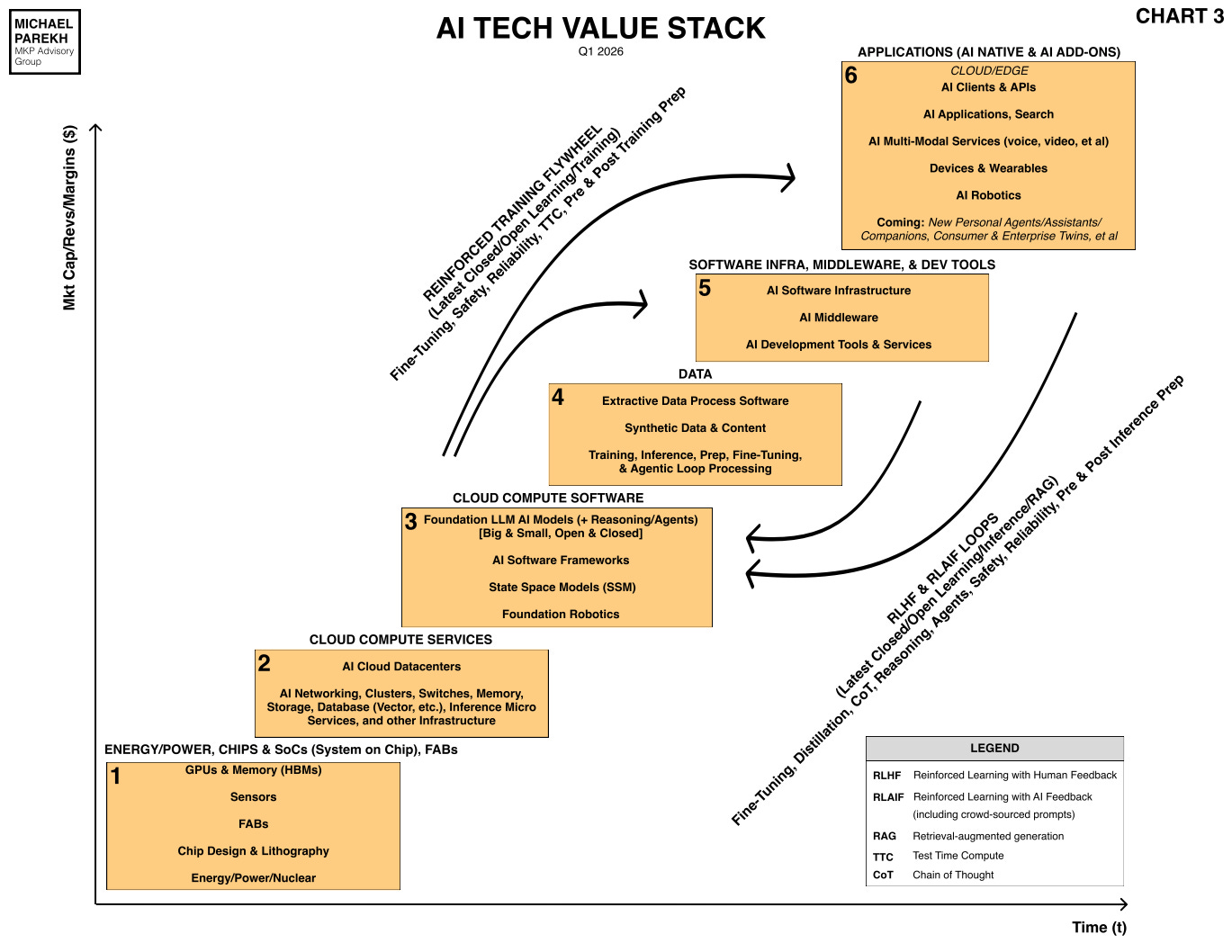
Apple has long been in disciplined in its M&A strategy, preferring ‘small’ technology focused acquisitions rather than ‘big and huge’ M&A deals like its peers. A policy again I’ve lauded in previous posts. Especially as it pursues its classic vertical stack integrated strategy, this time with AI priorities:
“In January, it agreed to buy Q.ai, an Israeli startup that makes technology for interpreting speech based on a person’s facial micromovements, for close to $2 billion. The acquisition was Apple’s second-largest deal ever after its $3 billion purchase of Beats Electronics in 2014.”
“And in the company’s second-quarter earnings call with analysts, Chief Financial Officer Kevan Parekh said Apple was moving away from a long-running policy of being “net cash neutral”—balancing its cash reserves with its total debt. Apple didn’t explain why it was changing the policy, through which it returned hundreds of billions of dollars to shareholders in stock buybacks and dividends. But one possibility is that it might use some of its cash reserves for major acquisitions.”
It’s useful to be reminded how Apple’s epic Apple Silicon strategy was the result of a pinprick technical acquisition 18 years ago.
“Apple’s effort to design its own chips in-house, which has been spectacularly successful in helping the company differentiate its devices, got its start through an acquisition. In 2008, Apple purchased a startup, PA Semi, for $278 million and used it to help launch generations of processors to run its iPhones and other products.”
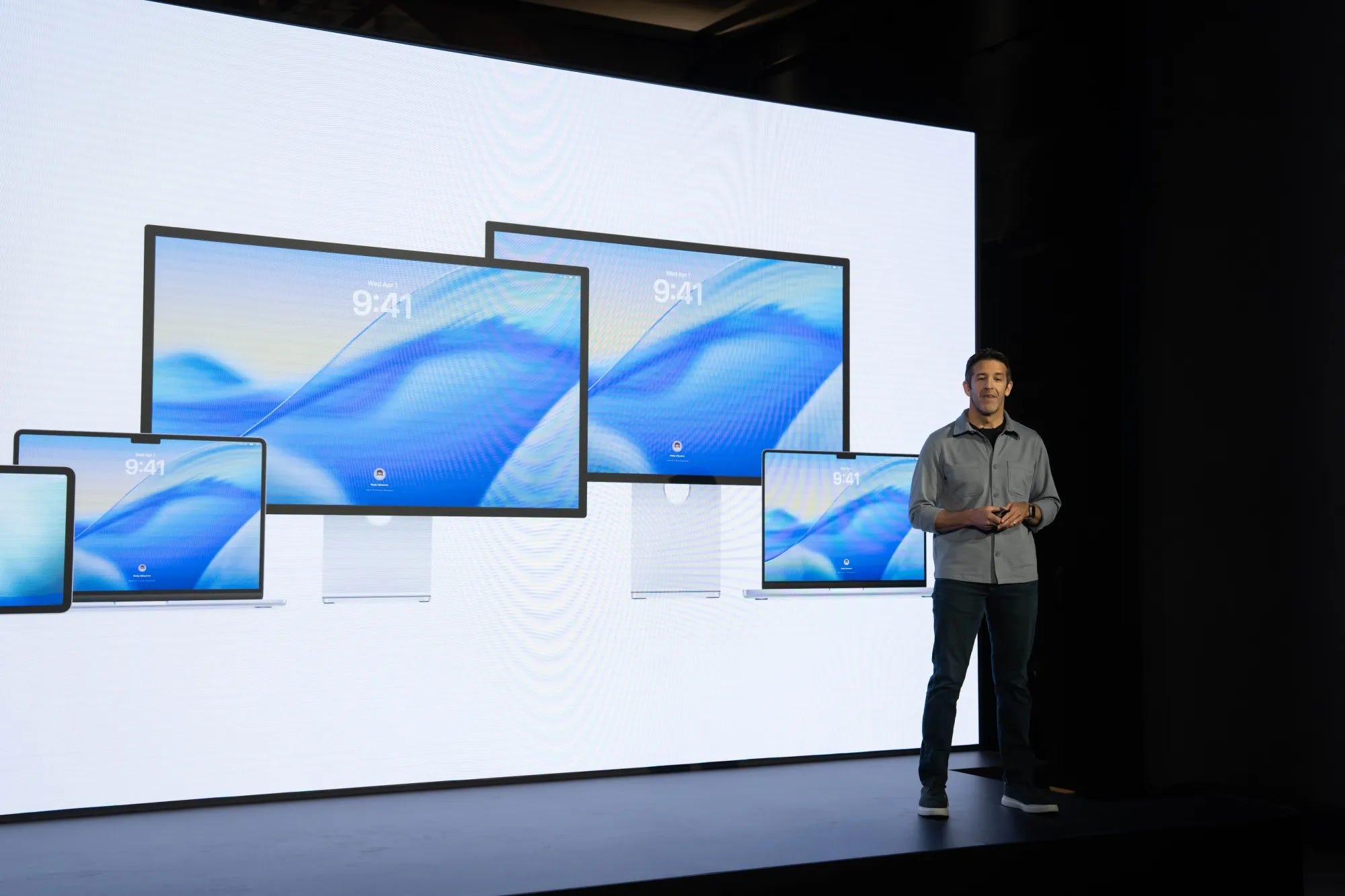
“Apple is also in the middle of a CEO transition, which could bring with it a bolder attitude about doing big deals. In September, the company’s hardware leader, John Ternus, will take over from Tim Cook. Apple is also elevating its chip leader, Johny Srouji, to oversee all of its hardware engineering in addition to semiconductors.”
And Apple is very much thinking of small language models (SLMs) over just a few LLM (large language models). Again, something I’ve discussed at length. Especially for Apple in its local AI strategy.
“Apple is also looking to acquire AI companies that can help it shrink models to better fit on the iPhone, The Information has previously reported. Steve Smith is running Apple’s day-to-day acquisition efforts, reporting to Adrian Perica, corporate development vice president.”
And it’s time to be thinking outside the box on AI chips given the dramatically expanding needs driven by AI compute going forward.
“With its foray into server chips, Apple may be running up against the limits of its current chip-designing capabilities. In the past, its large chip team has focused on battery-powered mobile devices, not the high-powered server chips necessary to compete with Nvidia, the dominant supplier of AI server chips.”
“When Apple was working on a project to overhaul Siri earlier this year, it tried to get Google’s Gemini models running on its internal server infrastructure. But the chips, which were originally designed for Macs, weren’t able to handle the giant Google model, people familiar with the project said.”
”Instead, Apple was forced to run parts of the new Siri on Nvidia chips inside Google’s cloud infrastructure. That was a somewhat surprising development given that Apple and Nvidia have historically had a tense relationship, as The Information has previously detailed. Some Apple executives view Nvidia as difficult to work with.”
“Bringing in new chip talent through acquisitions could help Apple bolster a road map it already has in place for producing more powerful AI server chips. Apple is currently working on an upgrade to its servers based on the M5 Ultra chip, Bloomberg reported. And with a future chip called M7 Ultra, Apple is aiming to sharply boost its AI chip performance, which could start rivaling that of Nvidia’s Blackwell chip, the news outlet also reported.”
Servers running massive and exponentially scaling AI tasks have orders of magnitudes higher requirements than even Apple’s current chip and product roadmap.
“The M7 Ultra could offer a maximum of 1.5 terabytes of memory, around double what M5 Ultra will likely offer. A server chip based on M7 Ultra won’t be ready until 2029, Bloomberg reported.”
“Apple hasn’t just looked at acquisitions to free itself from reliance on Nvidia chips. In 2024, The Information reported that Apple was working with Broadcom on an AI server chip. Last week, Broadcom said in a securities filing that the two companies were expanding their “longstanding technology collaboration through 2031.” Broadcom didn’t say what kinds of chips it was working on with Apple.”
Apple, along with Google remain my top two companies leading Consumer AI globally over the next few years, at least from a US big tech perspective.
Similarly, Apple, along with Nvidia, remain my two picks for the two big tech US companies leading the US open source AI efforts globally over the same time frame.
I’d prefer it be with China as opposed to a US vs China framework the world is currently on. I’ve explained my rationale on that front in detail here.
But Apple now getting more aggressive on potential chip acquisitions, along with considering larger acquisitions than before, are both big steps in the right direction this AI Tech Wave. And that is a Bigger Picture worth absorbing this weekend. Stay tuned.
(NOTE: The discussions here are for information purposes only, and not meant as investment advice at any time. Thanks for joining us here)