AI: China’s AI Academics turned Super Entrepreneurs (part 2). AI-RTZ #1187

The Bigger Picture, Sunday, August 23, 2026
Today, we’re discussing the fruits of the STEM (Science, Technology, Engineering, and Math) in China, as seen from an AI entrepreneurship perspective.
Thursday’s piece was the zoom-in: China’s AI momentum in downloads and valuations (part 1), with Alibaba’s Qwen crossing three billion downloads to lead open source AI. Friday’s was the zoom-out, Hugging Face’s census of the global open model landscape. This part 2 of the China story is about neither downloads nor valuations. It is about the extraordinary AI people behind those curves. That’s the Bigger Picture I’d like to unpack this Sunday.
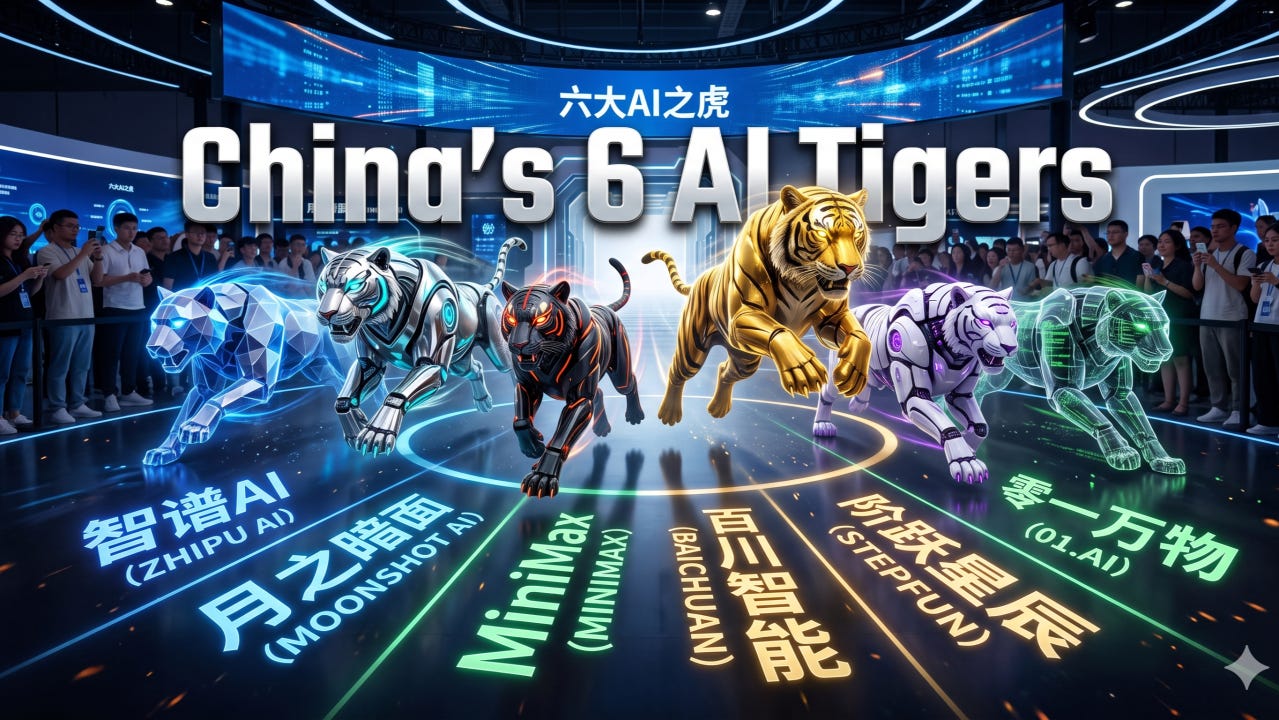
Specifically, China’s relentless AI academics turned super entrepreneurs. The professors and PhDs behind Z.ai, Moonshot AI, DeepSeek and the rest of what Beijing calls the ‘Six AI Tigers’ I’ve discussed earlier, who in under five years turned university labs into companies valued in the tens of billions each.
The Wall Street Journal this week published “The Brains who Powered China’s Surprising AI Leap”.
It re-affirms a key point I laid out in detail in ARD #127 a month ago: China has some extraordinary AI/Tech talent that can dent the world on a global basis. Just like the US had Bill Gates, Steve Jobs, Jeff Bezos, and so many others.
The avid students and entrepreneurs in China especially studied them all closely over the last few tech waves, especially since the PC. Now as we really get going with the AI Tech Wave, it behooves us to study many of them back.
The teacher and the pupil
The story the Journal tells opens with two people we profiled in ARD #127: Tang Jie and Yang Zhilin. More than a decade ago they were teacher and pupil at Tsinghua University.
That’s the Harvard/Stanford/MIT of China. Today they run two of the most closely watched AI companies on the planet.
Tang, 49, is a Tsinghua professor who has worked on machine learning for roughly twenty-five years, starting in data mining before the field had its current name recognition. He chose to stay in China after his doctorate, reasoning he could do something big at home. In 2019, after Beijing cleared university researchers to commercialize their work, he spun his lab out into the company now called Z.ai.
His lab was famous for its intensity: researchers running experiments until three in the morning, a knack for landing top journals, and an equal knack for monetizing the work. Its alumni populate frontier labs on both sides of the Pacific.
Yang Zhilin was one of those students.
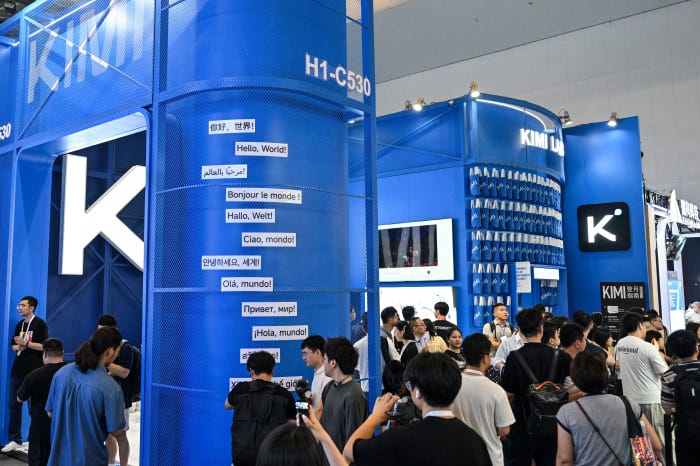
Competitive programming at seventeen, machine learning under Tang at Tsinghua, then a PhD at Carnegie Mellon before returning home. An avid rock drummer, he named his startup after Pink Floyd’s Dark Side of the Moon: Moonshot AI. Its Kimi K3 is the largest open-weight model released to date, and lands right up against the frontier closed models. I’ve discussed them a fair bit in these pages.
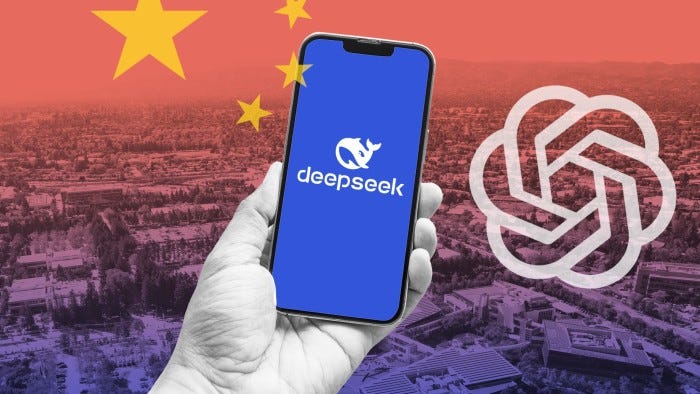
The third figure is DeepSeek’s Liang Wenfeng, the quant hedge fund founder who got his start in computer vision two decades ago. When Tang met him in 2023, he told his staff he was struck by Liang’s different way of thinking. That year Liang spun DeepSeek out of his fund, declaring the same goal Tang had put on his personal website years earlier: teaching machines to think like humans.
The connective tissue is Tsinghua itself, which the Journal describes as a virtual Silicon Valley threaded through Beijing, Shanghai and Hangzhou. Turing Award winner Andrew Yao left Princeton in 2005 to build his elite ‘Yao class’ there. The computer-vision boom of the 2010s, the era of SenseTime and the ‘four little dragons of AI’, trained the engineering corps. Knowledge moves between them through published research and an open-source culture that shares by default.
The running list, updated
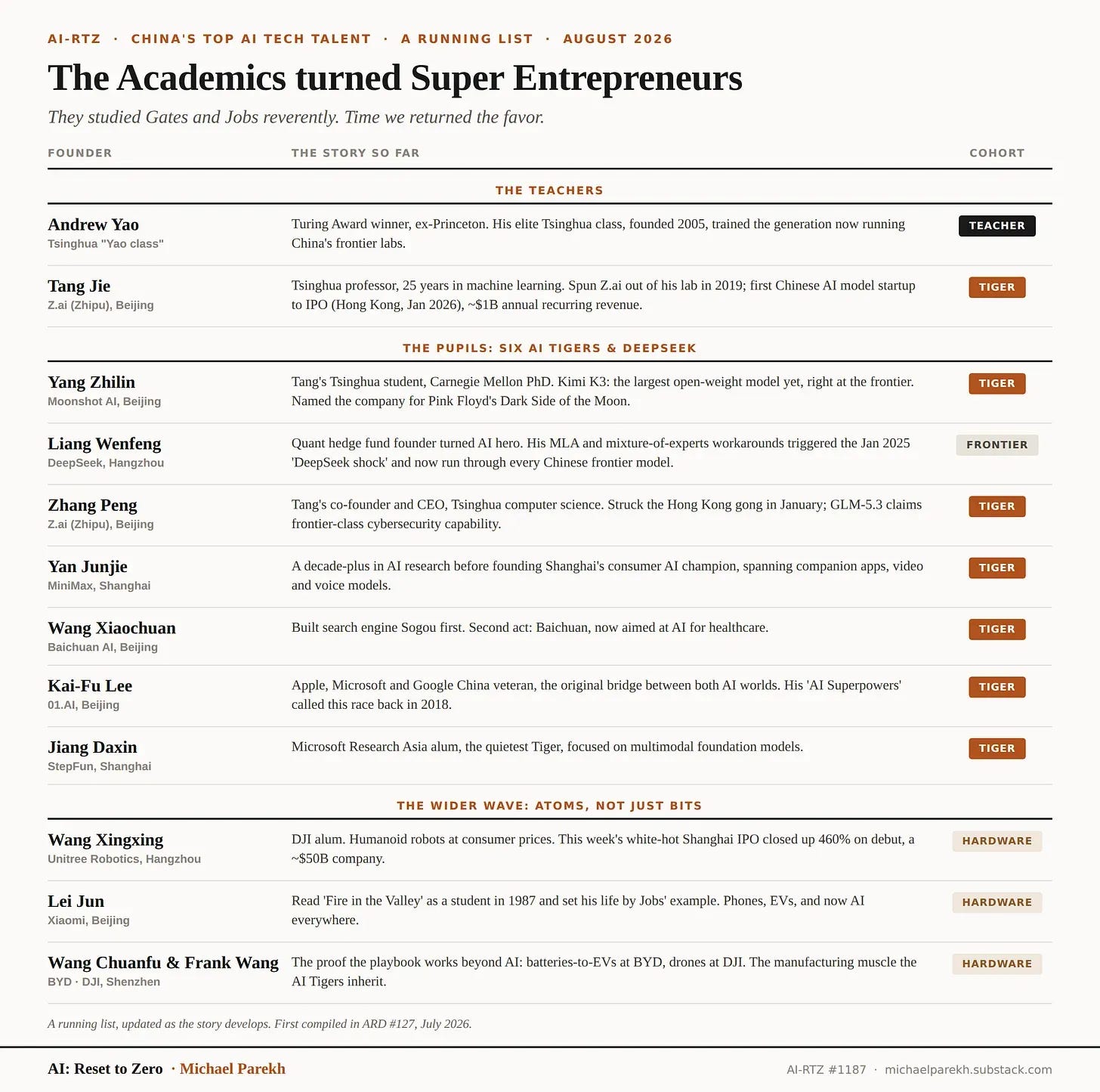
The chart up top is the list we first compiled in ARD #127, now updated into a running scoreboard of China’s top AI tech talent. Four weeks in, the updates are already piling up.
Z.ai became the first Chinese AI model startup to go public, striking the gong in Hong Kong in January. By July its annual recurring revenue had reached roughly $1 billion, about twice DeepSeek’s. This month it shipped GLM-5.3, claiming parity with Anthropic’s Mythos 5 on cybersecurity capability.
Moonshot’s Kimi K3 shocked the frontier as an open-weight release. And this week brought the hardware chapter: Unitree Robotics, founded by DJI alum Wang Xingxing, closed its white-hot Shanghai debut up 460 percent at a roughly $50 billion value, as we covered in ARD #145.
The money is following the talent. Nearly half of all equity-capital investment in China went into AI in the first half of this year, most of it from government-backed funds. And the geography is concentrating: Beijing hosts 19 of China’s top 50 AI companies and Shanghai 14, while Guangdong, the home province of both Liang and Yang, is now recruiting Tsinghua students by the busload to claw its way back into the race.
Even Elon Musk is keeping score. In June he predicted China would not match Anthropic’s top Fable model until the first quarter of 2027. Tang fired back on X: “Won’t take that long.” Industry leaders on both sides now put the gap at months.
More with less
The constraint side of this story matters as much as the talent side. Researchers at top Chinese labs say they are often allotted a fifth of the high-end chips available to peers at OpenAI and Google, thanks to Washington’s export controls. Jefferies calculates Chinese tech companies invested less than a fifth of what their US counterparts did through these years.
That scarcity produced the engineering. DeepSeek’s multihead latent attention slashes a model’s memory footprint. Its early bet on mixture-of-experts designs showed the whole Chinese industry how to boost performance while easing chip demands. Those two workarounds powered the January 2025 DeepSeek shock, and now run through every Chinese frontier model, including Moonshot’s K2 and K3. The techniques flow both ways: DeepSeek in turn adopted a Moonshot method for training stability.
The other side of the ledger deserves equal time. Anthropic has accused Chinese companies including Z.ai and Moonshot of large-scale distillation of its models, against its policies. Neither company has commented, and people inside Chinese labs concede the practice is widespread globally and possibly more aggressive there. US firms with more chips and capital also spend far more on exploratory research, the kind that can produce step-change breakthroughs rather than efficiency wins.

And the business gap remains real: Anthropic’s annualized revenue reached $65 billion in July, some 65 times Z.ai’s. DeepSeek’s Liang, pressed by investors in May about giving his secrets away, answered that he is not worried about competition because the market is big enough. Chips, not people, he added, are the most critical gap. On the talent, he sees no gap at all.
Studied in one direction
Here is the part of this story we keep returning to, because it’s most overlooked in the US. China’s technology entrepreneurs have studied our great founders closely for four decades. Not casually. Reverently.
Xiaomi’s Lei Jun read ‘Fire in the Valley’, the history of the personal computer pioneers, as a university student in 1987, and by his own account it changed the direction of his life.
Kai-Fu Lee worked at Apple, Microsoft and Google before writing the book on the US-China AI race. The generation now running the Tigers grew up on translated biographies of Bill Gates and Steve Jobs the way American kids grew up on baseball cards.
We have not returned the favor. Most American observers, including most American technologists, cannot name Tang Jie or Yang Zhilin or Yan Junjie, despite their companies lapping closer ever day to the AI frontier. As we wrote in ARD #127, you cannot measure what you do not see.
And the story is wider than China. As we laid out in ‘Crazy Rich Asian AI Markets’ (#1124), the AI boom’s picks and shovels run through Taiwan, South Korea and Japan, and its talent runs through the whole region, from Taiwan-born Jensen Huang to the Carnegie Mellon PhDs now running Beijing labs. The studying that matters now runs in reverse: their profiles, their papers, their open models, read the way their generation read ours.
My Take
The most consequential export America ever shipped to China’s tech industry was not a chip or a model. It was the founder playbook itself: the biographies, the open papers, the open source. They ran it, patiently, for twenty-five years, through teacher-pupil chains like Yao to Tang to Yang.
What comes back at us now is not espionage-shaped, whatever the distillation fights settle into. It is compounding-education-shaped. A national talent flywheel of elite classes, intense labs, published research and shared weights, running at maximum speed under constraint. Constraint is historically a feature for innovation, not a bug.
Export controls address the chips. They do not address the flywheel. The useful response to a flywheel is to study it, the way this piece, the WSJ profile beneath it, and our running list up top try to do. Know the names and the companies.
Respect the talent and entrepreneurial zeal.
Read their papers. Run their models. Their generation did exactly that with ours, and it is now our turn at this stage of this AI Tech Wave. Stay tuned.
Sources:
-
The Brains Who Powered China’s Surprising AI Leap
The Wall Street Journal’s profile of Tang Jie, Yang Zhilin and Liang Wenfeng, and the Tsinghua talent engine behind China’s frontier labs. Today’s anchor piece.
-
Home province of DeepSeek, Moonshot founders seeks to retain, attract future AI talent
South China Morning Post on Guangdong’s recruiting push, and the geography of China’s top 50 AI companies.
-
Meet China’s top six AI unicorns
TechNode’s rundown of the Six AI Tigers and their founders.
For longtime readers, from the archives:
-
Closer Than They Appear. China’s AI Founders, Robots & Talent. ARD #127
Where this list was first compiled: the Six AI Tigers, the founders up close, and the case for studying them back.
-
AI: China’s AI Momentum, in Downloads & Valuations (part 1). AI-RTZ #1184
The zoom-in: Qwen tops three billion downloads, and China multiples blow past US peers.
-
AI: The Global State of Open Source AI Models (part 2). AI-RTZ #1185
The zoom-out: Hugging Face’s census of open AI worldwide.
-
‘Wheels within Wheels’ in AI. Stripe, Nvidia & Unitree. ARD #145
This week’s Unitree IPO, in the context of AI’s interlocking money wheels.
-
AI: Crazy Rich Asian AI Markets. AI-RTZ #1124
The wider Asian AI wealth wave: Taiwan, South Korea and Japan.
(NOTE: The discussions here are for information purposes only, and not meant as investment advice at any time. Thanks for joining us here.)


