AI: China’s AI Momentum, in Downloads & Valuations (part 1). AI-RTZ #1184

Two data points landed this week on China’s AI momentum in this AI Tech Wave, and they measure the same flywheel from opposite ends. One counts what the world’s developers are choosing to build on in terms of global AI models. It’s from founder Jack Ma’s Alibaba.
The other counts what China’s investors are willing to pay for it. This is part 1, the close-up on that important topic. Tomorrow, part 2 zooms back for the global state of open source AI.
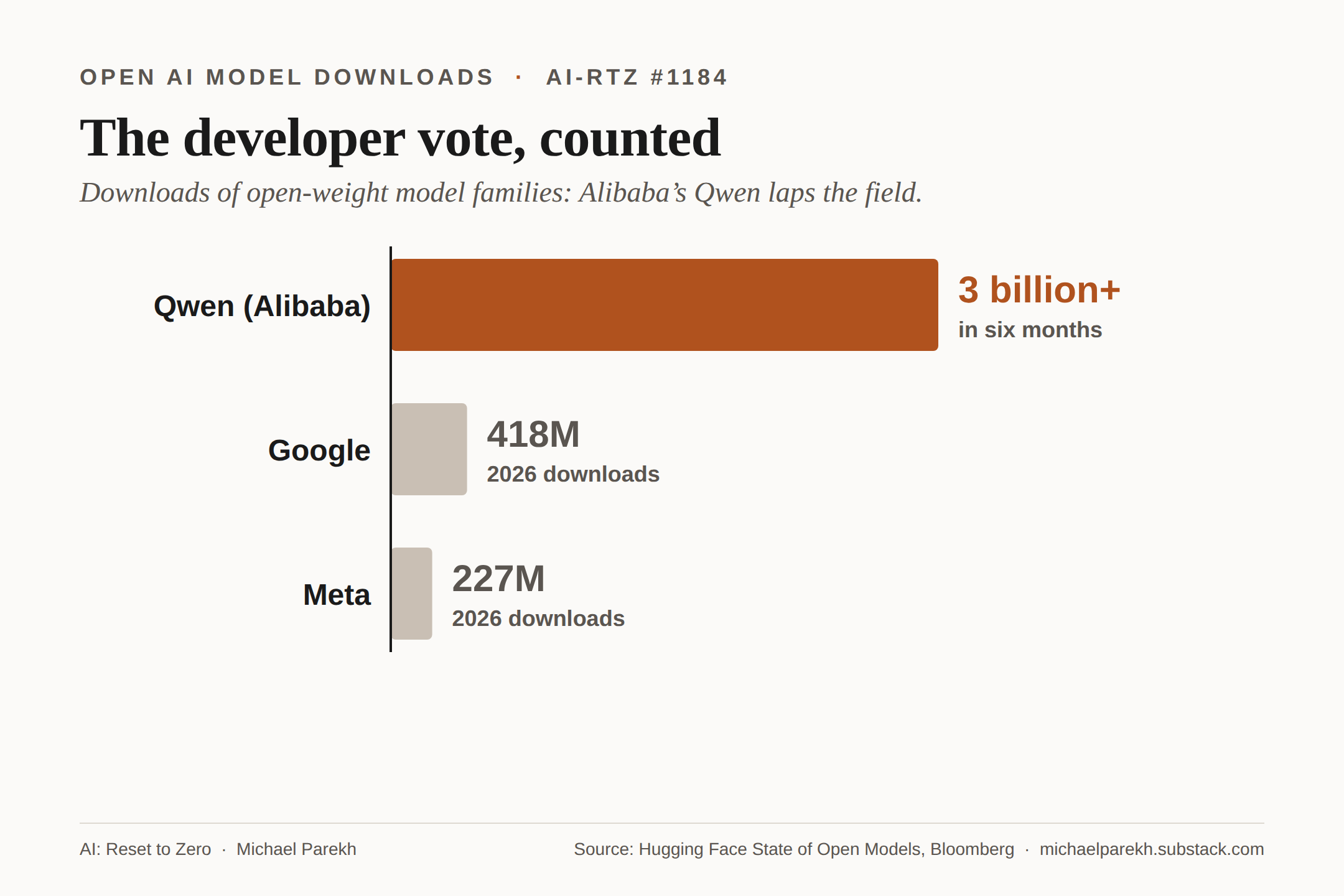
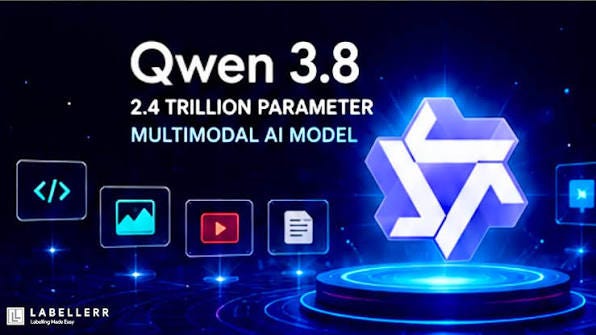
Start with the developers. Bloomberg reports, off Hugging Face’s new State of Open Models report, that Alibaba’s Qwen family of open-weight models has crossed 3 billion downloads in the past six months, making it the most downloaded AI model family in the world:
“Qwen, Alibaba’s family of AI models, has open-sourced more than 460 models and its ecosystem has spawned 300,000-plus derivatives… Google, part of Alphabet, had 418 million downloads while Meta stood at 227 million in 2026.”
Hugging Face calls Qwen
“One of the largest foundations of the open AI ecosystem,”
and, in the line that matters most, says it
“has become part of the default workflow for developers deciding what models to fine-tune and deploy.”
Default workflow is the phrase to sit up and notice. That is distribution, the hardest thing to build in software, and Alibaba is compounding it through its cloud into Southeast Asia and Africa, markets most rivals barely reach.
None of this is a surprise to readers here. I called Alibaba the ‘canary in the coalmine’ for open vs closed AI back in July.
Before that, OpenClaw set off a developer frenzy in China that showed how fast open agent code propagates there, and DeepSeek keeps coming back for seconds.
Notably, Bloomberg points out that export controls, including the brief overseas ban on Anthropic’s frontier model this summer, do not appear to be braking any of it. And the US response is telling: Meta and Nvidia have both pushed out new open models in recent weeks, a dynamic covered in ‘Open Source AI: Rockets Are Hard’, with Nvidia playing kingmaker across the stack. More on that side of the ledger in part 2 tomorrow.
Now the investor side of this discussion.
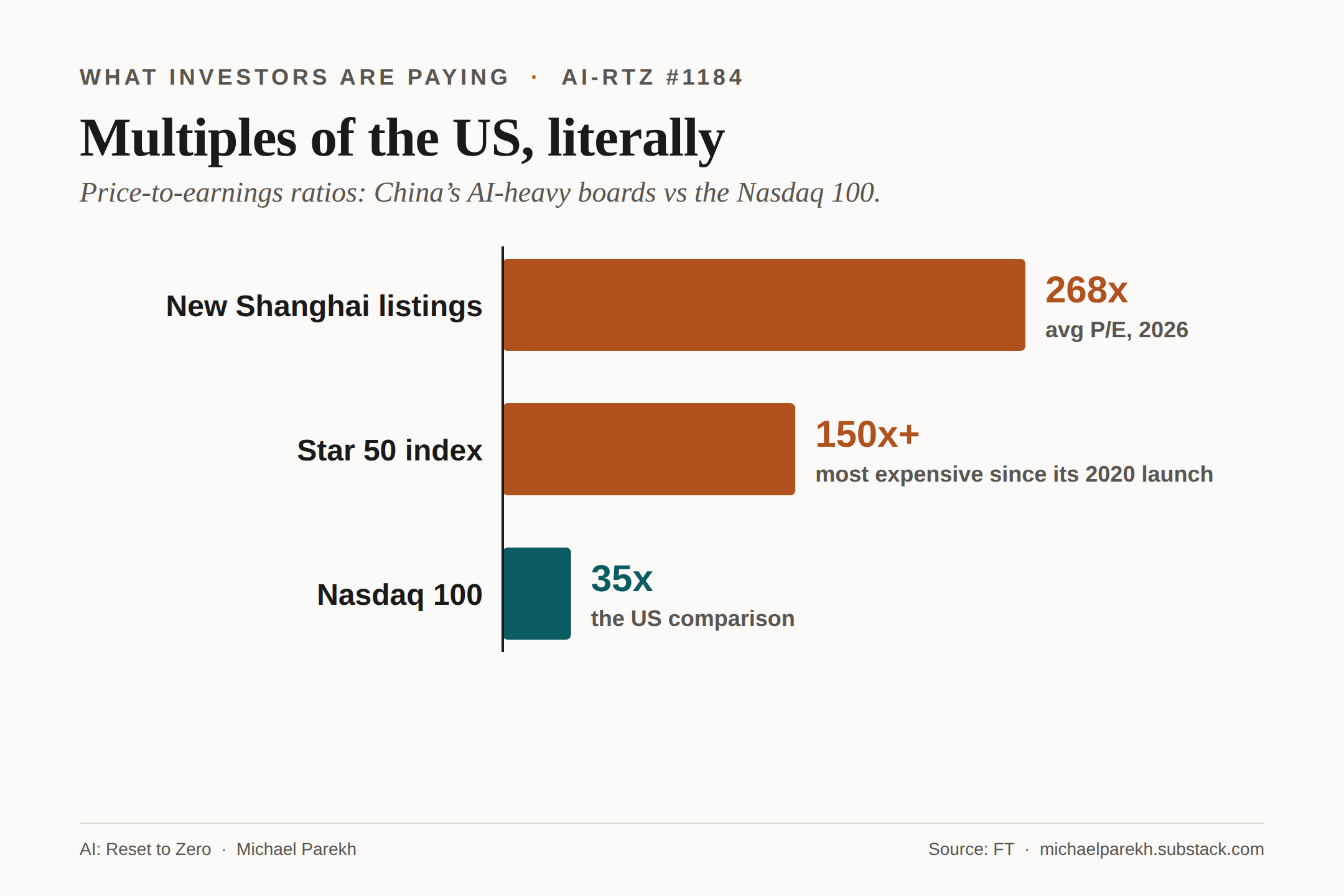
The FT outlines how “AI frenzy drives Chinese tech valuations to multiples of US peers”:
“The overall price-to-earnings ratio of the Star 50 is more than 150, well above the Nasdaq 100’s 35 in the US… Companies that have listed in Shanghai this year have an average price-to-earnings ratio of 268.”
The specifics behind those multiples are the same names we have been tracking. Moonshot’s Kimi K3, China’s largest AI model to date, rivaling Anthropic’s. Chipmaker CXMT, which I covered as it drew Apple’s interest and again as it passed Tencent to become China’s most valuable company, up 466% from its debut per the FT.
Humanoid robot maker Unitree’s upcoming listing, oversubscribed more than 5,500 times by retail investors. Beijing’s ‘national team’ buying $9 billion of equities into the summer selloff. And the throughline underneath: semiconductor self-sufficiency, with local companies increasingly supplying local companies. We went deep on this ecosystem, the founders, the robots, and the talent, in ‘Closer Than They Appear’ on the ARD podcast.
The FT is pragmatic with its assessment of Mr. Market in China.
This frenzy sits on top of a weak economy and the largest housing bust in memory, with households pushed from property into equities. The mainland’s investor base skews short-term and crowded.
And here is the twist worth highlighting: the download champion is not the valuation champion. Alibaba, the company that just won the world’s developer mindshare, is down 17% this year on weak Chinese consumer spending, while Tencent is down 26%. The market is paying 150 to 268 times earnings for silicon sovereignty, bidding up China’s memory IPO champ CXMT, which as mentioned earlier, passed Tencent to become China’s largest market cap company.

While marking down the open-model leader Alibaba. Developer adoption and investor enthusiasm are pointed at different targets.
My take: Put the two narratives from China above together, and the twists surprise indeed. Downloads are the leading indicator: they measure which ecosystem the world’s builders are quietly standardizing on, one fine-tune at a time.
Valuations are the lagging, and louder, indicator: they measure what a domestic investor base with nowhere else to put its money believes about catching up. Both can be right, and both can overshoot in the swings of the pendulums.
What they jointly confirm is the point argued here all along: China’s AI ecosystem is compounding on its own flywheel, open weights feeding derivatives feeding adoption, less dependent every day on US policies and permissions.
Which brings back a long-term point I’ve been making on US/China and AI, worth highlighting again.
As I argued in ‘Looking beyond Space & AI Races’ on America’s 250th July 4th, this should not be a ‘race’ with a finish line at all:
AI is compounding infrastructure for 8 billion people, and China’s open source momentum has long had positive spillovers for US AI too. The race framing keeps producing errant policy and worse US growthmetrics. From token-count scoreboards to US labs lobbying against China’s open source while their own developers download Qwen. Three billion downloads is not a lap time. It is the pie expanding, in every direction at once.
Tomorrow in part 2: the zoom-out. Hugging Face’s full State of Open Models report, its key charts, and my takes on what the global open source picture means from here.
A timely global update on the AI Tech Wave, and worth looking over the US horizon Stay tuned.
(NOTE: The discussions here are for information purposes only, and not meant as investment advice at any time. Thanks for joining us here.)


