AI: China's post Meta/Manus changes for foreign investors. AI-RTZ #1075

The Bigger Picture, Sunday, May 3, 2026
Regular AI-RTZ readers and ARD podcast listeners know that I’m in the Jensen Huang camp of balancing US/China realities rather than either side taking their marbles and going home. Especially when it comes to AI and tech cross-investments in this AI Tech Wave getting REALLY just started four years after OpenAI’s ChatGPT moment.
And right now, it looks like China may be trying to keep its AI/Tech marbles closer to home after ruling that the $2+ billion Meta/Manus (China AI Agent company) be unwound. And that is the Bigger Picture I’d like to discuss today.
Especially due to unintended consequences that are likely to ricochet in China and the US on all things AI, if the balancing act fades and/or fails.
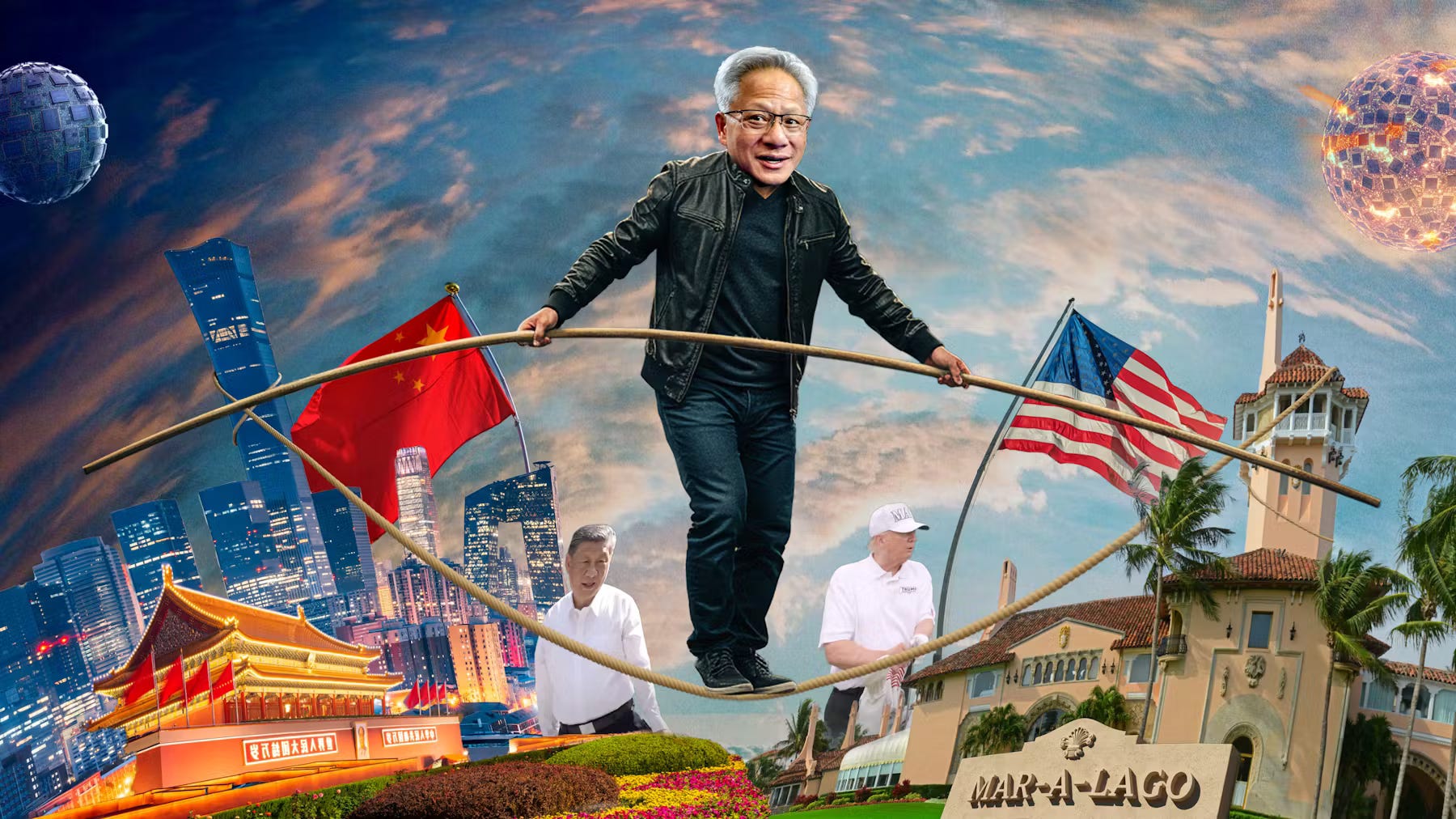
Also, one needs to keep in mind the broader context of the US driving the split of US TikTok from China’s Bytedance, at fire sale prices.
For background, I’d like to start with the Information’s piece “Moonshot AI and Other Chinese Firms Weigh Corporate Overhaul in Wake of Meta-Manus Deal Reversal”, summarized as follows:
“Chinese startups eye domestic incorporation after regulator’s IPO stance.”
“Meta-Manus deal reversal prompts China’s tougher IPO approval stance.”
“Corporate overhaul could delay IPOs and complicate overseas capital raising.”
“Chinese tech startups such as Moonshot AI and DeepRoute.ai are considering changing their corporate structures—in which they’re partly incorporated overseas—in favor of incorporating in China. That shift follows signals from China’s securities regulator that it is less likely to approve initial public offerings by local companies incorporated outside the country, say people with direct knowledge of the matter.”
“The regulator’s new stance could make it harder for Chinese startups to raise capital from overseas investors. It follows the controversy over Meta Platforms’ acquisition of AI agent Manus, which the Chinese government this week ordered unwound.”
A key possible interim development is around the way things have been done for overseas investors to date. It’s called the ‘Red-Chip’ structure, a detail that makes all the difference for tech FDI into China.
“So far there’s no blanket ban on the overseas holding structure, known as a red-chip structure, for companies seeking to list, the people with direct knowledge of the matter said. Several lawyers who are advising companies seeking to list in Hong Kong or the U.S. said they are telling their clients to wait and see until the Chinese regulator explicitly tells them to restructure.”
“Eliminating the structure could curtail Chinese startups’ ability to receive dollar funding from overseas, given that investors may not want to jump through the hoops of investing in a China-incorporated company and navigating the country’s foreign exchange controls to eventually recoup that investment.”
“The vast majority of China’s tech giants have a red-chip corporate structure. Alibaba, ByteDance, Tencent and Baidu are all incorporated in the Cayman Islands. Aside from making it easier to raise money overseas, the structure can simplify setting up supervoting rights for founders and stock option incentive schemes for employees, as China’s current regulatory framework is stricter on those matters.”
“Dismantling the red-chip structure is a complex, multistep legal exercise that typically takes six months to a year, according to multiple lawyers who have handled such cases. The process requires a company to buy back all investors in the offshore holding entity, set up a joint venture in China with foreign investors, and then sell shares again to the original investors in the name of the joint venture.”
The issues get complicated quickly in the financial and operational weeds for overseas investors:
“During the process, existing investors who decide to go along with the restructuring will also need to pay taxes on capital gains and other things in accordance with Chinese regulations before they invest in the new venture. If some investors decide not to put their money in the newly established joint venture, either due to concerns about foreign exchange restrictions or for other reasons, that would trigger issues for the company, such as finding new investors to fill the shortfall or losing some funding.”
“In addition, when the joint venture company finally goes public in Hong Kong—an increasingly popular destination for Chinese tech startups thanks to U.S.-China tensions—it is required to issue a different type of security, for which the lockup period for existing investors is 12 months, twice as long as for shares issued by red-chip companies.”
The regulatory ripples post that Manus transaction reversal are already spreading:
“China’s Securities Regulatory Commission has asked both Moonshot AI, an AI model developer, and DeepRoute.ai, an autonomous-driving startup—both of which are considering going public in Hong Kong—about their ownership by overseas holding companies.”
“Moonshot is now evaluating a potential change to its structure and discussing the matter with lawyers. DeepRoute.ai is having similar discussions.”
Foreign investors would need to materially changes their processes if the current avenues via Hong Kong and other incorporations are closed off. Along with US tech trade and exports with China.

“To incorporate in China, tech firms with overseas investors would have to set up a joint venture in China with foreign investors. That can be a lengthy process that would delay any IPO plans.”
“Separately, StepFun, a Shanghai-based developer of AI models, voluntarily started unwinding its overseas holding structure earlier this year, after determining that shifting its corporate domicile to China could reduce the time it would take to obtain regulatory approval for an IPO in Hong Kong later this year, according to a person with direct knowledge.”
“Bloomberg earlier reported on the Chinese government’s new stance on overseas incorporation, without mentioning specific companies affected.”
One can hear the machinery cranking up, amongst Chinese authorities and agencies:
“The Chinese securities regulator’s toughened stance on overseas holding companies reflects its difficulties regulating companies that have most or all of their operations and employees in China but are owned by companies overseas, where Chinese regulators have no jurisdiction.”
“In such an important sector like AI and other new technologies, Chinese regulators would want to have better visibility and supervision over how these companies grow, how they raise capital and how they move their capital around. That would seem to me the new normal, which I would expect all governments would want to do in the name of national security,” said Lyndon Chao, head of equities and post trade at the Asia Securities Industry & Financial Markets Association.”
It all lands squarely on the US/China geopolitical relationship, which I’ve discussed for a long time in these pages.
The ‘threading the needle’ exercise underway across various administrations, is now moving into a new phase. Especially with the planned China/US trade talks coming up this month at the highest levels.
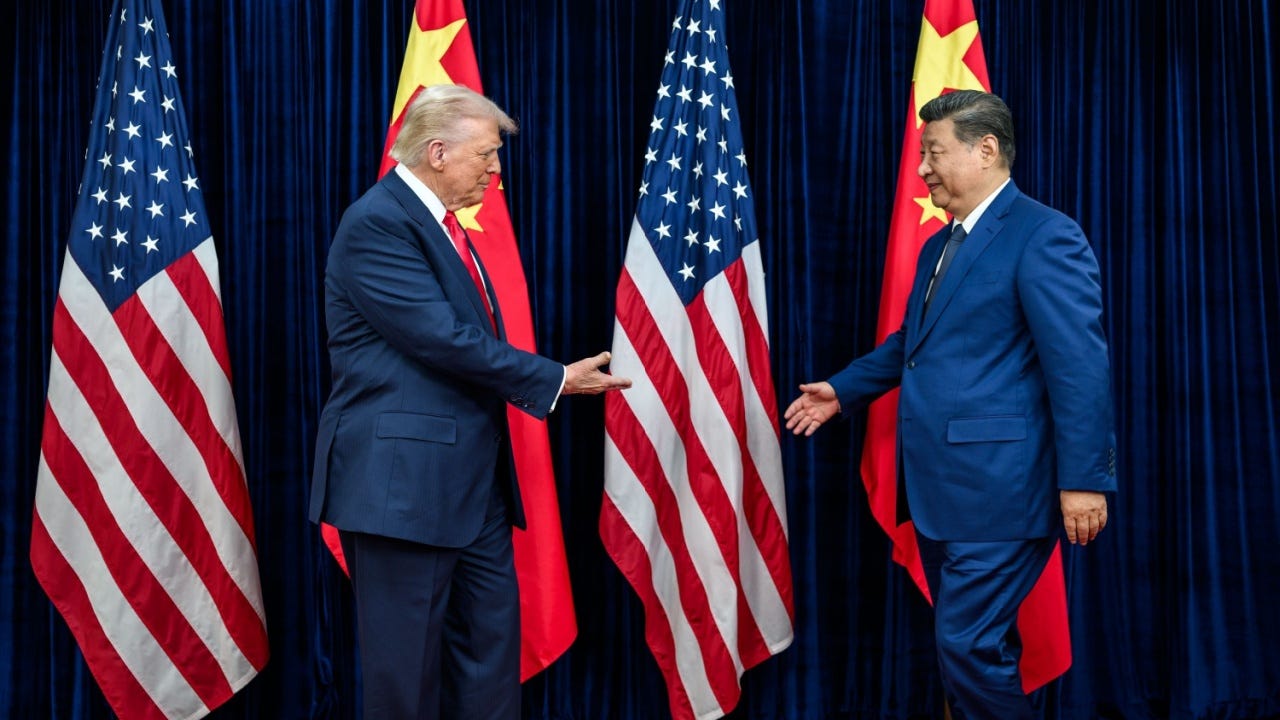
““The stakes are just higher and higher amidst the geopolitical rivalry. So just as much as the U.S. is trying to restrain China in these sectors, China is trying to make sure that these important sectors don’t fall into the hands of a geopolitical competitor,” Chao said.”
The whole piece is worth a read for additional details and nuance. But the broader bigger picture is clear.
This development is likely to cause all sorts of repercussions in China and the US around AI matters. Especially amongst overseas investors still trying to find pathways to continue investing in China.
Especially as China remains the world’s second largest AI market today, and by my estimation the largest AI market in the next 2 plus years. Oh, and it’s also where at least half the world’s AI engineers come from today. And rising from there every day.
So the machinations of how US investors both financial and corporate can access opportunities in China is a critical part of the Bigger Picture of this AI Tech Wave going forward.
Especially at a time when China AI And Tech innovation is racing ahead on a bottom up basis. All the while leveraging its globally unmatched manufacturing IP and ecosystems as AI moves into the physical world of mobility, robots and beyond.
Not figuring out a way to ‘thread the needle’ and balance the mutual dependencies mean smaller opportunities to play with AI marbles for all. For both US companies and investors. Stay tuned.
(NOTE: The discussions here are for information purposes only, and not meant as investment advice at any time. Thanks for joining us here)