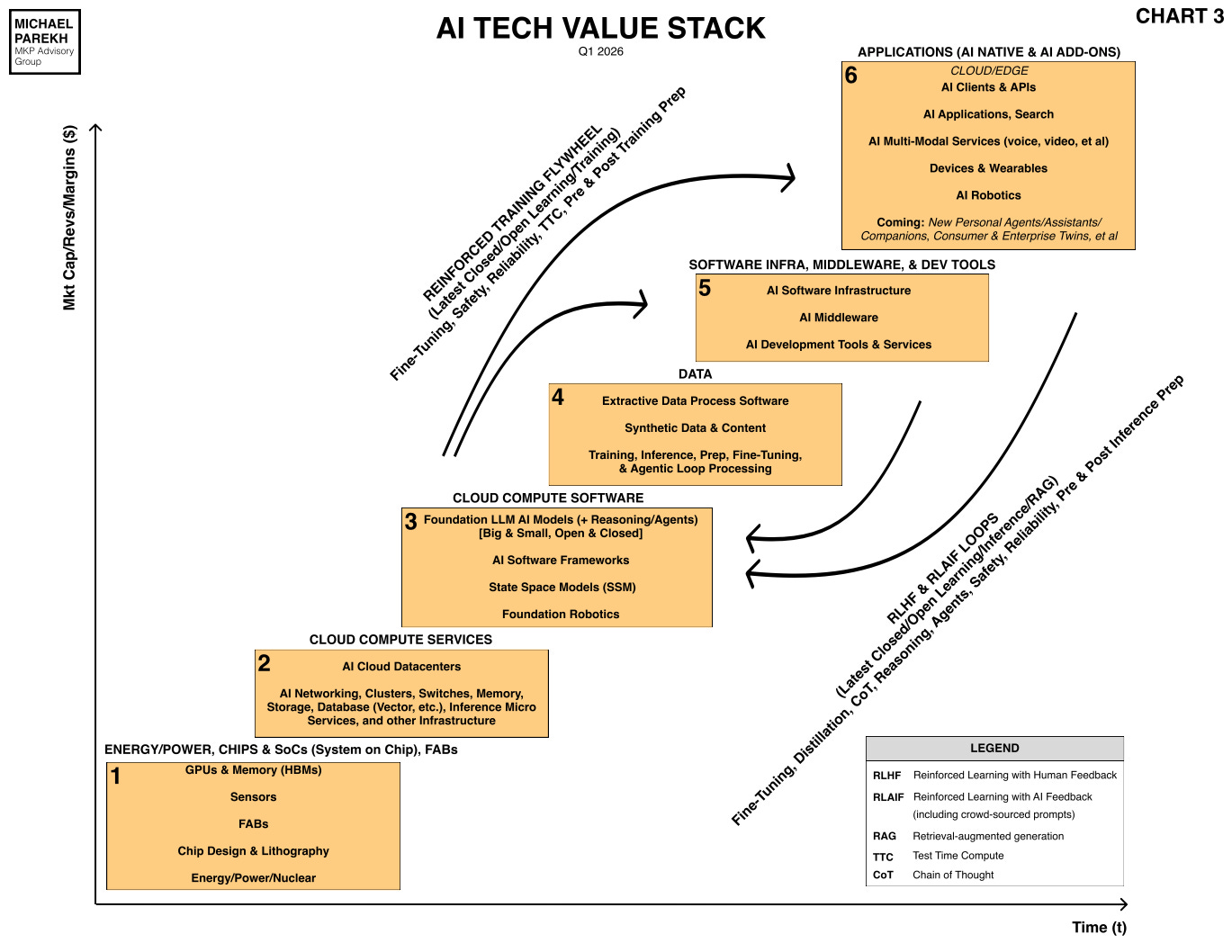
That all have pathways of greater than Moore’s Law improvement in price and performance over that time span and more.
But at a time when the financial markets are leaning into the AI Tech Wave with the current enthusiasm, it’s prudent to look and think through the ‘what if’ scenarios if things don’t pan out as imagined. Even through a financial dip or a blip.
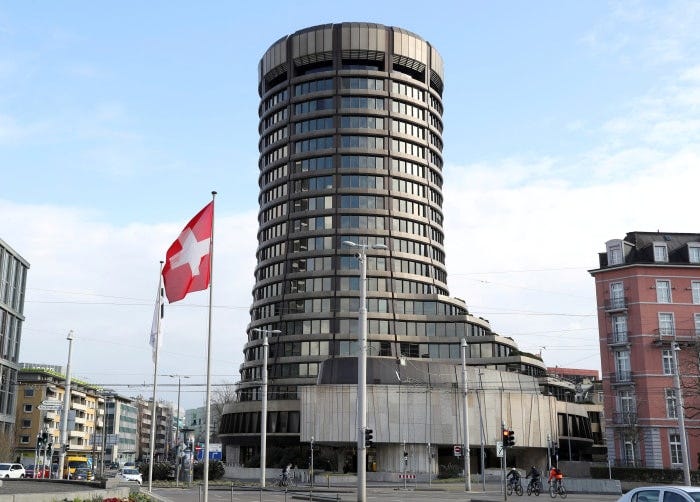
I’ve discussed a lot of downside scenarios here at AI-RTZ. And it’s time to look at the most recent one from a weighty source, the Bank for International Settlements, aka the BIS.
“If you’re already anxious about the AI spending bubble and its global economic risks, maybe don’t read the latest annual report from the Bank for International Settlements.”
“The report, released Monday, lays out in unsettling detail how an AI bust could throw the global financial system into disorder. It also comes from an institution that has a good track record of predicting problems, including the 2008 financial crisis.”
“This time, the bust could start with overinvestment in AI infrastructure from tech-company spenders. Once it becomes clear that returns aren’t measuring up to the scale of those outlays, a pullback in financing and stock prices could ensue.”
The concern is a longstanding one, as the piece acknowledges. But it’s useful to revisit it on an ongoing basis.
“There’s nothing especially new about those concerns. But the BIS connects some other dots, drawing lines between a possible AI bust and the unusually vulnerable state of consumers, governments and the global economy.”
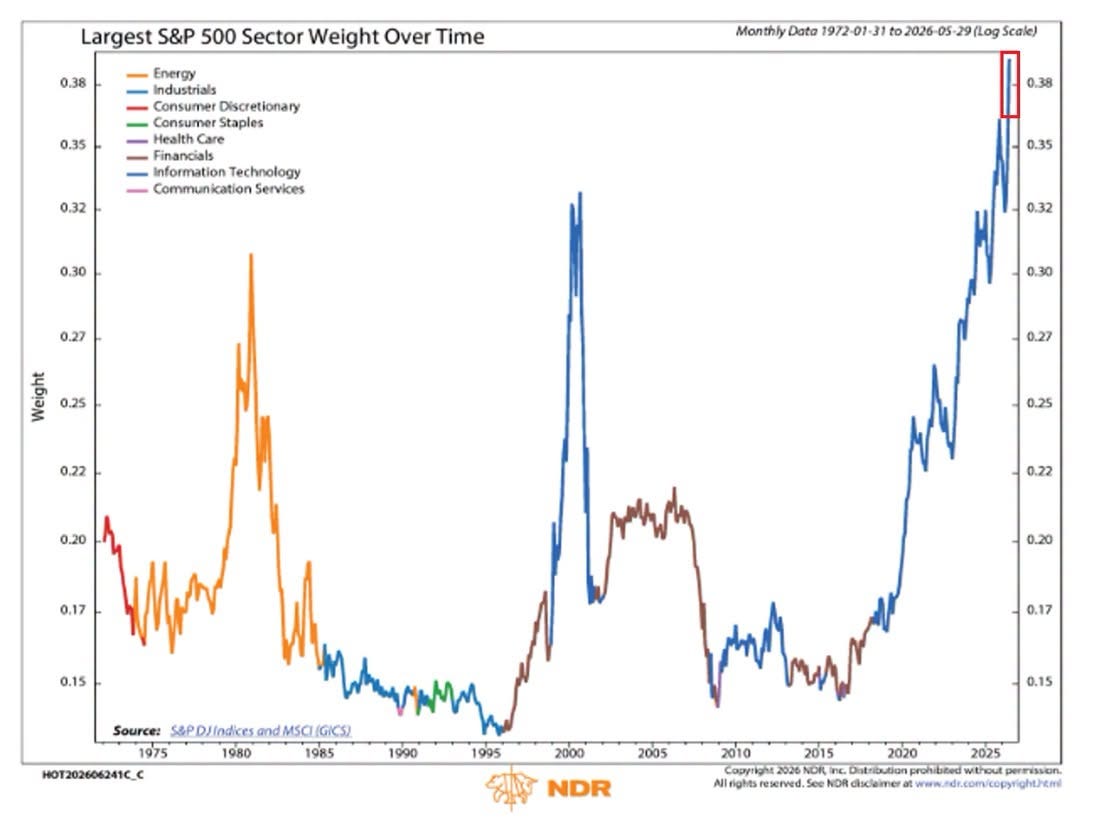
“U.S. households are significantly more exposed to stocks than in the past couple of decades, for example, both relative to their wealth and their income. And rising U.S. stock prices during the AI boom have given U.S.-listed companies extraordinary weight in global indexes, threatening broad global erosion of wealth in the event of a U.S. tech-focused bust.”
Markets both private and public, and especially the latter, are rather ebullient.
“Tech companies are only the tip of a supply-chain iceberg, the BIS points out. If they slow the pace of their capital spending, construction contractors with comparatively weak balance sheets could feel the pain quickly, among other financial dominoes ready to fall.”
“The debt that has come to increasingly fuel AI investments could only compound the potential destruction. And government budgets in advanced economies are stretched, leaving countries less latitude to reinvigorate economic activity through spending. Persistently elevated inflation and geopolitical uncertainty caused by the Iran war make it trickier for central banks to find a good response to any disruption.”
Again, timely reminders, often ignored when the music is loud, and investors are running harder around the long line of chairs.
Flashing green lights indeed to add another metaphor.
“These warnings are worth listening to in part because of where they come from. The BIS, a consortium for global central banks based in Switzerland, has raised the alarm early about crises in the past. In March of 2006 for instance, it put out a paper titled “Prime or Not So Prime” that detailed the risks posed by the securitization of subprime loans in the U.S.”
“That turned out to be prescient. And there’s a reasonable chance the BIS is right again about AI, which has been in what looks like a spending and chip-company revenue bubble for some time. Exactly when and how it pops, though, is much harder to guess.”
This set of concerns of course is a constant rhyme through prior tech waves and their financial cycles.
Just like the Internet did when I started to cover it in equity research at Goldman Sachs in 1994. And had conviction in its long-term investment rewards despite the short-term interruption of the ‘dot-com’ crash in the early 2000s.