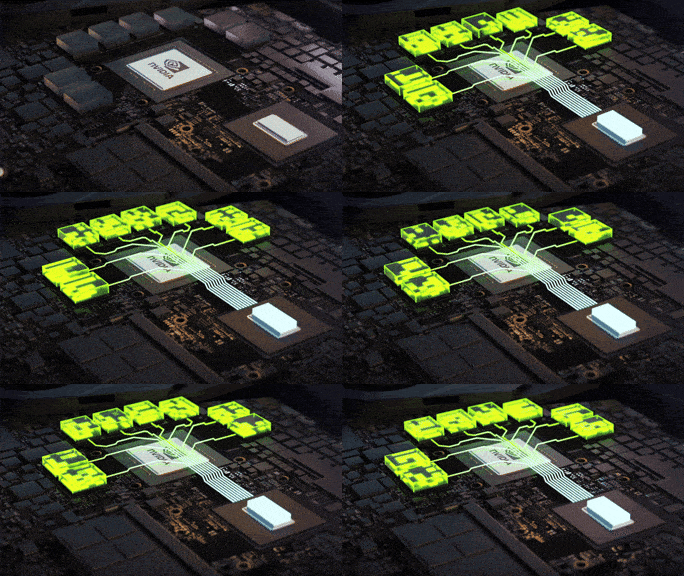
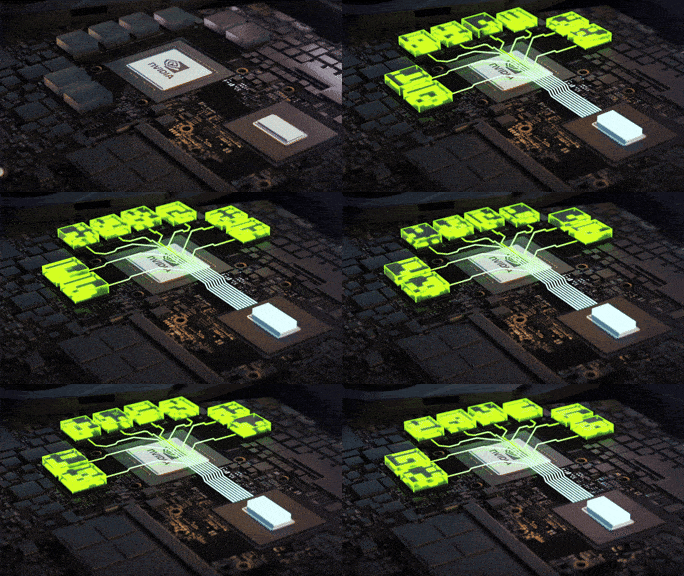
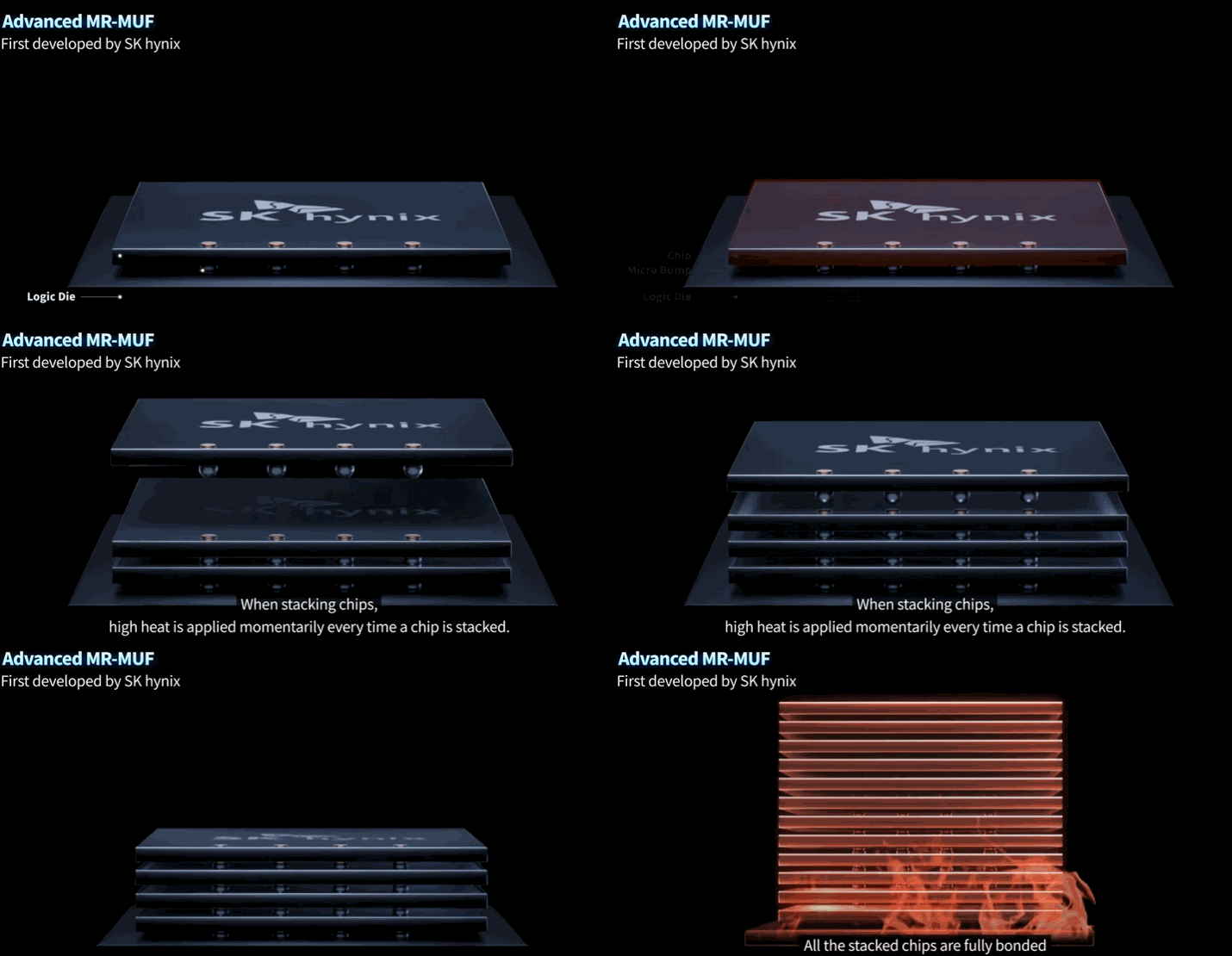
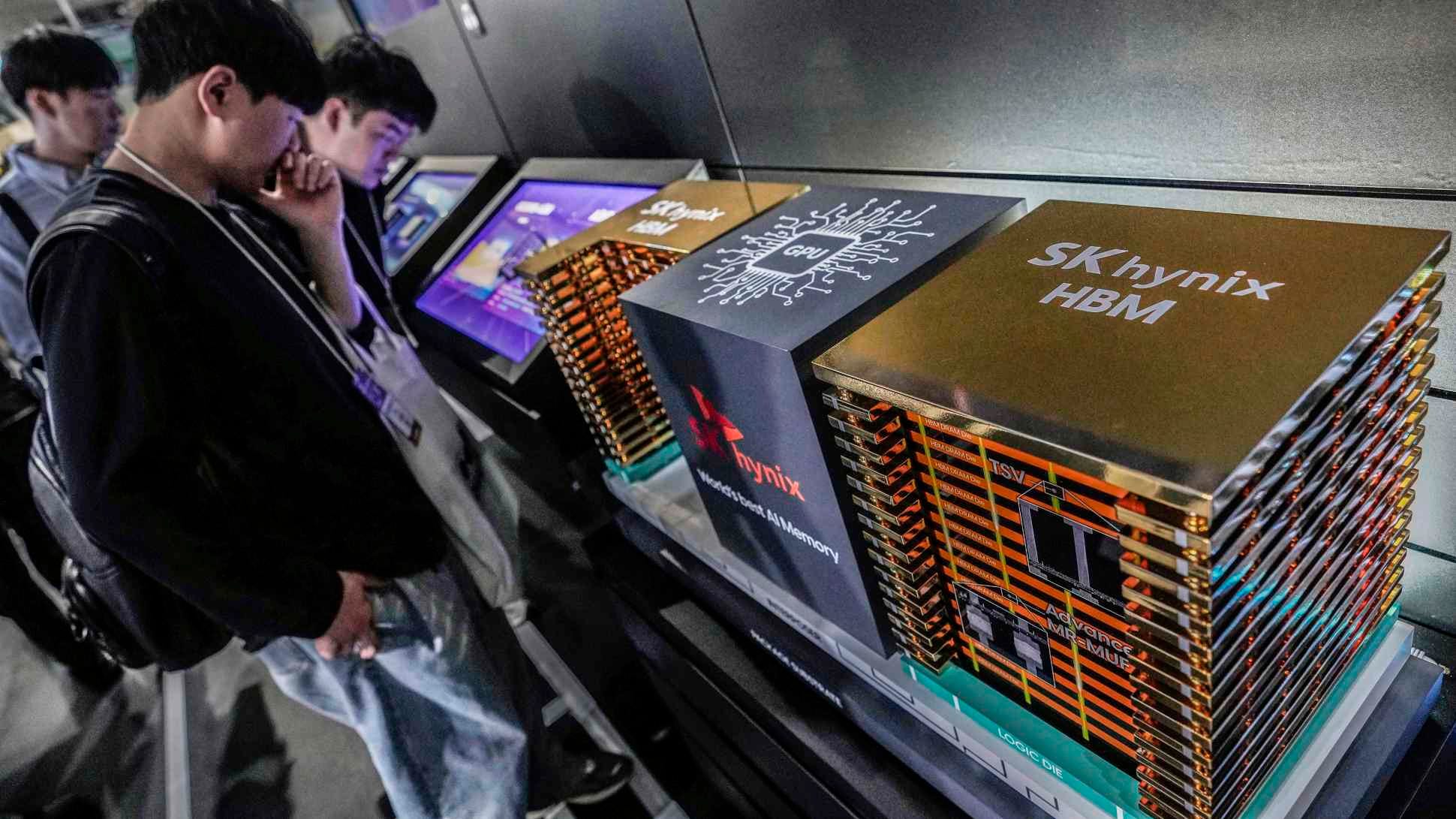
“Dell Technologies Inc., HP Inc. and other tech companies are warning of potential memory-chip supply shortages due to soaring demand from the buildout of artificial intelligence infrastructure.”
“A shortage would threaten to increase the costs of manufacturing everything from phones to medical equipment and cars, with companies including Xiaomi Corp. and Lenovo Group Ltd. preparing for potential price increases.”
“Companies such as Dell and HP are considering options including repricing devices and stockpiling memory chips in anticipation of rising costs, with some estimating that memory accounts for 15% to 18% of the cost of a typical PC.”
“Dell Technologies Inc., HP Inc. and other tech companies are warning of potential memory-chip supply shortages in the coming year due to soaring demand from the buildout of artificial intelligence infrastructure.”
“Consumer electronics makers including Xiaomi Corp. have sounded the alarm about potential price increases, while others including Lenovo Group Ltd. have begun stockpiling memory chips in anticipation of rising costs. Counterpoint Research this month forecast a 50% price rise for memory modules through the second quarter of next year.”
All the smartphone companies from Apple to Samsung have all boosted base memory in their products, and the trend is ramping up.
“A shortage would threaten to increase the costs of manufacturing everything from phones to medical equipment and cars. Such chips are used in virtually every modern electronic device that stores data. The AI boom is indirectly to blame. There are two types of memory chips, ones that help with processing and ones that store information. Manufacturers are allocating more production to meet demand for new, more complex and profitable products used in AI systems, causing a shortage of more common types of memory.”
“Dell has never seen “costs move at the rate” that they are now, Chief Operating Officer Jeff Clarke said on a call with analysts on Tuesday. The company has seen tighter supplies of dynamic random access memory, DRAM for short — which includes high-bandwidth memory for AI to the chips powering personal computers — as well as of hard drives and so-called NAND flash memory, he said. “The cost basis is going up across all products.”
“US sanctions have also worked to exacerbate the supply crunch by limiting the technological capabilities of new Chinese entrants.”
“Palo Alto, California-based HP sees the latter half of 2026 being particularly challenging and will increase prices where necessary, Chief Executive Officer Enrique Lores told Bloomberg News in an interview.”
“For the second half, we are taking a prudent approach to our guide, while at the same time we’re implementing aggressive actions” like bringing on more memory suppliers and putting less memory in products, he said. The company estimated that memory accounts for 15% to 18% of the cost of a typical PC.”
“AI memory orders are pressuring supply of the chips for other electronics.”
The broader points of scarcity also continue:
“The race to build AI infrastructure has already raised energy bills in areas near large data centers. It’s also lifted the valuations of the world’s top memory makers. Shares of South Korea’s Samsung Electronics Co. and SK Hynix Inc., along with Micron Technology Inc., have surged in recent months as inventories dwindle and supply challenges crystallize. SK Hynix said last month that it’s sold its entire memory chip lineup for next year, while Micron expects supply will remain tight into 2026.”
“Japan’s Kioxia Holdings Corp., which specializes in NAND production, saw its stock increase multiple times over following its December public listing, propelled by the same tight supplies.”
China of course is ramping up here as well to secure its own supplies:
“China’s top chipmaker Semiconductor Manufacturing International Corp. has noted that the memory shortage is coming as manufacturers prioritize business with the world’s largest AI chip provider, Santa Clara, California-based Nvidia Corp. Nvidia in turn has placed an emphasis on assembling its highest-value, most advanced systems bound for AI data centers. SMIC warned that a shortage of memory may constrain car and electronics production in 2026.”
“In Beijing, Xiaomi jacked up the price on its marquee device and said it expects a shortfall in memory chips will lead to price increases for mobile devices next year, too.”
Apple as mentioned earlier, is also managing its supply chain issue as well.
“Apple Inc. has given one of the most sanguine of assessments. CFO Kevan Parekh acknowledged on a call with analysts that there’s “a slight tailwind” on memory prices and some “new products do have a slightly higher cost structure.” But he stressed that Apple is managing costs well. Like Lenovo, Apple’s position as one of the top customers — if not the top customer — for many players in the electronics supply chain helps it secure strong terms for ongoing supply.”
“Lenovo’s memory inventories are meanwhile roughly 50% higher than usual, Cheng told Bloomberg TV. Taipei-based Asustek Computer Inc. has also raced to stockpile, with both PC makers planning to hold prices steady in the holiday quarter and reconsider the market situation in the new year.”
“Chey Tae-won, chairman of SK Hynix parent SK Group, also warned of a supply bottleneck earlier this month. “We have entered an era in which supply is facing a bottleneck,” Chey said in a keynote speech at the SK AI Summit in Seoul. “We are receiving memory chip supply requests from many companies, and we are thinking hard about how to address all demands.”
The whole piece is worth a detailed read to understand the next point of supply chokepoints for AI beyond chips, data centers, power and AI Talent. This November 30th marks year three of AI Tech Wave kicking off with OpenAI’s ChatGPT.
And the industry is off to the largest global scaling of any tech wave before it. And that’s worth noting and remembering. Stay tuned.
(NOTE: The discussions here are for information purposes only, and not meant as investment advice at any time. Thanks for joining us here)
Good morning everyone, Today’s episode of Trends with Friends is a good one. Michael Parekh, Phil Perlman and myself are joined by Josh Mohrer for a...
Podcasts Michael Batnick talks private credit stress with Brian Moriarity, Principal at Morningstar. (youtube.com) Brendan Frazier talks with Meghaan...