This is significant because it’s opportunity disrupt the AI trance these top LLM AI companies have their target customers under this AI Tech Wave. And Microsoft increasingly wants to be less dependent on just a handful of frontier AI model companies. Beyond Nvidia of course.
“Microsoft CEO Satya Nadella criticized the concentration of AI power and articulated a strategy for cheaper, more user-controlled models.”
“Microsoft rolled out low-cost AI models and is weighing hosting DeepSeek, a Chinese provider, to drive down prices for customers.”
“Nadella advocates for democratized AI deployment, emphasizing job reorganization over elimination and shared societal benefits.”
“Satya Nadella helped usher in the AI boom. Now he has a tough message for the companies leading it.”
“The chief executive of MicrosoftMSFT is joining a growing effort to take on artificial-intelligence giants OpenAI and Anthropic, outlining in an interview his vision for the next wave of the AI boom, one involving cheaper models, more user control and political messaging that wins the public’s trust.”
“Nadella offered a blistering critique of how the race for AI supremacy has taken shape, with a small group of companies capturing the value of the world-changing technology as they make dire prophecies about safety risks and job losses, insisting they need vast resources for limitless expansion.”
“You can’t say, hey, all white-collar jobs are gone and this could even be a weapon and we will use all the power to build data centers,” Nadella told The Wall Street Journal. The public, he predicted, wouldn’t tolerate just a few models and companies “doing all of the learning for the world.”
“While he didn’t directly name OpenAI, Anthropic or Alphabet’s Google—the three companies building the most advanced proprietary models—he made clear that Microsoft is seeking to steer the AI race away from a future dictated and controlled by frontier model-builders.”
“In a matter of weeks, Microsoft has rolled out a suite of low-cost models meant to drive prices down for customers bracing from the sticker shock of skyrocketing AI bills. The company released Copilot Cowork, an autonomous AI “agent” allowing users to choose various AI models, including cheaper ones, as they complete long-running tasks.”
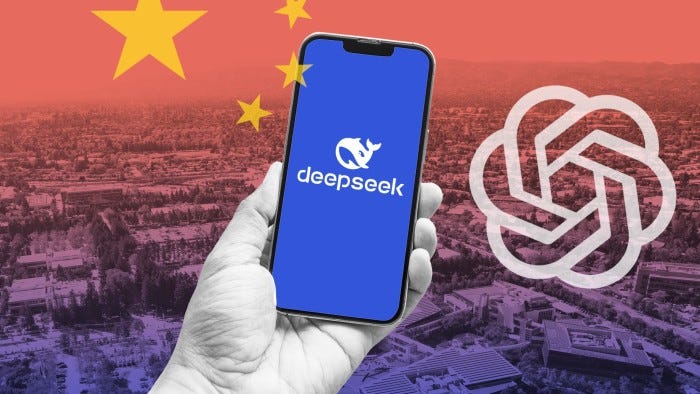
“Microsoft is weighing whether to host a version of DeepSeek, an ultralow-cost AI provider based in China that OpenAI and Anthropic have called out for distilling, or copying, their top models. Such a step would likely lead to a dramatic rise in use for the Chinese model-maker, one that could come at the expense of OpenAI and Anthropic, which are facing the prospect of a prolonged price war.”
“It is a striking step for Nadella, who has long played the part of elder statesman in the trillion-dollar AI race, to join a growing effort to shift the race away from the development of top models with ever-expanding capabilities.”
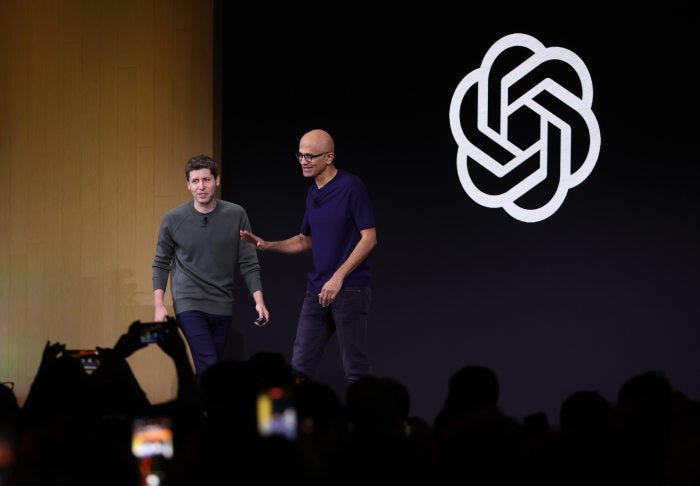
“Microsoft is one of OpenAI’s oldest partners and has invested billions helping to build the company into the colossus it is today. After years of tensions, the two companies recently struck a deal that allowed OpenAI to expand its ties to other large tech companies. Microsoft also reached a multibillion-dollar agreement with Anthropic last year.”
“Nadella said there was room for every company to thrive, and he predicted there would be very successful new companies. A Microsoft spokesman said that the company will continue to nurture successful partnerships with OpenAI and Anthropic and that Nadella’s push for an AI reset isn’t a “zero-sum game.”
“Anthropic CEO Dario Amodei has made frequent comments about the potential job losses AI could bring, including a prediction last year that new AI systems could wipe out half of entry-level jobs by 2029. OpenAI’s Sam Altman also predicted significant job losses but said recently that he was “delighted” to have been wrong about it. OpenAI has published a series of policy proposals designed to help people see the potential benefits AI could bring. Both leaders have made dire warnings about safety, and Anthropic has found itself in a fracas with the White House over the potential threats of a widespread release of a powerful new model.”
“Microsoft has trailed its peers in developing its own AI systems. In the latter half of 2025, Copilot subscribers increasingly preferred other options, such as Google’s Gemini, according to market-research firm Recon Analytics.”
“Finding itself without a competitive frontier model, Microsoft has decided instead to use its deep pockets to join the ranks of companies trying to turn models into commodities. Axios earlier reported that Microsoft was considering providing a version of DeepSeek on its Copilot platform.”
“Nadella’s interview laying out his plans to reshape the AI race follows an essay he published June 14 offering a view of what AI-first companies will look like in the future.”
“The new model for AI deployment will be more democratized, with societal benefits that are widely shared and where companies avoid dependency on a small group of frontier models, he said in the interview.”
“Nadella criticized executives who have thought of AI technology as a tool for reducing costs through job eliminations. “No, how about we think about reorganizing the jobs?” he said. Referring to the main unit of measurement for AI output, he said companies must possess both “token capital”—or in-house AI capability—and human capital. AI companies, he said, must provide a “recipe for how that can be done. Yes, it’s a lot of change management, it’s a lot of displacement, but there is a path,” he said.”
Microsoft has been on this course adjustment since its relationship started evolving with OpenAI last year.
“Nadella described a vision of AI as a knowledge engine that helps companies leverage their workers and use their data, tapping a spectrum of models at various prices and capabilities. The models are “all hill-climbing inside of a machine you control,” he said.”
“The character of companies will be “the tacit knowledge that they contain,” he said, both human and AI. In the future, firms will be a “continuous learning system” of both human wisdom and AI tokens. Keeping intellectual property safe would be paramount to prevent businesses from getting commoditized, he said.”
“Fixing what is wrong in the AI race will take more than a better message, he said.”
“No amount of just narrative is going to do it because where we are now, we have to sort of walk the walk,” Nadella said, pointing out the need to ensure people feel like they have agency and economic opportunity. “We now have to do the hard work in earning the social permission.”
All this underlines how Microsoft is decidedly charting a different path against the two frontier AI model companies. Particularly ahead of their mega-AI IPOs later this year.
Carving out its own position relative to the desired end enterprise customers in this AI Tech Wave In a more ‘us vs them’ framework. A mechanism that’s worked in power politics in particular for millennia. Stay tuned.
(NOTE: The discussions here are for information purposes only, and not meant as investment advice at any time. Thanks for joining us here)
Good morning from Phoenix. I have gone to bed at 8 pm two nights in a row. I love my bed in Phoenix with our heavy blanket and obviously am exhausted from...