Hope you all had a great monday. And are geared up for one busy week for all things AI. It starts with old agreements redrawn and re-litigated. And a busy kickoff to Mag 7 earnings reports (Google, Meta, Microsoft & Amazon on Wednesday, Apple on Thursday). WIth AI FOMO driven investors focused on all things with even a tinge of AI.
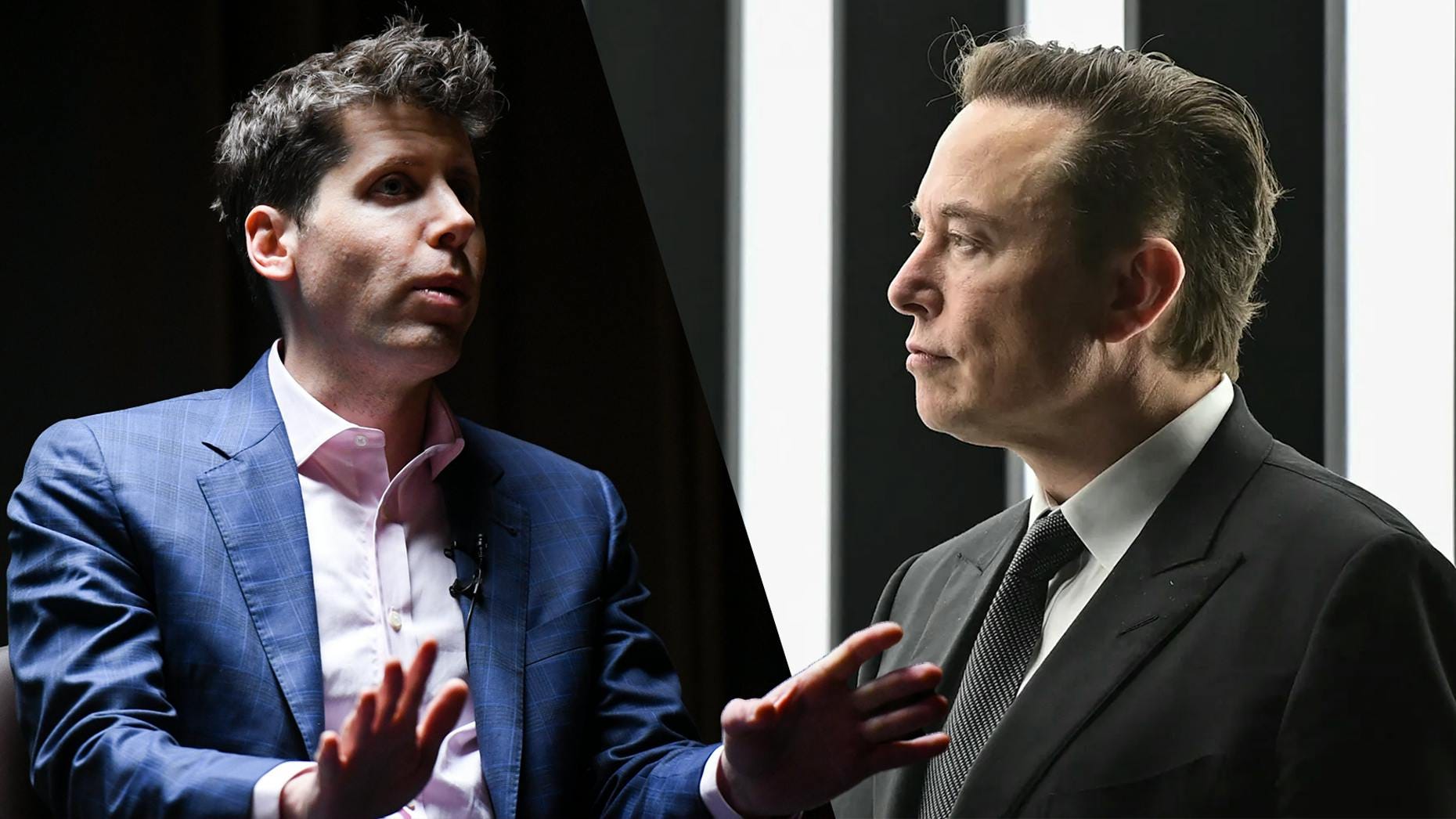
The development is also timely, coming on the kickoff on its jury trial with Elon Musk over the zigs and zags of its origin story journey from non-profit to for profit structure.
It’s Elon Musk at his best, in a manner of speaking, using litigation as a way to accomplish a whole series of objectives against his arch-nemesis OpenAI founder/CEO Sam Altman. While of course manuevering his own mega-AI IPO this June of SpaceX/xAI with a $1.75+ trillion valuation.
“The amended deal was designed to resolve legal questions that arose from OpenAI’s plans to sell AI products on Amazon Web Services.”
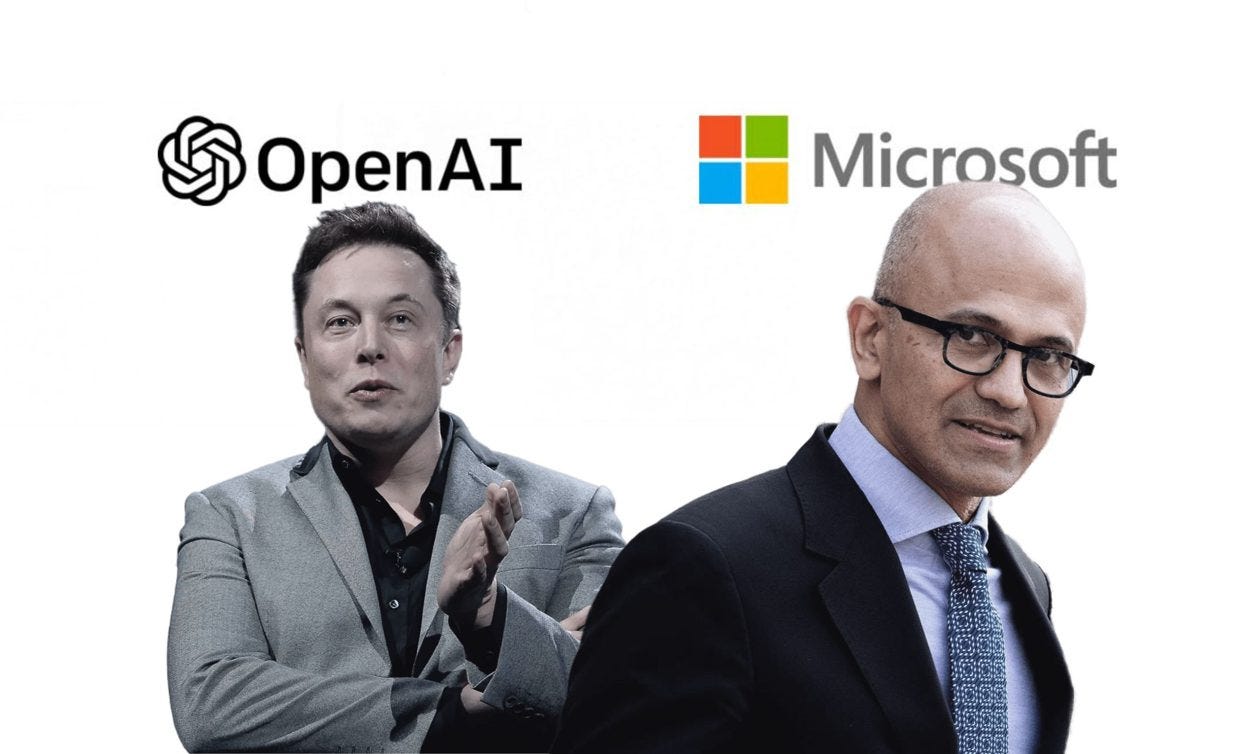
“Microsoft and OpenAI amended the terms of their arrangement, allowing OpenAI to sell its models on competing cloud providers, the companies said on Monday. The companies also scrapped a controversial clause in their deal that would have granted Microsoft a share of OpenAI’s revenue and certain IP rights up until OpenAI achieved “artificial general intelligence,” or AI on par with a human.”
Both sides gets key items they want:
“Microsoft will now keep getting a share of OpenAI’s revenue until 2030 regardless of whether the startup achieves AGI, the companies said. Microsoft will also retain the rights to use OpenAI’s models and products until 2032, but Microsoft’s rights to the IP will no longer be exclusive.”
“Microsoft will also stop sharing some of the revenue it makes from selling OpenAI models on Azure. Up until now, Microsoft shared 20% of the revenue from those sales with OpenAI, while OpenAI shared 20% of its total revenue back to Microsoft. OpenAI will keep sharing revenue with Microsoft through 2030, the companies said Monday.”
An important element is that Microsoft negotiated a change in its earlier agreement, where Microsoft takes a toll of revenues generated by OpenAI’s partnerships with other hosting companies like Amazon AWS. Previously, OpenAI had to host their models only on Azure servers.
OpenAI now has a $250 billion commitment on Microsoft Azure servers through the dates of their new deal. In exchange for this large commitment, Microsoft relinquished its exclusive right of first refusal (ROFR) for OpenAI’s cloud workloads. This is what allows OpenAI to pursue partnerships with other providers like Amazon Web Services (AWS) and Google Cloud.
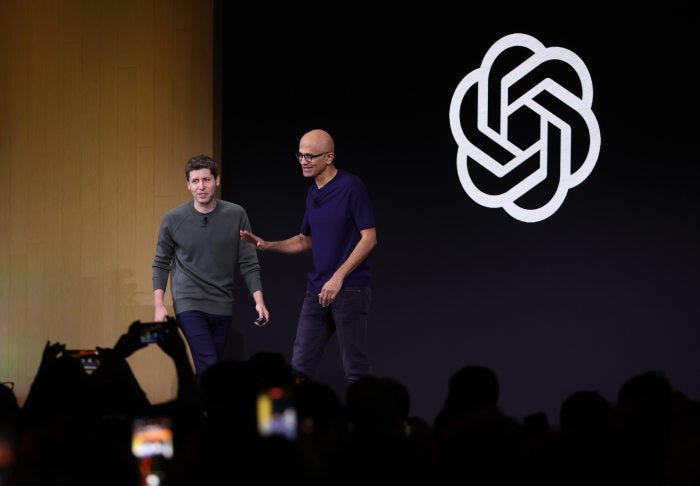
“The amended deal, which OpenAI CEO Sam Altman and Microsoft CEO Satya Nadella and their deputies hammered out over the last several weeks, was designed to resolve legal questions that arose from OpenAI’s plans to sell AI products on Amazon Web Services, according to someone briefed on the deal talks. The new agreement resolves those concerns by letting OpenAI sell its technology anywhere.”
“Once AGI is declared by OpenAI, that declaration will now be verified by an independent expert panel.”
“Microsoft’s IP rights for both models and products are extended through 2032 and now includes models post-AGI, with appropriate safety guardrails.”
“Microsoft’s IP rights to research, defined as the confidential methods used in the development of models and systems, will remain until either the expert panel verifies AGI or through 2030, whichever is first. Research IP includes, for example, models intended for internal deployment or research only. Beyond that, research IP does not include model architecture, model weights, inference code, finetuning code, and any IP related to data center hardware and software; and Microsoft retains these non-Research IP rights.”
“Microsoft’s IP rights now exclude OpenAI’s consumer hardware.”
I’ll discuss this development in separate posts. Back to the revsied Microsoft deal items from OpenAI’s perspective,
“OpenAI can now jointly develop some products with third parties. API products developed with third parties will be exclusive to Azure. Non-API products may be served on any cloud provider.”
“Microsoft can now independently pursue AGI alone or in partnership with third parties.”
“If Microsoft uses OpenAI’s IP to develop AGI, prior to AGI being declared, the models will be subject to compute thresholds; those thresholds are significantly larger than the size of systems used to train leading models today.”
“The revenue share agreement remains until the expert panel verifies AGI, though payments will be made over a longer period of time.”
“OpenAI has contracted to purchase an incremental $250B of Azure services, and Microsoft will no longer have a right of first refusal to be OpenAI’s compute provider.”
“OpenAI can now provide API access to US government national security customers, regardless of the cloud provider.”
“OpenAI is now able to release open weight models that meet requisite capability criteria.”
“This is going to be a fun week. First, Elon Musk and Sam Altman square off in a California court over the origins of OpenAI (for more details, see here). The final outcome probably won’t have a huge impact on the ChatGPT company—Musk’s chances of both winning the case and getting everything he wants from a victory seem unlikely, as we wrote here. No matter what happens, though, the courtroom antics should be entertaining. (Musk still has a chance of winning, to be clear).”
Not to mention of course quarterly results from most of the ‘Mag 7s’ up as well this week:
“And then on Wednesday, four of the biggest tech firms—Google, Meta Platforms, Microsoft and Amazon—are releasing their March quarter numbers after the market closes, likely within a few minutes of each other. (Coincidence, or conspiracy to bamboozle hapless reporters and analysts?) Apple follows on Thursday with its March quarter numbers.”
“Analysts expect Apple will deliver 15% revenue growth—similar to the previous quarter and a huge improvement on the single-digit growth (or declining) numbers we’ve been used to seeing from Apple in recent years. That will give retiring CEO Tim Cook one more chance to throw the word “record” around.”
“But it’s the Wednesday reports that are most important. The four companies reporting are spending a combined $600 billion-plus on capex this year, much of that to expand AI-related data center capacity, so the simultaneous reports will offer a valuable report card on the state of play.”
“That’s more true of the three big cloud firms—Amazon Web Services, Microsoft Azure and Google Cloud—which are renting out their servers for use by one or both of the major AI firms, OpenAI and Anthropic, along with a growing number of other businesses. In the fourth quarter, Google Cloud and Amazon Web both reported accelerating growth while Microsoft Azure reported a slight slowdown on a still-hot growth rate of 39%, due to a lack of computing capacity. That ensures all eyes will be on Azure’s growth rate this week.”
“But it’s not just about cloud growth. Investors have zeroed in on how Microsoft’s software business will fare in an AI-dominated world, putting the spotlight on the so-far relatively small number of subscriptions to its Copilot AI chatbot. Microsoft has revamped its Copilot teams so an update on Copilot subscriptions is highly anticipated.”
As a reminder, MarketSurge (by Investor’s Business Daily) is now a sponsor of the weekly show. All the charts you have been seeing in the videos and...
Also on the site Elder financial fraud is only going up. Maybe AI can help. (abnormalreturns.com) Noted personal finance writer Jonathan Clements is dying....
Podcasts Jim Dahle talks with William Bernstein about what it really means to “stop playing when you win the game.” (whitecoatinvestor.com) Steve Chen...