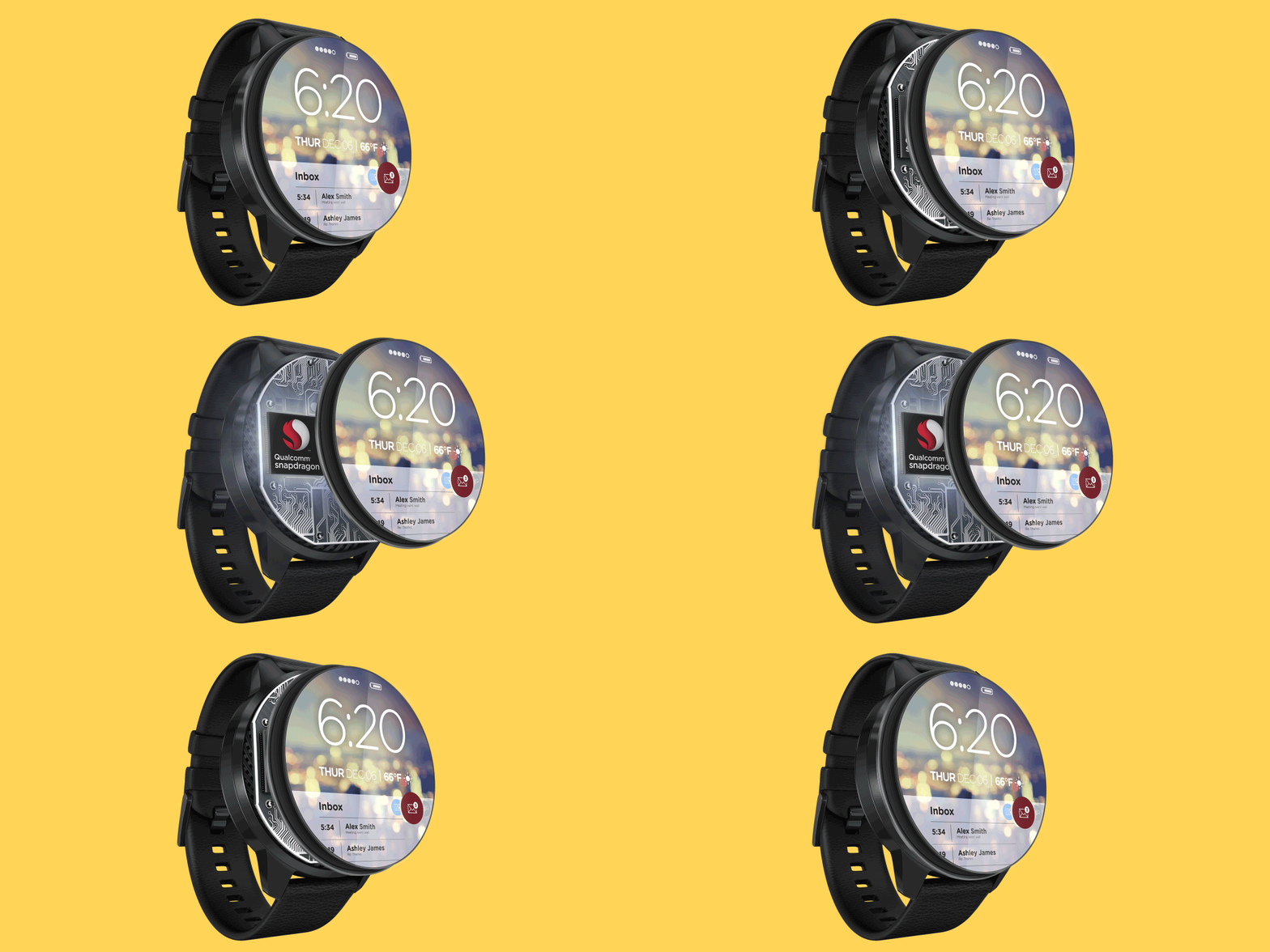
AI: Qualcomm's new AI Wearables chip. RTZ #1015

As I pointed out in one of my year-end pieces on what to expect this AI Tech Wave in 2026 around ‘AI Devices’, AI Smart Glasses, and ‘AI Wearables’ and other ‘Science Projects’, much remains to be desired.
In fact, there currently is a wide gap between the realities of the hardware and software to enable really cool AI Wearables, vs what has been available in the market.
Especially to make LOCAL AI device aspirations real at scale.
And with built-in trust and privacy capabilities.
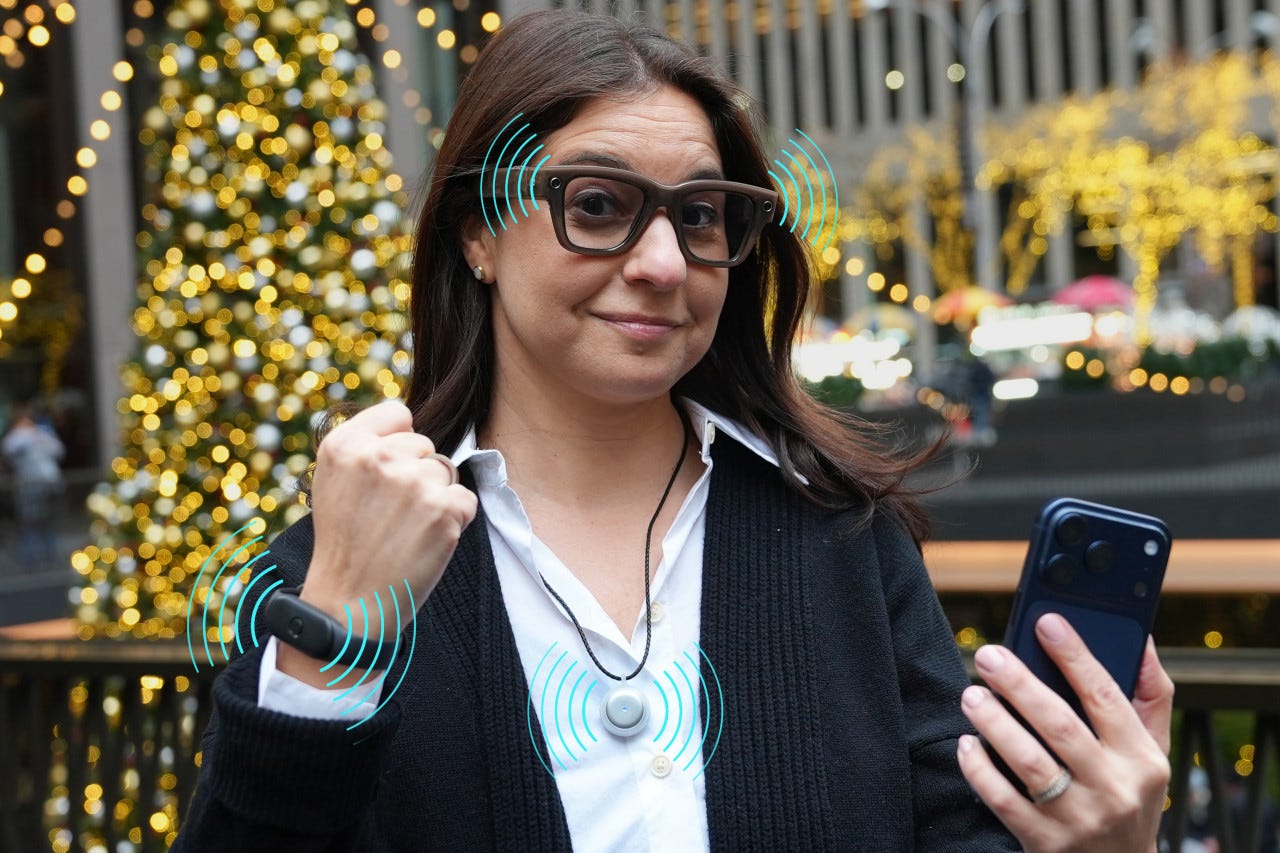
Despite the best efforts of incumbents like Apple, Google, Meta, Samsung, and recent entrants like OpenAI with their Jony Ive venture.
Much of what is possible is due to the efforts of chip vendors like Qualcomm, whose core offerings power the world’s smartphones and increasingly AI devices and wearables.
At the annual Mobile World Conference (MWC) in Spain this week, they and the world’s smartphone/device companies are laying out their plans for AI powered gizmos in 2026 and beyond.
And it’s notable what Qualcomm is about to roll out in the way of specialized AI optimized, wearable chips.
The Shortcut lays out the salient aspects of the new Qualcomm wearable chip in “Qualcomm’s Snapdragon Wear Elite is the biggest smartwatch chip upgrade in 3 years”:
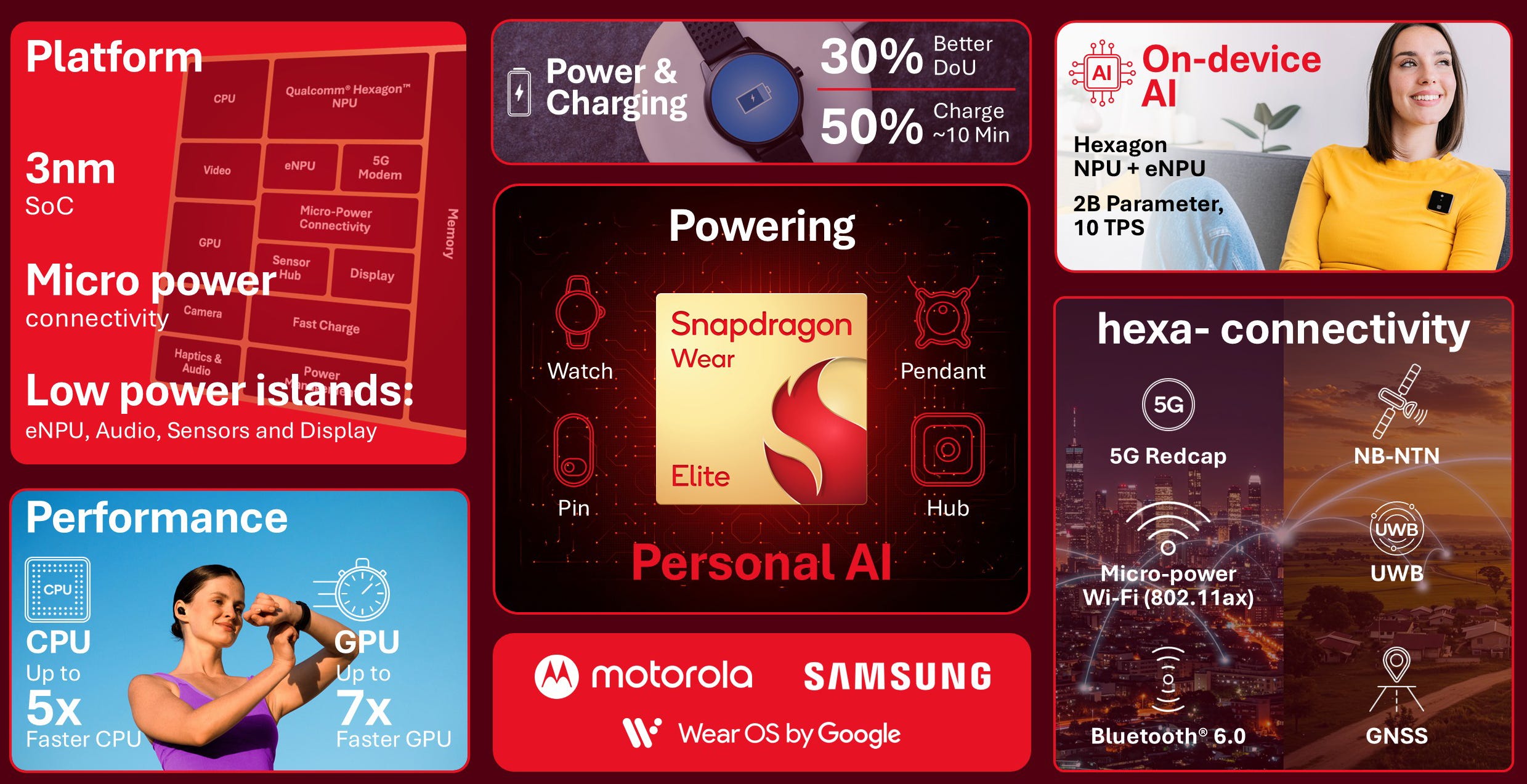
“Six things to know about Qualcomm’s new 3nm wearable platform that brings on-device AI, satellite messaging, and 5G to your wrist—”
“⌚ Qualcomm’s first new wearable platform tier in 3 years debuted at MWC 2026”
“First-ever NPU in a wearable chip, running AI models up to 2B parameters on-device”
“30% longer battery life and 50% charge in just 10 minutes”
“📡 Industry-first hexa-connectivity: 5G, Wi-Fi, Bluetooth 6.0, UWB, GNSS, and satellite”
“📱 Samsung, Google, and Motorola confirmed as launch partners”
“📆 First devices expected within the next few months”
“Qualcomm just dropped the biggest wearable chip announcement in years at MWC 2026 in Barcelona, and it’s going to change what you expect from the smartwatch on your wrist. The new Snapdragon Wear Elite is the company’s most ambitious wearable platform yet – and it’s not just for watches anymore.”
“The key takeaway is this: Snapdragon Wear Elite is designed to turn wearables from smartphone accessories into standalone AI-powered devices. Think watches, yes, but also AI pins, pendants, smart bands, and hub devices that can think for themselves.”
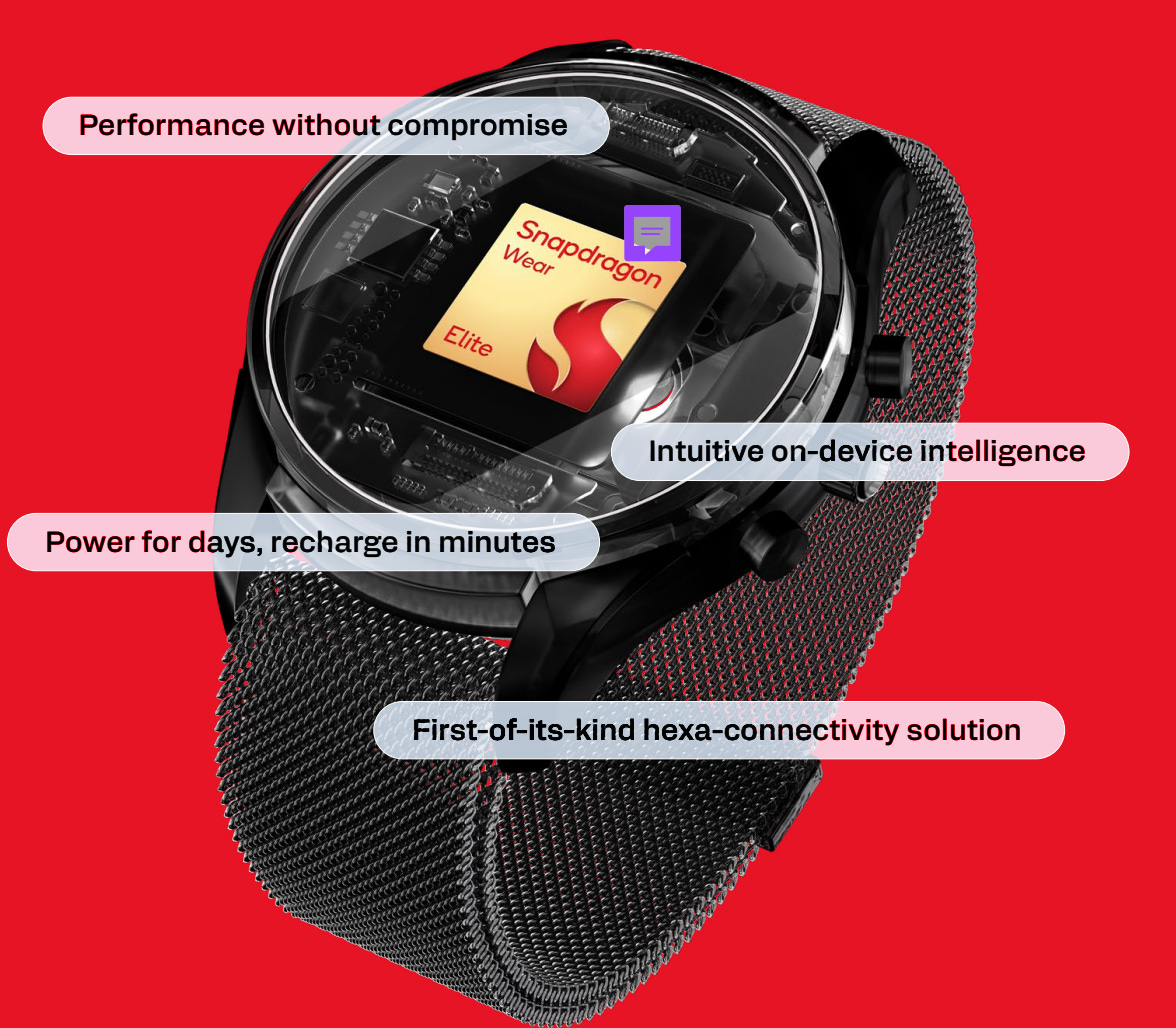
So it’s the first AI Wearable chip system outside the ones coming out of Apple, with its own Apple Silicon strategy across its various hardware platforms. To be available from global device OEM (original equipment manufacturer) partners like Samsung, Google, Motorola and others around the world.
The satellite connectivity feature is important due to increasing interest by companies like Apple, Samsung, Google and others. As I discussed a few days ago, the plan is to leverage low-orbit satellite broadband connectivity, from providers like SpaceX/Starlink, Amazon Leo, Globalstar and others.

In particular, item number 5 is particularly notable for what this chip makes possible in a wider array of AI Wearables beyond smart watches, independent of smartphones:
“5. It’s not just for watches – and Samsung is already on board”
“Qualcomm made it clear during my briefing that “the Wear Elite isn’t replacing the existing Snapdragon W5 lineup,” with Head of Cloud and Edge AI Product Management John Kehrli describing this additional premium tier “like having two swim lanes.” The W5 Gen 1 and Gen 2 will continue serving the mainstream market, while the Wear Elite targets next-gen premium devices.”
“And those next-gen devices will go well beyond traditional smartwatches. The platform is designed for AI pins, pendants, smart bands, and hub devices. It supports Wear OS by Google, Android, and Linux, giving OEMs flexibility to build whatever form factor they want.”

And there are notable global OEMs in the mix:
“The partner list is strong out of the gate. Samsung confirmed that the next-generation Galaxy Watch will use Snapdragon Wear Elite, calling it “an even more holistic wellness companion.” Google’s Wear OS chief said the platform delivers “the performance, battery life and connectivity essential for the next generation of Wear OS.” And Motorola teased that Wear Elite will help them push forward with their “Project Maxwell” AI companion concept from CES.”
“One caveat worth noting: while the chip does include camera integration (with Qualcomm Spectra ISP supporting dual CSI 4-lane cameras), the imaging capabilities are geared more toward general wearable use cases than high-end smart glasses. So I don’t expect this to power the next Meta Ray-Bans, which need top-tier camera sensors. For AI glasses, Qualcomm has separate AR1 and AR1+ platforms in its portfolio.”
They then go onto outline the specs and the broader perspective on the new Qualcomm offering:
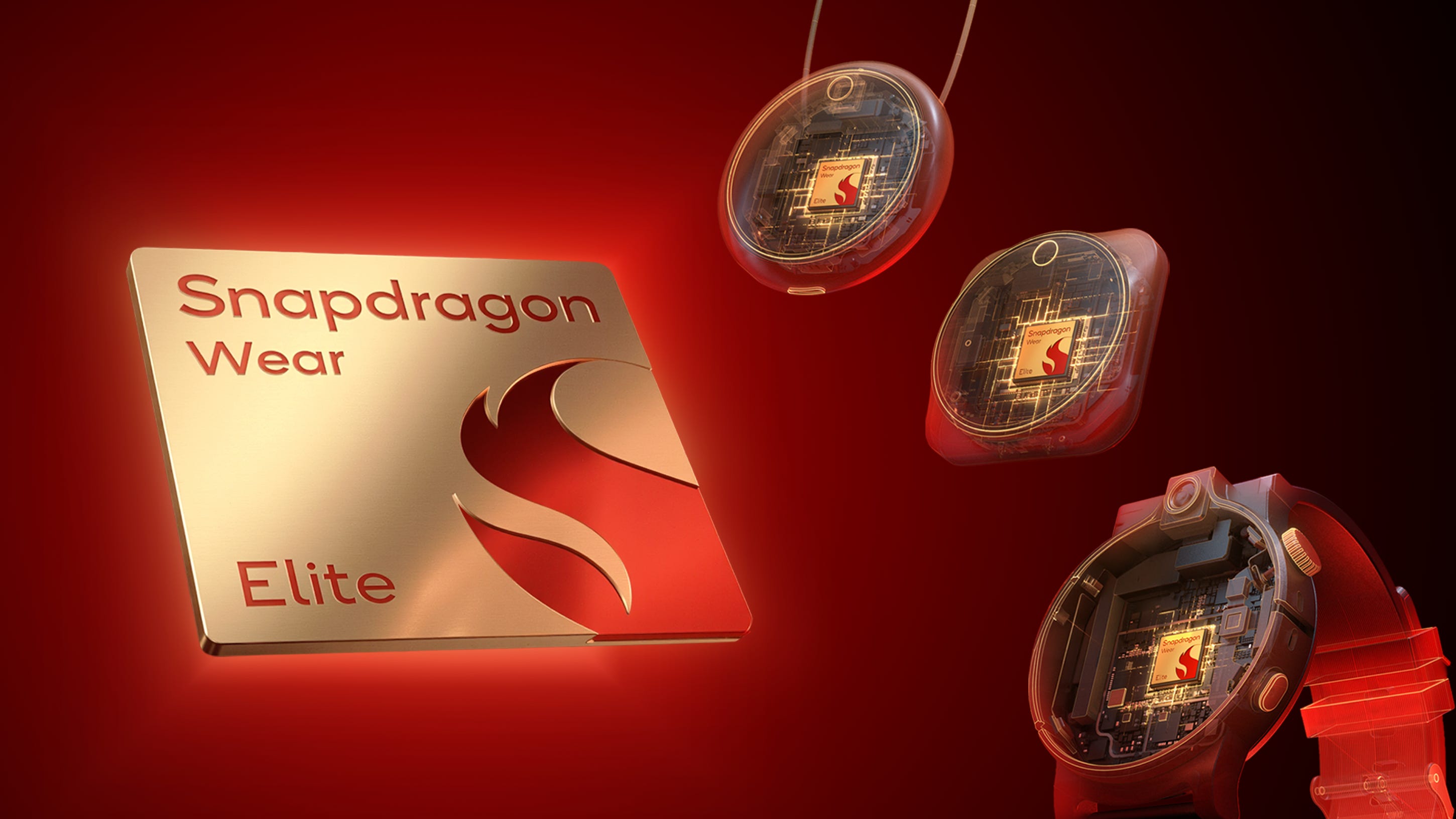
“Snapdragon Wear Elite key specs
Process: 3nm
CPU: Up to 2.1 GHz (1+4 core config)
GPU: Adreno A622, 1080p@60fps
AI: Hexagon NPU + eNPU, up to 2B parameters
Memory: LPDDR5, 6,400 MHz, 16-bit
Storage: eMMC 32GB
Cellular: 5G RedCap (Rel-17), LTE TDD/FDD
Wi-Fi: Wi-Fi 6 (802.11ax), 2.4/5/6 GHz
Bluetooth: 5.3 + Bluetooth 6.0
Location: NB-NTN, GPS, GLONASS, Galileo, BeiDou, QZSS
UWB: Yes
Camera: Qualcomm Spectra, dual CSI 4-lane
Security: Qualcomm TEE 5.35
OS Support: Wear OS, Android, Linux, Free RTOS
Partners: Samsung, Google, Motorola”
“Snapdragon Wear Elite outlook”
“The Snapdragon Wear Elite represents a genuine inflection point for wearable technology. For years, smartwatch chips have been an afterthought – repurposed mobile silicon squeezed into a smaller form factor. Qualcomm is now treating wearables as a first-class AI computing platform, and the specs to back it up are here. The real test will be how Samsung, Google, and Motorola translate this silicon into devices you’ll actually want to wear every day.”
The whole piece is worth a full read, especially on the six key differentiating features of the Qualcomm Snapdragon Wear Elite SoC (system on a chip).
Apple is likely on a similar path with its own Apple Silicon SoCs for its wearable portfolio of products.

And we should expect the major AI Wearables companies like Apple, Google, Samsung and others, as well as the new major entrants to the space like Meta, OpenAI and others, to all incorporate some versions of these new wearable chips in their new products to come this year and next.
The Qualcomm chip hints at the types of new AI functionality that can be made real at scale in hundreds of millions of units. And that’s a lot more tangible than the ongoing scifi driven aspirational expectations around AI that develop in the vacuum of real hardware and software.
Now there are tangible breadcrumbs to the AI Wearables to come soon this AI Tech Wave Stay tuned.
(NOTE: The discussions here are for information purposes only, and not meant as investment advice at any time. Thanks for joining us here)


