“If AI were a candidate for political office, it would be losing in a landslide.”
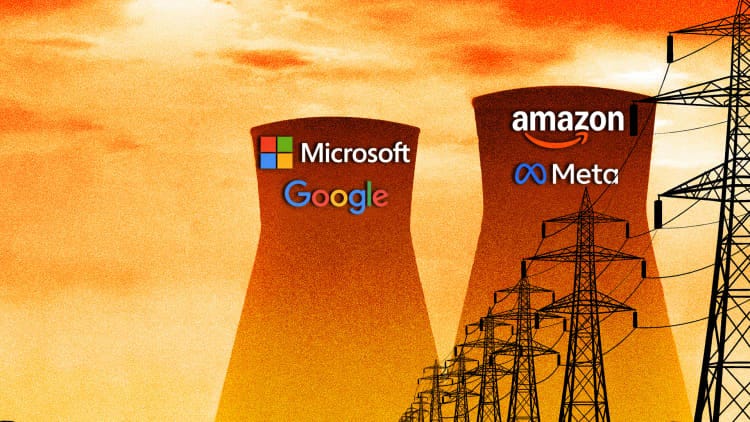
“Why it matters: The AI hype cycle would have you believe the technology is inevitable. But AI backlash is growing, as people worry it will steal their jobs, jack up electricity rates and further enrich the wealthy, all while hurting the environment.”
“State of play: A commencement address went viral this month after Florida real estate executive Gloria Caulfield said “artificial intelligence is the next Industrial Revolution,” sparking a chorus of boos from the crowd.”
“The speaker could have avoided the jeers had she checked the latest polls: Only 18% of young people ages 14 to 29 say they feel hopeful about AI, according to a recent Gallup survey.”
“The disdain spans generations and political parties. An Economist/YouGov poll released this week showed over 70% ofAmericans think AI is advancing too quickly, with 68% of Republicans and 77% of Democrats saying it’s moving too fast.”
“Other YouGov polling shows negative views of AI rising from 34% three years ago to just over 50% now.”
The other part of the narrative is that AI industry managements aren’t addressing this state of affairs head on:
“Between the lines: AI executives aren’t doing much to quell the backlash, which is already showing signs of slowing the industry. Some of them appear unfazed — or unaware.”
“In previous conversations with Axios, AI executives at multiple frontier AI labs were surprised by the negative opinions. They see AI as just as inevitable as the rise of the internet.”
“Asked about backlash to AI, Superhuman Mail CEO Rahul Vohra — whose company makes an AI-powered email assistant — seemed unfamiliar with the premise of the question. After hearing about poor polling around AI, he responded: “We don’t really see that.”
So there’s that. And the disconnect it typical of tech waves in the way past, like automobiles and industrialization. Recent computer tech waves of course had a more positive initial disposition. The AI wave disconnect distinctly stands out as a result.
“What they’re saying: While the tech underlying AI is here to stay, “What is not inevitable is that these technologies will be embedded in every aspect of our lives, become indispensable, or replace humans,” Dr. Avriel Epps, assistant professor at University of California, Riverside, said in an email to Axios.”
“Nothing in the future is inevitable and no single person, company, or group gets to decide what will happen in the future.”
“Threat level: Negative AI sentiment could become a financial liability for AI labs if it continues to curb access to their most valuable resource: compute power.”
“A record number of data centers, which provide the compute AI companies use to answer user queries, were canceled in the first quarter of 2026 amid resistance from communities, per Heatmap Pro data.”
“Public pushback is emerging as a binding constraint, particularly around data center buildout,” Morgan Stanley analysts wrote in a note about market risks associated with the midterms.”
“These data center setbacks are “sapping confidence” among investors, according to a note investment bank Jefferies sent to clients.”
Notably, this current AI distaste is more an American take, not a global one for now:
“Reality check:
“Globally, opinion is more positive, with the share of respondents expecting AI to do more good than harm rising to 59% in 2025 from 55% in 2024, according to Stanford data.”
“The bottom line: The AI industry has a serious PR problem that threatens to inhibit the rapid growth that its leaders have taken for granted.”
My take is that the sentiment will shift slowly as AI usefulness becomes more clear on the consumer side. But this will take longer than anyone would like. AI does not have the immediate consumer appeal of the most recent tech waves of the last three decades. It’s mostly an enterprise win for now.
And that’s enough for now since it’s worth trillions.
In the meantime, young people are still trying to adjust to the pros and cons of AI. This piece by a Stanford student graduating as one of the first post-ChatGPT generation, describes the visceral reality of AI at Stanford today, among his peers.
Good morning … Stocktwits is presenting the second annual Cashtag Awards on May 4 at the NYSE. The Cashtag Awards celebrate the innovators, game-changers,...