Earlier this week I wrote about how Chinese developers at tech/AI companies large and small were being ‘DeepSeeked’ in reverse, a year after DeepSeek turbo-charged US LLM AI innovations with its open source improvements in a variety of underlying AI technologies and approaches.
This time it was the open source AI Agents OpenClaw innovations, now a part of OpenAI, that was the catalyst the other way. The bigger takeaway from the piece is that China’s tech/AI developers are creating new open source and proprietary AI applications and services that are likely uniquely different than the ones created here in the US.
Which leads to a challenge for US institutional and venture investors, who have been increasingly restricted by US government authorities from investing directly in China technology companies, public or private, large or small. But it seems like a number of them are finding legal ways to do the same overseas. That is the Bigger Picture I’d like to unpack this Sunday.
It’s an opportunity potentially worth trillions to US companies and investors. As the governments try and ardently perform their global political theater on both sides.
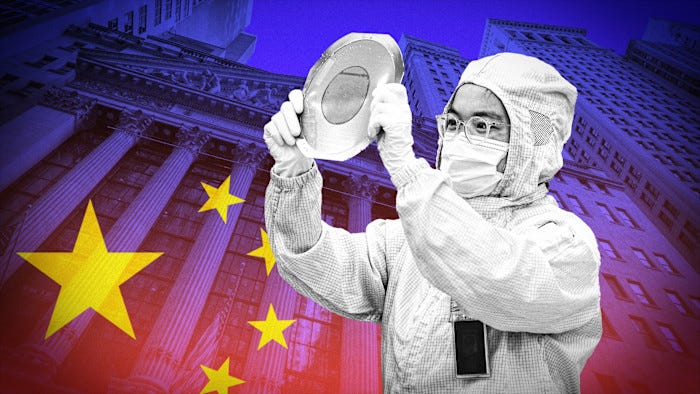
“US investors are increasingly asking Asian fund managers to carve out special vehicles so they can invest in the region without falling foul of American investment restrictions on Chinese technology. American investors held $361bn of Chinese stocks and bonds as recently as the end of 2024, according to the US Treasury, but rules introduced last year threaten large fines and imprisonment for those invested in certain high-tech Chinese sectors, such as advanced semiconductors, quantum computing and artificial intelligence. “
This means foregone opportunities in a world where China is today the second largest global AI developer AND market after the US. And poised to be number one over the next decade, with its world leading manufacturing ecosystems, and relentless competitive energies in the country to innovate on new technologies both at the tactical AND strategic levels. This means opportunity costs for US investors through a critical period:
“Several US states have also brought in laws to restrict their public pension funds from investing in Chinese companies. The restrictions are in response to a growing AI arms race between the US and China and concern within Washington that American investors are helping Beijing develop cutting-edge technologies.”
Case in point the open source AI Agent innovations being catalyzed by OpenClaw currently in China discussed above.
So there is natural demand for legal work arounds:
“While asset managers have previously received interest in “ex-China” funds, private equity and hedge fund managers in Singapore and Hong Kong now report demand from US institutional investors for so-called parallel funds. These are replicas of existing funds that exclude certain Chinese sectors.”
“In the past 12 months, an increasing number of asset managers were offering the workarounds in response to investor requests, they said. “US investors have become highly sensitive to China risk,” said Kher Sheng Lee, co-head of Asia-Pacific at the Alternative Investment Managers Association, which represents more than 2,000 hedge fund managers globally, with combined assets of over $4.5tn. “They still want the Asian growth story but now demand structures that limit spillover.”
And it’s accelerating, with bespoke architectures being created:
“Momentum is building,” he added. “Managers are repurposing familiar fund tools, like side pockets originally built for illiquidity, to manage geopolitical friction.” Side pockets are typically set up for clients who want to strip out harder-to-sell assets from a fund’s portfolio and increase their liquidity. Now US investors specify Chinese companies and sectors they want excluded. “These requests from US investors are coming up more and more often, especially for areas like semiconductors,” said a Singapore-based manager of a tech-focused fund. “They are looking to take out their exposure to the most sensitive companies.” Lee added: “The red lines are sharpening: advanced chips, AI and quantum are out. National security considerations are now a core investment filter.”
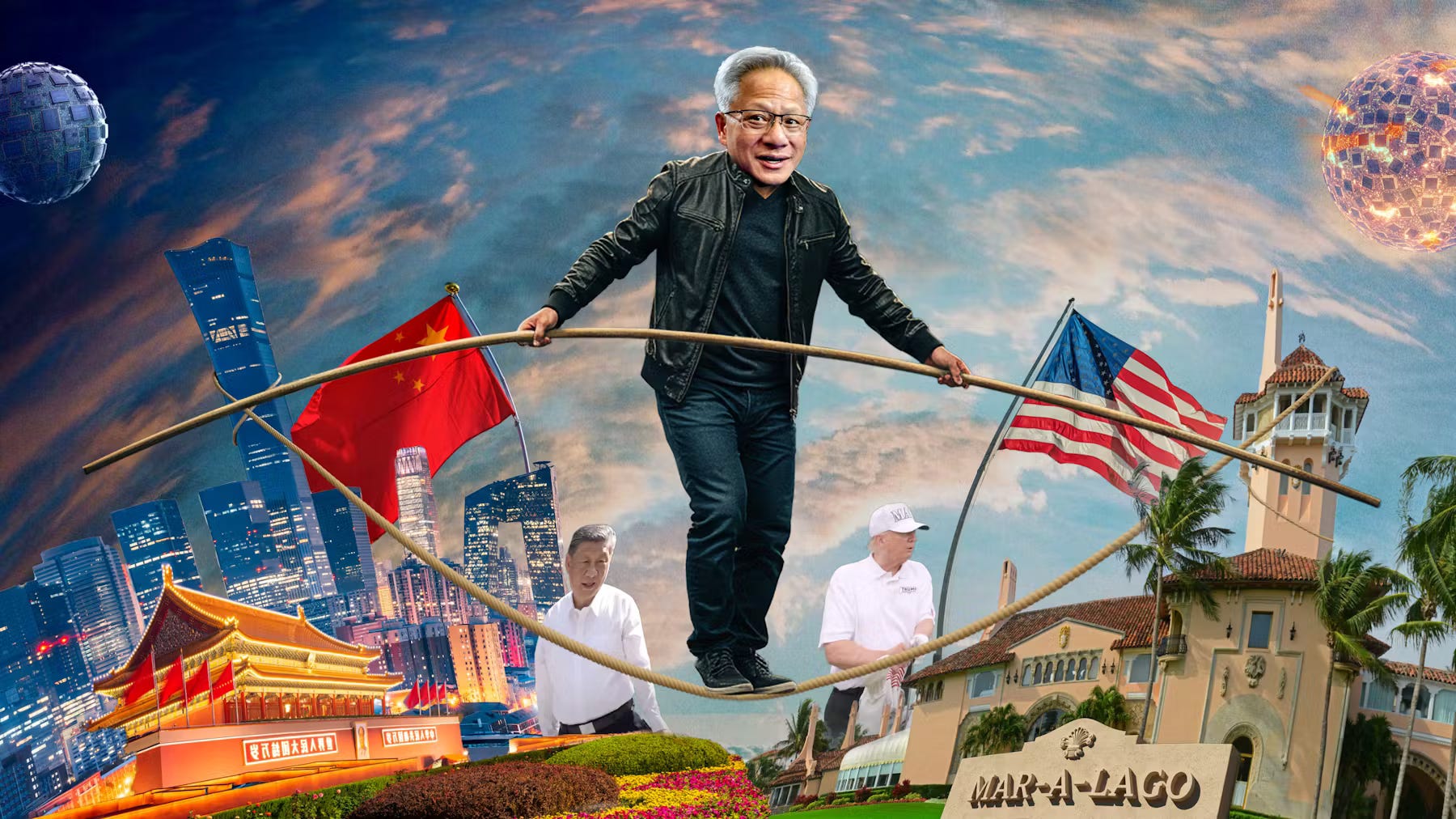
A bidirectional reality, as seen with how the US’s ‘crown tech jewel’, Nvidia, and its founder/CEO Jensen Huang, is working to ‘balancing’ between the two hard political realities.
“Asset managers said the requests were driven by compliance staff at the US investors, which included pension funds, endowments and family offices, rather than the investment teams. “US regulation is the biggest driver of this,” said one Asia-based adviser who has worked on deals in which private equity firms have allowed US pension funds to exclude certain Chinese companies. “The most common solution has been for the manager to set up two separate funds,” the person added.”
The US regulations curtailing these investments have crossed administrations:
“One that will have exposure to the entire regional strategy and another that will have exposure to the entire region but excluding the relevant country.” Under rules drawn up under former president Joe Biden, Washington in 2025 imposed civil and criminal penalties on US entities that invested in Chinese companies involved in semiconductors, quantum computing or AI systems that could be used by China’s military. The civil and criminal penalties include fines of up to $1mn and prison terms of up to 20 years.”
“This led to many US investors cutting back or pausing new investments in China, while several Silicon Valley venture capital firms pre-emptively separated their Chinese entities before the rules came into effect. Recommended US-China relations US concludes Alibaba and BYD have links to Chinese military. Since then, President Donald Trump has signed into law more significant powers to restrict US investments in Chinese technology companies, which has further led to investors seeking workarounds. “
The whole piece is worth reading for additional details.
But the Bigger Picture to take away this AI Tech Wave is tech/AI innovations are truly global. And they’re bigger than most of the tech waves that have come before.
So it’s important that the US figures out a way to ‘thread the needle’ with China, on cross-investments and cross-development, while catering to national security imperatives.
Perceived or Real. Sooner the better.
While the various players find their own way through the high friction thicket. Stay tuned.
(NOTE: The discussions here are for information purposes only, and not meant as investment advice at any time. Thanks for joining us here)