
AI: Weekly Summary. RTZ #948


-
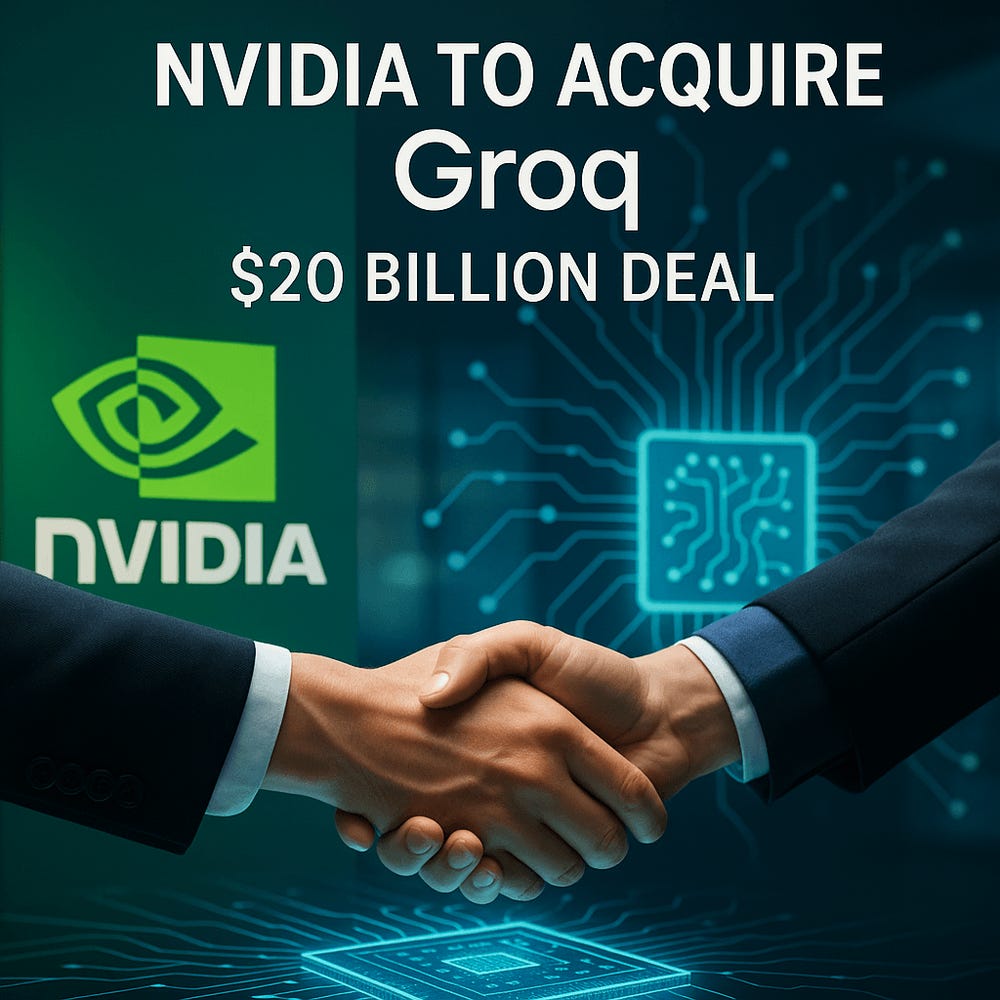
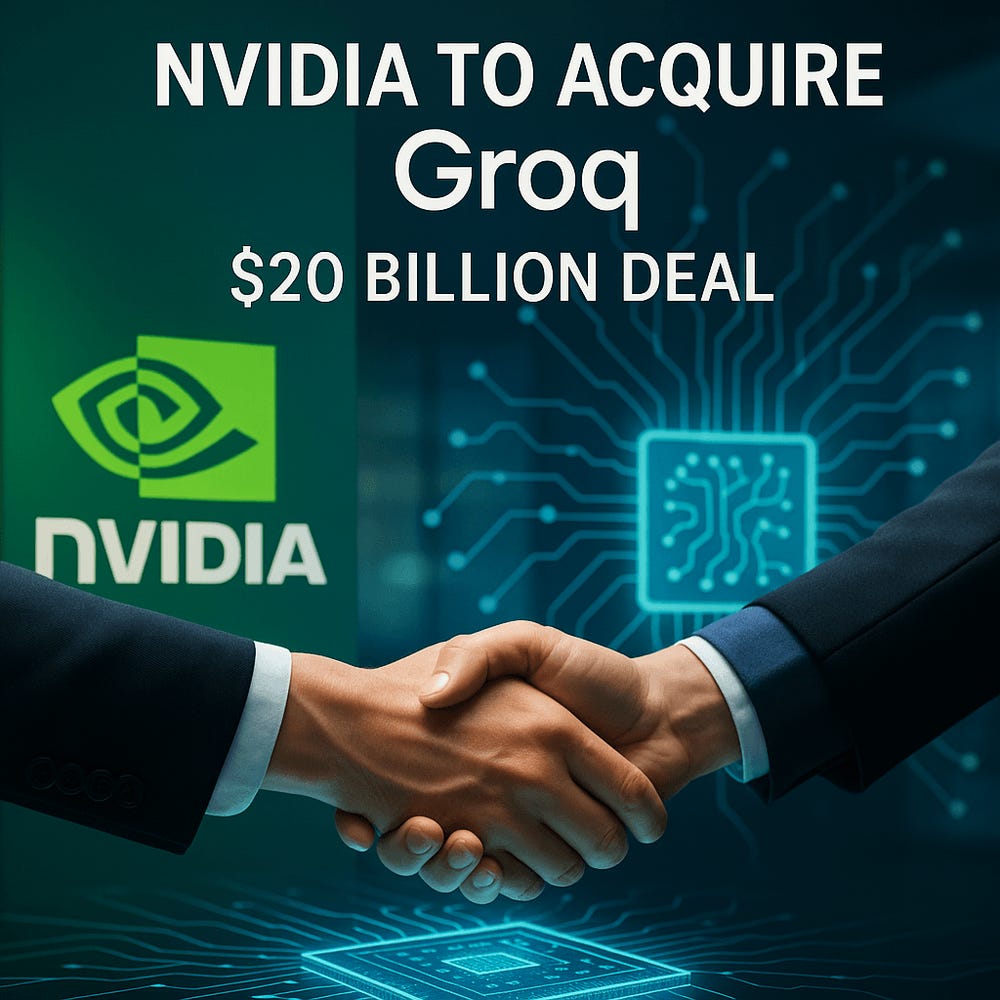
Nvidia’s AI Inference startup Groq deal: Nvidia’s $20 billion AI ‘acqui-hire’ licensing deal with AI Inference startup Groq (no relation to Elon Musk xAI’s Grok AI), is yet another in a chain of similar multi-billion dollar deals this year. These include Microsoft/Inflection, Google/CharacterAI and Windsurf, Meta/Scale AI and many more. The deal helps Nvidia shore up its formidable software and hardware mosts vs upcoming competition from AMD, its own top customers, and a host of AI chip startups globally. The founders of Groq and key employees are slated to join Nvidia, while Groq continues as an independent company. In that way, it’s particularly similar to Meta’s $14 billion deal with Scale AI. Nvidia’s founder/CEO Jensen Huang has a good track record of small and large acquisitions and partnerships to buttress its formidable array of AI Infrastructure assets. Expect this trend to continue for Nvidia and its peers into 2026. More here.
-
Google races on with Gemini 3 Flash: Google continued its lead with Gemini 3, releasing a smaller, more efficient Gemini 3 Flash with plans for a broad, global rollout early next year. It’s meant to ‘strike a decisive blow against OpenAI and others’, with a ‘faster, cheaper model across the Google ecosystem’. The model is optimized for ‘multimodal planning and reasoning’ capabilities, including the ability to watch videos, look at images, listen to audio and read text, while turning those inference queries into data and results for mainstream users. The model also leverages Google’s vertical AI infrastructure stack with its own TPU chips. That provides Google an edge vs competitors that are more AI compute constrained for now going into 2025. Next year of course will see a few more gigawatt AI data centers coming on line, potentially alleviating the compute shortage for all competing LLM AI models. More here.
-
A hard race for AI Devices in 2025: It’s been a hectic year for AI devices with not that much to show for it thus far. That is a growing media consensus for now, notwithstanding optimism for 2026 and beyond. The big one next year of course is the ‘portfolio of AI devices’ being launched by OpenAI next year in collaboration with Jony Ive, after the $6.5 billion merger earlier this year. Also up are Apple’s AI power Siri devices and platforms, as well as Amazon Alexa Plus. Not to mention similar offerings by Google. Another big area are AI Smart Glasses from Meta, Google, Apple, Amazon and others. As well as the general growing category of AI Wearables. Apple is said to be planning cameras on its formidable Airpods platform. And of course a plethora of AI voice chatbots delivered via hundreds of millions smartphones globally. So a lot to look forward to despite a slow start in 2025. More here.


-
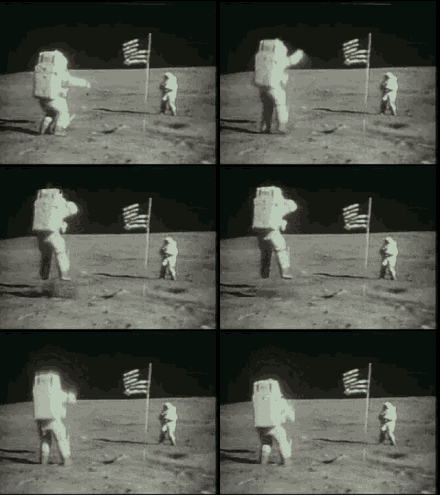
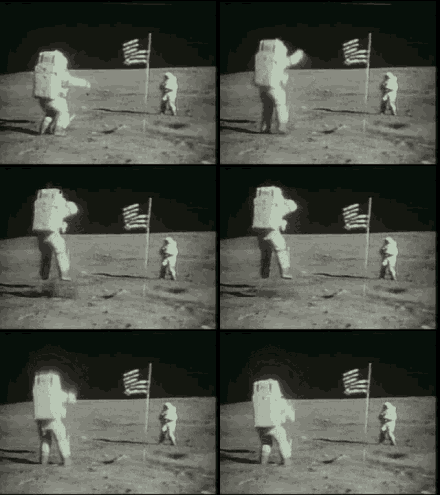
AI Race rivals the Real NASA led Space Race: Big tech Mag 7 and OpenAi are already committed to investing over $400 billion in 2025 alone, more than the $300 billion it took in 2025 dollars for the US and NASA to land two men on the moon in 1969 from 1958. That was a geopolitical US vs USSR ‘space race’, much like the US vs China ‘AI Space Race’ today. The difference being the lack of a clean objective to land a human on the moon. AGI is a lot more fuzzy end point, and thus an infinite game vs the finite game of the actual Space Race. And the US landed a total of 12 men on the moon by 1972, and none since for over half a century. It’s useful to consider that the US has spent over $2 trillion in current dollars on thousands of NASA projects manned and unmanned in 67 years from 1958 to 2025. That compares to the $1.4 trillion committed by OpenAI alone from now through 2030. With general rewards lagging the investments. More here.
-
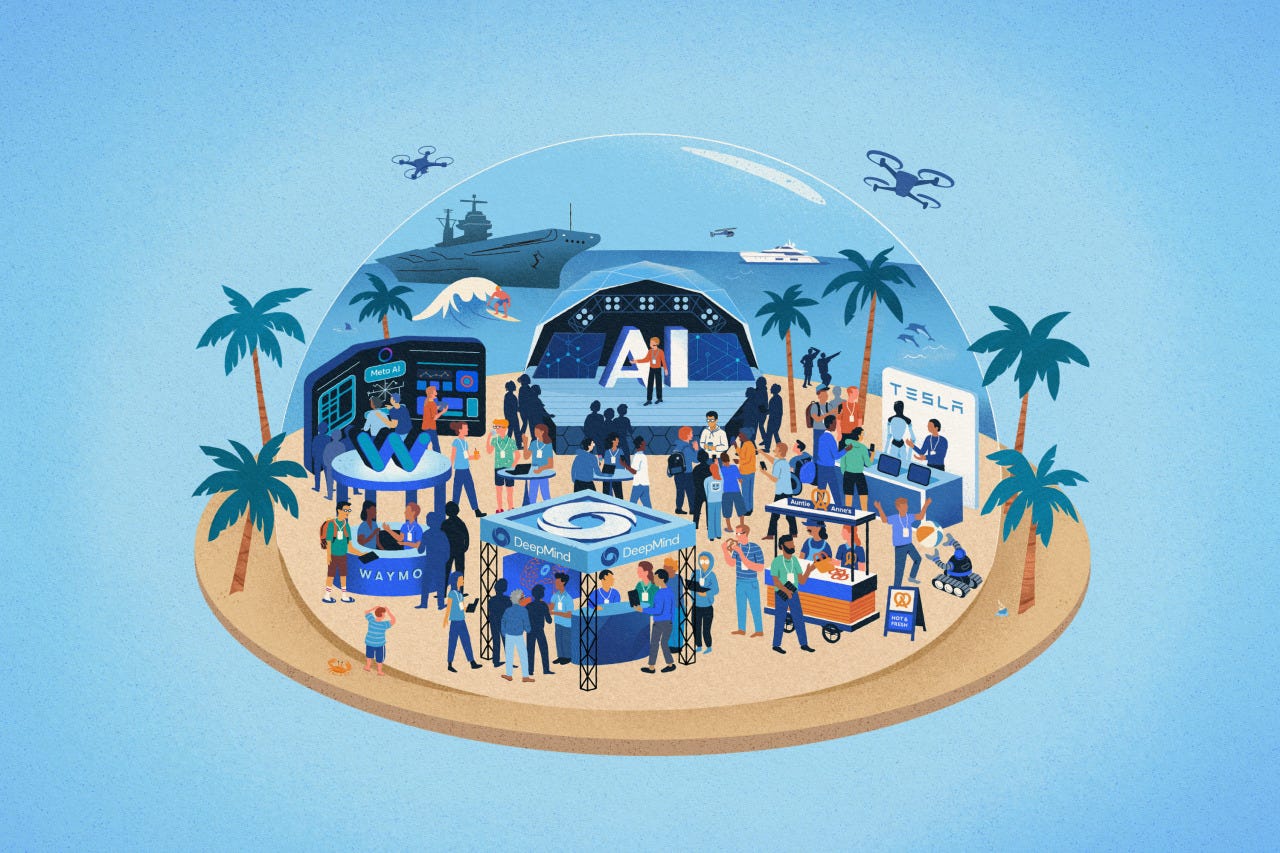
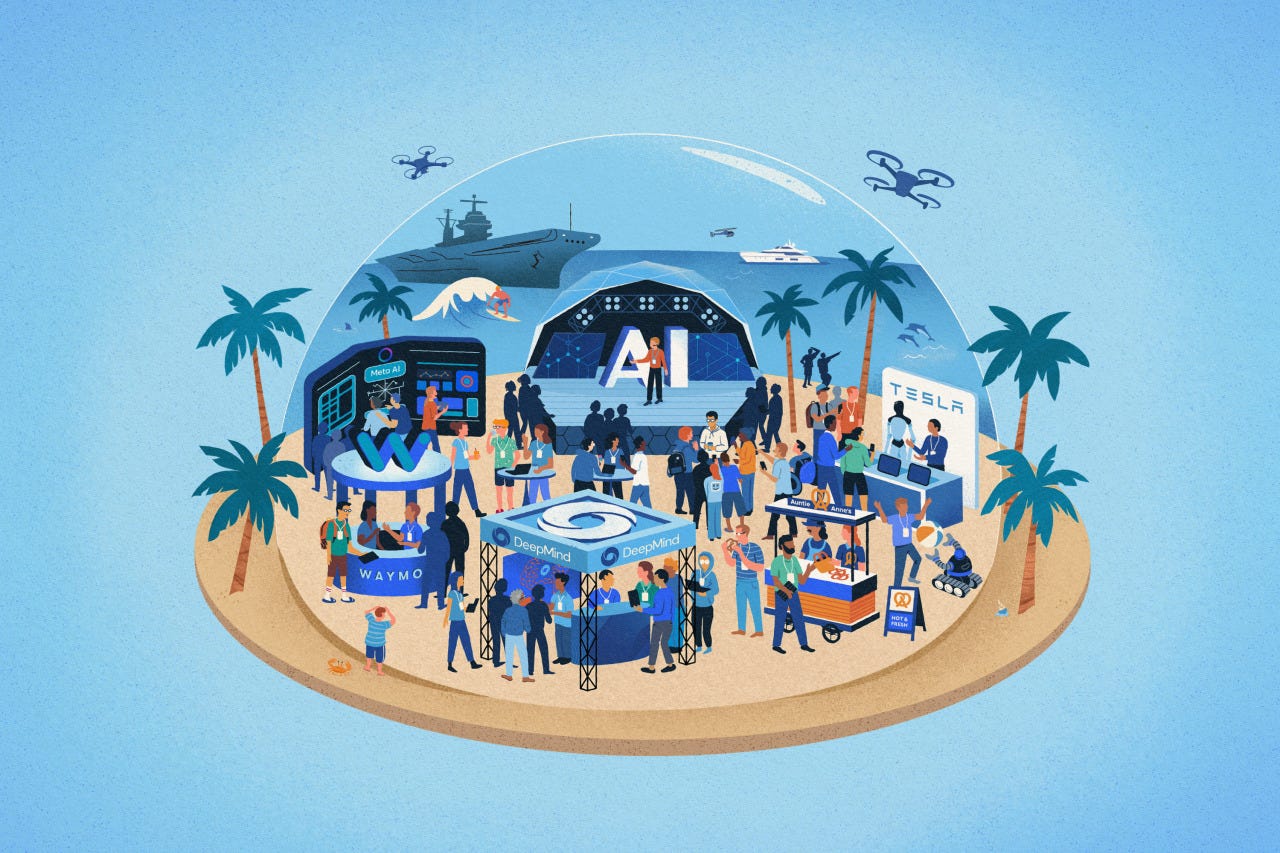
Quite the AI surprises in 2025: The NeuroIPS AI 2025 conference in San Diego this month offers quite the look back on 2025 for the AI Tech Wave. Five big surprises from my perspective included Meta’s AI Hiring Dash to build beyond Llama, China’s leadership in open-source AI, Google’s Gemini comeback, OpenAI’s AI gauntlet and year-end ‘Code Red’, and of course AI spending offsetting GDP slump due to tariffs. And those were just the bigger ones. Others include the mad dash across 50 states to secure Power for the Gigawatt AI Data Centers through a thicket of local and state regulations, including Federal focus against it. And of course the modest abatement of AI doomer fears vs AI FOMO to invest ahead of demand. Not to mention the growing rush to fund AI Data Centers in Space. More here and here.
Other AI Readings for weekend:
-
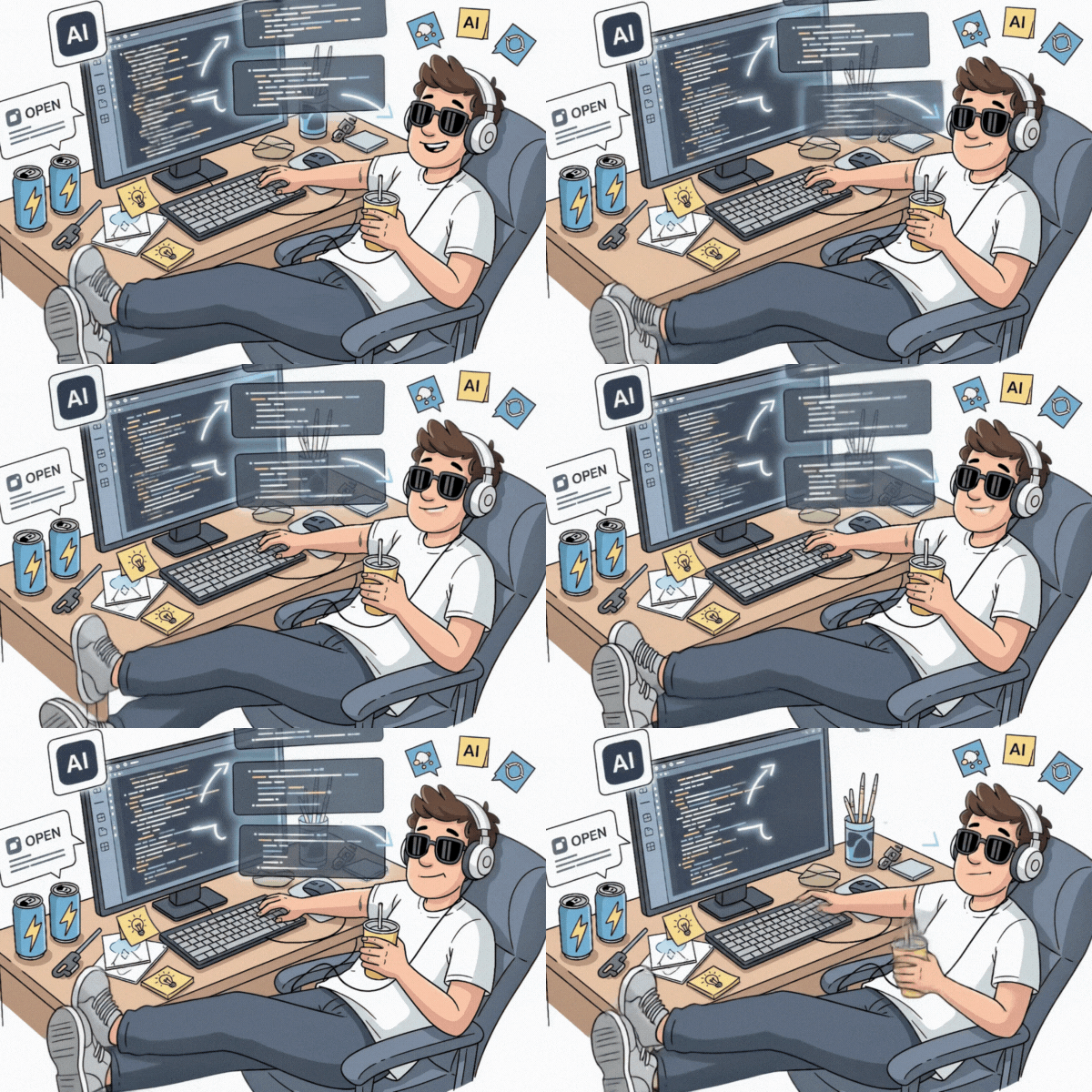
AI guru Andrej ‘Vibe Coding’ Karpathy’s 2025 AI software overview out. More here.
-
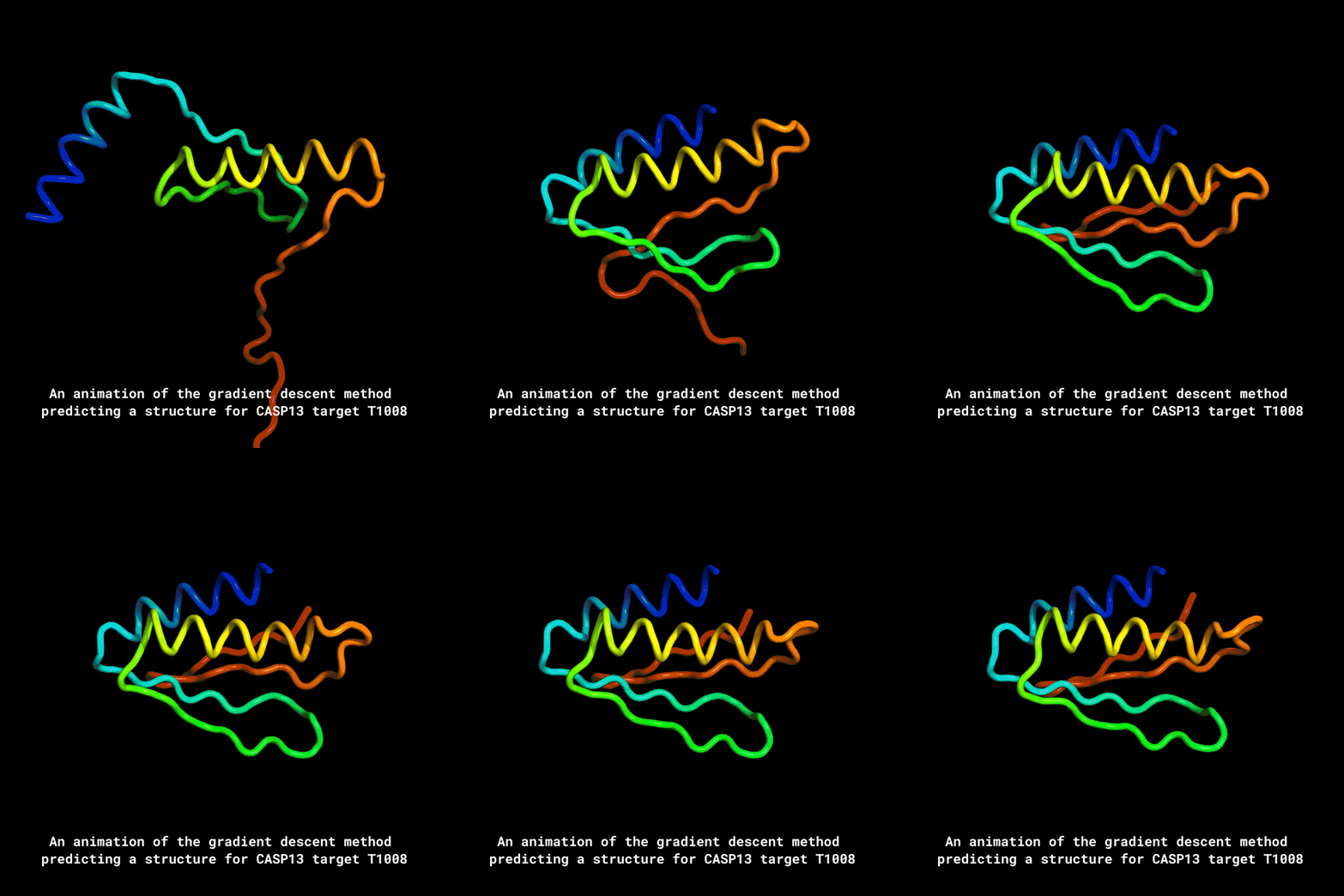
Google Deepmind VP of Research on long-term Alphafold projects. More here.
(Additional Note: For more weekend AI listening, have a new podcast series on AI, from a Gen Z to Boomer perspective. It’s called AI Ramblings. Now 34 weekly Episodes and counting. More with the latest AI Ramblings Episode 34 on AI issues of the day. As well as our latest ‘Reads’ and ‘Obsessions’ of the Week. Co-hosted with my Gen Z nephew Neal Makwana):
(NOTE: The discussions here are for information purposes only, and not meant as investment advice at any time. Thanks for joining us here)