Markets at a Crossroads

Here’s a preview of what we’ll cover this week:
-
Macro: Powell Agrees To An Expanding Economy; Weaker Dollar Is A Markets’ Tailwind
-
Markets: Meta: Non-Consensus Alpha; Microsoft Was Misunderstood; Amazon: A White Knight For OpenAI?; Winner of CapEx Arms Race?; WSJ – The Contrarian Signal For CoreWeave
-
Lumida Curations: Tariffs: Industrial Comeback or Hidden Consumer Tax?; Rebuilding the Arsenal-The $1.5T Push; The Simple Hack For Better Sleep
Spotlight

This week, we had an exciting bit+bips podcast with Charles Edwards talking about Gold’s phenomenal rise in the last year, and where it goes from here.
Charles believes Gold has 5-10 year bull run every few decades, where it outperforms equities easily.
I had a contradicting opinion – $5K was a nice round number for Gold, and it’s usually around round numbers when markets re-assess the asset.
We saw this in Nvidia, where it sold off to $4.5T after becoming the first company to a $5T valuation.
The prediction on Gold turned out correct this week. It is now trading at approximately ~$4,900, down about 15% from its high.
We also talk about the geopolitical situation, bitcoin’s lag, and how rate cuts can impact markets.
Watch the full show here.
When To Have Paper Hands

Gold dipped 9.8% on Friday.
Recent buyers in Gold are “paper hands” or momentum chasers, and now are trapped buyers.
They got a dose of reality and are rushing to exit.
If you are owning momentum, you want to have paper hands. The key is detecting and participating in early momentum.
If you are a quality value investor, you need strong hands while your asset is mispriced or you will be shaken out.
Paper hands are a form of mental flexibility. Diamond hands are a form of conviction.
If you know the asset and have a concept of intrinsic value, choose diamond hands.
Gold is a momentum idea. There is no valuation framework. The gold run has out paced ‘dollar debasement’ drastically.
So, it is a momentum and crowd idea.
You want to be paper hands there.

What we see is a classic intermediate top in Gold.
After that, we need to re-assess. Price targets don’t make sense in our view. It’s better to ‘re-assess’ with new information in the future.
Price targets create a false sense of precision. The world can unfold in many paths. The actions of real world actors matter – Warsh nomination, Trump’s action in Iran, dealings with Canada, China’s bid for Gold…
What we can say now is that the commodity rally needs to reset.
Note: The gold rally and international stock rally are both part of the same meta trade – fading U.S. assets. It’s reasonable to expect international stocks to pull back here as well (although we expect they will continue to outperform U.S. assets).
We also saw this week that Microsoft tanked 10% on news that 45% of its backlog is linked to OpenAI related agreements. The market is skeptical about Mr. Altman’s ability to honor $100 Bn+ in contracted agreements when the firm makes less than $30 Bn annually.
If you take a step back you have the following conditions:
1) Skepticism on OpenAI’s capex sustainability whose $100 Bn financing represents material earnings for semiconductor complex and large cap tech.
2) Commodities are having a blow off top.
Silver’s pullback should hurt Gold (also pulled back and we have a small short here initiated Friday) and even Copper. Copper has a great fundamental demand story… but in the near term all commodities should get hurt as Silver unwinds.
I shared my thoughts on how Silver would unfold several days before the commodity cracked [ here ], and suggested gold investors sell this past Monday [ here ].
3) Growth stocks, including software, remain under pressure. (It looks like we were early on our software call.) The category appears to be capitulating now.
4) “Old guard high beta” names like Robinhood and Palantir are in deep corrections.
5) Financials are weak due to credit card cap rate talk.
6) The United States has an Armada stationed outside Iran. Energy stocks are out-performing QQQ substantially. Energy leading in the S&P, and a rise in oil prices, is statically not good for equities.
7) We are entering a period of weak seasonality after we get past beginning of month inflows in February.
8)The Epstein files are back.
That will hurt Trump’s polling and dampen ‘Trump Bump’ related animal spirits including Crypto. Take a look at Coinbase stock decline…
9) We are in the first half of a mid-term cycle. Statistically, post GFC we see a 7% average drawdown.
10) Trump appears to back Kevin Warsh who historically is a hawk. Warsh wants to get the Fed Balance sheet back to normal. That’s not good for speculative assets, such as crypto (see Bitcoin breaking to new lows).
It’s also not good for the equilibrium PE multiple on stocks more generally.
It’s also a bit worse. Markets, including me, thought we might see BlackRock CIO Ric Reider as head of the Fed. The world’s largest buy of bonds (Reider) paired with the world’s largest seller of bonds (Bessent) could restore confidence and bring down long-term yields.
Markets rallied a bit on this news. Those investors have a rugpull here. More generally, markets have not had time to process a Warsh Fed much at all. Markets were trained on super-dove Hasset for many months, then Reider.
Markets don’t like surprises.
11) And this is a crucial point… as we have noted in recent weeks, the positioning in markets is high.
The AAII Bull Bear and multiple sentiment surveys show investors are ‘all in’.
We last saw these levels back in February 2021 which was a terrible time to own risk assets.
The good news?
Earnings growth is strong. In our view, however, this news will be outweighed by other risk factors.
There is a reasonable chance of a pull back here. The failure of Microsoft to rally on Friday after a 10% drop, despite a 24x forward PE and 20% EPS growth, suggests investors are skittish.
It’s a very complex picture. Day-to-day events matter. That’s also another way of saying that the pair-wise correlation across stocks (e.g., volatility) is going higher.
A de-escalation around Iran could help to spark a rally.
But, it’s hard to assume Trump re-positioned substantial military infrastructure and doesn’t want to take action.
We believe Trump sees himself as a historically significant figure in the style of Teddy Roosevelt whom he cites quite often.
Trump likes wins on the board. One of the few areas directly in Trump’s control is military action. The last military action on Venezuela was positively received by Venezuelans and Trump’s base.
We believe some type of strike on Iran is inevitable. (It would help shift the news cycle focus away from Epstein as a side consideration.)
That should help Oil Field services companies. Our name FTI, which we highlighted after the Venezuela Action, continues to do well.

Suffice to say, risks are unusually elevated. We took down our market beta this past week.
A Monday gap down is quite possible. Note: Buying Monday gap downs has historically been a winning strategy.
The news between now and Monday morning matters of course. If you’re looking for one of the best apps to monitor markets and real-time news, we suggest joining www.lumidainvest.com.
We use the app everyday, and it has a Bloomberg style real-time newsfeed. It even includes a Trump Watch feature – ideal for times like today.
Trumps VS Iran

On Friday, Trump said, “We have a large armada heading to Iran right now. Even larger than what we had in Venezuela.”
“If we don’t make a deal, we’ll see what happens.”
Will we see an escalation in Iran? It’s hard to say. My guess is ‘Yes and soon.’
This article forward to me by an ex-marine I trust suggests the same:

Here’s a podcast I did this week about the great power politics going on right now. We talk about John Mearsheimer, and his prophetic calls on Russia, China and the United States.
Watch it here.
Macro
Powell Agrees To An Expanding Economy

FOMC decided to keep rates unchanged this week as was expected.
Powell’s commentary provides solid insights into the economy, and seconds our opinion on economic resilience.
Powell: “The U.S. economy expanded at a solid pace last year and is coming into 2026 on a firm footing.”
“Available indicators suggest that economic activity has been expanding at a solid pace.”
Powell attributed economic strength to improved customer spending.
“You’ve got strong consumption that’s been happening before financial conditions have been supportive”
“Consumer spending has been resilient…”
He also pointed to rising corporate investment, highlighting high business confidence: “…business fixed investment has continued to expand.” “…we’re benefiting from the AI build-out of data centers.”
On Inflation, the tone was calmer than earlier, but he flagged elevated levels than the 2% target.
“Inflation has eased significantly from its highs in mid-2022 but remains somewhat elevated relative to our 2 percent longer-run goal.”
Recent readings still reflect above-target levels:
“Total PCE prices rose 2.9 percent… and core PCE prices rose 3.0 percent.”
However, Powell highlighted that much of the remaining pressure is concentrated in goods rather than services:
“If you look away from goods and look at services, you do see ongoing disinflation in all the categories of services.”
Powell also had optimistic remarks on labor market performance, and says it is “stabilizing after a period of gradual softening.”
His comments suggest future rate cuts may be far off as inflation remains elevated from target and the economic activity has been resilient.
Powell: “We want to see further progress on inflation before making adjustments to policy.” We want to “Finish the job of getting inflation back down to 2 percent.”
Overall, his comments second the economy is on a solid footing, and expanding.

Powell’s tenure as Fed chair ends in May ’26.
Warsh is likely to be tested with market volatility as a new Fed Chair.
Markets don’t know if:
1) Warsh is a hawk as his history suggests
2) Warsh was a hawk but pivoted to dovish to get the job and is now a dove
3) Warsh was a hawk but pivoted to dovish to get the job but will now act like a hawk
We believe Warsh will gradually shrink the Fed Balance sheet and push to lower rates.
The weaker independence of the Fed will not help to lower long-term rates.
We recommend folks read our analysis of long-term rates here where we suggested long-term rates will face continued upward pressure.
Markets
Weaker Dollar Is A Markets’ Tailwind
This week, Trump commented the dollar is “seeking its own level” and is “doing great.” But, is it actually doing good?

Dollar has fallen to its weakest level in roughly three years, dipping approximately 10% in the last 1 year.
A weaker dollar is a risk-on signal for international markets, and also U.S. markets all things being equal. If you want to “re-balance” global trade, a weaker dollar (e.g., lowering the purchasing power of Americans) is necessary.

Since 2020, every meaningful dollar downtrend has lined up with double-digit EPS growth and strong equity returns.
When the dollar weakens, stocks tend to strengthen.

Periods where the dollar hits lows have repeatedly coincided with equity markets pushing to highs.
Forward returns after these setups have been consistently positive, often lasting months.
With the recent weakening in dollar, markets have support for outperformance.

The Q4 earnings season also gives us a reason to be optimistic about the continuance of the bull market.
So far, 72% companies have delivered a beat on their revenue estimates, while 78% have beaten on earnings.
This outperformance is remarkable because revenues and earnings estimates were already revised higher after outperformance in Q3’25.
The beat rate has been the best since 2021 after Q3’25’s performance.
It’s difficult to argue about a bear market with solid fundamental performance.
That said, we believe headline risk will overshadow a strong fundamental earnings backdrop. The direction of the 10-year rate will be key to watch this week.

We continue to see the non-consensus opportunity in international stocks.
The dollar weakness has supported a broadening out in international markets.
So far this year, global markets have broadly participated.
Most country ETFs are up year-to-date, and have outperformed US markets.
The US has been the 6th worst performing market, gaining only 1.4% in January.
Investors have been diversifying away from the US.
You can see it in the outperformance of Brazil, South Korea, Turkey and many other markets. Such periods of outperformance tend to continue.
That said, we do expect international names to pullback this week. Markets never make it easy!

These are some of the markets we have been bullish on for a few months now. Over 35% of our exposure is now in international equities.
We discussed América Móvil in our last newsletter. You can read our thesis here.
I also did a Lumida Non-Consensus Investing podcast explaining why I see this move continuing in the near term. View here.
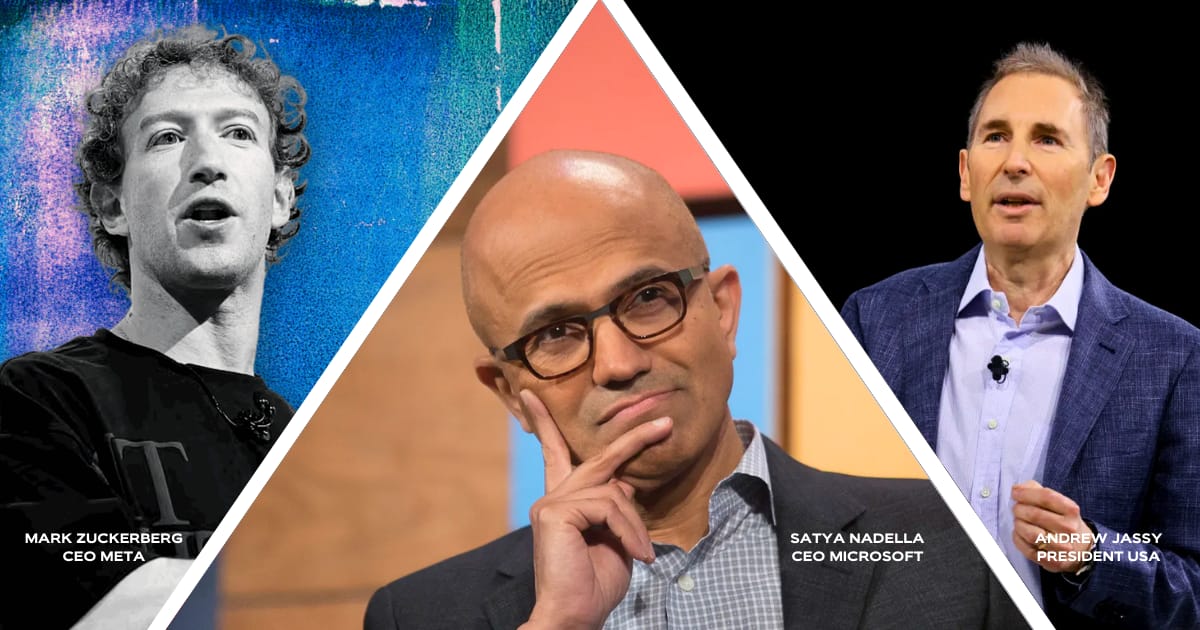
Meta: Non-Consensus Alpha
Meta reported earnings on Wednesday, delivering a double-beat and rising 10%. The stock was beaten down until a week earlier.
We discussed Meta’s bull case in our last newsletter and how it had reliable growth levers and lower valuations compared to Mag-7.
Meta is also a 2026 Lumida stock pick.
The market agreed after earnings.

The biggest question around Meta was the returns on its AI capex, and the earnings commentary was more than comforting for investors.
Zuckerberg (CEO): “Our business performed very well, thanks to AI-driven performance gains.”
“We’re seeing very strong results from the ad performance investments we made throughout 2025 with year-over-year conversion growth accelerating through the fourth quarter.”
AI is increasing time spent and engagement, which converts into higher ad revenue.
Zuckerberg noted “Instagram Reels had another strong quarter with watch time up more than 30% year-over-year in the U.S.”
“On Facebook, video time continued to grow double digits year-over-year in the U.S”
“Threads is also seeing strong momentum, benefiting from recommendation improvements. The optimizations we made in Q4 drove a 20% lift in threads time spent.”
Higher engagement has helped advertisers see better conversions, which is driving demand and higher prices.
“The average price per ad increased 6% year-over-year, benefiting from increased advertiser demand, largely driven by improved ad performance.”
Meta also noted AI driving productivity gains across its business.
Susan Li (CFO): “Since the beginning of 2025, we’ve seen a 30% increase in output per engineer with the majority of that growth coming from the adoption of agenetic coding, which saw a big jump in Q4.”
“We’re seeing even stronger gains with power users of AI coding tools, whose output has increased 80% year-over-year.”
Overall, these comments accompanied with the double digit growth in revenues and profits helped the stock gain ~10% on its earnings day.
The world is going digital. Meta is positioned to monetize these consumer eyeballs for years to come.

Meta’s ad revenue has grown 50% over the last two years at a base of ~$50B.
The margins, excluding R&D, come close to 80%.
Meta can choose to cut R&D and boost net income whenever they want. This is the ‘real embedded option’
This is a high operating leverage business with rapid revenue growth.

The key question to ask for a business of Meta’s size is can the revenue growth trend continue, or is this a mature business.
Ad revenue growth YOY is 18%, and it is accelerating!
We have already seen how AI-spending is driving better pricing and improved engagement, which will help produce reliable growth.

The best thing – Meta has plenty of fundamental growth to fund AI investment without diluting shareholders.
It’s the inverse of OpenAI, which needs to figure out how to monetize and fund its capex.

Meta is also exploring new sources of revenue growth, product innovation, and capex.
Zuck says “2026 is going to be the year that AI starts to dramatically change the way that we work.”
“We’re starting to see projects that used to require big teams now be accomplished by a single, very talented person.”
“Our vision is building personal super intelligence. We’re starting to see the promise of AI that understands our personal context, including our history, our interests, our content and our relationships.”
The early results are promising .
“We’re seeing good early traction with our AIs in Mexico and the Philippines, with over 1 million weekly conversations between people and business AI is now happening on our messaging platforms.”
WhatsApp can also act as a growth lever.
Zuck said “we expect to complete the rollout of ads in status throughout the year”
“Paid messaging within WhatsApp continues to scale as well, crossing a $2 billion annual run rate in Q4.”
The outlook on Capex was also solid.
“We will continue to invest very significantly in infrastructure to train leading models and deliver personal super intelligence to billions of people and businesses around the world.”
How does OpenAI compete with this chart?

The main bear case for Meta is intense levels of capex spending and uncertain ROIC.
But, at a valuation of low 20x NTM, I believe that is priced in.
What’s not priced in is Meta as a potentially dominant AI leader.
Microsoft Was Misunderstood

Microsoft also reported earnings on Wednesday, and it had an almost inverse reaction to Meta.
The stock dipped 12% after earnings despite producing a double-beat.
Increased data center spending and slower than expected Azure growth (38% vs 40%) hurt investors’ sentiment.
But, the market misunderstood its earnings.
Although Microsoft’s capex increased 63% from last year, most of this capex was for GPUs, which already have confirmed revenues for their life.
Amy Hood (CFO): “Roughly 2/3 of our CapEx was on short-lived assets, primarily GPUs and CPUs”
The GPUs “are sold for the entire useful life”, meaning the capex will generate almost certain returns.
Amy Hood: “the remaining spend was for long-lived assets that will support monetization for the next 15 years and beyond.”
Moreover, Azure’s growth at 38% against expectation of 40% also had a solid underlying reason.
Microsoft is using their compute capacities to meet their internal needs before they sell it ahead.
Microsoft Copilot, where compute capacities were used, posted impressive gains – paid Copilot users increased by 75% YoY.
Amy Hood acknowledges if compute was sold entirely to customers, “the KPI would have been over 40”.
Satya Nadella (CEO) notes it was a “record quarter for Microsoft 365 Copilot seat adds, up over 160% year-over-year.”

The bull case for MSFT looks interesting now.
Before earnings, Microsoft traded at ~28x P/E NTM. After the stock’s dip, and earnings beat, the P/E NTM valuation has declined to ~24x.
The last time Microsoft traded at such valuations was back in Jan 2023.
The business has grown about 50% in revenues and earnings since then.

Microsoft’s stock generally bottoms reliabily at 22X forward PE. We aren’t there yet, and it’s not clear markets will go there either.
Cloud remains the Growth Lever. Intelligent cloud revenue was up 32% YoY, coming in at $56B.
The remaining performance obligations (RPO) grew by 110% YoY in Q2 ’26, and is now at $625B.
Management expects to realize 25% of it in the next 12 months, and an additional 39% in the next 24 months.
Satya Nadella says cloud “demand continues to exceed our supply.” This supports our thesis that capex spend is ROI positive.
Capital returns sweeten the bull case for Microsoft. Dividends and buybacks amounted to $32.7B in Q2’26, up 32% YoY.
Capital returns show management’s confidence in the company’s cash position, and their trust in the underlying fundamentals.
However, the bear case of Microsoft is OpenAI.
OpenAI represents 45% of the $625B backlog.
This equals ~$280B in future revenue commitments.
How does OpenAI fund it?
A difficult question.
OpenAI’s revenue performance obligations are like a metastasized Stage IV cancer.
I think you could create a basket called ‘OpenAI Related’ and you would see it easily lags benchmarks.
Names in there would be: Oracle, Microsoft, and others…
Fortunately, markets have priced in this risk sooner than otherwise.
We won’t ever see a Dot Com level bubble ever again because markets are always learning and memory of that era is in practitioner’s minds.
The pre-condition of the Dotcom bubble was the retirement of nearly every money manager in the Nifty Fifty bubble (except Warren Buffett).
We bought MSFT this week – it seems like an obvious trade with ~20% revenue and earnings growth on a base of ~$300B.
The levers in cloud and AI monetization can help significant growth in future.
Microsoft is non-consensus now, and that’s exactly where alpha lives.
AMAZON: A WHITE KNIGHT FOR OPENAI?

Amazon is considering a $50 Bn investment in OpenAI.
Since the disastrous Altman interview, markets have woken up to just how adjacent market cap rests on a pyramid of OpenAI counterparty risk.
The valuation can’t be walked back, price is socialized and fixed with Softbank as the lead.
So, non-priced terms, such as the spend OpenAI must commit towards AWS, must be in play.
This is a ‘strategic’ not financial investment for Amazon.
Meaning, if you are one of the Middle East SWFs throwing money at this, or Softbank, you are overpaying since you have no quid pro quo with a datacenter business.
Pure financial investors see no commercial value exchange whatsoever.
(That tells you this is a bad deal for non-strategics.)
Amazon is already an early and major investor in Anthropic.
Amazon now has all sorts of confidential insight into OpenAI: including its product roadmap, and user engagement statistics, etc.
Markets recovered from their lows immediately after this news was leaked.
(That’s also why it was leaked – the market cap carnage would be greater than $50 Bn).
Although I don’t think OpenAI is priced correctly, not by a mile, from the Trump admin point of view you could argue OpenAI is too big to fail.
So long as markets can see a steady streak of financing into OpenAI, the spice will flow.
There’s so much market cap resting on OpenAI – Microsoft, Oracle, Semi Complex, Datacenter names, Energy IPPs / Nuclear, etc that the Trump admin should want OpenAI financing to be successful.
I do think an OpenAI round gets done and is successful.
Note: Whenever markets feel stress, you see a leak like this to the Information or the WSJ. We saw this happen twice in the last 90 days…
But, I doubt we will see any smart money non-strategic investors involved.
After this round of financing, OpenAI will need to prepare an OpenAI to fund its insatiable demand for capex – they have no choice.
Wall Street will be the financier of last resorts, and you’re supposed to fade that.
Winner of CapEx Arms Race?
The obvious winner for Meta, Microsoft and Amazon / OpenAI news?
Nvidia. And TSM.
Nvidia’s EPS expectations are for 60% growth over the next 12 months.
I believe those are low ball estimates.
Meta ramped up capex. That means more for Nvidia in 2027.
Nvidia is trading off of 2027 expectations now.
We had trimmed our Nvidia exposure back when it hit a $5 Tn market cap, but added back in recent weeks with the Mag 7 correction.
It has worked well so far.
Nvidia is not a lay up here. The market is still punishing companies with OpenAI exposure.
Still, we believe Nvidia can swap out OpenAI demand with other customer demand.
What’s truly in question is ‘When does Nvidia’s growth rate slow: 2027 or 2028?”

WSJ Is The Contrarian Signal For CoreWeave

WSJ published an article on Dec 16, titled “What’s Ailing CoreWeave”.
The stock had dipped 24% in 5 prior days. This article caused a low in the stock at around $66.

After the article, CRWV bounced back and rushed to $114 in less than 1.5 months, an almost 70% run.
On Jan 26, WSJ published a positive headline of Nvidia investing in CoreWeave.

This marked the top for the stock. Funny thing – we did trim our exposure to CoreWeave after this WSJ headline.
The stock has come down to $93 since then, erasing almost 18% of its gains. Now, we are looking to accumulate again.
That’s classic non-consensus on both ends of a WSJ article.
We have been bullish on Coreweave – it is a Lumida 2026 stock pick. Read our thesis here.
The risk to CoreWeave is the OpenAI exposure. But, Nvidia stands ready to consume demand for any excess CoreWeave capacity.
Lumida Curations
Tariffs: Industrial Comeback or Hidden Consumer Tax?
A heated Schiff–Pomp clash breaks down whether “Made in America” tariffs rebuild U.S. manufacturing—or simply push higher prices straight onto American households.

The $1.5T Push to Fix America’s Supply Chain Weakness
Jamie Dimon warns that years of dependence on foreign producers left critical defense industries exposed—now massive capital is rushing in to rebuild the industrial backbone behind U.S. security.

The Simple Hack For Better Sleep
Small timing shifts—earlier dinners, screen wind-downs, and short pre-bed reading—can meaningfully improve sleep quality without medication.

Meme

Not Subscribed Yet? Don’t miss out on future insights—subscribe to the newsletter now!
For real-time updates, follow us on:
X | Telegram | Youtube | TikTok | News | Ram’s X | Lumida Health | Lumida Tax
As Featured In


Disclaimer: Lumida Wealth Management LLC (‘Lumida”) is located in New York, NY, and is an SEC registered investment adviser. SEC registration does not constitute an endorsement of the firm by the Commission nor does it indicate that the adviser has attained a particular level of skill or ability. Lumida only transact business in those states in which it is registered, or qualifies for an exemption or exclusion from registration requirements. Any direct communication by Lumida with a prospective client will be conducted by a representative that is either registered or qualifies for an exemption or exclusion from registration in the state where the prospective client resides.
The information in this material has been obtained from sources believed to be reliable. While all reasonable care has been taken to ensure that the facts stated in this material are accurate and that the forecasts, opinions and expectations contained herein are fair and reasonable, Lumida, Inc. and Lumida Wealth Management LLC (collectively Lumida) make no representations or warranties whatsoever the completeness or accuracy of the material provided, except with respect to any disclosures relative to Lumida. Accordingly, no reliance should be placed on the accuracy, fairness or completeness of the information contained in this material. Any data discrepancies in this material could be the result of different calculations and/or adjustments. Lumida accepts no liability whatsoever for any loss arising from any use of this material or its contents, and neither Lumida nor any of its respective directors, officers or employees, shall be in any way responsible for the contents hereof, apart from the liabilities and responsibilities that may be imposed on them by the relevant regulatory authority in the jurisdiction in question, or the regulatory regime thereunder. Opinions,forecasts or projections contained in this material represent Lumida’s current opinions or judgment as of the day of the material only and are therefore subject to change without notice. Periodic updates may be provided on companies/industries based on company-specific developments or announcements, market conditions or any other publicly available information. There can be no assurance that future results or events will be consistent with any such opinions, forecasts or projections, which represent only one possible outcome. Furthermore, such opinions, forecasts or projections are subject to certain risks, uncertainties and assumptions that have not been verified, and future actual results or events could differ materially. The value of, or income from, any investments referred to in this material may fluctuate and/or be affected by changes in exchange rates. All pricing is indicative as of the close of market for the securities discussed, unless otherwise stated. Past performance is not indicative of future results. Accordingly, investors may receive back less than originally invested. This material is not intended as an offer or solicitation for the purchase or sale of any financial instrument. The opinions and recommendations herein do not take into account individual client circumstances, objectives, or needs and are not intended as recommendations of particular securities, financial instruments or strategies to particular clients. The recipients of this material must make their own independent decisions regarding any securities or financial instruments mentioned herein and should seek advice from such independent financial, legal, tax or other adviser as they deem necessary. Lumida may trade as a principal on the basis of its views and research, and it may also engage in transactions for its own account or for its clients’ accounts in a manner inconsistent with the views taken in this material, and Lumida is under no obligation to ensure that such other communication is brought to the attention of any recipient of this material. Others within Lumida may take views that are inconsistent with those taken in this material. Employees of Lumida not involved in the preparation of this material may have investments in the financial instruments or securities (or derivatives of such financial instruments or securities) mentioned in this material and may trade them in ways different from those discussed in this material. This material is not an advertisement for or marketing of any issuer, its products or services, or its securities in any jurisdiction.