
AI: AI Talent War's Second Front. Trade Schools. AI-RTZ #1163


Back in January I wrote here about the skilled worker shortage sitting underneath the AI data center boom. Electricians, carpenters, plumbers, pipefitters.
They’re all in unprecedented demand as US big tech companies invest over $5 trillion in AI Data Centers by the end of the decade. It’s the defining building boom of the AI Tech Wave in its fourth year since ChatGPT.
Six months on, the situation has gotten far more urgent.
The New York Times lays it out in “A.I. Companies Are Recruiting Electricians and Carpenters by the Thousands”.
“The future of artificial intelligence depends on finding more skilled humans for some very physical jobs.”
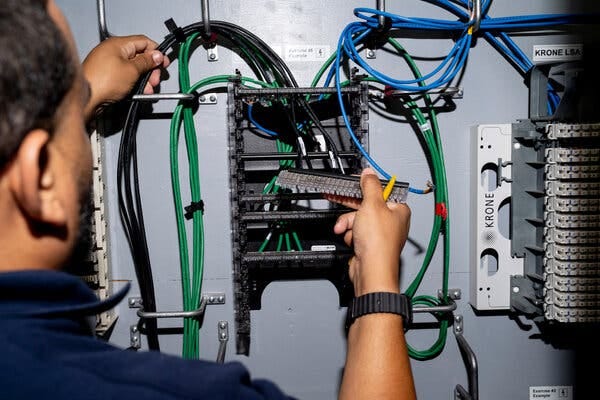
It zooms in on motortown.
“As an electrician in training in Detroit, Tyler Shelton spends most of his days popping down manholes to fix cables and other electrical gear. But lately, his company has sent many of its workers to a sprawling data center that just broke ground about an hour away.”
“‘Everybody wants that money,’ Mr. Shelton, 29, said during lunch break at his apprenticeship’s twice-a-month classroom day. ‘We have work to do, but we’re also losing a good chunk of manpower to these data centers.’”
It’s not just big tech companies hiring young academics doing their graduate AI studies at universities I wrote about last Fall. Now it’s young workers learning their trade in the physical world.

The project pulling Shelton’s colleagues away is OpenAI’s build in Saline Township.
“OpenAI’s project in Saline Township is the biggest single investment in Michigan’s history, according to the state, requiring hundreds of electricians working 10-hour days, seven days a week.”
Here is what has changed since January. The AI companies have stopped simply bidding for these workers. They are now paying to train them at scale.
“As part of a $50 million program from Google, the group plans to boost annual apprenticeship enrollment to 30,000 from 19,500 for the next three years in locations selected by Google. Another grant from BlackRock, the asset manager, would widen training pipelines for its data centers in Texas, part of a $100 million effort to expand the skilled trades.”
Note the phrase “in locations selected by Google”. That reads less like philanthropy and more like supply chain management. With big investments up front.

And the scale of the thing has no obvious precedent.
“There is no parallel in American history for the boom underway in the construction of data centers, fueled by companies with functionally unlimited cash that are racing to supply skyrocketing demand for their A.I. models.”
“‘There’s no question the resources are very limited, so decisions to build one thing kind of drag from another,’ said Mario Iacobacci, who runs the construction and infrastructure advisory practice at Oxford Economics.”
That last line is the one markets tend to underweight. Commercial construction jobs are up since ChatGPT shipped. Residential hiring has dipped.
The AI build-out is not happening in a vacuum. It is competing with housing, hospitals and factories for the same crews.
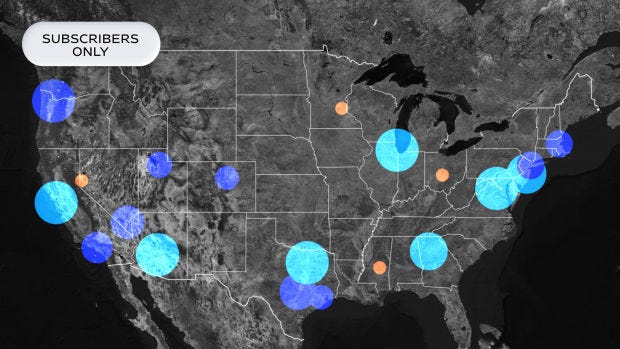
We covered the local end of that tension in ARD #122 on super-sizing AI data centers. And mapped where the power is going in RTZ #940 across 50 states. This is the labor side of the same AI phenomenon.
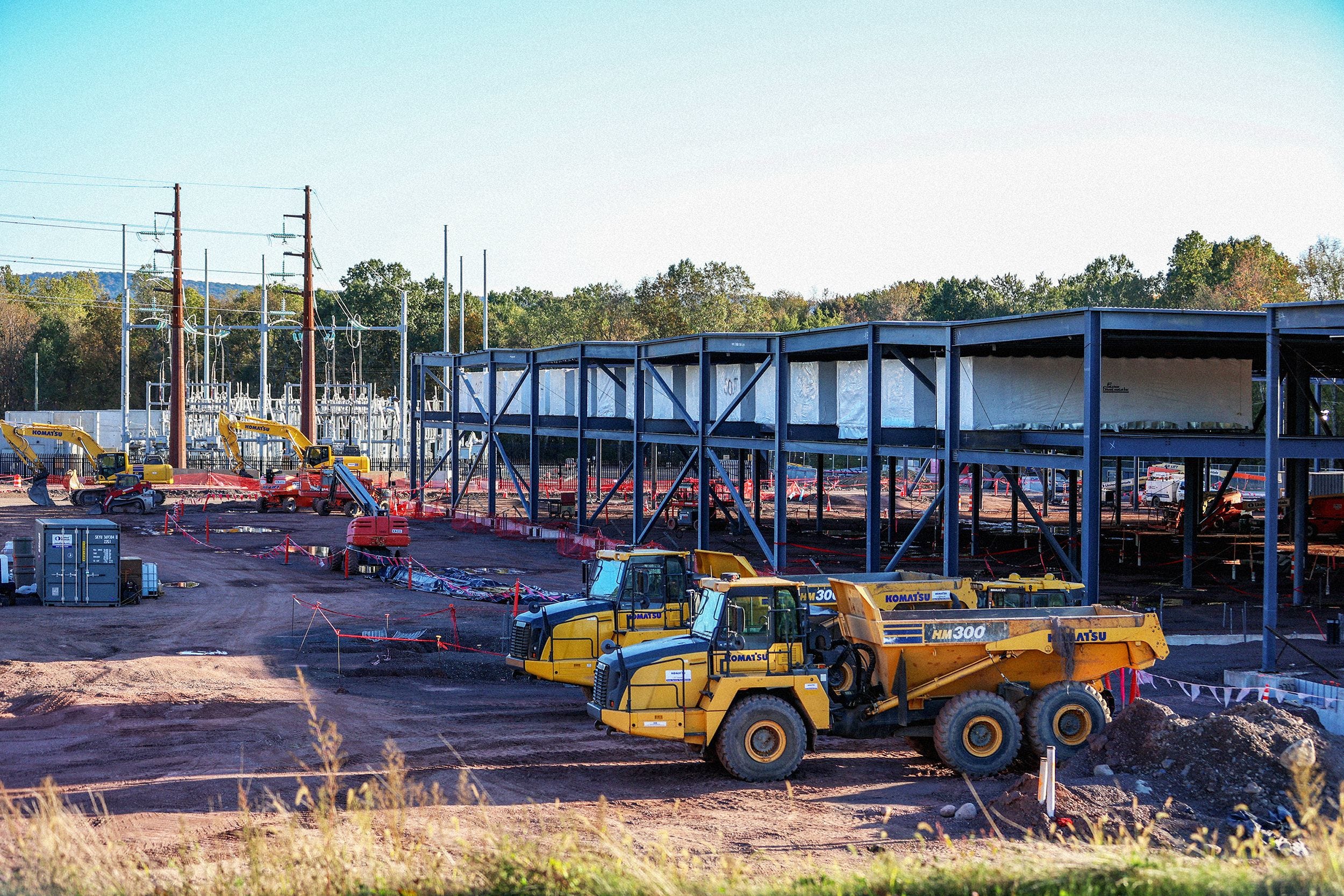
The bidding war of course shows up in the pay. Just as it did for the AI Researchers talent war kicked off by Meta last year. Fewer zeroes per person compared to those, but more zeroes nevertheless.
“According to an analysis by Indeed, the job listings website, hourly installation and maintenance jobs at data centers pay 42 percent more than similar jobs in other fields.”
“‘It is creating a labor tension that is really delicate,’ said Marty Schager, Aerotek’s director of data center market development. ‘You’ve got a passive job-seeker community out there right now that I think is looking to potentially capture opportunity with this once-in-a-generation data center gold rush.’”
So the AI talent war now has two fronts, and they are starting to correlate.
We wrote about the researcher front last summer, when Meta was writing very large checks for a small number of people. Same auction. Same poaching. Same per diems and signing bonuses. Different collar.

But the two fronts have not been treated the same way. When the companies were draining the academic pipeline, MIT’s Jim Collins warned they were eating the seed corn for the field. Nobody answered that with a $50 million check.
They are writing those checks for the electrical pipeline. Because a doctoral shortage shows up in a decade. An electrician shortage shows up in this quarter’s build schedule.
The unions are not entirely on board on the long-term training issues.
“In one of the largest efforts, Meta, the social media giant, has allocated $115 million for the first year of what it says will be a multiyear commitment to train construction workers, starting with about 5,000 participants. They will complete a four-week training course, with travel and lodging paid for, then work on a site with one of Meta’s contractors.”
“Mr. McGarvey called Meta’s effort ‘a brilliant public relations move,’ arguing that a month of training doesn’t measure up to a four-year apprenticeship that teaches a wide range of skills.”
Four weeks against four years. Both things can be true at once. A month gets a body onto a site this quarter. It does not make a journeyman.
But it does put them on a track going that way.
Worth adding up the tab so far.
-
Google. $50 million. Apprenticeship enrollment from 19,500 to 30,000 a year, in locations Google selects.
-
BlackRock. $100 million. Training pipelines widened for its Texas data centers.
-
Meta. $115 million in year one. About 5,000 people through a four week course, then onto a Meta contractor site.
-
The building trades themselves. $2.5 billion a year. Already. On apprenticeships and continuing education, paid by employers and members.
So the AI money is real. It is also close to a rounding error next to what the trades already spend on themselves every year.
And there is a second thing these programs buy. Connections with local communities. A needed element in an era where local opposition to data centers is on the rise. And becoming a political issue in the coming midterms.

Here is Anthony Abrantes of the Eastern Atlantic States Regional Council of Carpenters, on why the AI builders want the trades on their side locally.
“‘Those industries did a really bad job of stopping the rhetoric and educating communities,’ Mr. Abrantes said. ‘It’s almost like we’re doing their advocacy and business development for them.’”
So that is a Carpenters union official saying out loud that the trades are the industry’s local political cover.
The comparison he draws is to offshore wind, which lost its social license first and its projects second. The AI builders watched that happen.
Not everyone inside the apprenticeship is sold on the work either. And they all seem to be circling the same question.
“Starr Sciortino is in her second year of the electricians union’s apprenticeship training. She loves troubleshooting problems, and just started on General Motors’ major retrofit of its plant in Lake Orion. But she compares working on a data center to helping build a weapons factory.”
“‘I don’t believe any type of money is worth sacrificing any resources that’s beneficial to communities,’ said Ms. Sciortino, 22. ‘However long it lasts, is it really worth it in the end?’”
The argument is for longer tracks to life-long careers. Beyond data centers the size of Manhattan.

“‘The best-case scenario would be you train all these skilled workers up and right when the data centers start to become less popular is we’d have a housing boom,’ said Jeff Strohl, director of Georgetown University’s Center on Education and the Workforce. ‘That’s probably not likely.’”
“Joe Ottenbacher already switched careers, leaving early childhood education because of its bureaucracy and underfunding. He worries that an exodus of electricians from their $200,000-a-year data center jobs could depress wages for everybody else.” “‘If we have an influx of workers at this point with the data centers being built, what happens when they’re done? Where do those workers go?’ he said.”
That is the depreciation question, pointed at people instead of at GPUs.
Which means other stakeholders need to get in on the discussion and work to extend the tracks. Across the country.
We have spent a lot of time here on what happens to the hardware when the build-out normalizes. Less on what happens to the crews. The chips get written down on a schedule. The electricians, carpenters, plumbers and others do not.
So the candid take for now.
This is likely the largest private investment in American skilled trades in a generation, and it is being made for entirely self-interested reasons. Both halves of that are true, and neither one cancels the other.
A four year apprenticeship outlasts a four year build cycle. It’s an impact of the AI Tech Wave worth tracking. On an all important second front. Stay tuned.
(NOTE: The discussions here are for information purposes only, and not meant as investment advice at any time. Thanks for joining us here)


