
AI: Anthropic & OpenAI inch forward to mega AI IPOs & more. Weekly Summary. RTZ #1060


-
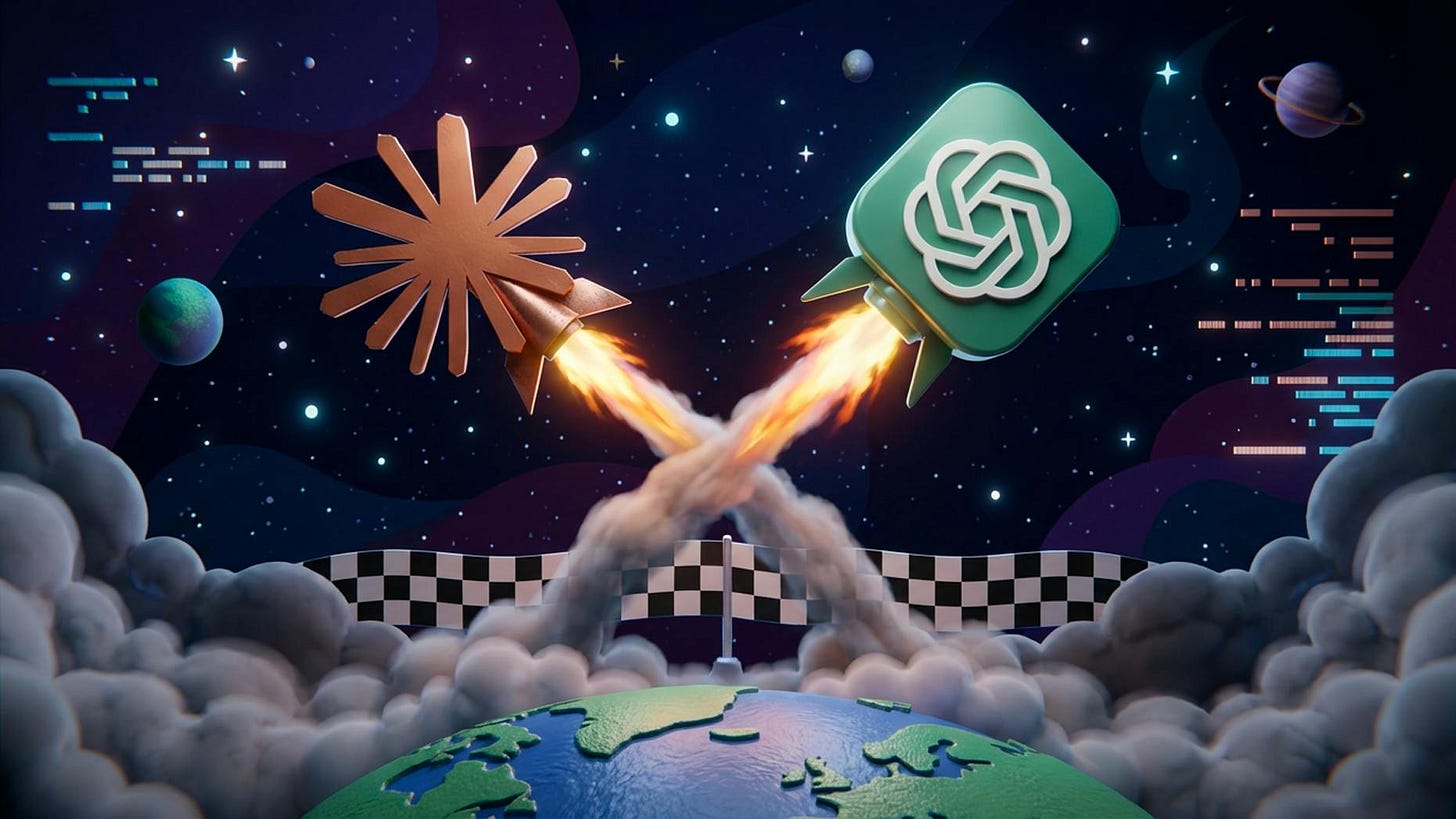
Anthropic’s Opus 4.7 Pitstop & Pricing changes before Mythos: Anthropic is following up its cybersecurity concerns around its ‘peek-a-boo’ reveal of its next gen Mythos model, with Opus 4.7. It’s a small upgrade to its Claude Code and Cowork driving Opus 4.6. While it beats the earlier model on some benchmarks, there are anecdotal complaints that the model Claude feels ‘different’ vs a few days ago. Speculation ranged from a ‘nerfing’ of Claude ahead of a full Mythos release, to possible AI Compute infrastructure shortage that both Anthropic and sibling rival OpenAI are facing in the near term. Mythos, now with its Glasswing cyber security tour and testing with a small cohort of corporate and government partners, could likely take a few weeks or months. In the meantime, Anthropic continues to navigate to its mega-AI IPO by year-end. In that context, the company changed pricing to bill firms based on ‘a la carte’ AI use, as demand for its AI Agent products jumped. Anthropic working hard to become Coke in this picture. More here.


-
OpenAI tests Ad Pricing: OpenAI is trying out various pricing schemes for ads on its global ChatGPT franchise. This is in addition to its API enterprise pricing for its various models. Ads are a revenue line that the company is modeling to grow from $2.4 billion in ad revenue in 2026, to $11 billion by 2027, growing to over $100 billion by 2030. That would make it a strong, global ad business after Google, Meta, Amazon and others. The current ChatGPT ads pilot is extended, as OpenAI is testing early advertisers’ budgets slowly. Across less than 5% of its global ChatGPT inventory. Early marketer feedback indicated difficulty in figuring out if the ads are working. And stress the need for stronger tracking and measurement tools. As well as ad system management tools. Also, there is a demand for more inventory, for more robust trials and testing. Also in flux is what the ads will look like, with so far adding short headlines and a small image adjacent to AI results. The current experiments build on traditional online advertising, with presumably more AI specific innovation to come. Separately, OpenAI also launched GPT-Rosalind an AI model for life sciences research, including drug discovery. As research preview for customers like Moderna and Amgen. This is an area where OpenAI has discussed value capture pricing. More here.
-
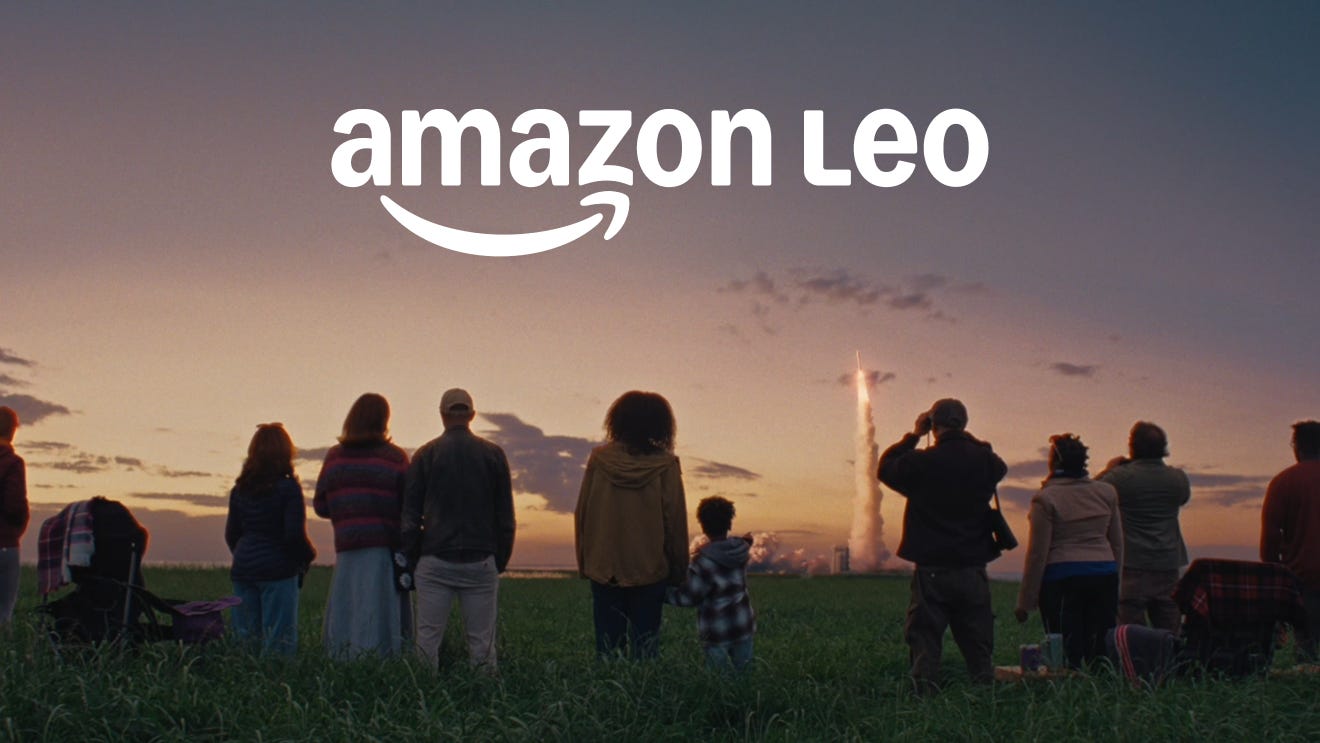
Amazon’s $12 Billion Globalstar Buy w/ Apple Deal: Amazon’s $12 billion acquisition of satellite company Globalstar marks more ante in the low earth orbit broadband satellite business, going up against Elon Musk’s Starlink. That unit of course is the crown jewel of his SpaceX/xAI, getting ready for its mega-AI IPO this June, in time for Elon’s birthday. The Amazon Leo unit’s deal also includes a partnership with Apple, who is a 20% equity owner of Globalstar. That was a $1.7 billion investment two years ago, with Globalstar satellites providing emergency SOS messaging services to billions of iphone and Apple Watch owners on the ground. For Amazon, it means a couple of hundred legacy satellites, as well as an important radio spectrum portfolio, that potentially allows it to compete more aggressively with Starlink. These are long-term AI infrastructure investments in space in low earth orbit. Which will take billions more in investments, and a patient timeline to execute networks of thousands of Amazon Leo satellites encircling the earth. Starlink already has over a 60% share with over 10,000 satellites and counting. The holy grail for all the large players here is the chess game towards direct global broadband connectivity with billions of smartphones on the ground. Initially supplementing, and eventually bypassing terrestrial cellular wireless networks. More here.
-
Apple’s Big Splash coming into AI Smart Glasses: Bloomberg reports Apple is leaning into its long anticipated move into ‘simpler’ AI Smart Glasses. It marks a shift away from its higher end AR/VR Vision Pro experiment. Moving more towards the smart glasses that Meta has spent tens of billions ramping up with a range of third party brand and distribution partners. Apple seems to be going full vertical stack with its portfolio of four types of glasses in various styles. Presumably distributed via its hundreds of global, iconic retail stores. The key here is Apple’s intention to leverage its core asset, over two billion iPhones that could be more tightly coupled with the AI Smart Glasses. That then provides an off loaded processing and storage module, keeping the AI Smart Glasses light, and potentially relatively less expensive. It’s a capability not easily matched by competitors like Meta, Google, Amazon, Snap and others. More here.


-
Google Gemini AI Skills for Chrome Browsers: Google as long expected, is making its next move with AI features in its Chrome browsers. They call it ‘Skills, and they’re ‘Ai Powered’, using Google Gemini. The premade Skills, available via a Gemini sidebar in Google’s ubiquitous Chrome browsers, include ways to keep at hand a host of light-weight AI Agent tasks for its billions of global users. The strategy is an extension of the AI Browser trend I’ve been talking about for months. The Skills are also poised to assist in AI Shopping, an incremental revenue opportunity that Google and others are very keen on developing with AI Agents. Also to be expected would be seamless first party integrations with Google’s multiple billion user apps on the desktop and mobile, as AI Skills roll out over time. Separately, Google is also rolling out a local and global AI Search app on Windows. A smart move to gain distribution across hundreds of millions of windows machines worldwide. Additionally, Google is also updating AI Mode in Chrome, letting users open links side by side with AI mode on desktop. It’s all strong leveraging of Google’s global distribution opportunities with Gemini. More here.
Other AI Readings for weekend:
-
Anthropic/Figma Board shift highlights growing misalignment between AI Platforms and upstream Applications. This. More here.
-
New AI tussles amongst AI Power Users vs Doubters vs Resisters: Now three opposite things are true about AI at the same time. This. More here..
(Additional Note: AI Ramblings is now a weekday Daily podcast called AI Ramblings Daily (ARD). Different content than AI-Reset to Zero (AI-RTZ), which remains a daily morning substack with now over 1057 ‘MY TAKES’ on key AI events and issues turbulently flowing by. AI Ramblings Daily is a typically a 20 minute afternoon podcast on my take on key AI developments of the day. Both daily substack and podcasts typically discuss different AI issues and items. And are free to subscribe. Try this week’s series with ARD Episodes # 53, 54, 55, 56 and Friday’s #57 here: )
Up next, the Sunday ‘The Bigger Picture’ tomorrow. Stay tuned.
(NOTE: The discussions here are for information purposes only, and not meant as investment advice at any time. Thanks for joining us here)