This is an extension of ‘The Blip 2.0’ in all but name for now into the third week. While being expanded to OpenAI. Anthropic may see more flexibility with releasing Fable 5 later this week. But it’s still a ‘drip-drip’ approach by the US Government on ‘The Blip 2.0’., adding massive friction to US frontier model development and global distribution. And it is the Bigger Picture this AI Tech Wave I’d like to unpack today.
Especially as competition ramps up from China on open source AI alternatives. Ahead of the next Xi/Trump meeting on tech and trade at the White House in September.
“The government is allowing trusted partners to access the Mythos 5 model following a two-week restriction that rattled the tech industry.”
“The Trump administration is allowing Anthropic to reoffer its banned Mythos 5 AI model to trusted companies and government partners.”
“The administration’s decision follows two weeks of talks with Anthropic to address security concerns.”
“Fable 5, another Anthropic model, remains restricted, while OpenAI delayed its GPT-5.6 public rollout due to government security concerns.”
“The Trump administration is allowing Anthropic to reoffer one of its banned AI models to trusted companies and government partners, a key step toward rolling back restrictions that fueled industry concern about ad hoc federal regulation of artificial intelligence.”
“Anthropic can allow dozens of companies and partners trusted by the government to access Mythos 5, one of the two models that the administration banned for foreign use two weeks ago, Commerce Secretary Howard Lutnick said in a Friday letter to Anthropic Chief Compute Officer Tom Brown, a copy of which was viewed by The Wall Street Journal.”
“Fable 5, a general-purpose version of Anthropic’s powerful Mythos model that was also banned, remains restricted, and restrictions on Mythos 5 still apply to entities that aren’t trusted partners.”
“The olive branch from the administration is the result of two weeks of talks led by Lutnick and Brown to address the government’s security concerns, which were sparked by Amazon researchers who found a way to evade Fable’s safeguards.”
There’s a lot of positive, ‘happy talk’ both both sides on the meager progress to date.
“These efforts have yielded significant progress. In addition, Anthropic has committed to work with the U.S. government on protocols and standards and releases for the covered models,” Lutnick said in the letter.”
“An Anthropic spokesman said the company was working to restore access to Mythos 5 for the partners as soon as possible. “We are pleased to see this progress and continue to work with the government to expand access to Mythos 5 and make Fable 5 available for general use again,” he said.”
But underlying positions on both sides seem relatively entrenched. Even as both sides couched it all in more positive frames.
“Anthropic had previously said that it felt it had adequate safeguards in place and didn’t think the issue raised by the Amazon researchers was as serious as some cybersecurity experts had claimed. The company has feuded with the Trump administration for months over AI usage in the military and Anthropic’s past ties to nonprofits that are big donors to liberal causes.”
“President Trump recently praised Anthropic Chief Executive Dario Amodei’s response to the model ban.”
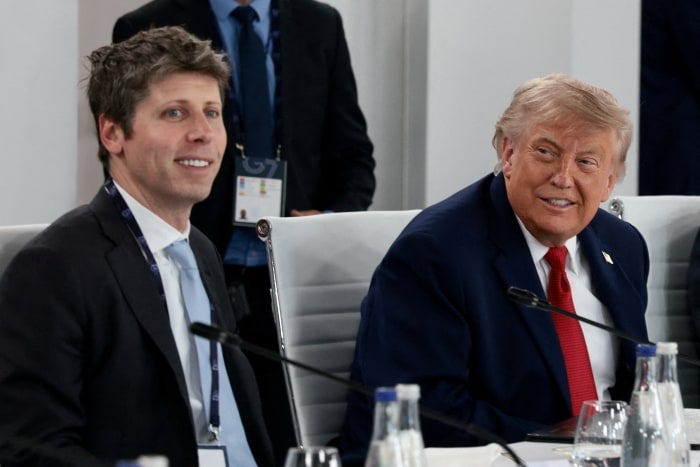
“He responded very responsibly,” Trump told Axios, adding that Amodei seemed “nice” and “smart” when the pair took part in a Group of Seven AI meeting in France while negotiations were ongoing. Earlier this year, Trump called Anthropic a “radical-left, woke company” when the Pentagon designated the company a security risk.”
“The Commerce Department had restricted all usage of Fable 5 and Mythos 5 by foreign individuals or entities, prompting Anthropic to shut down all access to comply with the unprecedented rule. It marked the government’s biggest intervention in the rapidly evolving AI industry.”
All this was an acceleration of course from previous guarded steps on these models in the first place.
“Mythos 5 was restricted to trusted partners before the government ban. Mythos Preview, an earlier version of Mythos that had been gradually made available to companies and governments managing critical infrastructure, has remained an option to users, but the Trump administration’s concerns about model safety have prompted concerns across the industry.”
“On Friday, OpenAI said it was delaying the public rollout of its latest models, known as GPT-5.6, because of government security concerns. The company is letting trusted partners access it with government approval and hopes to expand access. Like Mythos, the models have demonstrated the ability to efficiently find software bugs, capabilities that could be used in cyberattacks.”
“The White House is racing to implement an executive order that was recently signed giving federal cybersecurity officials more of a say in AI model evaluation. Until the order is implemented and standards are in place, companies are in limbo and reacting to case-by-case decisions from the administration, executives have said.”
As the US gates and extends the release of the top US frontier AI models to customers worldwide, effectively slowing these top global horses down, the markets are not waiting for the next best thing.
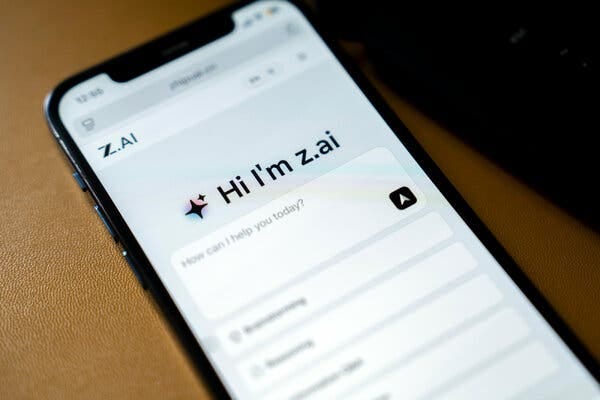
“Silicon Valley engineers recently flocked to new technology from a Chinese company, Z.ai, that is almost as good as its American competitors but much cheaper.”
“Two weeks ago, the artificial intelligence company Anthropic shut down its two most powerful A.I. systems after an unexpected demand from the U.S. government to cut access to it.”
“Days later, a Chinese start-up, Z.ai, released an A.I. model that is nearly as powerful as Anthropic’s models, Fable and Mythos. But Z.ai’s new technology costs much less to use, and no one in the United States was putting restrictions on it. It quickly landed on a closely watched leaderboard of the world’s 10 most popular models.”
“Z.ai is on the cutting edge of a wave of powerful but inexpensive A.I. from China that is challenging the lock that OpenAI, Anthropic and Google have had on the industry. Six of the models now on the A.I. leaderboard were developed in China.”
“Z.ai’s new model, GLM-5.2, arrived just as U.S. businesses realized that they had to find ways to cut down on how much they were spending on A.I. It also landed when executives in Silicon Valley were becoming worried that the Trump administration was leaning toward regulating the technology.”
“With Fable restricted, the gap between the U.S. and China is very slim,” said Rehaan Ahmad, a co-founder of the Silicon Valley start-up alphaXiv, who has been using Z.ai’s new model for more than a week.”
Of course geopolitical ‘China’ questions remain the looming factor.
“The Chinese models still face two big hurdles to widespread use in the United States: concerns about their ties to the Chinese government and complaints that Chinese companies have unfairly used American technology to build these cheaper models. But their low cost is winning converts.”
“About 18 months ago, the Chinese start-up DeepSeek shocked Silicon Valley when it demonstrated that it could build effective A.I. far more affordably than many of its American counterparts. Z.ai is doing something similar. When performing certain tasks, GLM-5.2 costs about an eighth as much as Anthropic’s Claude Opus 4.8, which came out shortly before Fable and Mythos, according to OpenRouter, a start-up that runs the A.I. leaderboard.”
“Like most top-performing Chinese models, GLM-5.2 is open source software, which means anyone can use and modify it for free. That makes it much cheaper to use, even if it is not quite as powerful as what American companies have created.”
The big US tech companies are noticing and leaning in already.
“The largest cloud computing providers, including Microsoft and Amazon, already offer access to some systems from Z.ai, DeepSeek, MiniMax and other Chinese start-ups. Microsoft has also considered adding the latest DeepSeek model as an option to power one of its own products, which now runs on technology from Anthropic and OpenAI, two people familiar with the deliberations said, speaking on the condition of anonymity because they were not authorized to discuss them publicly.”
And US users are finding ways around the geopolitical concerns.
“Some software developers are reluctant to use the A.I. system that Z.ai offers from computers in China, because they worry about sharing data with the company or with the Chinese government. They are also wary of China’s efforts to censor its A.I. systems or running afoul of U.S. export restrictions.”
“Z.ai was added to the Commerce Department’s trade blacklist in 2025. Corporate filings show that several of the company’s shareholders are controlled by a Chinese government agency that supervises the country’s defense industry.”
“Companies can still use the model without sending data back to China in violation of U.S. export rules, as long as they are careful about how they set up their systems, said Wei Chen, chief legal officer at Infoblox, a network security company.”
“The Chinese models do not have the same restrictions if you host them yourself or you go through another provider,” Mr. Ahmad of alphaXiv said. “Right now, there are more restrictions on models from Anthropic.”
“After DeepSeek’s release in 2025, governments around the world passed regulations limiting its use because of data security concerns. But so far, GLM-5.2 has not raised similar alarms, Ms. Chen said.”
The US frontier model companies are of course lodging their complaints against the AI competition from China.
“Anthropic and OpenAI have accused Chinese companies of improperly harvesting data from their A.I. systems to accelerate the development of the Chinese technology. On Wednesday, Anthropic sent a letter, viewed by The New York Times, to Senators Tim Scott, Republican of South Carolina, and Elizabeth Warren, Democrat of Massachusetts, accusing the Chinese tech giant Alibaba of “brazenly” and “illicitly” trying to copy its technology through 24,000 fraudulent accounts.”
‘Distillation’ is the key charge being lobbed around. Even though the US AI model companies have been doing their fair share of the same for years now.
“When Mustafa Suleyman, the head of Microsoft’s A.I. lab, unveiled a suite of new models this month, he emphasized that they had been built from scratch on data that the company had commercially licensed.”
“That means that you can put it into production in a very trustworthy way with complete confidence,” he said.”
“Using data from one system to train another — a process called distillation — is common in A.I. development. But the Anthropic and OpenAI terms of service forbid anyone to surreptitiously harvest data for distillation. It is not clear whether Z.ai used distillation in the development of its technology.”
“But distillation alone cannot build a top A.I. system. That requires several other complex techniques as well, said Charles O’Neill, head of model training at Baseten, a company that sells access to GLM-5.2.”
China is playing the longer game here.
“Because China produces most of the top-performing open-source systems, they say, U.S. developers will build their software atop those technologies. In the long run, that could put China at the heart of A.I. development.”
“Some argue that Chinese systems will always trail the top U.S. models because U.S. export controls limit the flow of the specialized computer chips needed to train A.I. technologies. Z.ai and other Chinese start-ups spend millions for access to chips in data centers outside China.”
“Z.ai’s filings in Hong Kong show that in the first half of 2025, the company spent more than seven times its revenue on expenses that essentially boiled down to fees for such computing services.”
“Still, experts estimate that China is just six months or less behind the American companies. “
“There had been this speculation that the export controls would eventually bite and the gap would widen between American frontier models and their Chinese models, but GLM is pushing things in the other direction,” said Jeffrey Ding, an assistant professor at George Washington University who specializes in emerging technology and international relations.
“And with Fable and Mythos sidelined, many businesses have realized the importance of having alternatives.”
The whole piece is worth a read for additional details.
All while the US government pursues it ad hoc policies on the gating of the top US AI models. For a whole host of geopolitical and political calculations beyond the technical and cybersecurity drivers.
The markets globally will take these ‘Blip 2.0’ actions into their processes around AI options going forward. And that is the Bigger Picture keeping in mind this AI Tech Wave, going into week three and beyond of ‘The Blip 2.0’. In its new, gated form. Stay tuned.
(NOTE: The discussions here are for information purposes only, and not meant as investment advice at any time. Thanks for joining us here)
Autos Republicans don’t want EVs. (wapo.st) Ironically EVs are made largely in GOP districts. (msn.com) Good luck trying to turn off data sharing on...