Unlike other tech companies, Apple doesn’t pre-announce upcoming products. You get to see new stuff from Apple when they’re good and ready to release it to the world. A capability truly valuable in the supply-constrained AI Tech Wave. Making it a key Apple strategic advantage today, as I’ve discussed at length.
So Apple doesn’t pre-announce upcoming products. The closest exception to that is Mark Gurman, managing editor at Bloomberg.
Time and time again, he has positioned himself as the key person to be able to ‘pre-announce’ Apple products and moves, thanks to his relationships and sources around the global Apple ecosystem.
“Apple is working on several frame styles and a unique camera design for its first smart glasses. Also: The foldable iPhone is on track for a September debut despite fears of production delays, and Apple’s former AI chief is leaving.”
“Apple Inc.’s next major product category is shaping up to be display-free smart glasses — but that wasn’t always the plan.”
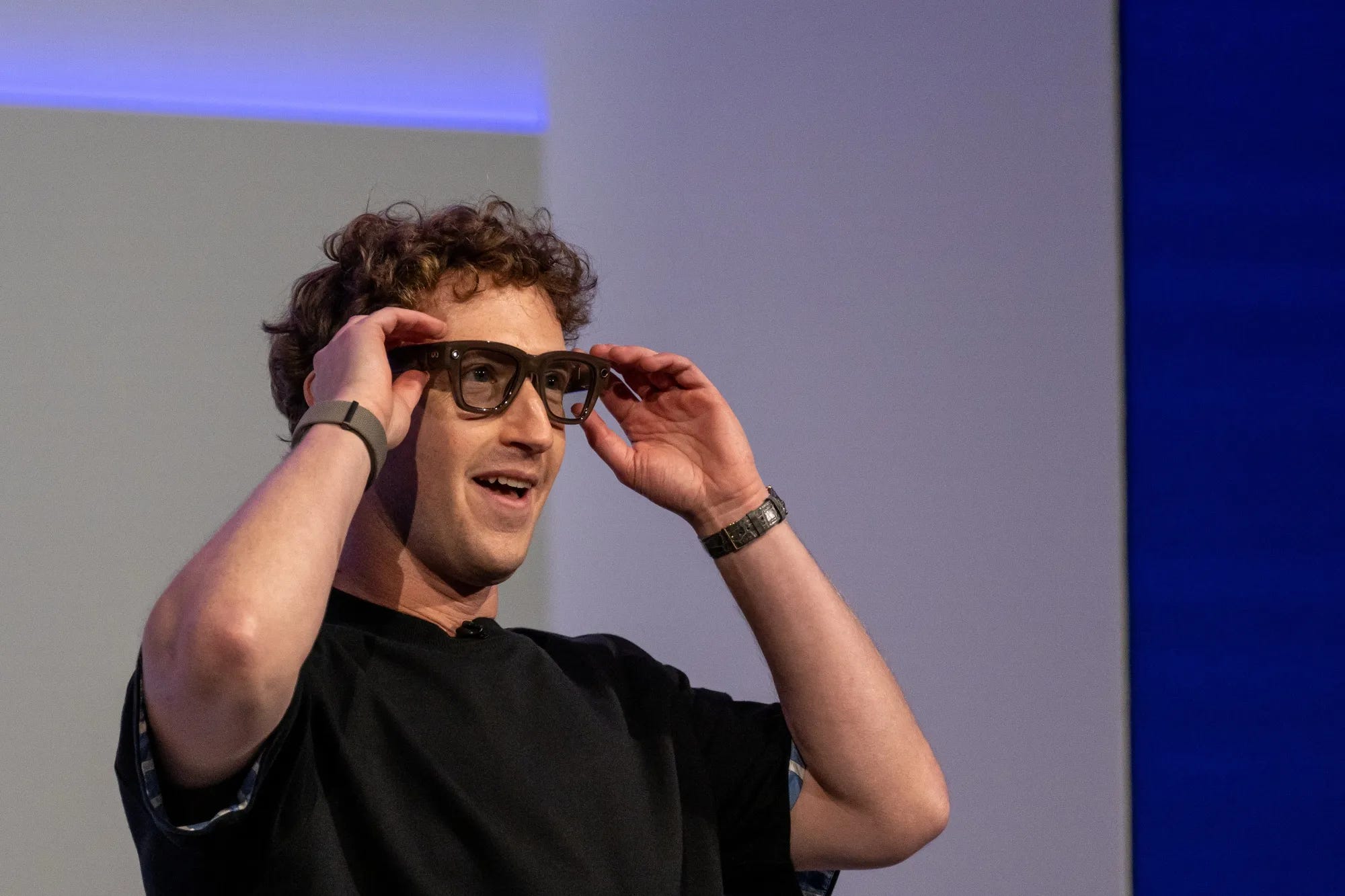
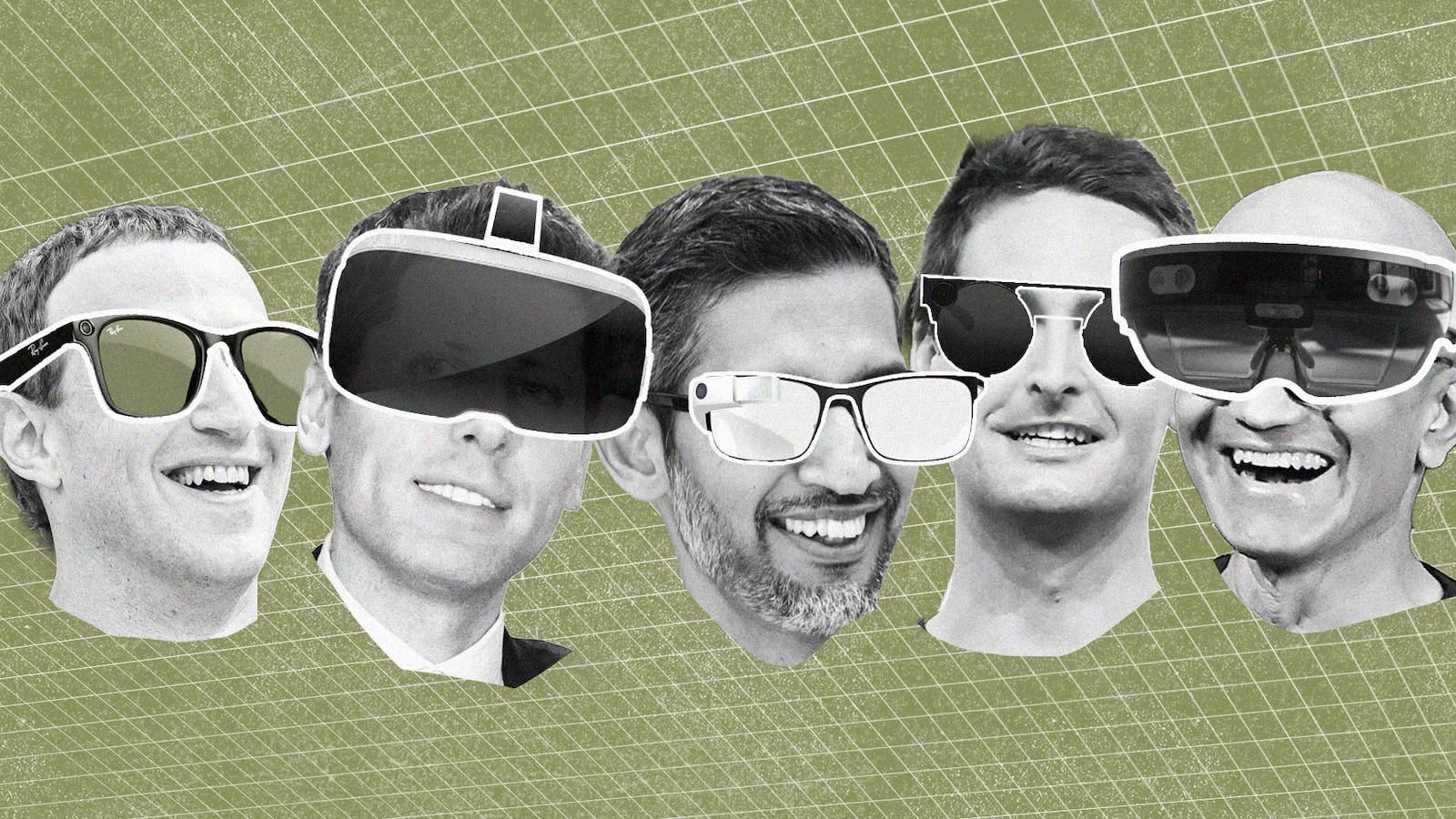
With participants like Google, Amazon, Snap, and others. As well as Meta’s laser focused in this category driven to down by founder/CEO Mark Zuckerberg. He is investing tens of billions in this category. If only to have an AI hardware category that is truly independent of Appls’s global iPhone platform.
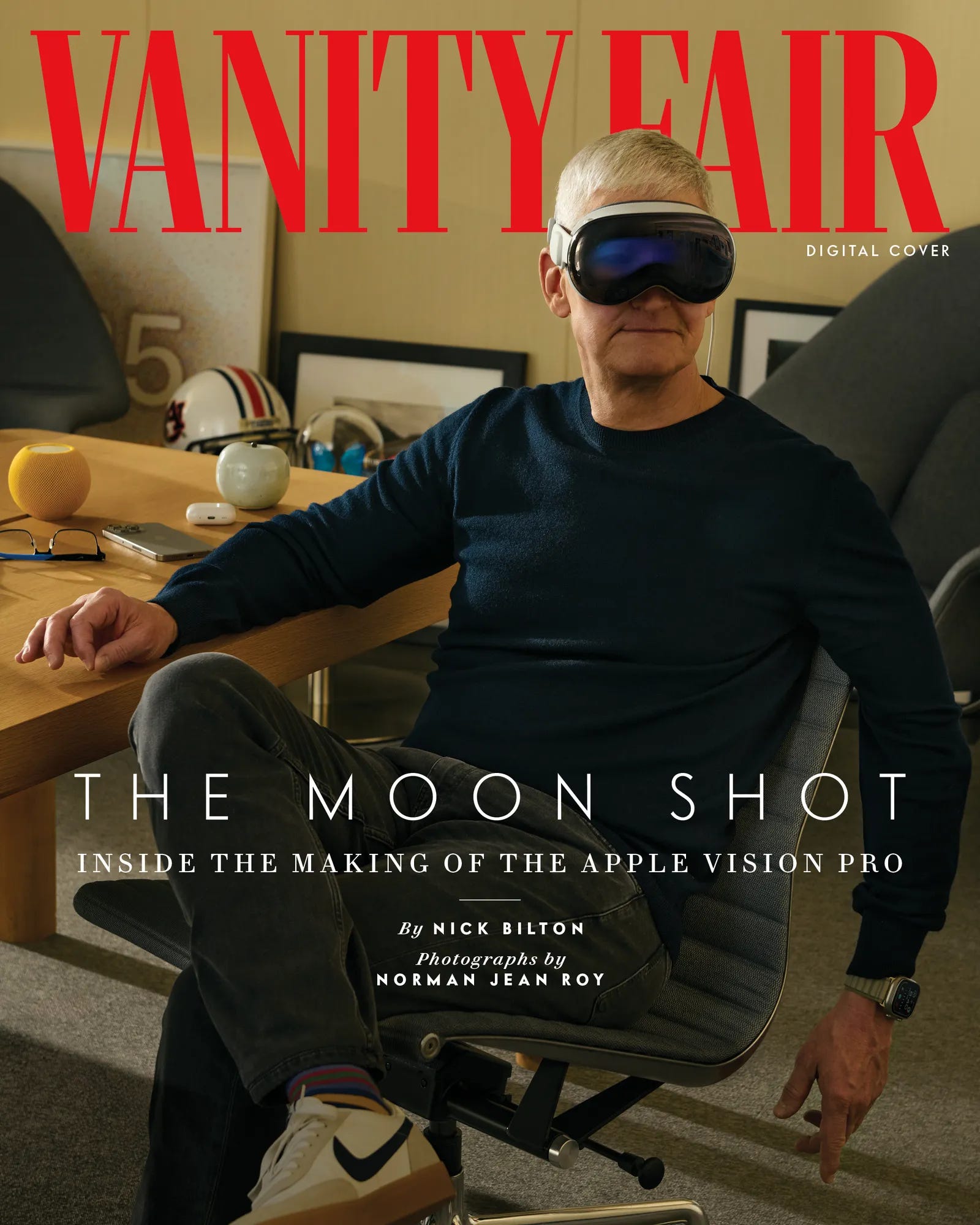
Apple too has been top-down focused here, with the Apple Vision Pro. Led by CEO Tim Cook.
Resulting in the first major, not so mainstream successful, but still very cool, benchmark setting product. Now it seems Apple is getting set to broaden out the product spectrum around glasses. After YEARS of investment and meticulous preparation:
“Roughly a decade ago, when Apple formed what is now known as the Vision Products Group to explore head-worn devices, the road map looked very different. The company was pursuing three distinct products: an iPhone-tethered augmented reality headset with a wireless controller; a high-end mixed-reality headset; and standalone AR glasses.”
“The first device would have vaulted Apple into augmented reality, which superimposes data and graphics on top of real-world views. The mixed-reality headset, meanwhile, would meld AR and virtual reality. And the final item would be true AR glasses, a lightweight device that could provide context about the world without a lot of extra bulk.”
“The timeline was ambitious. Apple aimed to ship the iPhone-dependent device in early 2020, follow up with the mixed-reality headset by late 2021, and then deliver true AR glasses by mid-2022. In the end, only one of those products materialized: the mixed-reality headset, which eventually launched as the Vision Pro in 2024. The tethered device was scrapped, and AR glasses remain years away.”
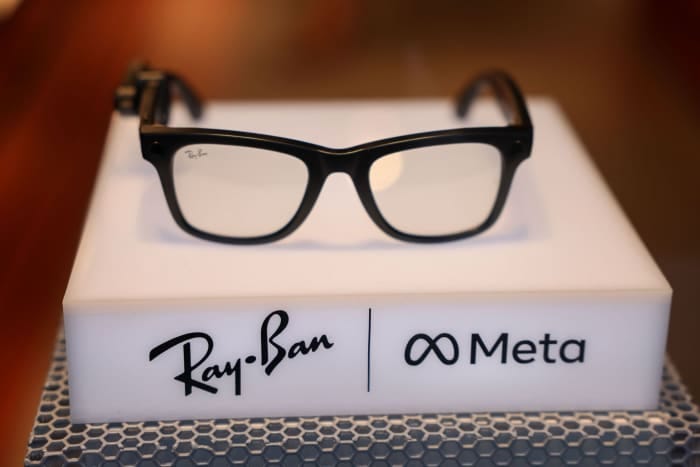
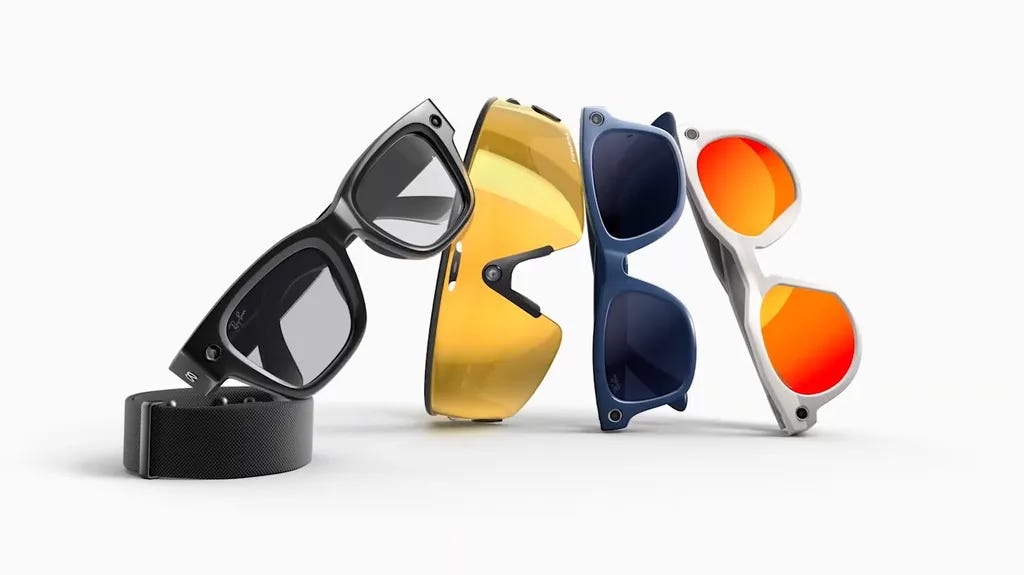
We know how that end of the smart glass spectrum turned out. Now the possibilities down the smart glass spectrum. Currently dominated by over 3+ million Meta Ray-Ban smart glasses out in the wild today:
“But there was another type of device that wasn’t on Apple’s list until around 2022: a simpler form of smart glasses without a display. Meta Platforms Inc. pioneered this category with its camera-equipped Ray-Bans, showing that there was demand for such an item. And now Apple is currently developing its own version, internally code-named N50. The idea is to unveil the product at the end of 2026 or early the following year, with the actual release coming in 2027.”
“Like Meta’s offering, Apple’s glasses will be designed to handle everyday uses: capturing photos and videos, syncing with a smartphone for editing and sharing, handling phone calls, listening to notifications, playing music, and enabling hands-free interaction via a voice assistant. In Apple’s case, that assistant will be a significantly upgraded Siri coming in iOS 27.”
And it’s a full-fledged portfolio of glasses being planned, along with accompanying AI devices. Meta has a range that includes displays in their smart glasses:
“The glasses are part of a broader, three-pronged AI wearables strategy that also includes new AirPods and a camera-equipped pendant. Each device is designed to leverage computer vision to interpret the user’s surroundings and feed contextual awareness into Siri and Apple Intelligence. That will enable features like improved turn-by-turn map directions and visual reminders.”
The key here is the Apple secret sauce to any new product or service:
“When Apple typically enters a new product category, it offers clear advantages over what’s currently available. We saw this with the original iPod, iPhone, iPad and Apple Watch — and, even though it was a flop, the Vision Pro. That approach won’t be as obvious with Apple’s upcoming foldable iPhone, but we should see it on full display with the glasses.”
And here it seems to be something that I’ve felt strongly about, leverage the iPhone:
“According to employees working on the project, Apple’s strategy is to outdo competitors by tightly integrating the glasses with the iPhone and offering a higher-end build. While Meta relies heavily on partner EssilorLuxottica SA for frames, Apple is unsurprisingly planning to go at it alone in terms of design. That also should set it apart from Alphabet Inc.’s Google and Samsung Electronics Co., which are leaning on Warby Parker.”
Meta of course has a retail distribution strategy with thurd party partners for its portfolio of smart glasses:
Apple understandably is going full stack with the glasses, especially given its online and retail distribution advantages at hundreds of signature Apple stores around the planet. It seems to stack up this way:
“Apple’s design team has whipped up at least four different styles and plans to launch some or all of them, I’m told, as well as many color options. The latest units are made from a high-end material called acetate, which is known to be more durable and luxurious than the standard plastic used by many brands.”
“Here are the designs in testing:”
“A large rectangular frame, reminiscent of Ray-Ban Wayfarers”
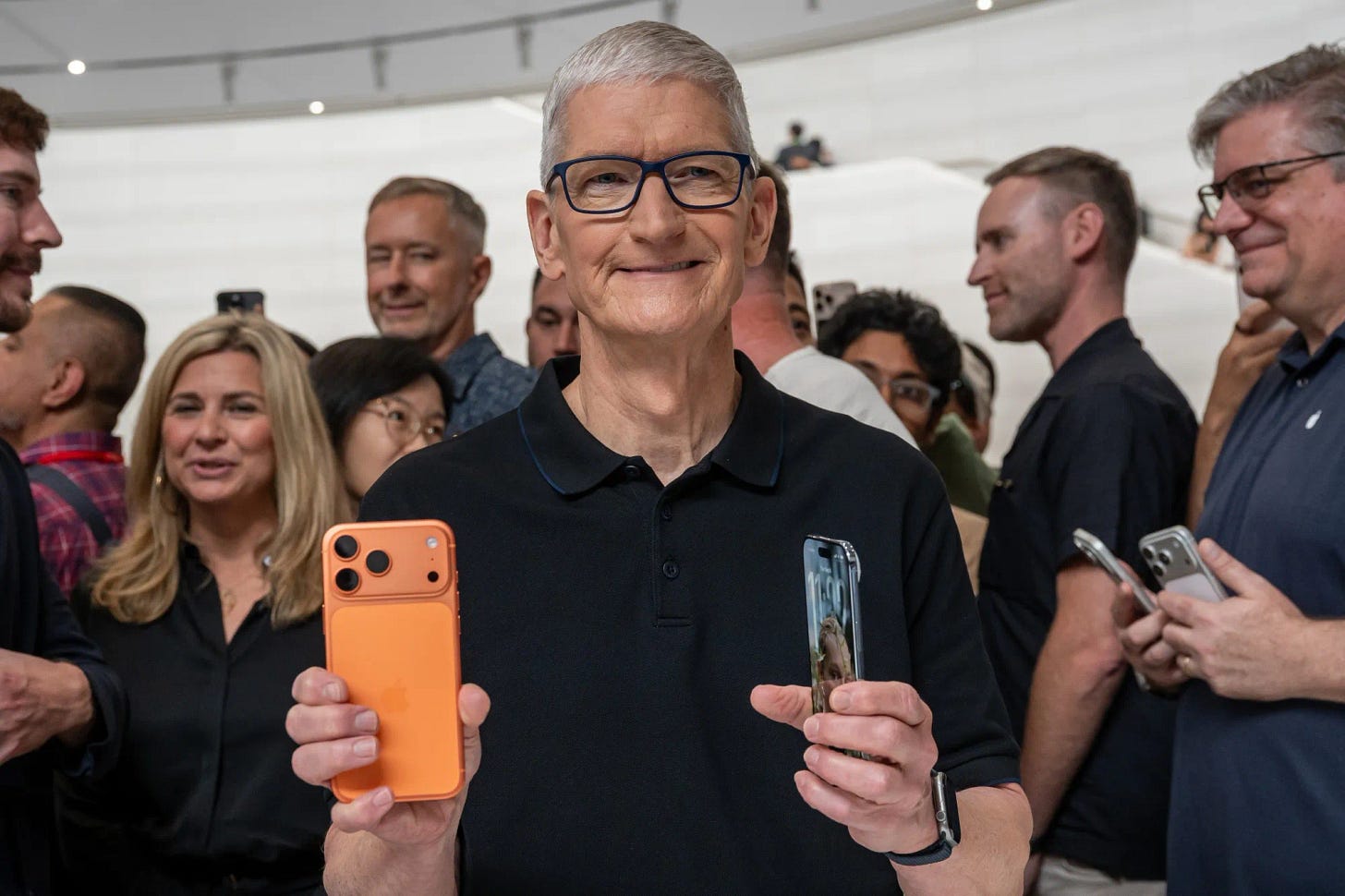
“A slimmer rectangular design, similar to the glasses worn by Apple Chief Executive Officer Tim Cook”
“Larger oval or circular frames”
“A smaller, more refined oval or circular option”
“Apple is exploring a range of finishes, including black, ocean blue and light brown. As with AirPods and the Apple Watch, the goal is to create a design that is instantly recognizable. Apple refers to this as the “icon” internally. One notable detail under consideration is the camera system: vertically oriented oval lenses with surrounding lights, a departure from the circular design seen in Meta’s products.”
The vertical stack approach offers Apple some unique advantages relative to peers:
“Despite Meta’s early lead and Google’s advantages with the larger Android ecosystem, Apple’s strengths — its brand, in-house chips, giant retail presence and deep iPhone integration — position it well to compete. If executed properly with a functional Siri, these glasses could follow a trajectory similar to the Apple Watch: not first to market, but ultimately dominant.”
And of course it’s a long-term bet. Not just this year’s product releases.
“That said, the category’s true potential won’t be realized until high-quality augmented reality becomes viable in a lightweight form with usable battery life. And by all accounts from within Apple, that breakthrough is still several years away — likely closer to the end of the decade, or roughly eight years later than planned.”
The full piece, worth a read, adds color on other aspects of Apple’s upcoming product and people moves. Especially the long anticipated Apple Fold phone, which I discussed on AI Ramblings Dailly last week.
“Apple just mass-shelved a $3,500 headset, dissolved the entire team that built it, and is now building glasses that do less than Meta’s $299 Ray-Bans. And the math says this is the smartest hardware decision they’ve made in years.”
”Vision Pro shipped 390,000 units in 2024. Then 45,000 in Q4 2025. Production halted. Marketing cut by 95%. The dedicated Vision Products Group was dissolved and folded into standard hardware divisions. Apple killed the product without saying the word.”
”Meanwhile Meta sold 7 million smart glasses last year. Tripled their entire prior sales in a single year. They’re targeting 20 million units by end of 2026. EssilorLuxottica’s stock hit record highs.”
”Here’s what Apple actually learned from the Vision Pro failure: the market doesn’t want a computer on your face. It wants a computer that looks like your face already has something on it. 300 million Americans wear corrective lenses. The addressable market for “glasses that also do AI stuff” is 100x the addressable market for “headset that replaces your monitor.”
”The four frame styles tell you everything. Wayfarer shape, Tim Cook’s slim rectangles, large ovals, small ovals. Acetate instead of plastic. Multiple colors. Apple studied how people already buy eyewear and reverse-engineered a tech product into that behavior.”
“The constraint nobody is talking about: these glasses require an iPhone. That’s the entire strategy. AirPods made switching from iPhone painful. Apple Watch made it worse. Glasses that see the world through Siri and relay everything through your phone? That’s the final lock-in device. Every pair sold is an iPhone retention contract worth $1,000+ per year in services and upgrades.”
”Meta built a standalone product. Apple is building a retention moat you wear on your face 16 hours a day.”
Apple’s core move here seems to be leveraging the iPhone. Technically and financially. Something peers cannot do.
But it looks like the world will soon have Apple’s versions of smart glasses soon to peer through. Re-setting the AI Wearables scene this AI Tech Wave for 2026 and beyond. Despites current challenges. Stay tuned.
(NOTE: The discussions here are for information purposes only, and not meant as investment advice at any time. Thanks for joining us here)
Meta’s ‘Good Enough’ AI strategy, AI Inc’s cybersecurity as cover for AI compute ramp, and Anthropic’s new ‘all-you-can-eat” AI Agent pricing. That plus...
Markets The U.S. stock market is constantly doubted, evidence to the contrary. (awealthofcommonsense.com) You can’t have a bubble without this group...