
AI: Bravura Quarter for Amazon, Microsoft, Google Clouds. AI-RTZ #1165


-
Amazon, Microsoft and Google quarters see Cloud lifts: Amazon, Microsoft and Google all saw investors connect rising AI investments with robust growth in the top three global cloud businesses, driven increasingly by businesses focusing on AI applications. As I crunched on ARD #131, AWS revenue came in at $42.2 billion, up 37 percent, which CEO Andy Jassy called their fastest growth in eighteen quarters, at a 39.4 percent operating margin. Microsoft had the biggest single-day move of any stock in US history, about $450 billion added, on Azure up 43 percent and a $678 billion contracted backlog. Google’s cloud was up over 80 percent the week before. My take: investors are differentiating between the companies pouring into this AI buildout who also have huge enterprise cloud businesses, where you can see revenue growth in the tens if not hundreds of billions, and those who do not. All three of these can show it. That is likely why Amazon could lift its 2026 capex to $220 billion on higher memory costs and still finish the day up 15 percent. More here and here.

-
Meta and Apple quarters less so: Meta and Apple saw more negative reactions post-quarter. As I covered on ARD #130 and again on ARD #131, Meta’s revenue rose 28 percent while costs and expenses rose 55, free cash flow came in at $784 million against $31 billion of quarterly capex, and the full-year guide narrowed to $130 to $145 billion by raising the floor rather than lowering the top. Apple’s numbers were the strongest June quarter in its history, revenue $109.4 billion up 16 percent and EPS up 29, and the stock still fell about nine percent, close to $373 billion of market value, on services growth of 12 percent against a street looking for fifteen. My take: both are investing ahead in the AI Tech Wave like the others, but Meta like SpaceXAI cannot yet point at an enterprise cloud business converting the spend into sustained enterprise contracted revenues. Apple’s is a different case entirely, spending roughly two percent of what Amazon spends, and I continue to think it is one of the two best-positioned consumer AI companies over the next few years alongside Google (not stock advice). More here and here.
-
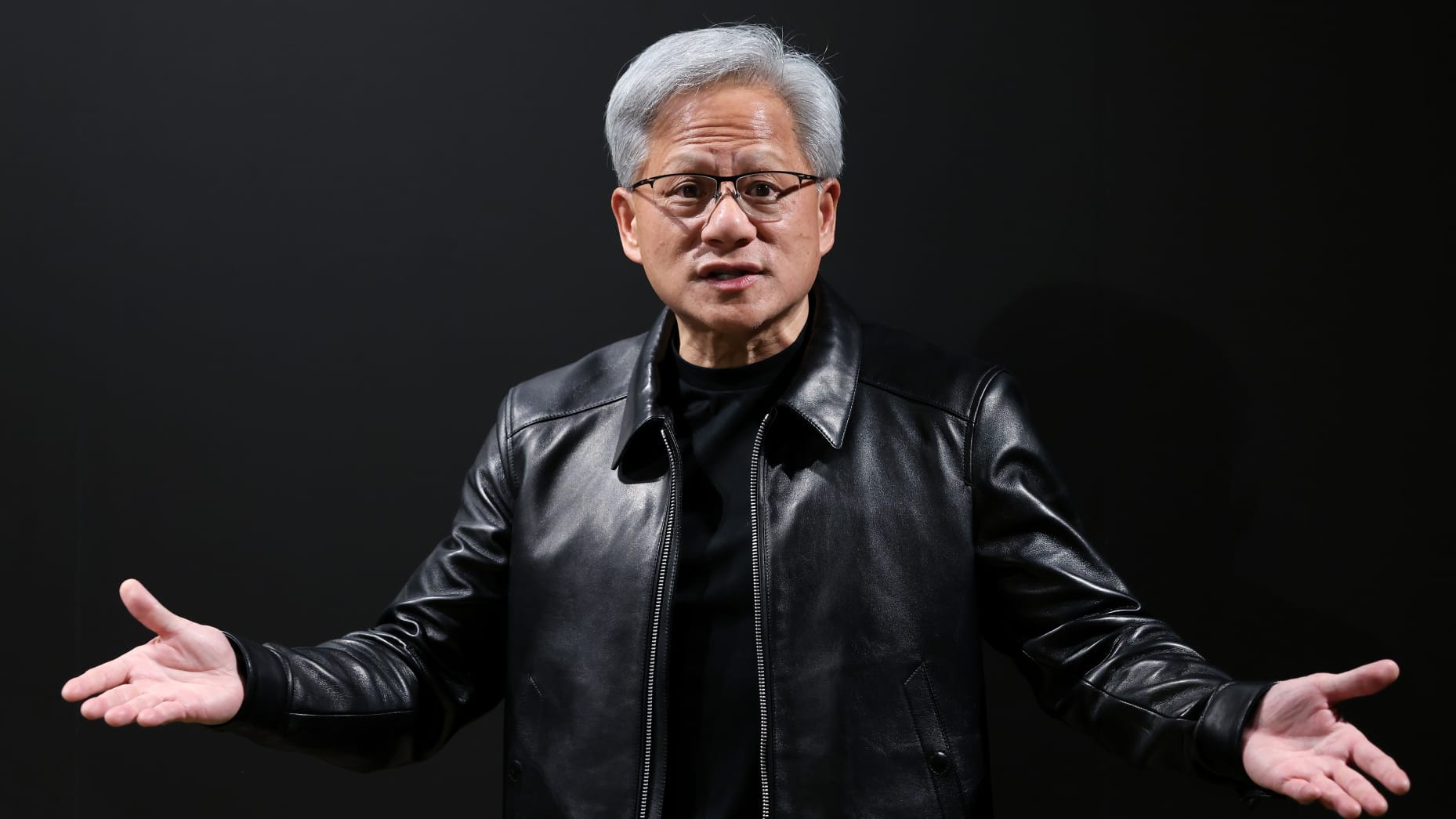
Nvidia less valued versus peers: Nvidia is seeing lower relative valuations against its semiconductor peers, even as it remains the pick-and-shovel supplier to every buildout above. Trefis ran the comparison and the spread is striking: Nvidia at about 32 times earnings, against AMD at 172, Marvell at 72 and Broadcom at 64. And that is on 71 percent revenue growth versus AMD’s 35, at a 64 percent operating margin versus Broadcom’s 44 and AMD’s 12. The market’s hesitation appears to sit on execution risk, whether Nvidia can hold an annual product cadence through Vera Rubin and the launches after it. As I laid out in AI-RTZ #1160, the market has started looking past Nvidia to the rest of the complex, memory in particular, where SK hynix and Samsung have run several hundred percent. My take: The company doing the most profitable work in the sector is being priced as though the leadership share is the risk. Nvidia reports on August 26, the last of the big quarters, and it is the one that tests whether the rest of the complex was right to run ahead of it (not stock advice). More here and here.
-
China AI closer than it seems: China’s AI entrepreneurs and companies are far closer than is appreciated in the US. As I went through on ARD #127, the ‘Six AI Tigers’ plus DeepSeek are shipping frontier open models from Beijing, Hangzhou and Shanghai, and four of the eight are doing it right now, with Kimi K3 at 2.8 trillion parameters currently the largest open model anyone has released. My take: the perceived gap keeps looking narrower than assumed, and the reason is structural rather than patriotic. Chinese labs largely have to go open, because they cannot count on unlimited domestic compute and their home market alone will not carry the models. Open source is how they reach global usage. More here and here.
-
Nvidia champions US open source companies: Nvidia’s Jensen Huang is leaning hard into US open source AI policy and investments. He made the point in the most deliberate way available to him, by joining X on July 24 and using his first post ever to share an open letter, ‘Open Weights and American AI Leadership’, which argues open models strengthen cybersecurity, competition, access and national sovereignty alongside closed frontier models, and compares the moment to the open source software fight of the 1980s. It launched with 25 signatories and no OpenAI, Anthropic or Google, and by the next day had doubled to 50, still without Amazon or Anthropic. As I dug into on AI-RTZ #1164, the Nemotron Coalition Nvidia convened in March now runs to nine labs, and only two of them have actually shipped a frontier open model, one of which is Nvidia itself. Reflection AI, the company Nvidia backed to be the US open source answer, is still playing catch-up. My take: the founders there have it right that this is like building rockets, and rockets are hard. It took SpaceX over a decade and a long line of failures before Falcon 9 became routine. Nvidia is playing quarterback for a US open source effort that is, for now, a committee rather than a champion, while China ships. The absence of the three biggest US frontier labs from that letter is the whole story in one line. More here and here.
Additional Items.
-
AI Agent Patents rise globally . More here.
-
Big Tech’s second AI Talent front, Electricians, Carpenters, Plumbers & beyond. More here and here.
(Additional Note: AI Ramblings is now a weekday Daily podcast called AI Ramblings Daily (ARD). Different content than AI-Reset to Zero (AI-RTZ), which remains a daily morning substack with now over 1160+ ‘MY TAKES’ on key AI events and issues turbulently flowing by. AI Ramblings Daily is a typically a 20 minute afternoon podcast on my take on additional AI developments of the day. Both daily substack and podcasts typically discuss different AI issues and items. And are free to subscribe. Try this week’s series with ARD Episodes # 127 — Closer Than They Appear on China’s AI founders, 128 — Have Cake & Eat It Too on Anthropic, OpenAI and their investors, 129 — How High Can It Go? on OpenAI, SK hynix and AI deal prices, 130 — Time to Crunch the Numbers on Meta, Microsoft and Mr. Market, and 131 — That’s a Wrap on Big Tech’s quarterly bow, here.):
Up next, the Sunday ‘The Bigger Picture’ tomorrow. Stay tuned.
(NOTE: The discussions here are for information purposes only, and not meant as investment advice at any time. Thanks for joining us here)


