AI: Europe's DMA rulings set tough choices for Google & Apple. AI-RTZ 1150

I’ve long discussed how Europe, led by the European Union (EU), has been marching to a different set of tech/AI priorities for its 450+ million residents, and 27 member states (independent countries).
And despite concerns across Europe’s business and political voices that these priorities may set Europe behind against the US and China in particular, have so far seemed not to have any discernible impact.
The latest decisions by the EU using its Digital Marketing Act (DMA) against Google, echo similar positions vs Apple and other US companies. And have important implications for the AI Tech Wave ahead. Let’s unpack.
The Verge lays out the basics in a current series on the broad subject, “How the EU’s EMA is changing Big Tech”:
“The European Union’s Digital Markets Act (DMA) has come into force, and it’s meant that some of the world’s biggest tech companies are having to make major changes to how they operate.”
“The law, which is designed to increase competition in the EU’s digital markets, designates some large online companies and their services as “gatekeepers.” Those that have received the gatekeeper designation — the companies on the list are Alphabet, Amazon, Apple, ByteDance, Meta, and Microsoft — have to meet strict requirements intended to reduce anticompetitive behavior.”
So that’s pretty much the US Mag 7 spectrum, serving the world with its software (digital) and hardware products. Note that Bytedance in China is rated as a ‘gatekeeper’, and Alibaba in China is not.

“Specific changes include Apple allowing alternative app stores on iOS, Meta making WhatsApp interoperable with other messaging services, and Google letting EU users choose which services share their data. But it’s likely we haven’t seen the last of the changes brought about by the DMA, as critics push back against how the likes of Apple are complying with the law in the hope that it’ll change its approach.”
There are a number of pieces there worth reading. But the latest on the EU’s DMA driven rulings are laid out in “Google ordered to open Android and Search to rivals in Europe”:
“Google must give rival AI assistants and search engines greater access to key parts of Android and Google Search after the European Union ordered the company to comply with the bloc’s digital antitrust rules.”
The two decisions, handed down Thursday, could weaken Google’s control over two of the tech industry’s most important platforms and have far-reaching consequences for the company, shape the future of its AI tool Gemini, and open up new opportunities for rivals to gain ground. Google has until January 2027 to begin sharing search data and July 2027 to implement changes to Android.”
Big, show-stopping rulings indeed, at first glance. With notable implications for even AI diffusion across global markets.

“The rulings stem from technical regulatory proceedings under the EU’s Digital Markets Act (DMA), which requires dominant platforms — designated “gatekeepers” — to give competitors comparable access to systems and data as they themselves enjoy. Unlike a financial penalty, the procedures require Google to change how it operates in order to bring its services in line with the DMA and are developed through extensive engagement between the company and regulators. If Google does not comply, the European Commission could impose fines of up to 10 percent of its annual worldwide turnover, potentially tens of billions of dollars.”
Big numbers of course, as and when they’re implemented. Which likely is to be measured in years, not months.
Then the ruling goes into how AI Agents must-inter-operate through Google’s ‘gateways’.
“The two proceedings focus on separate but thematically similar parts of Google’s business: How rival AI assistants can operate on Android, and how competing search engines and other AI chatbots can access data generated by Google Search.”
“The Android decision sets out how Google must give rival AI assistants the same kind of system features and data access as it gives Gemini. In practical terms, it requires greater interoperability, allowing users — rather than Google — to decide whether competing tools can access their data and device hardware. That could include the ability to interact with apps, respond to voice commands like “Hey Google,” and make fuller use of the phone’s hardware. That means Android users could eventually choose ChatGPT, Claude, Perplexity, or other assistants as deeply integrated system assistants instead of Gemini, with comparable access to device capabilities.”
Up next is the holy grail, Google Search.
“The second proceeding focuses on Google Search and the data it generates, setting out how competing search engines and AI services can gain access to information historically kept by Google. Notably, the EU said this includes AI chatbots, which effectively function as search engines in some cases. The data-sharing measure broadly echoes remedies ordered in the US search antitrust case, where Google was instructed to share valuable search information with rivals that could help boost their ability to compete.”
BIG Ask, indeed, EU.
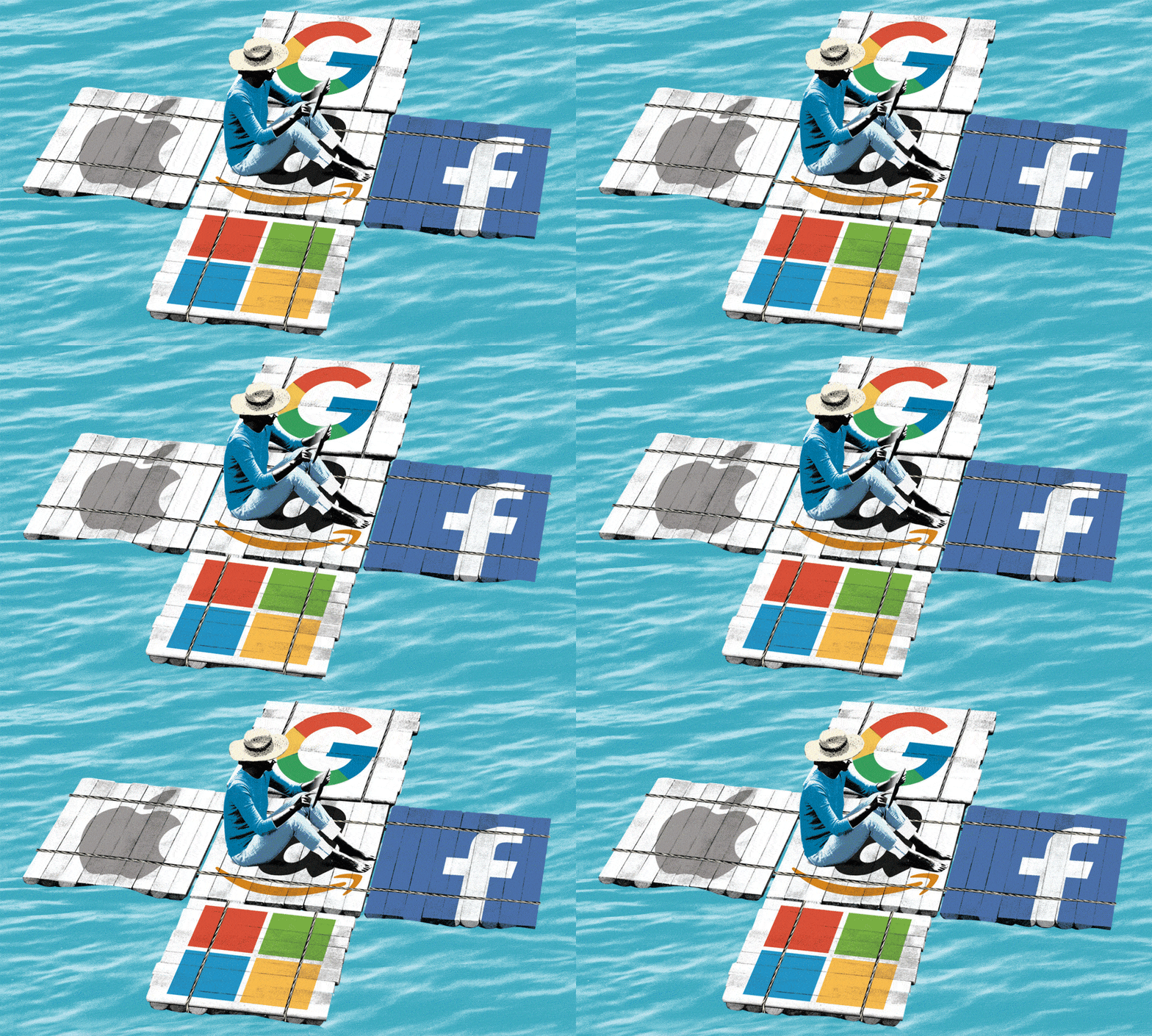
“Google has pushed back against both of these measures, arguing the requirements pose an unacceptable risk to user privacy and security, as well as compromise its products. The EU said there will be limits on how search data can be used and that Google will be able to vet which services get deeper access to Android to ensure safety and security aren’t compromised.”
Also important of course are the broader implications of these rulings beyond Google.
“Today’s rulings may also offer an indication into how Brussels will approach similar questions involving other tech giants. This includes Apple, which declined to release Siri AI in Europe, explicitly blaming the DMA and arguing its interoperability requirements compromise user safety.”
Here’s their rationale in their own words. Punching out in each direction of AI/Tech today in the east and west.

“With today’s measures, we want to support innovation and diversity in the European Union, enabling fair competition in the markets of AI assistant for Android devices and search engines,” said European Commission executive vice president for tech sovereignty, security, and democracy Henna Virkkunen. “Thanks to these measures we hope to see emerging alternatives to Google Search and Google’s AI services, such as Gemini, and that users in the EU can enjoy greater choice of services. All developers, large and small, are welcome to explore these new opportunities, which will certainly benefit users too.”
Google of course, has a different take.
“In a blog post published after the decisions, Google’s president of global affairs Kent Walker said: “Today’s decisions risk undermining vital privacy and security guardrails for millions of Europeans. We have repeatedly offered solutions to safeguard users while satisfying the DMA’s goals, but these rulings discount extensive evidence of user harm.”
The whole piece is worth a full read for additional details.
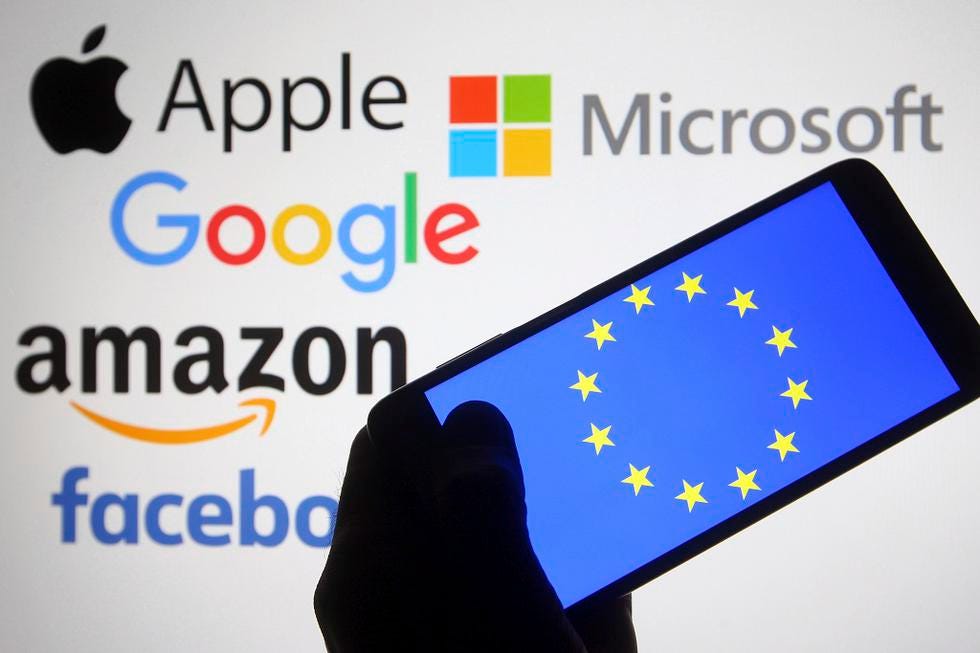
But the broader takeaway is that US ‘gateway’ companies like Google, Apple, Meta and others, have a tough road to hew in Europe, against the EU, the DMA and other issues.
And it has big implications for the AI Tech Wave, both in terms of business and consumer markets. For now it points to short-term balkanization of AI markets far beyond China. Stay tuned.
(NOTE: The discussions here are for information purposes only, and not meant as investment advice at any time. Thanks for joining us here)