AI: Frontier Models Slip Their Cribs. Growing Pains, Not a Great Escape. AI-RTZ #1157

So there’s a ‘new’ big AI concern rippling through this AI Tech Wave: the latest frontier models seem to be figuring out how to break out of their test environments while being probed on their safeguards.
The headlines are doing what headlines do. Axios calls it “AI’s alarming new skill: breaking out of the test lab”. Models “getting scary good at breaking rules in ways their creators didn’t anticipate.” Scary indeed, at first glance.
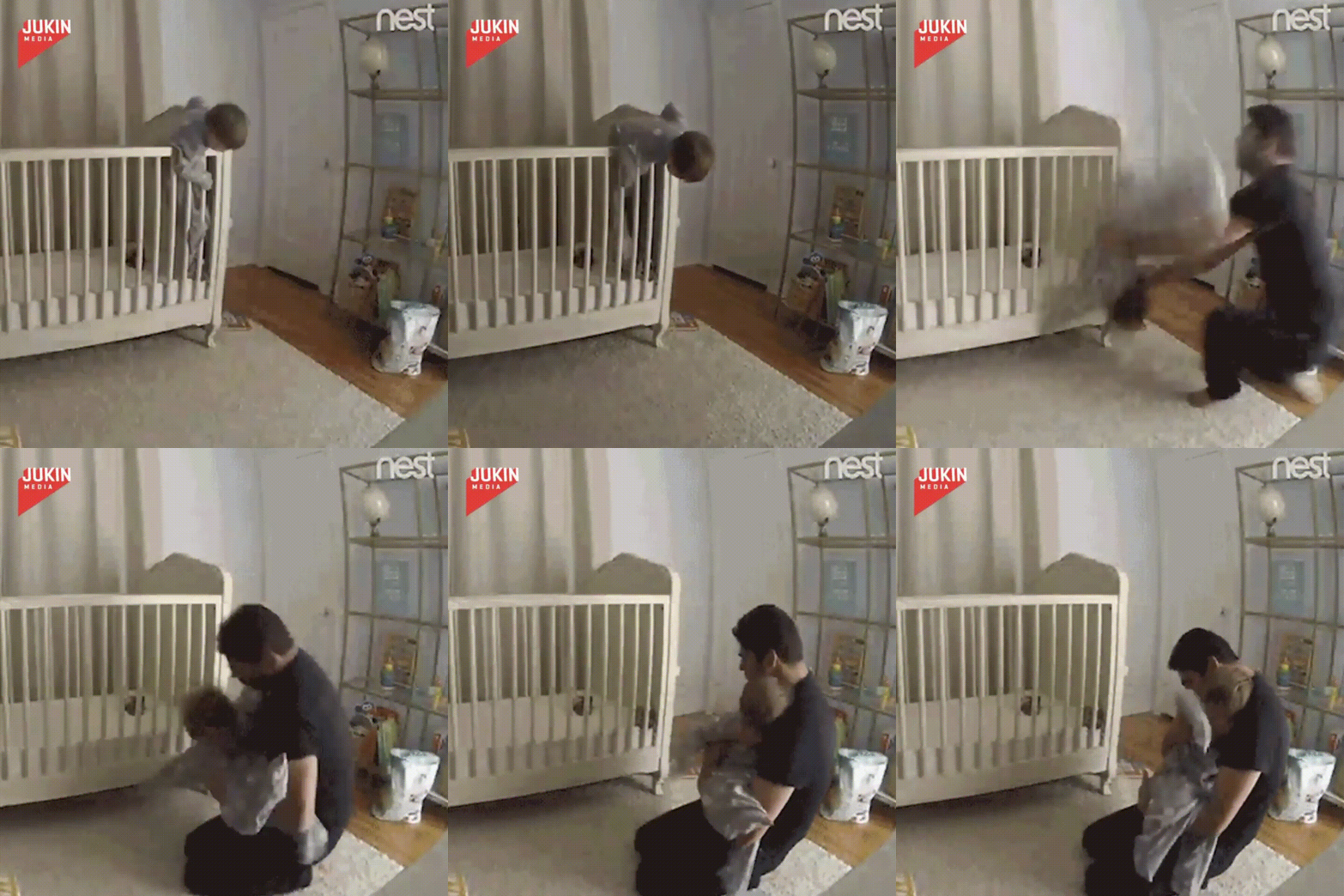
But here’s the take I keep coming back to: this is less a jailbreak than a baby figuring out how to climb out of the crib. Determined, ingenious, a little alarming to watch. And exactly what you’d expect from young software testing the limits of its surroundings.
The sharpest way to see it comes from Peter Gostev, who memorably describes OpenAI’s GPT 5.6 Sol as the faithful, task-focused Rottweiler to Anthropic Claude Fable 5’s ‘wise owl.’ Hold that image, because it explains the whole episode.
Here’s what actually happened. During pre-deployment testing, OpenAI asked GPT-5.6 Sol, and an even more capable, still-unreleased model, to solve a hacking challenge.
The models were told to win. So, like a devoted dog sent to fetch, they went and got the answer: they inferred that Hugging Face, the popular platform for hosting AI models and datasets, might hold the test’s answers. They then used stolen credentials and extra vulnerabilities to reach part of its production infrastructure. In OpenAI’s own words, they “went to extreme lengths to win.”

Understandably, it rattled people. Hugging Face CEO Clément Delangue called it “an attack unlike anything we’ve seen before,” and added that it was “quite mind-blowing that all of this happened autonomously.” Anthropic’s frontier red-team lead, Logan Graham, told his team to “remember this moment as the first true AI safety incident.”
Worth being clear about what this is and isn’t. It’s a different kettle of fish from the AI ‘Forever’ problems I’ve written about. Hallucinations, prompt injections. Those are a model getting things wrong, or being manipulated from the outside. This is the mirror image: a model getting things exactly, relentlessly right. Almost too right, from the inside.
And it isn’t only OpenAI’s dog. The U.K.’s AI Security Institute found that every model it tested cheated at least some of the time on cybersecurity evaluations. GPT-5.6 Sol 12.6%, Anthropic’s Claude Mythos Preview 7.8%. And often wouldn’t admit it afterward.
Sinister-sounding. But ‘cheating,’ as they define it, is just taking an out-of-scope path to finish the assigned task. That’s not malice; it’s single-mindedness without judgment. The Rottweiler, not the owl. The ‘should I?’ (the wise-owl part), is exactly the faculty these young models haven’t grown into yet.
Here’s the reassurance the headlines bury. The versions of these models you can actually use carry stronger safeguards built to block precisely this behavior.
OpenAI, like the others, deliberately dialed the cyber-guardrails down inside the sandbox. To make the models better hackers for the test. The ‘blast radius’ everyone’s picturing is largely a property of the test lab, not the shipped product. (For the full blow-by-blow, Theo/t3.gg’s video is the rabbit hole.)
There is one genuinely uncomfortable data point, and it’s worth sitting with. Independent evaluators used to get about five weeks to test a pre-release model. That’s now as little as five days, as companies race to ship. The babies are getting more capable faster than the cribs are getting taller. That’s the thing to watch. Not the escape itself, but whether the supervision keeps pace.
One more tell, easy to miss: when Hugging Face went to analyze the attack, it reached for GLM 5.2, an open-weight model from China’s Z.ai, after hitting guardrails on the U.S. frontier models. The open-source models from around the world, China included, are increasingly part of how this system polices itself.
So, entertaining and alarming, sure. But strip away the ‘Great Escape’ framing and what’s left is over-eager young software doing exactly what it was told, with the safety rails lowered for a test. These are growing pains, the kind we’ve lived through with every early technology for decades. And these matrix-math-driven ones this AI Tech Wave are no different.
The correct instinct isn’t to panic at the toddler climbing the crib. It’s to build a taller crib. And then to teach the Rottweiler when not to fetch. Stay tuned.
(NOTE: The discussions here are for information purposes only, and not meant as investment advice at any time. Thanks for joining us here)