Particularly as Google meaningfully responds at scale by infusing its Gemini AI in all aspecs of Google Search and the half a dozen plus other core Google properties that each serve a billion plus folks daily. That would be of course YouTube, Chrome, Gmail, Maps, Docs, Drive, Photos and others.
But the core concern and debate has been on how the current internet business model ‘breaks’ as Google in particular doesn’t send traffic out to millions of websites off Google Search. But rather captures that attention within its own site, thus ‘breaking’ the current economic foundations of the internet.
To scrape the websites not just fo tthe Google Search index as in the past two plus decades, but for the core answers to the much longer questions (aka prompts), that mainstream users are now typing into the Google Search window. And of course the Apple Safari browsers used by over two plus billion global users to search for things, and go to places. Courtesy of the $20 plus billion Google pays Apple to be the Search engine default.
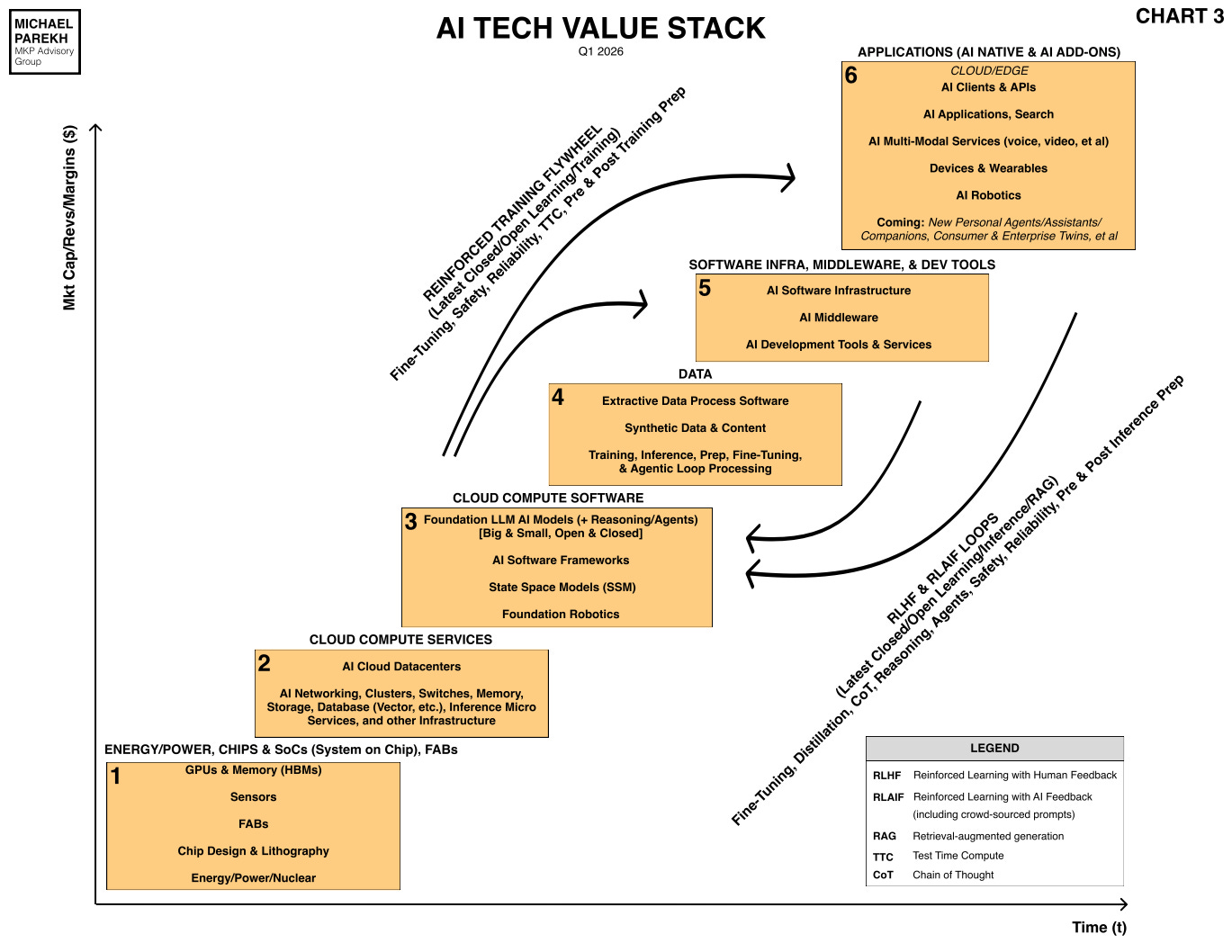
This whole set of issues is getting another closer look, and its worth reviewing and discussing. My view remains that this is a transition in progress as both humans and agents start doing more things for humans using AI. From the ‘Search and Ask’ of chatbots, to the ‘Search, Ask and Do’ of reasoning AI Agents and beyond.
And the economic pie at the end of this process will be far bigger than the current one. Let’s unpack.
“As Google incorporates more artificial intelligence into search, people are spending more time on Google. Some website operators are crying foul.”
“When Google prepared to go public in 2004, Larry Page, a co-founder of the company, wrote a letter to shareholders describing the internet firm’s responsibility to the world.”
“We believe a well-functioning society should have abundant, free and unbiased access to high-quality information,” Mr. Page said.”
That of course led to a happy set of ‘win-win’ scenarios for most of the stakeholders around the Google of yore.
“Google fulfilled that responsibility by acting as a gateway to the internet. It answered people’s search queries with lists of hyperlinks, pushing users out to what is known as the “open web” — the millions of websites run by merchants, publishers, universities and others — for more information. In the ensuing decades, Google became one of the planet’s richest and most powerful companies by directing people to the vastness of the open web.”
Problem is the Search business is not like say, the toothpaste business. Things are far more dynamic and competitive. And they change exponentially.
“Now in the age of artificial intelligence, Google appears to be shrinking back from the open web — and may be imperiling it.”
“Since last year, the Silicon Valley giant has revamped its search with A.I. It introduced AI Mode, which replaces search results of hyperlinks with conversational responses written by Gemini, its A.I. chatbot. Most recently, Google changed its iconic search box for the first time in 25 years so that people could add photos and videos to their queries and assign A.I. “agents” to run searches for them.”
“The effect of these moves is becoming clear: People are spending more time with Google than ever.”
Yes, so technology changed, and Google changed with it. As did a whole set of companies old and new. With a whole host of new things for users to do that they couldn’t before. With AI Agents the new tools and levers.
“Users are writing queries three times as long as the keyword-heavy questions they asked of traditional searches, Google said at its developer conference in May. People are spending one to nine more minutes in AI Mode than on traditional Google searches, according to three studies from researchers tallied by The New York Times. One October study from Growth Memo, a newsletter focused on search and marketing, found that in about 75 percent of sessions, users never left AI Mode for the web.”
Resulting in some impacts around the existing ecosystem.
“For publishers, businesses, banks and others that relied on Google to funnel its billions of users to their websites, the impact has been unmistakable as the company has increasingly incorporated A.I. into search. Google’s users are no longer leaving Google after a search and are just reading its A.I.-generated answers, they said, which means fewer people are coming to their websites and search traffic has dropped.”
Prominent journalists of course jumped on the trend with catchy phrases.
“Nilay Patel, the editor in chief of the technology website The Verge, has warned publishers for years that they would face “Google Zero,” a moment when traffic from Google would plummet to nothing.”
““For publishers, Google Zero is already here,” he said. “It wasn’t until AI Mode arrived that people could see that the slow creep was about to hit a tipping point.”
And it’s all being positioned, prematurely in my view, as a negative thing for the internet. As if it were a static state of affairs, and that there was a perennial obligation to keep things ‘just so’, by a key party to others.
“The changes threaten the open web and show how rapidly A.I. has upended the technology landscape. Tim Berners-Lee, the computer scientist credited with inventing the World Wide Web in 1989, had envisioned the web as a tool for global collaboration without borders, where people could launch their own websites and flit freely among sites created by others.”
Of course it’s not just Google who benefited from the era of the internet, mobile, and cloud of the last few tech waves.
“Much of that vision has been chipped away over the years, as tech behemoths like Apple and Meta created “walled gardens,” or tech ecosystems where users could get almost everything they needed under one roof. Now A.I. has indisputably accelerated that trajectory, Mr. Berners-Lee said in a 2024 essay.”
“Tech companies have built empires that locked users in and were focused on maximizing profit instead of enhancing public utility, Mr. Berners-Lee wrote. “The rapid advancement of A.I. has exacerbated these concerns,” he added, “proving that issues on the web are not isolated but rather deeply intertwined with emerging technologies.”
Putting Google defensively on its heels in this rapid set of changes with the AI Tech Wave.
“Google has denied that it is endangering the open web. In a blog post last August, Liz Reid, a vice president of search, said that the company’s ethos had not changed and that it was sending out a “relatively stable” number of clicks numbering in the billions. Reports of a decline in search traffic were “inaccurate” and relied on “flawed methodologies,” she said.”
““We care passionately — perhaps more than any other company — about the health of the web ecosystem,” Ms. Reid said.”
Google is doing what they need to do. At times slower than they should, given their current scale across the internet of today.
“Since publishing that blog post, Google has added more A.I. to search. It also created some features intended to push users out of AI Mode and into the broader web, including previews of websites to some responses and a tool that lets people set “preferred sources” so that A.I. refers to their favorite news outlets more frequently. The company also created a profile that helps publishers and creators promote their work in search.”
“Google’s AI Search features send billions of clicks to the web every week, meeting people’s evolving preferences for how they want to find information while driving significant traffic to websites,” a Google spokesman said in a statement, adding that the company’s A.I. features highlight links to the web.”
“He said the study that found that users stayed in AI Mode 75 percent of the time was flawed because it relied on a small sample size and gave users specific tasks that did not reflect normal user behavior.”
And of course there is the new trend of AI Agents, aka bots, mentioned above, doing their thing increasingly for their human questioners. I’ve argued that they increasingly need a parallel internet of their own. Especially as they work with and against other AI agents globally.
“Even so, searches are increasingly being performed by A.I. chatbots while the number of people visiting websites is falling, according to Cloudflare, a content delivery network company. While someone might once have Googled a soccer player’s World Cup performance and clicked to a sports site or a social media thread for commentary, a bot now crawls the web for that information and returns the player’s statistics to the user, who stays on Google.”
“In total, more than 50 percent of web traffic is now nonhuman, Cloudflare said. Between June 2025 and April 2026, human traffic to websites of businesses in industries like finance, publishing and retail dropped nearly 40 percent, it added.”
All that of course dents the current internet business model. And not just for Google.
“The web’s fundamental economic model has changed, Cloudflare said, and chatbot-style search tools like Google’s could put the open web in peril if left unchecked.”
“Google’s A.I., along with other popular chatbots, have hit Wikipedia. The Wikimedia Foundation, which manages the online encyclopedia, said it had experienced an 8 percent decline in human visitors to its site over the past year. At the same time, it has seen an increase in bots scraping its site for data to train A.I. models.”
But creates opportunities for internet denizens to figure out how to do new things with AI.
“My work is to ensure that people don’t forget about us because Google’s user interface changed,” said Selena Deckelmann, the Wikimedia Foundation’s chief product and technology officer.” ”Wikipedia has started promoting its own app and social media channels to establish connections with readers outside Google’s ecosystem, she said. It also began charging Google and other A.I. firms for access to its data for training.”
Regulators globally are of course noticing and reacing.
“Last month, Britain’s Competition and Markets Authority mandated that Google change its A.I. search tools in the United Kingdom to address publishers’ concerns. The regulator said Google must include clear links to attribute content in chatbot responses, a move intended to help send traffic to websites. The company is also required to allow website operators to opt out of having their content appear in A.I. summaries, and is making the changes across search globally.”
“For some open web proponents, the fact that people can leave Google’s ecosystem remains enough.”
And some observers are noticing that Google is at least trying to make sure it brings along positive changes to the internet, as its adjust to the massive changes wrought by the AI Tech Wave.
“Whether it uses a traditional search method or A.I., I think Google is still facilitating access to the open internet,” said Tori Noble, a staff attorney at the Electronic Frontier Foundation, a nonprofit focused on defending civil liberties online. “It’s not a closed universe” compared with walled gardens like Facebook, which requires a login for access, she added.”
But the media of couse needs a story centered around ‘wronged parties’.
“That’s little comfort to some website operators.”
The whole piece is worth a full read for far more details on the arguments pro and con Google.
But the broader point I’d focus on is that these are the earliest changes in the fourth year of this AI Tech Wave. Google is neither a winner or a loser yet, but is doing what they must. Evolve their products and services with the internet, despite the near-term impact on their own economics.
And give as much attention as possible to bring along the economic ecosystem that it’s presence helped built.
But coral reefs shift and change with broader forces in nature. The internet is undergoing similar changes of course with AI. And the big coral reef that is Google along with its ecosystem, will change too.
But I daresay it’s going to be far more than ‘Google Zero’ as is being branded just now. Stay tuned.
(NOTE: The discussions here are for information purposes only, and not meant as investment advice at any time. Thanks for joining us here)
Good evening. Welcome to Trends with No Friends. FOR THOSE JUST JOINING US, HERE’S AN OVERVIEW Markets were mixed. The Russell 2000 gained +0.40%. The...
Solar power If solar energy keeps getting cheaper, what opportunities does it open up? (caseyhandmer.wordpress.com) How Dominion Energy largely shut down...