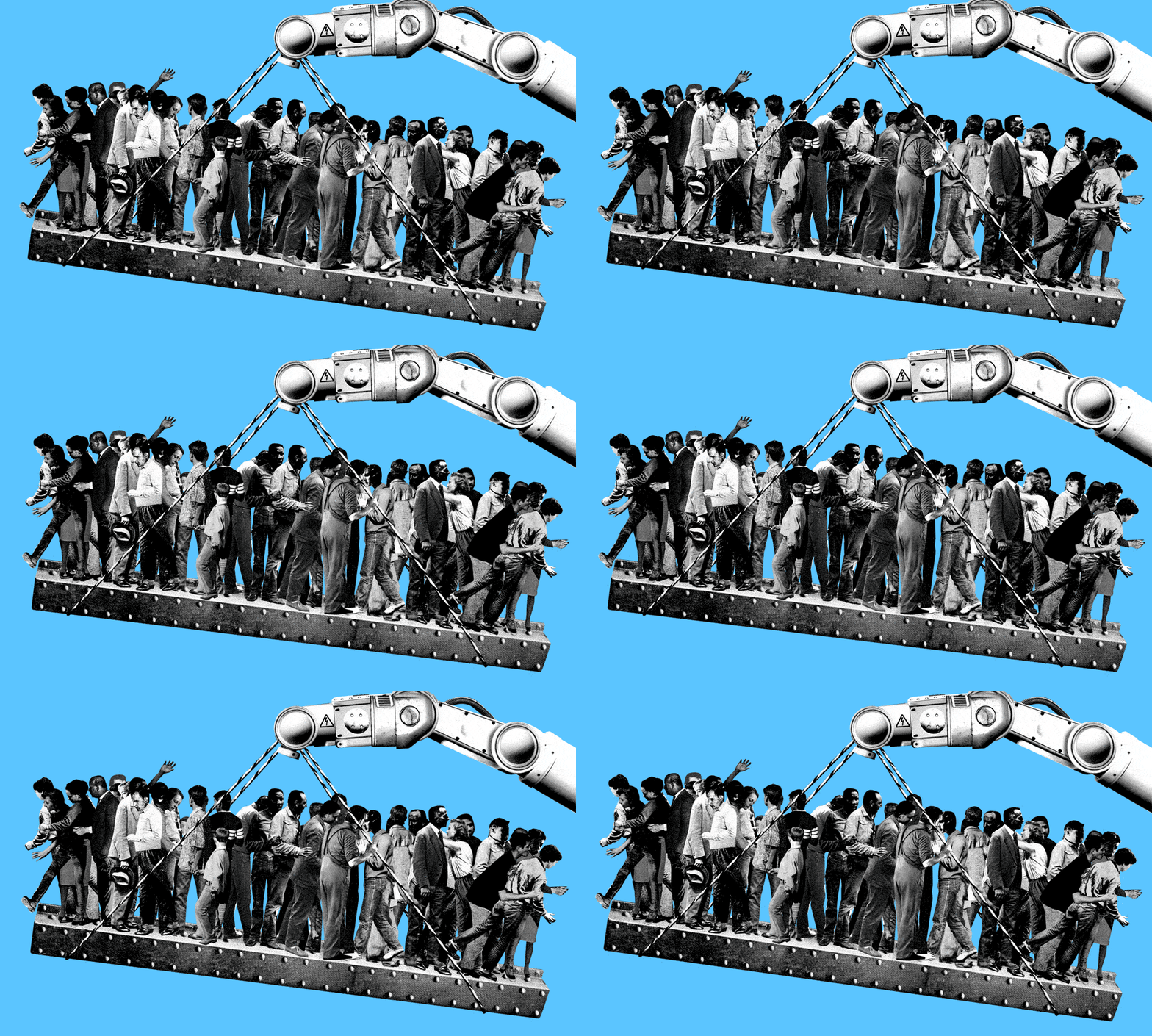
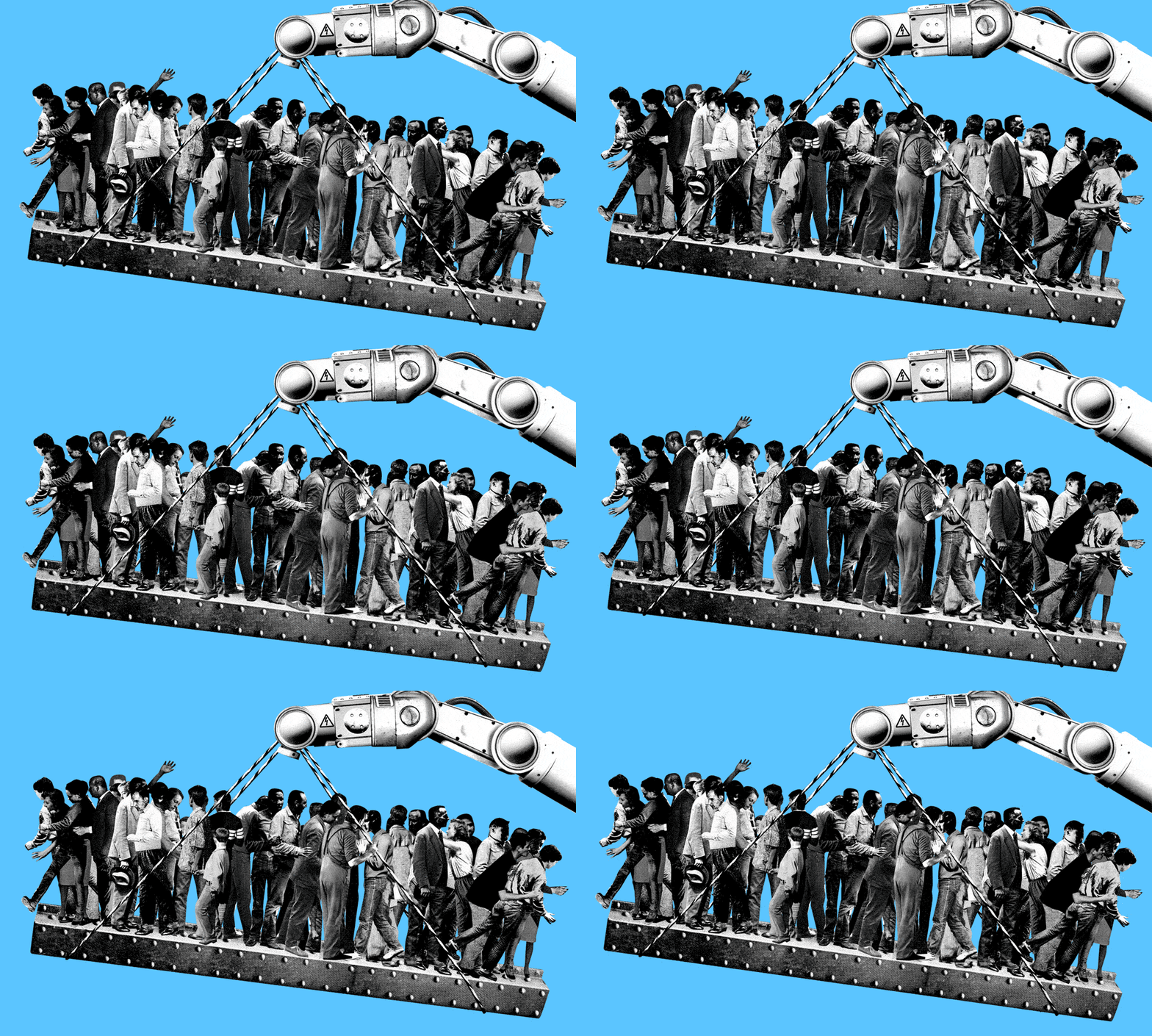
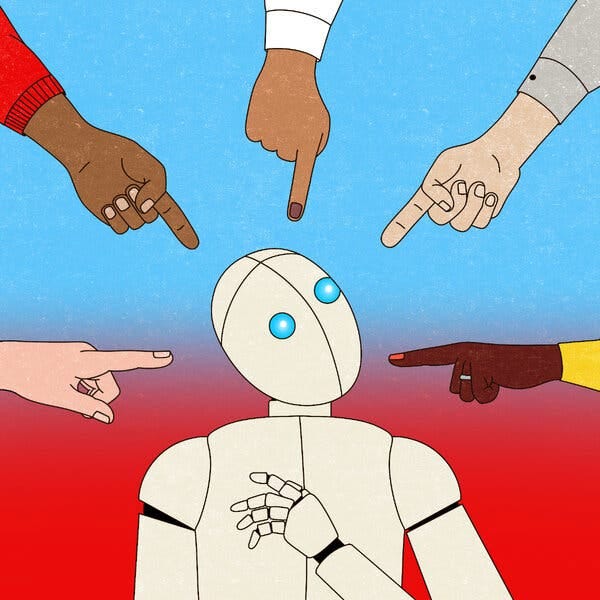
But for today, let’s come back to those job fear debates. As I’ve documented on a regular basis now, AI technologies continue to surprise on the upside as far as jobs are concerned. The latest data again provides an updated snapshot. And as usual, there’s good and bad news. The net Net is the question.
“The impact of AI on the job market is starting to show up in the data analyzed by Wall Street firms — so far it’s pretty modest, but certainly real.”
“Why it matters: New reports from Morgan Stanley and Goldman Sachs come in the wake of a deluge of doomsday predictions and tell a more nuanced story of how AI is changing the job market.”
First, my alma mater:
“Zoom in: Goldman Sachs looked at occupation-level federal data and scored jobs by AI exposure: separating roles that can be completely substituted by AI (proofreader) and those that can be considered complementary (doctor).”
“What they found: AI has both created and destroyed jobs over the past year.”
“It reduced employment in occupations that are easily substituted by AI, translating to a slight 0.16 percentage point increase in the unemployment rate.”
“At the same time, AI decreased unemployment by 0.06 point in jobs that are “augmented” by AI — roles that rely on things that machines cannot replace, like human judgment, interpersonal interaction and accountability.”
“Zoom out: Overall, AI raised the unemployment rate by just 0.1 percentage point, they find.”
So far, so minuscule on a net basis. Now on to Goldman’s nemesis:
“State of play: Morgan Stanley did a similar analysis — separating jobs by AI exposure. They come to a similar conclusion: AI added 10 basis points to the overall unemployment rate at most. That’s just 0.1 percentage point.”
“Between the lines: If you’re focusing only on how AI displaces workers, you’re missing the story, Joseph Briggs, an economist at Goldman Sachs, told my colleagues at Axios Macro in a recent interview.”
“Morgan Stanley’s analysis puts it this way: “Gen AI’s impact on labor demand is double-edged: The same technology that can automate tasks can also augment labor, raising productivity.”
So far, so fuzzy.
“Here’s a great example of how experts can have a hard time seeing the difference between AI substitution and augmentation.”
“Ten years ago, the godfather of AI, Geoffrey Hinton, famously said: “We should stop training radiologists now. It’s just completely obvious that within five years, deep learning is going to do better than radiologists.” nstead, what happened was that radiologists have broadly adopted AI and are using the tools to do their jobs better, as the New York Times reported last year.”
“The number of radiologists has increased, and their pay has gone up since Hinton’s comments, the Morgan Stanley paper points out.”
“Friction point: Companies this year are talking about AI displacing workers a lot more than they are talking about AI driving hiring, per an analysis the bank did of company earnings call transcripts.”
“They suggest that this might just be executives telling a story that investors want to hear: “Markets are rewarding cost-cutting narratives, which creates a strong incentive for firms to frame efficiency programs as AI-driven,” they write.”
“Transcript momentum should be read as directional, not definitive proof of incremental job losses.”
“The bottom line: AI’s impact on the labor market is small so far, and it’s more complicated than the doomers want you to think.”
Bottom line, there’s not enough in the data to be as fearful as we’ve been. But it’s inching in the right direction.
I’ve tended to be the net optimist for a long time on AI Tech.
I remain convinced that AI is going to surprise us on the upside, especially on global jobs creation. In fact we’re all going to be startled, blue collar or white collar, managers or workers, owners or employees, young or old, women or men, american or chinese (and everything in between), how useful this AI stuff turned out to be.
How it didn’t just ‘augment’ us, as self-appointed pundits like me kept saying. But it amplified us. And it aligned us more with each other than social media did to misalign us with each other.
So in the net analysis, AI is like to augment, amplify and align us.
All of the above is not hope and faith. But a net analysis based on decades spent on analyzing technologies and their impact. Compounded pattern recognition if you will.
And if anything AI technologies continue to feel like everything else before has been but a dress rehearsal. For net good things ahead.
As a reminder, MarketSurge (by Investor’s Business Daily) is now a sponsor of the weekly show. All the charts you have been seeing in the videos and...
Meta has unveiled a new prototype that may forever change how we interact with computers. Rather than relying on the traditional mouse and keyboard,...