
AI: Markets Looking Beyond Nvidia. AI-RTZ #1160


Sometimes the shiny glare hides the relevant detail. The one thing of real note under our nose.
Through every tech wave, I’ve found that markets tend to quickly focus on the opportunities beyond the leaders. Go on to secondary opportunities when the primary one has ‘done its thing’.
The logic is of course solid. Find the next one after the leader has broken out. But in that process, the leader is then often fundamentally under-appreciated on a relative basis. While the focus shifts to the next shiny thing in the tech wave.
This AI Tech Wave may be showing a similar trend in the fourth year of ChatGPT. And the leader in question may be Nvidia (not stock advice). Let’s unpack.
First, the market’s current frame of mind.
The Information makes its case in “Nvidia Shares Are Priced For Everything To Go Wrong: That Makes No Sense”:
“Shares of Nvidia don’t trade like those of a company whose revenues are expected to rise 83% this year. Instead, the stock is priced as though everything that could go wrong in the next couple of years will go wrong. That creates an opportunity for investors willing to take a longer view.”
The set-up is the relative performance gap with its peers.
“Most semiconductor investors are chasing the stocks they think will grow the fastest over the next few years. So while shares of Nvidia have appreciated just 10% so far this year, distant rival Advanced Micro Devices is up 142%, while memory chip maker Micron, whose business has exploded thanks to demand from AI data centers, is up 213% year to date. The Philadelphia semiconductor index is up 71%.”
So the secondary names of course did a LOT better than the primary one in this category. Including AMD, which I wrote about a few days ago.
(Those figures were struck mid-week. As of Friday’s close, Nvidia was at $206.84, up about 11% on the year, at a market cap near $5 trillion. Micron is nearer +223% and the Philadelphia semiconductor index +67%, after Friday’s chip selloff.)
The bear case itself is by now well established. Worth stating plainly, because I want to rebut the argument.
“The explosion in its AI chip business since OpenAI released the first AI chatbot, ChatGPT, has drawn in a bunch of challengers selling their own AI chips—startups such as SambaNova, Cerebras Systems and Groq (which ended up licensing its technology to Nvidia). Meanwhile, Google, which developed its own AI chip years ago, has begun selling it as well as renting it via its cloud unit. Amazon, which also has its own AI chip, is following suit. Meta Platforms, Microsoft, OpenAI and Anthropic have all taken some steps toward developing their own AI chips.”
Add to that AMD’s Helios rack systems, shipping later this year against Nvidia’s Grace Blackwell and Vera Rubin.
And add the law of large numbers, which the piece puts simply:
“Nvidia’s revenues are now so big, rapid growth is just harder for it to achieve than for smaller firms.”
That’s the whole bear case. Competition from its own customers, competition from AMD, and “How much bigger can it get?”
Then the valuation gap that follows from it.
“As a result, AMD is trading at 53 times next year’s earnings, according to S&P Global Market Intelligence, while Nvidia is trading near its lowest multiple of next year’s earnings since July 2021.”
(Other screens put AMD closer to 59x to 70x forward, which only widens the gap.)
Nvidia trades near 23 times next year’s earnings, and about 17 times the year after. Against a five-year average P/E near 36 times. Morningstar’s Brian Colello carries a $280 fair value on it, raised from $260 in May. The stock sits about 30% below that.
“Nvidia trades at a cheap multiple if you go back a couple years out, so the big question is, two years from now, is there still going to be significant growth in hyperscaler capex, enterprise capex? Does Nvidia maintain most of its market share? We think those answers are yes, and that’s why the stock is undervalued,” said Colello.
And the growth being discounted here is not small. Consensus has Nvidia at roughly $394 billion in sales this fiscal year, up about 82%. Then $552 to $556 billion the following year, up about 41%. The last reported quarter was $81.6 billion, up 85% year over year, with the data center piece at $75.2 billion, up 92%. This quarter is guided to about $91 billion.
AMD’s consensus is $76.3 billion in 2027, up 54%. As the piece notes,
“That hardly justifies the premium at which AMD trades.”
So the bottom line. Nvidia is no longer viewed as a ‘growth stock’.
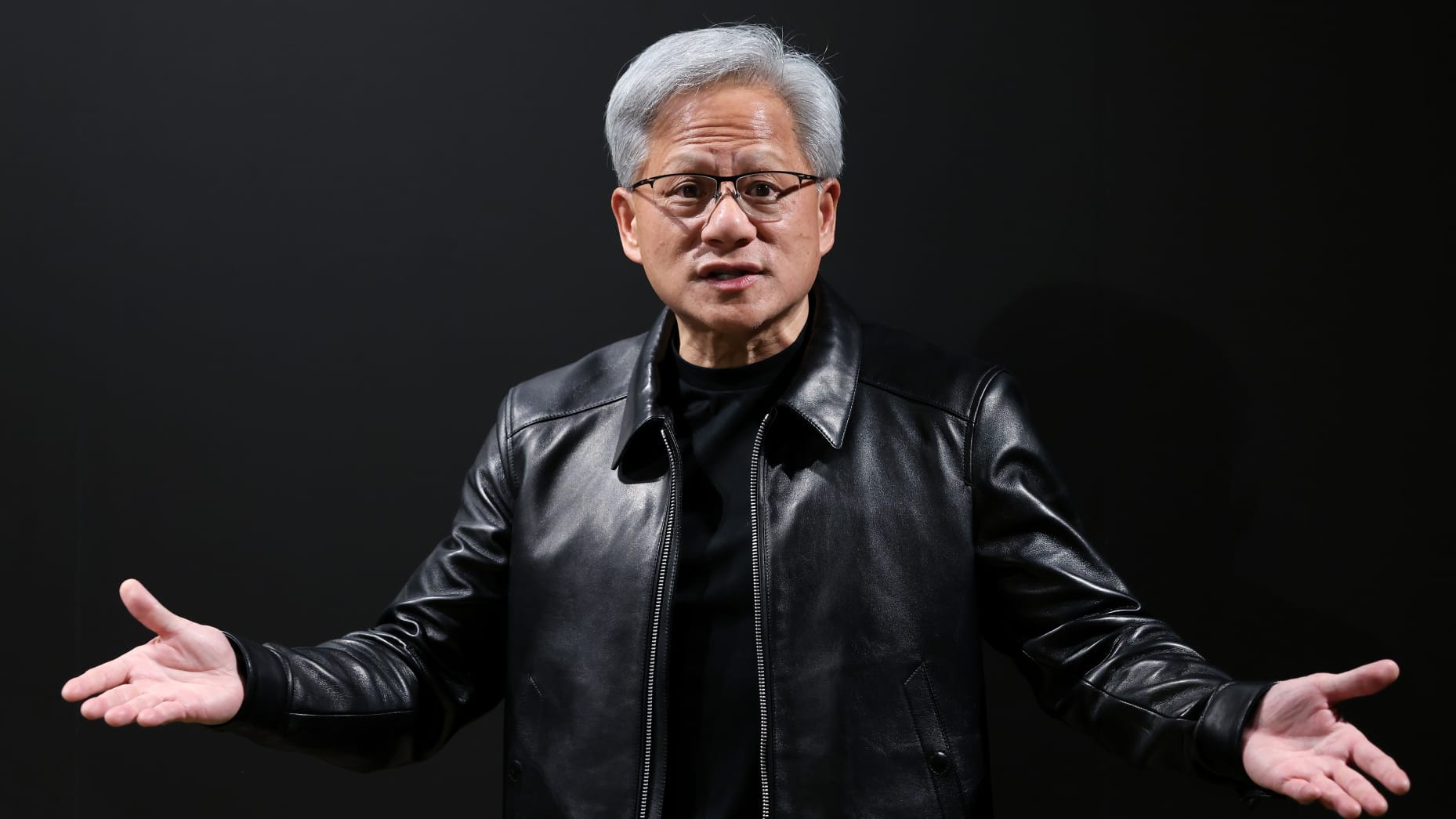
“Investors in semiconductors are gravitating toward growth stories where they perceive the ‘most acute supply-demand imbalances, where there is a sort of untapped growth opportunity,’ said John Belton, portfolio manager at Gabelli Funds. ‘Nvidia at this point doesn’t really fit any of those criteria.’”
Except one fact inside that well-argued bear case doesn’t fit it.
“Despite all these challenges, Nvidia remains the dominant supplier of AI chips. Its share of the market for chips used in inference, the process of running the models rather than training them, has actually risen, The Information reported recently.”
Inference was supposed to be where the custom chips took share. It’s where Nvidia is gaining.
So here are six things I think the bear case is missing.
One. The ‘Frenemies’ custom silicon everyone is building is a complement, not a replacement.
Every large Nvidia customer pursues an ASIC alternative. Partly for real, and partly for show. But mostly to show the market that they have a strategy to improve margins down the road. Through the current AI chip supply constraints.
And almost all of them stay 60 to 80% Nvidia-dependent in practice. The in-house parts get pointed at specific inference workloads at specific price points, not at the whole stack.
Meanwhile Jensen’s ‘paranoid’ edge keeps compounding Nvidia’s moat where it matters most. An extraordinary regular execution of AI chips & systems evolution that costs billions in global supply chain innovation.
So far the chain has been Pascal (2016), Volta (2017), Ampere (2020), Hopper (2022), Blackwell (2024), Vera Rubin (2026), and Feynman to come (2028).
Performance and efficiency per token is the core system goal, beating Moore’s Law by orders of magnitude (OOM) thus far on the regular tick-tock chip evolution. A lot harder to do than it looks.
Competitors will be hard pressed to match. All the while supported by massive layers of expanding open source and CUDA-related software frameworks.
Which is the one metric that customers can ultimately count on, both technically and financially.

And note that the same big tech companies building their own chips continue to clamor for Nvidia’s wares. Both things have been true at the same time for years now. And no major reason to pause now until through the end of this decade.
Two. Jevons Paradox is working in Nvidia’s favor, not against it.
The flood of cheaper and more efficient models, many of them open source and increasingly from China, doesn’t shrink demand for compute. Via the ‘Jevons Paradox’, cheaper compute expands and accelerates the market for it.
Which means the very competition the bears point to is also the thing enlarging Nvidia’s addressable market. I’ve been making this point most of the way thus far, and I’d make it harder today.
Three. Nvidia’s self-driving edge is this exact under-appreciation, already visible in one vertical, self-driving cars.
Nvidia’s open platform, Orin to Thor on the silicon side and Alpamayo on software, is already deployed by over two dozen global automakers, including BYD and others in China. And it gets a fraction of the attention that Tesla, Waymo and Uber attract for the same end market ambitions. Both in terms of self-driving cars and robotaxi fleets.
I’ve called Nvidia the most under-appreciated player in AI-defined vehicles for a while now. Same pattern as the stock. The picks-and-shovels leader ends up the least-discussed name in its own category.

The same holds for local AI compute and robotics.
Four. The market pays trillion dollar premiums for other tech/AI public companies, and nothing for now for Nvidia’s growing platform expansions into these future trillion dollar markets.
Investors give Elon’s SpaceXAI and Tesla a trillion dollar public premium each, for robotaxis and robots. Ahead of any threshold of real reality of their ability to deliver at scale globally vs Nvidia. These are both markets that will eventually blossom globally. But they will take years longer to be real than the markets assume for the above-mentioned Nvidia peers.
Meanwhile to emphasize again, the company already shipping the platform into over two dozen global automakers gets no premium at all for it.
I’m not arguing the Elon premium away. I’ve written plenty on why it’s there. I’m pointing at the aspirational asymmetry by investors.
Five. Jensen is the picks-and-shovels supplier to every side. And he picks every side and is the uber-allocator of supply-constrained AI chips and systems to all.
He partners with Nadella, Jassy, Pichai, Ellison, Zuck and Elon. He shows up and delivers the systems personally. And he is the ‘Kingmaker’ to AI startups galore up and down the tech stack.
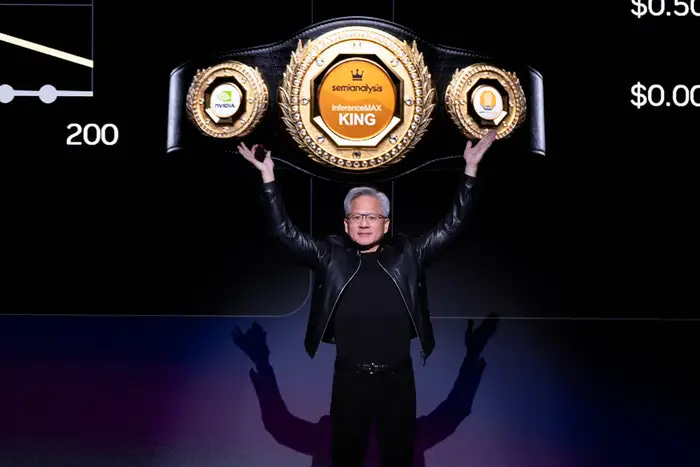
That is a large part of why the customer-competition story keeps not mattering as much as it reads. A supplier who is a partner to all six of your competitors is a hard thing to replace with a chip you designed for one workload.
Nvidia plods away. Executing growth strategies more adroitly than its peers. And being relatively under-appreciated for it.
Six. Nvidia has turned technical leadership into open source AI standards leadership.
I argued a while back that Nvidia and Apple should be the US champions for open-source AI. That has now happened out in the open.
Nemotron models are going out to US government agencies.
And Jensen used his first-ever post on X to lead an open letter to the White House with about 25 companies against restricting open models. By Saturday the count had roughly doubled. Anthropic is the one prominent AI company that has not so far signed on to support this initiative.
Even OpenAI, which seemed to be shifting to the anti-open-source side, has now indicated that it will support open source AI. Although reports continue that it is in DC arguing the opposite behind closed doors. So the ultimate direction for them remains uncertain.
Jensen, for what it’s worth, gained almost a million followers, and over 60 million views of the posted letter.
We discussed it on Friday’s show.
Nvidia is of course arguing for a policy that serves its long-term interests. But it’s also the right approach to take for the global AI ecosystem in the long term. And contrary to current fears in DC and elsewhere.
And The Information lands on a version of point one, at the very end.
“But investors may be underestimating the value of Nvidia’s long experience in making AI chips—particularly in the event of a pullback by tech firms such as OpenAI from AI investment. If that happens, many of the companies new to chip development may throw in the towel and stick with Nvidia. In other words, an AI bust would arguably hurt Nvidia less than newer chip designers whose product is still being proven.”
“Moreover, while Nvidia’s strategy of investing in potential customers—such as neoclouds Nebius and CoreWeave—has been criticized lately, that approach will likely protect its business in the event of a downturn.”
Which is worth digesting.
Two more things from the last few days.
First, SK Group and Nvidia unveiled a $500 billion-plus AI data center initiative on Friday, announced around Jensen’s meetings in Seoul with President Lee Jae Myung. SK Telecom will build a 2-gigawatt AI factory on Nvidia’s DSX and Vera Rubin platforms, launching in 2027. And SK hynix signed a long-term agreement to supply and co-develop next-generation high bandwidth memory (HBM).
That’s one country, one group, one week. It’s at least a partial answer to “How much bigger can it get?”

Second, the calendar is about to buttress the AI investment growth case ahead.
Microsoft, Meta, Amazon and AMD all report this week. Alphabet already raised its 2026 capital expenditures to $195 to $205 billion from $180 to $190 billion, and said the number goes up significantly again in 2027. Nvidia itself reports on August 26.
“For the moment, though, there’s no sign that the massive investment in new chips is slowing down.”
So the answers on continued global AI investment growth arrive in days, not quarters.
The whole Information piece above is worth a fuller read for the charts and details.
But the key takeaway remains.
In a bull market, investors often have their eyes on the others trying to catch up on the leaders. And not as much on the leaders.
Don’t let the glare distract from who’s really ahead. And relatively under-appreciated at this point in the AI Tech Wave. Stay tuned.
(NOTE: The discussions here are for information purposes only, and not meant as investment advice at any time. Thanks for joining us here.)


