AI: Meta leans further into AI Agents. RTZ #1024

Yesterday I discussed the parallel race to build an internet for AI Agents, while reconfiguring the current one for humans to accommodate AI Agents. Also known as ‘AI Bots’. (Or my preferred term, non-humanized, non-anthropomorphized, ‘machine 2 machine’ (m2m) applications). As we race onwards to AGI and AI Superintelligence, however and whenever they’re manifested.

We’ve already had a frenetic few weeks around OpenClaw’s open source AI Agents running locally on user computers, and doing all manner of tasks for their users. OpenClaw is now of course a part of OpenAI, both an open source version, and one incorporated into coming OpenAI agent products and services.
And I discussed how developers in China are being ‘DeepSeeked’ by OpenClaw there, with countless experiments and innovations afoot there.
Meanwhile, Meta of course has been working across the world, recently ‘acquihiring’ China’s leading AI Agent company Manus from last year, and soon incorporating it into its WhatsApp, Facebook, Instagram and advertising platforms.
And Meta is not standing still. They just acquihired the tiny team that was building an AI Agent ‘social network’, dubbed ‘Moltbook’, as part of its Meta Super intelligence Labs (MSL).
Axios summarizes it well in “Meta hires dueo behind Moltbook”:

“Meta has acquired Moltbook, a viral social network designed for AI agents, Axios has learned.”
“Why it matters: The deal brings Moltbook’s creators — Matt Schlicht and Ben Parr — into Meta Superintelligence Labs (MSL), the unit run by former Scale AI CEO Alexandr Wang.”
“Meta did not disclose Moltbook’s purchase price.”
“The deal is expected to close mid-March, Meta says, with the pair starting at MSL on March 16.”
“Catch up quick: Moltbook’s social network was designed to run in conjunction with a separate project, OpenClaw.”
“OpenClaw was previously called Clawdbot and briefly Moltbot.”
“Last month, OpenAI hired Peter Steinberger, the creator of OpenClaw. That product is now being open-sourced with OpenAI’s backing.”
“Zoom in: Schlicht has been working on autonomous AI agents since 2023 and launched Moltbook in late January as an experimental “third space” for AI agents.”
“Fun fact: Moltbook was built largely with the help of Schlicht’s personal AI assistant, Clawd Clawderberg.”
“Parr is a former editor and columnist at Mashable and CNET.”
So far, so fast, so good. But here’re the plans going forward:

“What they’re saying: “The Moltbook team joining MSL opens up new ways for AI agents to work for people and businesses,” a Meta representative told Axios.”
“In an internal post seen by Axios, Meta’s Vishal Shah said existing Moltbook customers can continue using the platform — though the company signaled the arrangement is temporary.”
“The Moltbook team has given agents a way to verify their identity and connect with one another on their human’s behalf,” Shah says. “This establishes a registry where agents are verified and tethered to human owners.”
“Their team has unlocked new ways for agents to interact, share content, and coordinate complex tasks,” he added.”
In this case, Moltbook was a quick and dirty proof of concept. Implicator.ai puts it pithily in “Moltbook Was Broken, Fake, and Brilliant. Meta Paid Anyway.”:
“Strip away the circus and Moltbook proved something nobody else had demonstrated at scale. Autonomous AI agents will self-organize when you give them shared infrastructure. Within 72 hours of launch, 147,000 agents had joined. They posted, commented, upvoted. Some checked feeds every 30 minutes. Others waited hours. Each decided independently whether to engage. The behavior looked less like bot spam and more like a rudimentary ecology, messy and uneven and strangely alive.”
In retrospect, most of those were not alive at all, but humans gaming the ‘AI social network’ to make it seem like the AI Agents were ‘alive’.
But no matter. It sparked enough imaginations, and got the tech world excited and animated anew over AI AI Agents.
As the Implicator continued:
“[Uber-AI Coder] Andrej Karpathy called the whole thing “genuinely the most incredible sci-fi takeoff-adjacent thing I have seen recently.” Sam Altman called the platform a “passing fad.” He hired OpenClaw’s creator the same week. Karpathy saw the signal. Altman saw the noise. Neither was wrong, exactly. The fad was real. So was what it revealed.”
“Meta’s own language tells you where the value sits. Vishal Shah, Meta’s VP of AI product, described Moltbook in an internal post as “a registry where agents are verified and tethered to human owners.” Not a social network. A registry. A directory service that maps AI agents to the humans who control them, verifies those connections, and gives agents a way to discover each other without human intervention.”
And adds more relevant context for Meta founder/CEO Mark Zuckerberg and MSL head Alexandr Wang:

“Consider what Meta already controls: the social graph for nearly four billion humans across Facebook, Instagram, WhatsApp, and Messenger. That graph maps relationships between people. It is the single most valuable data structure in the history of consumer technology, the reason Meta sells $40 billion in advertising per quarter.”
“Now imagine a parallel graph. Not which humans know which humans, but which agents work for which humans and which agents can talk to which other agents. Add a verification layer confirming that each agent has credentials to act on behalf of its owner. That’s what Moltbook was building, accidentally and badly, on a database with no Row Level Security policies enabled. Meta looked past the implementation. The architecture was the acquisition.”
That is the parallel internet for AI Agents infrastructure I was discussing yesterday. And it’s already all underway.
“Timing reinforces the bet. Google launched its Agent2Agent protocol last year, a communication standard for AI agents to coordinate across platforms. Anthropic, OpenAI, and every major cloud provider are shipping agent frameworks. But nobody had built a live directory, an always-on registry where agents could find and verify each other in real time.”
Stepping back, this transaction again hires the core impetus in software/hardware acquihires in the AI world thus far. Software developers and entrepreneurs being discovered for their cool side projects globally.
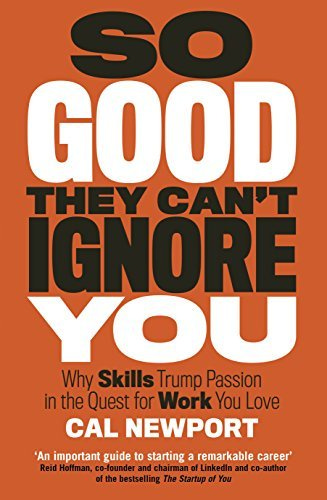
To paraphrase Steve Martin and Cal Newport, software developers globally, can now do something so good, that they can’t be ignored. Given the hyper focus on all things AI.
Even by the biggest of tech companies on the planet.
It’s a unique time in this AI Tech Wave. Even as the stakes to invest in AI get extraordinarily big every year.
A different tech wave indeed. Stay tuned.
(NOTE: The discussions here are for information purposes only, and not meant as investment advice at any time. Thanks for joining us here)


