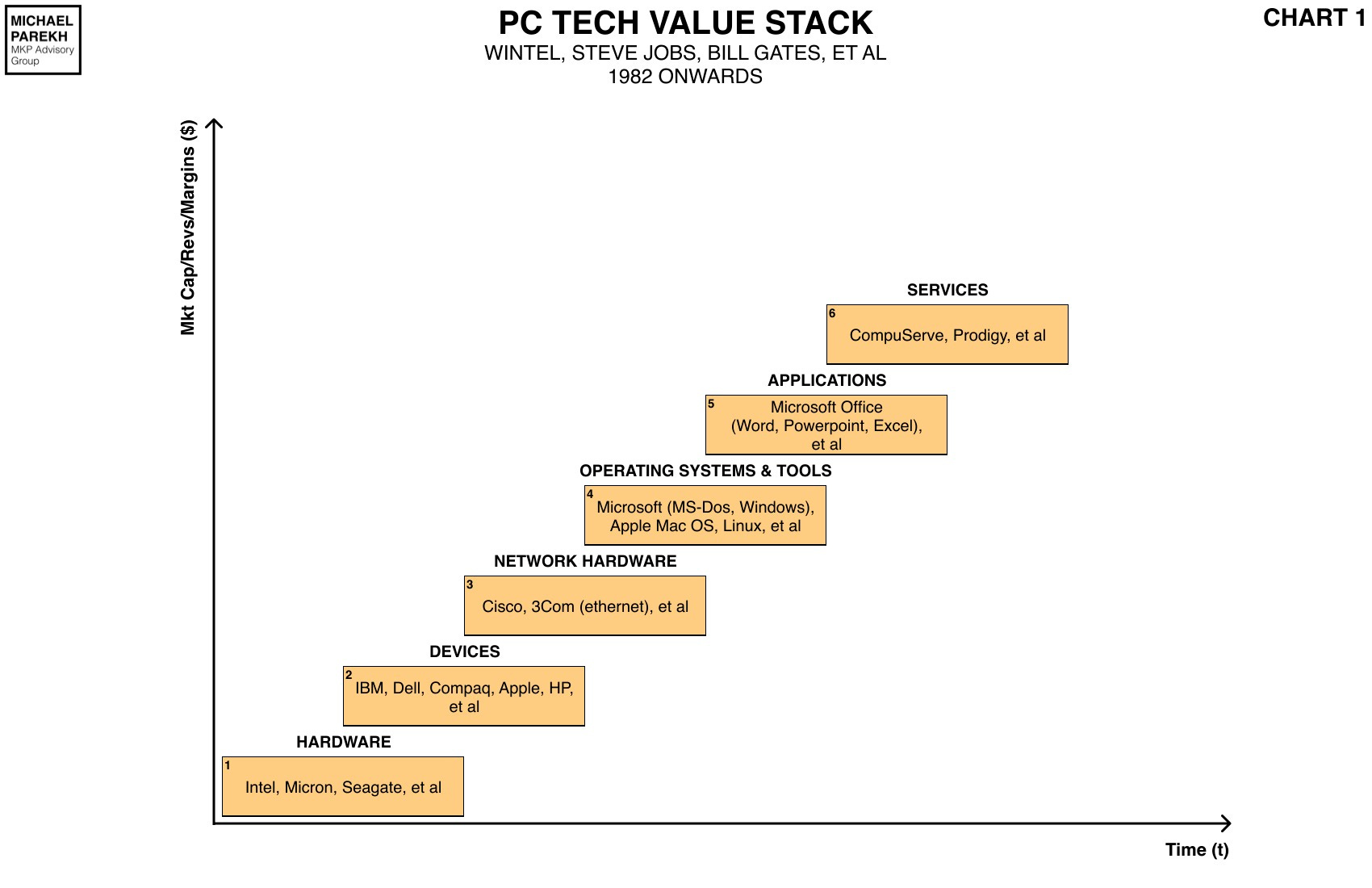
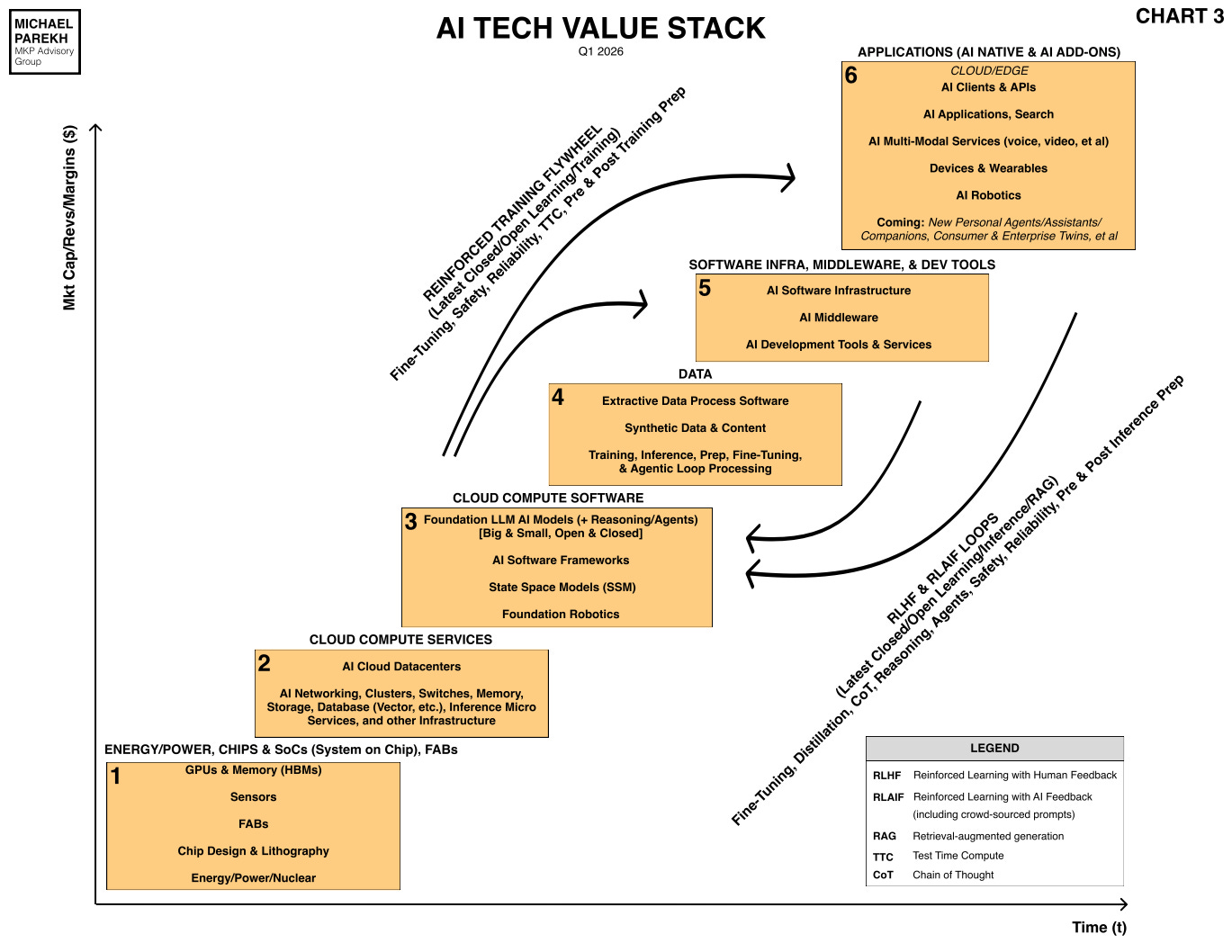
New vertical AI applications are being rapidly integrated, aka ‘harnessed’ horizontally, into cloud and local AI operating environments in the AI Tech Wave. And then bundled into new pricing packages for end customers. Just as they did starting with the PC Tech Wave in the 1980s and 1990s.
And it has big potential implications for AI financial models of both incumbents and AI startups going forward. Especially given recent concerns of AI induced ‘software apocalypse’. Not to mention the implications for end users of these technologies, and the choices they’re offered as the AI technologies evolve rapidly. Let’s unpack.
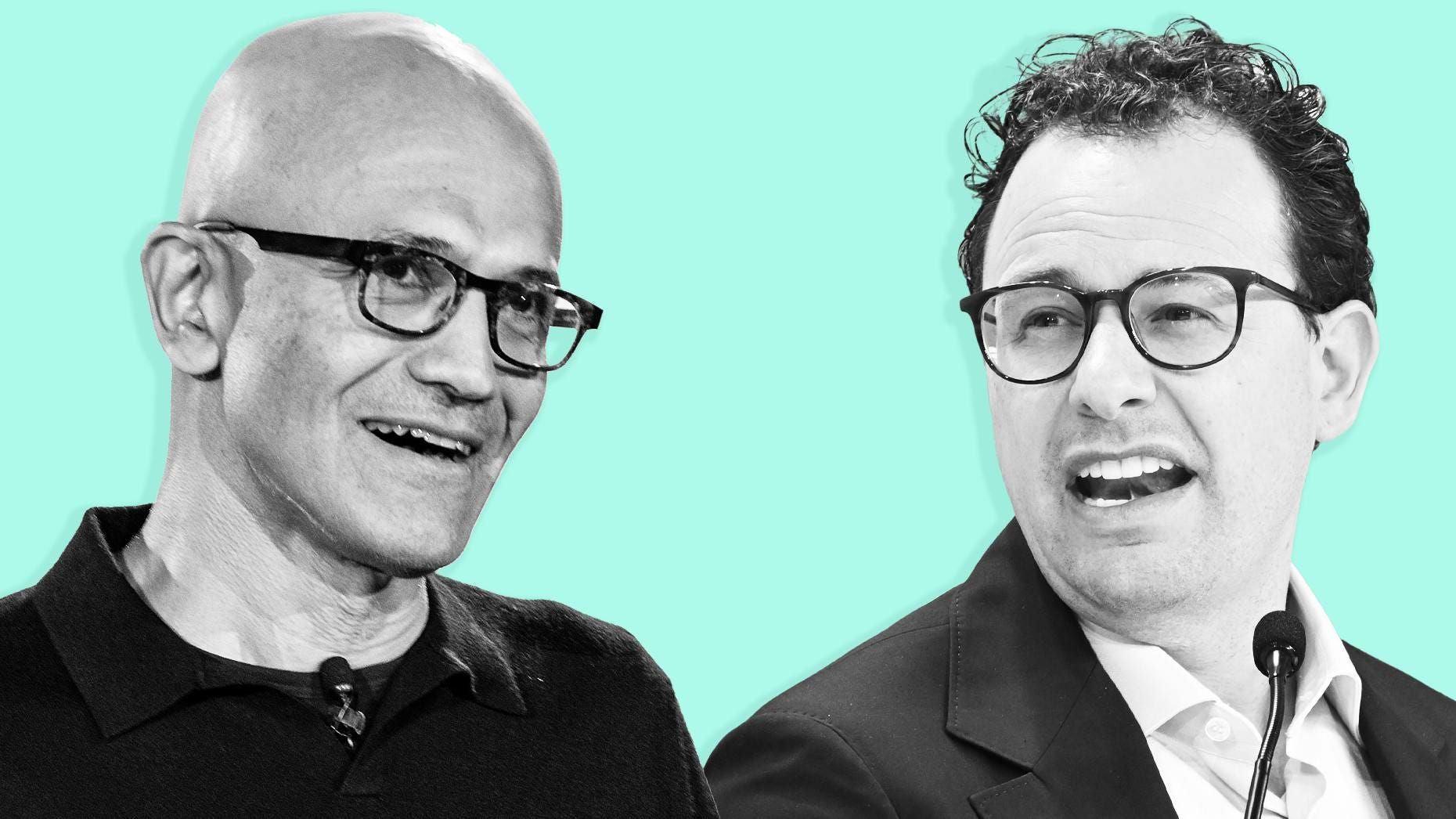
Microsoft announced an aggressive new ‘bundle’ for its 450+ million users of its Office 365 globally, offering ‘Copilot Cowork’, a new $99 per month per user AI Focused software bundle for its enterprise customers.
First, each tech wave has their own language of new words that evolve over time.
The PC tech wave had unprecedented productivity applications like Lotus 1-2-3 spreadsheets, and Wordperfect word processors that ran on nascent PC operating system platforms like Microsoft’s MS-DOs and then Windows in the 1980s and 1990s respectively.
Today in the AI Tech Wave, it’s vertical AI applications and services like Anthropic’s Claude Code and CoWork, that can now be integrated into Cloud operating platforms like Microsoft Azure, hosting its cloud based application platforms like Office 365.
The new words this time are ‘Harness’, as in Anthropic’s Claude CoWork is using Microsoft’s Copilot as a harness to deliver its capabilities to Microsoft’s end customers in the enterprise.
“Microsoft is adding Anthropic’s AI technology to its Copilot service to tap growing demand for autonomous agents, weeks after the startup’s new tools sparked a selloff in software stocks. The company on Monday unveiled Copilot Cowork, a tool based on Anthropic’s viral Claude Cowork offering, which has captivated Silicon Valley with its ability to handle complex tasks such as creating apps, building spreadsheets and organizing large volumes of data with limited human oversight. Microsoft is betting that its long-standing ties with enterprise customers and its focus on security and data controls will help it win business from companies interested in AI agents but wary of deploying them without safeguards.”
Microsoft of course offers a whole horizontal layer of trust, privacy and security on top of Anthropic’s AI application, to its hundreds of millions of enterprise end user customers in the cloud.
“We work only in a cloud environment and we work only on behalf of the user. So you know exactly what information it (Copilot Cowork) has access to,” Jared Spataro, who leads Microsoft’s AI-at-Work efforts, told Reuters. Claude Cowork only works locally on the device and most companies feel “very uncomfortable” with that, he said. “We’re the opposite.”
This is the same set of new Anthropic AI products that triggered the so called $300+ billion ‘software apocalypse’ in the SaaS (software as a service), enterprise application market over the last few weeks.
“The launch comes weeks after Anthropic introduced new tools for Claude that intensified investor concerns about the threat AI agents could pose to traditional software companies, triggering a selloff in the sector. Microsoft’s own shares fell nearly 9% in February. Copilot Cowork tool is currently in testing and will be available to early-access users later this month, Microsoft said.”
“The company did not disclose pricing, but said some usage would be included in its $30-per-user, per-month M365 Copilot offering for enterprises, with additional usage available for purchase. Microsoft also said it is making Anthropic’s latest Claude Sonnet models available to M365 Copilot users. The service had previously relied only on OpenAI’s GPT models.”
“This is a fascinating product launch on multiple levels. Start with the inclusion of Claude in Copilot: Microsoft has been signaling for months that they were determined to be model agnostic; for example, here was CEO Satya Nadella on the last earnings call:”
“I want to talk about the agent platform. Like in every platform shift, all software is being rewritten. A new app platform is being born. You can think of agents as the new apps and to build, deploy and manage agents, customers will need a model catalog, tuning services, harness for orchestration, services for context engineering, AI safety, management, observability and security.”
This ‘harnessing’ of vertical AI applications into Microsoft’s horizontal platform applications, as been in the planning for months.
Again, as Stratechery goes on to explain:
“This was in the context of agents, but Nadella was making the multiple models argument in the context of Azure for the last couple of years, after the company originally planned on optimizing around OpenAI but nearly got burned with the management upheaval at that company in November 2023. What Claude in Copilot represents is Microsoft implementing that multi-model strategy further and further up the stack: first as an offering on Azure, then as a platform offering, and now in the application layer itself.”
“Microsoft is taking a classic “commoditize your complements” approach and it’s exactly how the company should be leveraging its horizontal position in the value chain; from last month’s Microsoft and Software Survival.”
“While this battle is happening, there will be another fundamental shift taking place: yes, humans will be using software, at least for a while, but increasingly so will agents. What isn’t clear is who will be creating the agents: I expect every SaaS app to have their own agent, but that agent will definitionally be bound by the borders of the application (which will be another reason to expand the app into adjacent areas). Different horizontal players, meanwhile, will be making a play to cover broader expanses of the business, with the promise of working across multiple apps.”
Much rests on the integration of the vertical and horizontal applications, across two or more software vendors:
“Copilot Cowork specifically — which is distinct from using Claude models in Copilot — fits this concept to a degree (there’s a good demo of its capabilities here; basically, instead of being a chatbot, you have a worker who can accomplish a task). First, it is designed to interface directly with Work IQ, which gives the agent context without the user needing to do anything. Secondly, and relatedly, while Claude Cowork is designed to run locally and access your files on your computer, Copilot Cowork only works in the cloud. This is, as the Reuters excerpt noted, a feature, not a bug: local computers and files are a security hole, while corporate IT teams have much more control over what is or is not in a cloud environment, and who or what does or does not have access — and everything is logged.”
“This is actually another argument in favor of the Thin is In thesis: if you accept the argument that AI adoption is going to be driven in a top-down fashion, then it follows that AI usage is going to be centralized in the enterprise’s cloud, not run locally.”
And there are important marketing implications of course for both customers vis a vis their own customers. Aligned for now…
“This, by extension, gets at what is clearly a much deeper relationship between Microsoft and Anthropic than was previously reported. Microsoft said in their blogpost announcing Copilot Cowork:”
“Copilot Cowork runs within Microsoft 365’s security and governance boundaries. Identity, permissions, and compliance policies apply by default, and actions and outputs are auditable. Cowork runs in a protected, sandboxed cloud environment, so tasks can keep progressing safely as you move across devices. This is what makes execution durable at enterprise scale.”
Each company is of course trying to showcase its own capabilities separately, while they deliver and distribute these new integrated AI capabilities together. As Microsoft tries to clarify here:
“Working closely with Anthropic, we have integrated the technology behind Claude Cowork into Microsoft 365 Copilot. It is this multi-model advantage that makes Copilot different. Your work is not limited by one brand of models. Copilot hosts the best innovation from across the industry and chooses the right model for the job regardless of who built it. This is a pattern of work that will only become more powerful as new models and ways of working emerge.”
Microsoft of course has the additional incentive, and challenge, of making this work with other vendors beyond Anthropic itself:
“In fact, Copilot Cowork is not multi-model: it only works with Claude, and that is because Anthropic is demonstrating their own point of differentiation. Specifically, what makes Cowork work — and this applies to Claude Code and OpenAI’s Codex as well — is not just the model but also the harness, which is the software that understands how and when to use the model to accomplish specific tasks. Microsoft would surely love to be able to use any model to make Cowork function, because that would mean they could garner all of the margin from it; they can’t, however, because Anthropic has a point of integration that Microsoft can’t (yet) touch.”
“That gets to the most unknown aspect of this deal: what are the terms? On one hand, Microsoft is surely paying Anthropic a healthy margin, because Cowork is something Anthropic is uniquely capable of providing; on the other hand, Microsoft’s ability to incorporate Cowork into Work IQ and an enterprise’s cloud environment, and to do so at worldwide scale, is something that Anthropic has no hope of accomplishing for years if ever. Distribution still matters, and Microsoft is bringing that to bear in a major way.”
Next is the other question of ‘how many’ ultimate humans vs ‘AI Agents’ eventually:
“There’s one big problem with this starting point, however: it’s shrinking. Owning and organizing a company by identity is progressively less valuable if the number of human identities starts to dwindle — and, with a per-seat licensing model, you make less money. That, by extension, means that Microsoft should feel a significant amount of urgency when it comes to fighting the adjacency battles I predicted above. First, directly incorporating more business functions into Microsoft’s own software suite will make Microsoft’s agents more capable. Secondly, absorbing more business functions into Microsoft’s software offering will let the company charge more. Third, the larger Microsoft’s surface area, the more power it will have to compel other software makers to interface with its agents, increasing their capability.”
All this underlines the underlying complexity of the partnership going forward.
“What is clear is that Microsoft is not going to be burdened by “not-built-here” syndrome, one of the company’s longest-running afflictions. Yes, these announcements are, in broad strokes, about commoditizing complements; Cowork, however, is the announcement that truly mattered, because it’s the functionality that is going to be Microsoft’s strongest argument that this price increase is worth paying, and it’s functionality that is not
commoditized: Microsoft might want to not need OpenAI, but they do, for now, need Anthropic and their integration of model and harness”
The whole piece is worth a read for the additional nuances of the issues here.
It can be interpreted in many different ways by investors and the media.
“Satya just revealed Microsoft’s entire AI strategy in one product name.”
”They took the exact product that wiped $220 billion off their market cap in six weeks, licensed the underlying technology from the company that built it, and shipped it as a Copilot feature. The CEO of the world’s largest software company looked at the thing that triggered a trillion-dollar SaaS selloff and said “we should sell that.”
”This is the most expensive acqui-hire of a product concept in tech history. And they didn’t even acquire anything.”
”The math on Copilot tells you why they had to do it. 15 million paid seats as of January. That’s 3% of Microsoft’s commercial M365 base. Two years of pushing Copilot at $30/user/month across the largest enterprise distribution channel ever built, and 97% of their own customers passed. The product that was supposed to justify $37.5 billion in quarterly capex couldn’t crack single-digit attach rates.”
”So they’re doing what Microsoft always does when organic product development stalls: bundle and reprice. The new E7 tier costs $99/user/month, up 65% from E5 at $60. Copilot is now included rather than sold as a standalone add-on. They’ve repackaged the thing customers wouldn’t buy separately into a tier customers might buy for the security and identity tools.”
”But the real reveal is the model layer. Claude Sonnet is now available across all of Copilot Chat. For two years, M365 Copilot ran exclusively on OpenAI’s GPT infrastructure. OpenAI still represents roughly 45% of Microsoft’s cloud contract pipeline. Today’s announcement tells OpenAI that exclusivity is over, and tells the market that Microsoft’s $13 billion bet on OpenAI wasn’t enough to win the agentic race on its own.”
”Here’s the part that matters for every PM and enterprise buyer watching this. Copilot Cowork runs within M365’s security and governance boundaries. That’s the pitch: your IT admin controls the blast radius. But the original version of this technology runs on your actual desktop, across any application, reading your files and manipulating your OS directly.”
”Microsoft is selling containment. The product they copied from is selling capability. One approach locks AI inside the apps you already pay for. The other approach makes the apps irrelevant by working above them.”
”Every enterprise CIO now faces a binary choice. Pay $99/user/month for AI that operates within the M365 boundary and keeps your compliance team happy. Or let individual employees use the original for a fraction of the cost and get 10x the surface area.”
”MSFT is down 15% year to date. They’re spending more per quarter on capex than they spent per year in 2023. The primary justification for that spending is a product with 3% penetration that just got partially outsourced to a competitor’s architecture.”
”The E7 bundle is a bet that enterprises will pay a 65% premium for the governance wrapper around AI they can get elsewhere for less. That bet has about two quarters to prove itself before the market starts asking harder questions about the $150 billion annual capex run rate.”
This strategy of ‘containment’ only works if the underlying technologies being bundled and resold don’t change much and/or very fast.
But that isn’t what’s happening here. Anthropic’s Claude Cowork is evolving very fast. As a product, it’s barely a few weeks old, having been built rapidly by Anthropic’s world-class AI Research engineers on top of Claude Code, which is itself barely a year old.
What Microsoft is doing is bundling that pulsating electric wire, shielding it, and reselling it as a useful, ‘safe’ cable to its customers. The customers have to decide if by doing that, they forgo the potential benefits of working with the bundled technology directly.
While other Anthropic’s peers race to build their own versions of Claude Cowork this year.
And then Microsoft works hard to bundle OpenAI’s version into Copilot Cowork and then re-bundle and sell that again to their enterprise customers. While working hard to contain all the points of security vulnerabilities in all rapidly changing software.
These dynamics, multiplied countless times via companies far beyond Anthropic and Microsoft, highlights what is underway in enterprise software as AI technologies and applications are just being invented.
We’ve seen this movie before in earlier tech waves. Just not at this pace and scale globally. With far bigger stakes for all the parties involved at this early stage of the AI Tech Wave.
There will be ongoing, dynamic, technical and financial challenges for all participants. Especially as the underlying technologies rapidly evolve. And markets public and private, will see volatility due to these dynamics. Stay tuned.
(NOTE: The discussions here are for information purposes only, and not meant as investment advice at any time. Thanks for joining us here)
Well, as expected in Las Vegas, Nvidia founder/CEO Jensen Huang’s keynote at CES 2026 was worth the watch. Just like last year. One gets the sense that...
Strategy Why we diversify. (awealthofcommonsense.com) On the importance of portfolio rebalancing. (thefinancialbodyguard.com) Pessimists persist because...