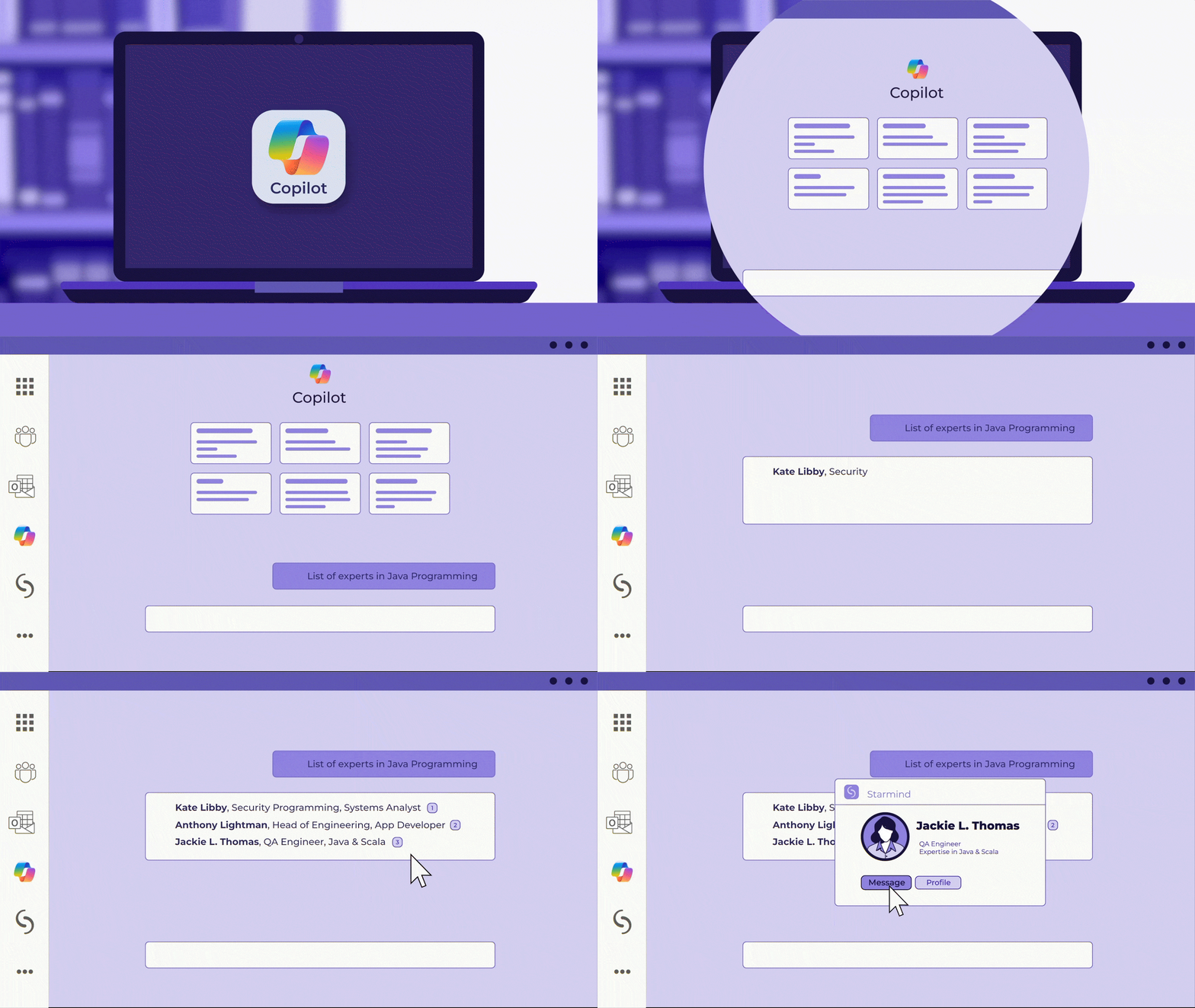
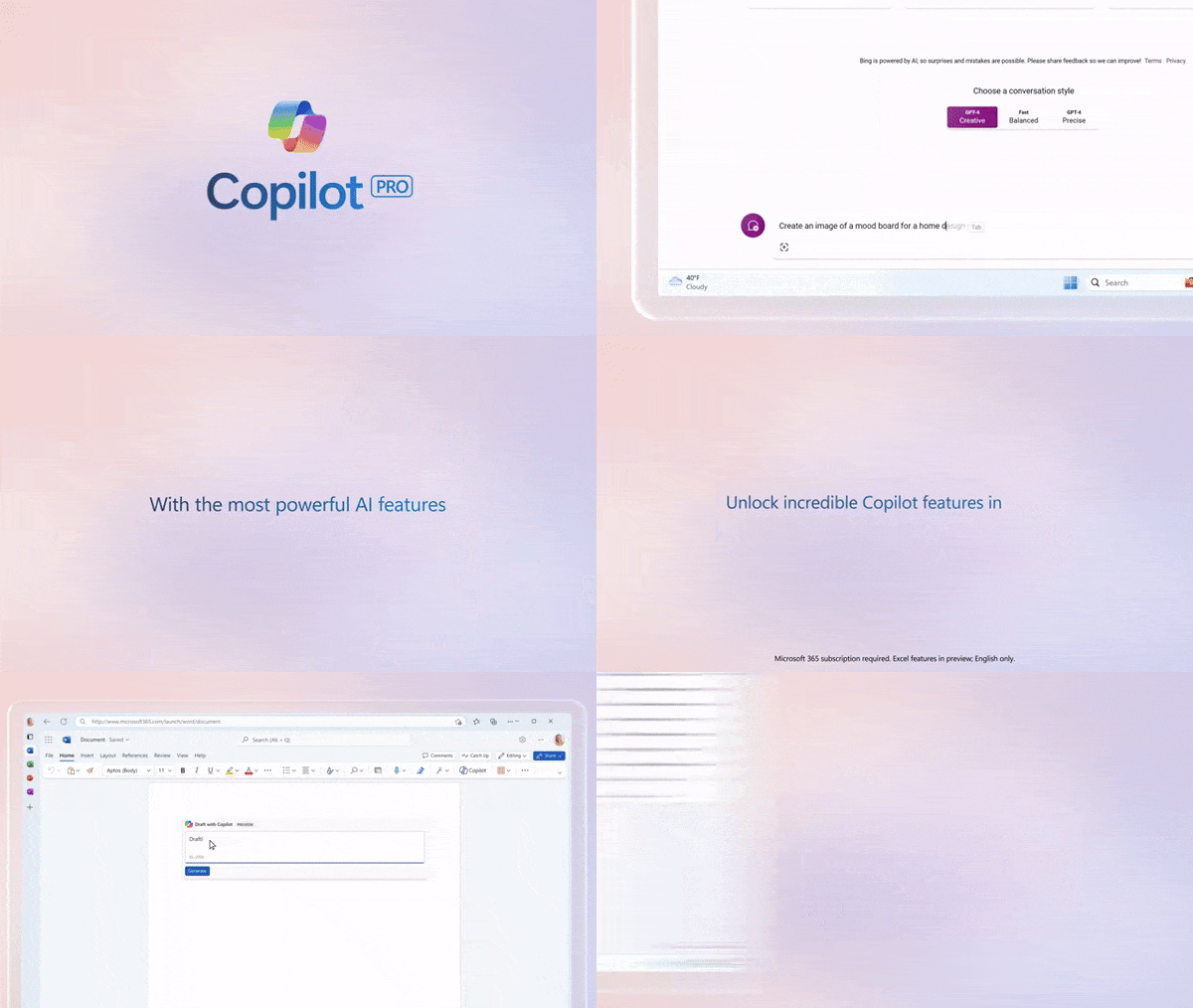
“Microsoft revenue grew 17% to $81.3 billion in the fourth quarter of 2025, a slightly lower rate of year-over-year growth than in the previous quarter. But Microsoft said it had $625 billion in remaining performance obligations as of the end of December, also known as a revenue backlog, up from $392 billion in the September quarter, implying it has plenty of revenue growth ahead. The company also disclosed it had 15 million paying subscribers of 365 Copilot, the suite of AI features for Office apps such as Excel and Word.”
“Revenue from Azure and other cloud services grew 39% in the fourth quarter, compared to 40% growth in the quarter prior. Microsoft doesn’t break out Azure revenue in dollars. The company’s shares fell 4% in after-hours trading.”
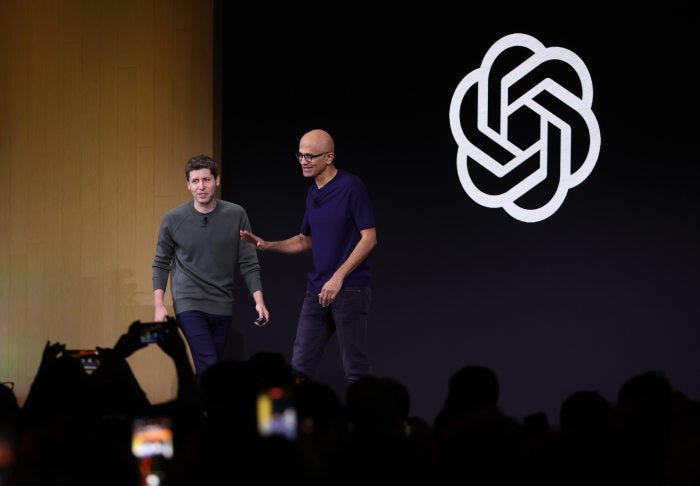
“The revenue backlog rise reflects OpenAI’s recent commitment to spend $250 billion on Microsoft’s Azure cloud over an unspecified period, which the companies announced in October. Microsoft said 45% of its remaining performance obligations came from OpenAI, or $281.2 billion, while the rest came from other customers’ bookings, including Anthropic. Microsoft said it will take 2.5 years, on average, for that backlog to turn into revenue.”
It’s all a ‘Frenemies’ situation, as Microsoft both partners with OpenAI, Anthropic and others, while competing with their AI products and services as well.
And Microsoft is keeping a close eye on open source AI software innovations that could provide offensive and defensive strategies against is core global software franchises.
“Anthropic’slaunch of Cowork, an AI-powered tool that takes over a computer to handle workplace tasks involving numerous applications, from Microsoft Office apps to Slack, has reverberated through Microsoft’s ranks.”
“In the days following the launch this month, Microsoft product leaders told colleagues that Cowork seemed like a competitor to 365 Copilot, a suite of AI features for Microsoft’s apps that aims to automate tasks such as generating documents or organizing users’ files, according to someone who attended the meetings.”
“Multiple 365 Copilot product leaders voiced concerns that Cowork’s ability to use Microsoft apps to generate Excel spreadsheets or PowerPoint presentations could be pulling ahead of what 365 Copilot itself can do. They told staff to keep improving 365 Copilot, this person said.”
Having used Anthropic’s Claude and CoWork with Microsoft Office 365 products in recent days, I can personally attest to how impressive and seamlessly they leverage the Microsoft applications out of the box. With minimal effort by the end user.
“Several divisions at Microsoft are moving quickly to develop AI prototypes that resemble Cowork, according to people involved in the effort. Ironically, Anthropic’s AI models power some of these prototypes, also known as AI agents, one of the people said. That mirrors how Microsoft used OpenAI technology to develop earlier 365 Copilot features that now compete with productivity features in OpenAI’s ChatGPT.”
A key advantage of Anthropic’s ‘horizontal’ approach is being able to work across vertical silos of apps, be they be from Microsoft, Google, Apple or others. Again, something I’ve been able to use personally already with Anthropic Claude Cowork.
“Part of Cowork’s strength is that it can take action across multiple applications in the way a human would. For instance, it can use a folder full of receipt images to generate an Excel spreadsheet listing the expenses shown in the images. It can search, rename and organize hundreds of files stored on a computer. And it can research a topic and create a PowerPoint presentation that brings together information from the internet with locally stored files.”
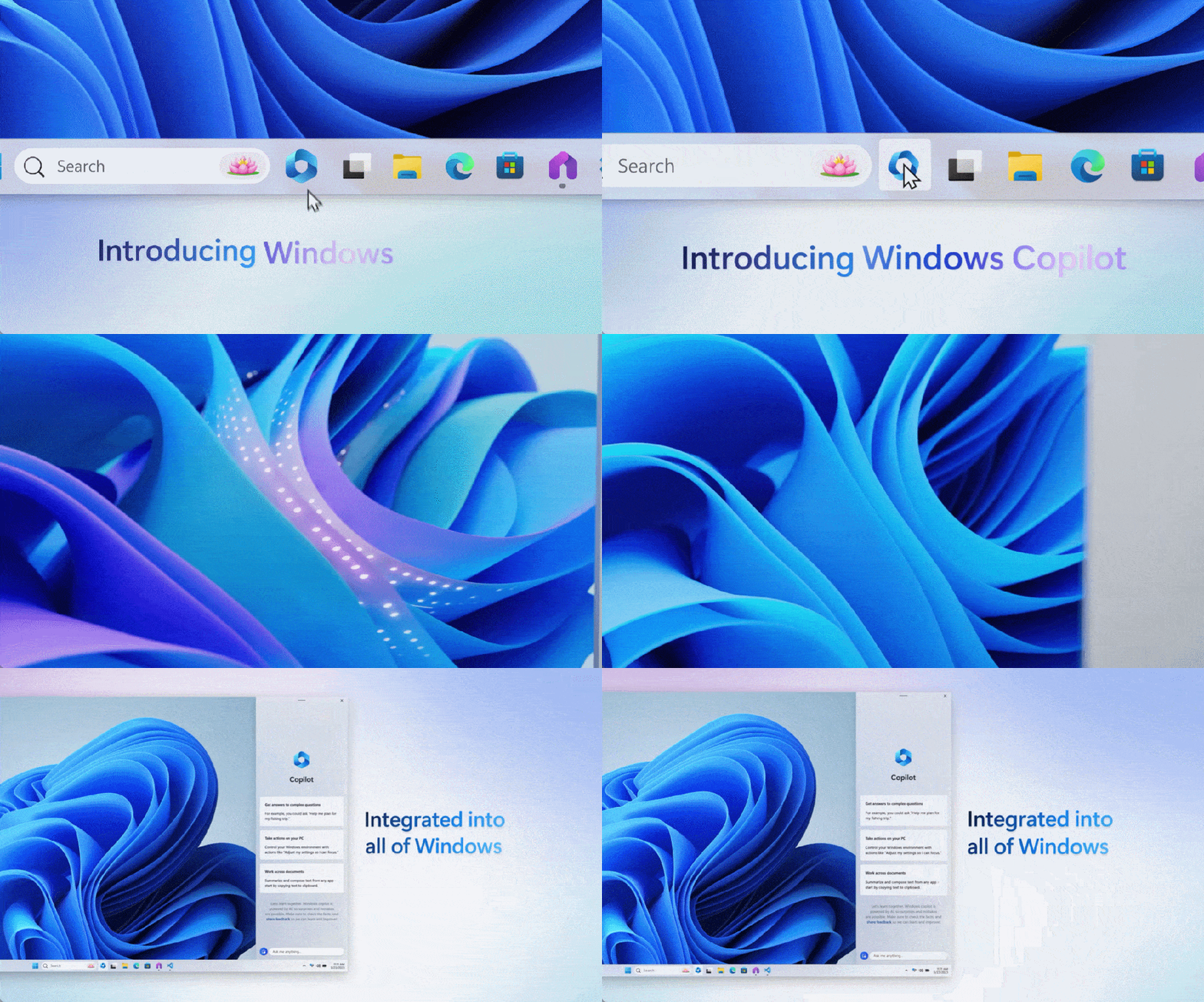
Microsoft of course is not asleep at the switch. Its Copilot perks up when one opens Excel on a project. For that matter, so does Google Gemini when one opens up Google productivity apps as well.
But it’s good to see Microsoft being proactive into these possible encroachments on to its core bread and butter platforms.
“Microsoft has previewed similar features in different versions of its Copilot tools, but it doesn’t currently offer a single tool capable of all such tasks.”
“To be sure, Cowork is an experimental tool, not an enterprise-ready product like what Microsoft sells. Cowork is currently only available as a preview, and Anthropic has warned customers that it carries “unique risks” related to data security, and that they should avoid using it for work that involves sensitive or regulated material.”
“Microsoft executives and product leaders recently have discussed Anthropic’s new technology in an internal Teams channel dubbed “AI Accelerator.” They’ve shared ideas for how Microsoft can develop competing products using either Anthropic models or models from OpenAI, which Microsoft gets for free, according to someone who has viewed some of the messages.”
It’s also notable that Microsoft is not just focused on competitive AI applications from the major LLM AI companies like Anthropic, OpenAI,Google and others.
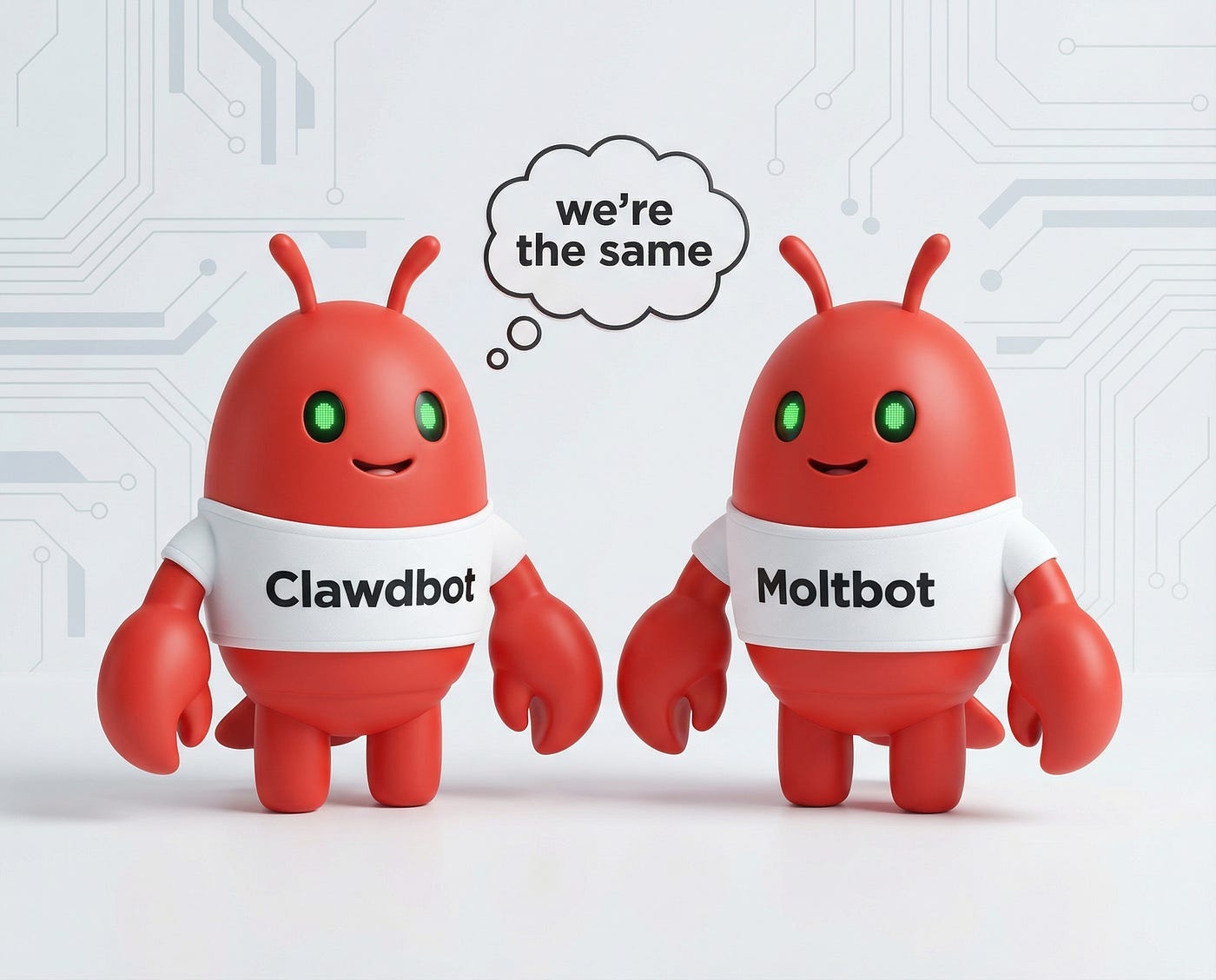
But also a Satya on down focus on broader AI startup initiatives, like the recent explosion of popularity of open source software project ‘Clawdbot’, amongst software developers. The product has recently been renamed Moltbot. Their slogan is “The AI that actually does things”.
“Clawdbot Creations”
“In one such message, Microsoft CEO Satya Nadella told colleagues he has started testing Clawdbot, an open-source AI product powered by Anthropic models, to automate tasks on a user’s computer. Similar to Cowork, Clawdbot can organize an email inbox, rename and sort a large number of files, or book online travel reservations. (Clawdbot’s creator, Peter Steinberger, said Tuesday he had renamed the product Moltbot to avoid confusion with Anthropic’s Claude.)”
“Nadella wrote about how he had used Clawdbot, and he encouraged staff to think about developing similar products, said the person who viewed some of the messages.”
This is great to see, a top down nudge always accelerates incumbents to try new things sooner than they have to unexpected innovations in prior tech waves.
“The conversations are part of Nadella’s effort to pressure deputies to speed up the company’s use of AI in its products. He wishes to prevent budding competitors as well as traditional foes from using AI to eat into Microsoft’s cloud and applications empire. He has sounded alarms about the urgency of the situation despite the company’s position of strength as the world’s fourth most valuable firm.”
“While Microsoft races to automate tasks within its core Office apps, Nadella also wants its AI to help workers accomplish tasks involving non-Microsoft apps, essentially becoming what he calls a digital co-worker. That effort is still relatively nascent, and Microsoft faces competition from OpenAI and Anthropic, which are aiming to build similar AI products.”
Microsoft of course can promise Windows capabilities when AI innovations can sometimes focus on one platform at a time.
“Microsoft product leaders are optimistic that they have an advantage developing such AI features for the Windows operating system. Cowork is currently only available on Mac.”
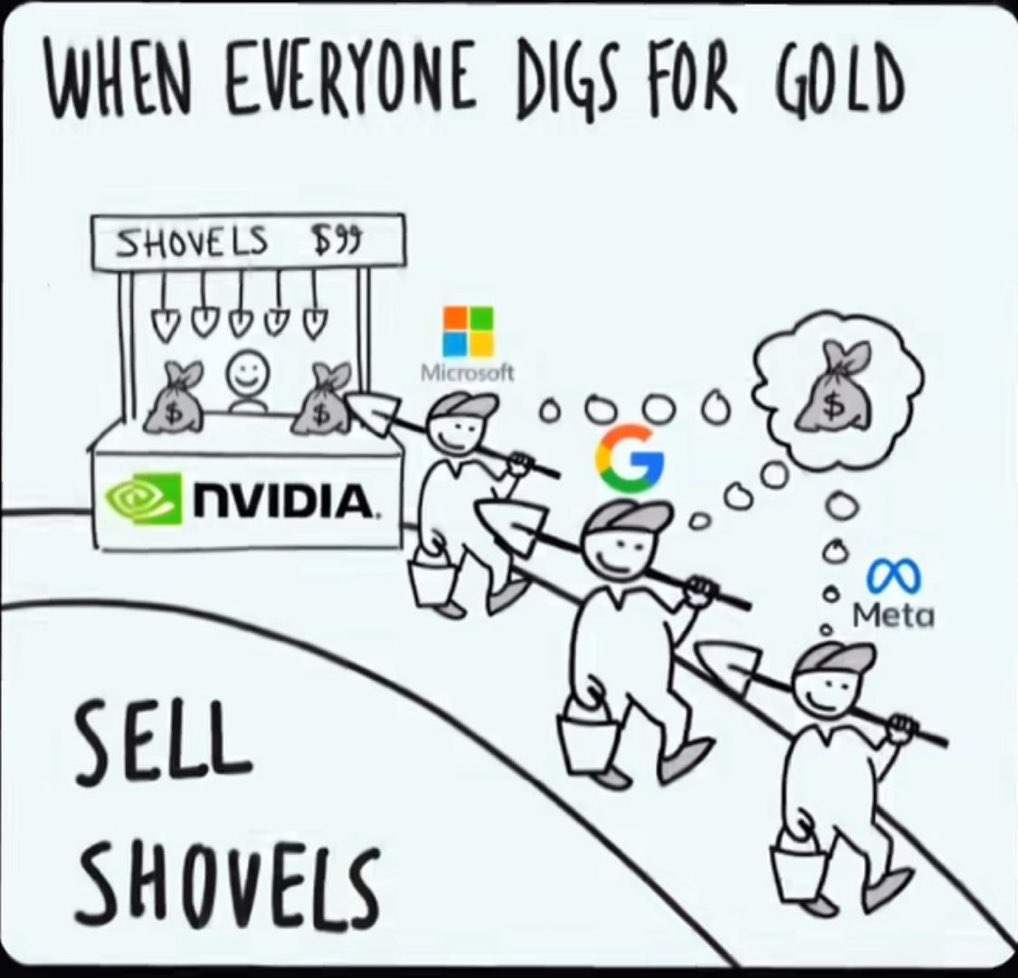
And again, the proactivity from the top is a notable feature at such a large big tech company in this AI ‘gold rush’.
“Nadella has hedged his bets, forging close business partnerships with both OpenAI and Anthropic so he can use their technology to improve Microsoft’s apps. That could put his company in a better position to meet the moment—including beating back potential competition from those two fast-growing newcomers. Anthropic recently hiked its 2026 revenue forecast 20%, thanks to the recent success of Claude Code and other products, and this week it showed off new ways Claude customers can access workplace apps such as Figma, Canva and Asana and from the chatbot itself.”
“Microsoft has already been using Anthropic’s models to power features in 365 Copilot, such as making calculations in Excel or generating PowerPoint decks based on written prompts. The company has separately been using Anthropic’s coding models in its GitHub Copilot product, making it one of Anthropic’s biggest customers.”
“Nadella has been encouraging staff to brainstorm new ways they could use Anthropic’s AI coding models to power Microsoft products such as 365 Copilot. He holds a weekly meeting where staff working on AI products can demonstrate new features. Following Anthropic’s release of the Claude Opus 4.5 model in late 2025, several of those meetings have focused on demonstrations of new features based on Claude Code, which Opus 4.5 powers, according to an attendee.”
“In response to Claude Code, Microsoft has released new products such as GitHub Copilot CLI, a version of its AI coding product that lets developers interact directly with the coding agent in a format similar to Claude Code’s. Microsoft last week also announced GitHub Copilot SDK, which makes it possible to connect the AI coding agent to other workplace apps, as Cowork can do.”
The whole piece is worth a read for additional details.
But the broader takeaway is that even the biggest companies like Microsoft are focused top down on the partnership and competitive elements evolving rapidly every day in this AI Tech Wave.
This is indeed a different reality vs earlier technology waves.
The principals this time have internalized the need to be responsive as early as possible, from the top down. Stay tuned.
(NOTE: The discussions here are for information purposes only, and not meant as investment advice at any time. Thanks for joining us here)
Good morning. Before I dive into the headline of today’s newsletter, I wanted to refresh readers that I do not make market ‘top’ or ‘bottom’ calls, but a...
Good afternoon. Welcome to Trends with No Friends. FOR THOSE JUST JOINING US, HERE’S AN OVERVIEW Markets marched lower. Every major index closed negative....
View the video of this post here. The most important charts and themes in markets and investing… 1) Unfathomable Growth Expectations were sky-high heading...