The offering, marketed and distributed globally by almost every bank in on the action, was reportedly 4x oversubscribed institutionally and individually. It starts trading today, June 12, 2026, as a public company on the Nasdaq with ticker symbol SPCX.
“He achieved what he said he would only about 19 percent of the time.”
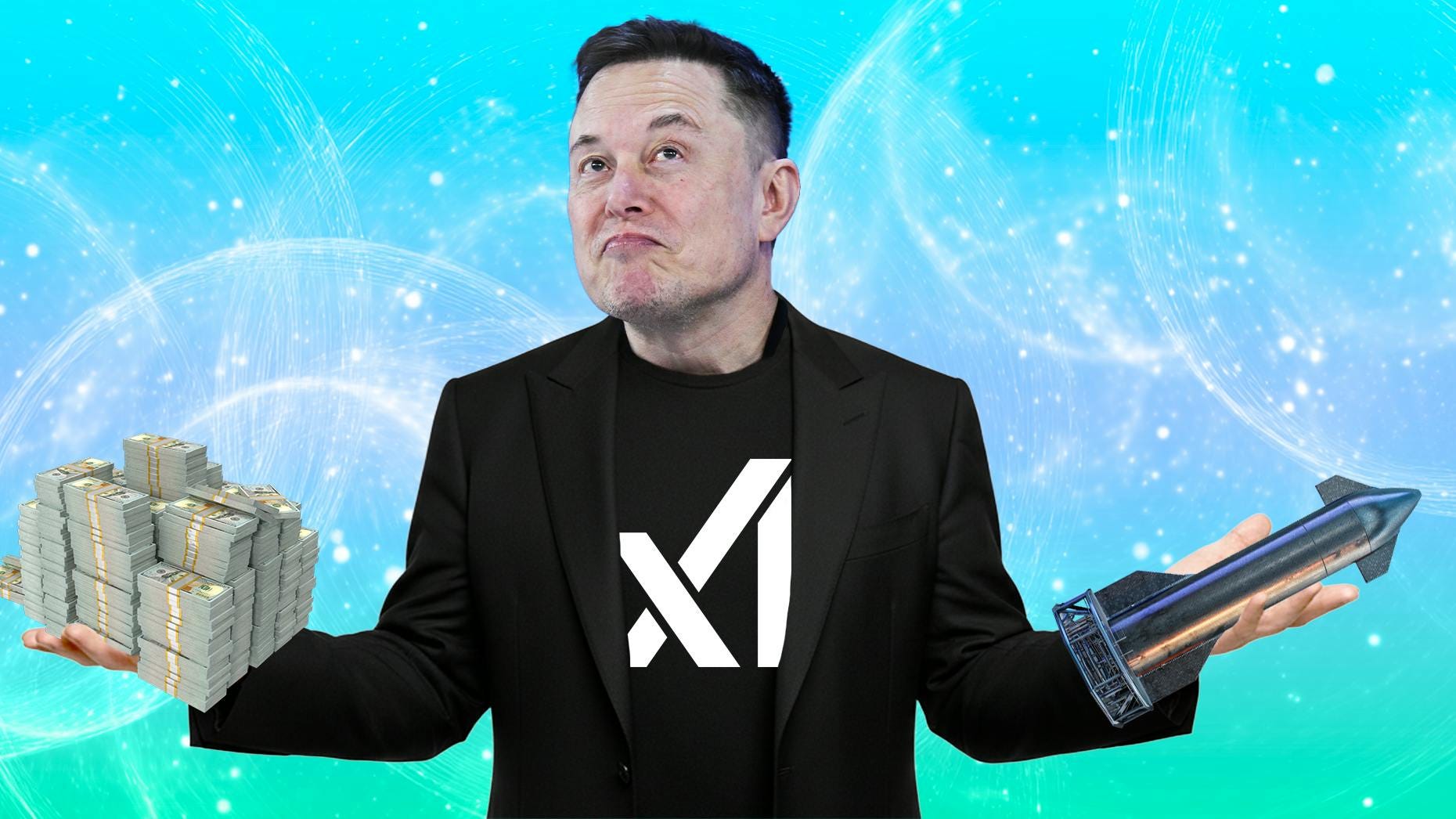
A trifling quibble for a trillionaire.
A key catalyst of SPCX in the coming weeks, has to do with a technical decision by Nasdaq. One I’ve discussed at length to date.
And that is to accelerate its entry from the traditional seasoning period of one year to two weeks into its widely followed and used Nasdaq index. The one that hundreds of billions of passive mutual and ETF funds rely on to provide broad, passive access to index investing. Essentially force-feeding early this IPO into billions of passive index funds.
It’s notable that the S&P this time took the more tempered decision NOT TO accelerate SpaceX/xAI into its index. And keep it to a year of seasoning, instead of an accelerated two weeks like the Nasdaq.
It’s useful to see how this all came about, as we wait for the SpaceX/xAI IPO to make its public trading debut. And of course the others to follow.
“Industry participants highlight unusual ties between exchange and index business
Social media data show index changes are unpopular with retail investors
Nasdaq previously shortened index inclusion period ahead of prior IPOs”
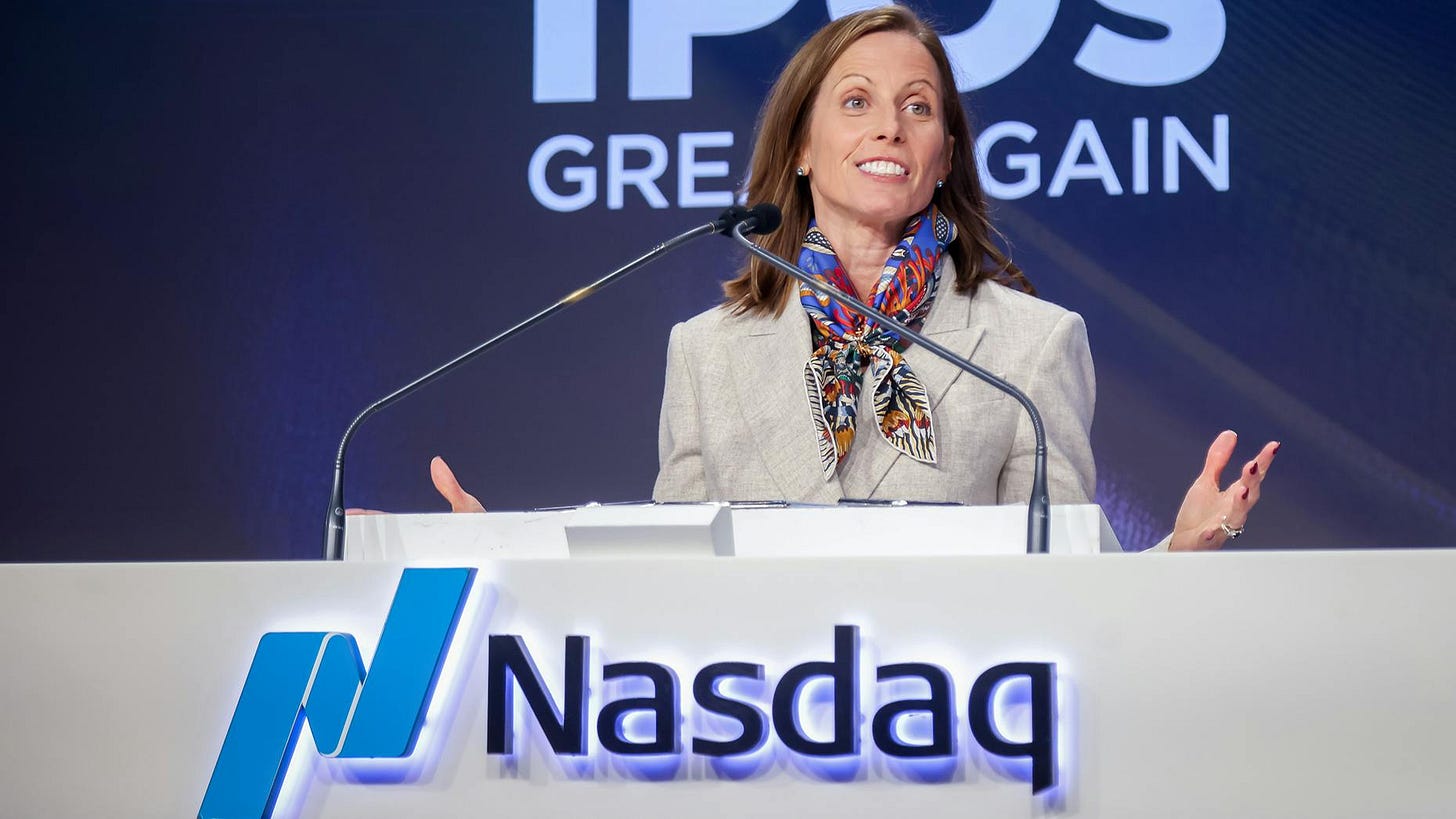
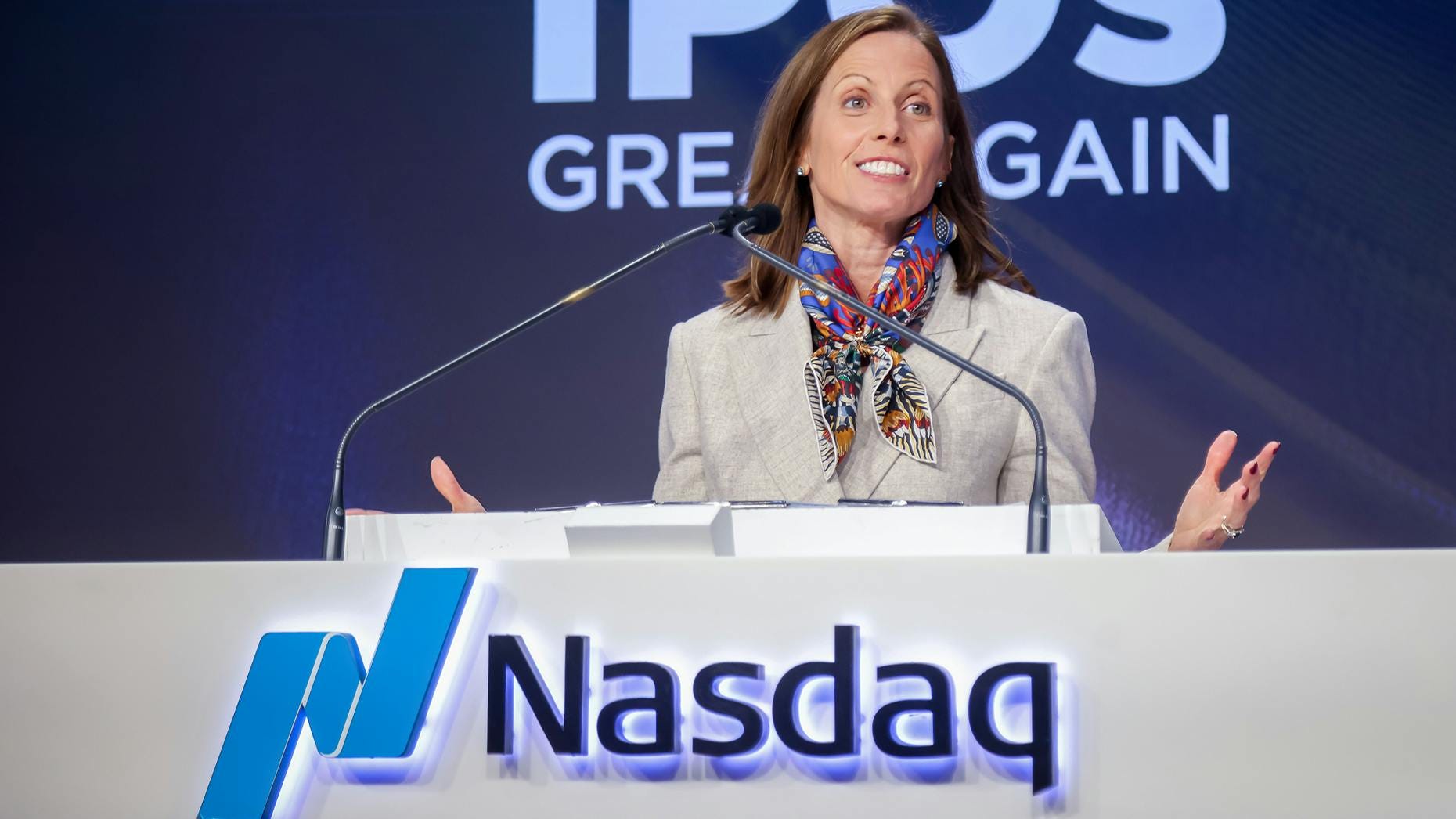
“When Nasdaq CEO Adena Friedman took the stage at the Economic Club of Washington, D.C, in March, she wasn’t shy about how the company wields its stock indexes to woo business.”
“In an interview with Carlyle Group Chair David Rubenstein, Friedman highlighted Nasdaq’s key distinction from rival exchanges: It also manages the influential Nasdaq-100 index, the benchmark whose rules dictate how roughly $800 billion worth of funds invest. That means Nasdaq can help push investor dollars toward the companies that list on its exchanges.”
Can’t get clearer about the incentives than that. The ‘feature not a bug’ argument’ front and center.
““The Nasdaq-100 is the only index in the United States that’s tied to where you list,” Friedman noted. She said that Nasdaq has become “essentially a 3% to 4% owner of the companies that sit in the Nasdaq-100” by way of its influence over the funds that actually make the investments.”
“Nasdaq’s stock price has roughly quadrupled since Friedman took the reins more than a decade ago, putting the company at a $49.5 billion market capitalization. And SpaceX’s expected Nasdaq listing on Friday, after what’s likely to be the biggest initial public offering in history, could be that strategy’s most powerful validation yet.”
It’s a competitive industry indeed with mega-AI IPOs being a key catalyst.
“Nasdaq has spent recent years courting a series of blockbuster IPOs, most recently SpaceX, an effort that’s begun to pay off thanks to persistent outreach and a buoyant tech market. More recently, Nasdaq revised the rules governing the Nasdaq-100 to let large, newly public companies enter the index faster.”
“That means exchange-traded and other index funds that mirror it will have to quickly buy those shares, while the company has also struck deals to license the benchmark to more top asset managers. Nasdaq’s changes could drive roughly $6 billion of SpaceX purchases by longtime licensing partner Invesco’s popular QQQ and QQQM exchange-traded funds alone, with total buying across Nasdaq-linked funds likely reaching $8.5 billion.”
The technical decisions around float and other mechanics matter here very much:
“Representing around 11% of SpaceX shares available for trading, that buying will all happen within SpaceX’s first 15 days as a public company. (The weight dictating how much stock the index funds actually buy will depend on SpaceX’s trading price at the time.) Some other major index providers, such as MSCI, FTSE Russell and Morningstar, have made similar changes. But Nasdaq moved more aggressively. It was the only index provider to weight SpaceX in its index disproportionately to the amount of shares available for sale.”
““I can’t think of a precedent with this many indices adding a stock this soon after an IPO,” said Marco Sammon, an assistant professor of finance at Harvard Business School, who has studied the impact of index inclusion on stocks.”
For Nasdaq, this was an imperative for its core listings business, starved of new IPOs in recent years.
“Nasdaq made the index methodology changes because of stark market changes over the past decade, reflecting that “companies are staying private longer, listing at larger scale, and arriving with more complex share structures,” a spokesperson said, adding: “The changes were not designed for any single company, and are consistent with updates other major index providers have independently made in response to the same market dynamics.”
It’s notable that it’s much larger peer, the S&P did not decide to follow suit.
“Nasdaq’s decision looks especially notable after S&P, provider of the most widely tracked U.S. stock benchmark, decided last week against loosening the S&P 500’s inclusion rules. S&P’s existing profitability and other requirements could keep SpaceX out of that index for some time, given that its AI business has dragged the company deep into the red.”
And it deserves a lot of attention. Despite the white hot laser focus on all things AI. And rockets in space.
“These high-profile decisions, coupled with SpaceX’s imminent debut, have pushed a usually sleepy corner of finance into the spotlight. Index providers have enormous influence over the flow of investing dollars, but unlike stock exchanges, whose listing fees are subject to regulatory caps, they face far less direct oversight in the U.S., largely setting and policing their own rules.”
“And though indexes are often thought of as a passive reflection of a particular market, the Nasdaq-100 is neither a broad market index like the S&P 500 nor a sector-specific benchmark. Instead, it compiles the 100 biggest nonfinancial companies listed on the exchange, which skews heavily toward tech but also includes companies like Costco, Starbucks and, as of late 2025, Walmart.”
And it is getting some needed discussion:
“Some critics of the setup are starting to speak up, saying that lucrative indexing and listing decisions come at the expense of investors, while such a rapid timeline could be tough to manage from a technical standpoint. At the same time, the index moves are putting off many small investors SpaceX wants to cater to, at least judging by social media chatter.”
“Michael Green, chief market strategist at ETF firm Simplify Asset Management, said Nasdaq “monetized its index and the representation of the QQQ” to stand out and win listing business. “They’re really nice, wonderful people and want to see their organizations succeed,” Green said. “They’re forced under competitive pressure to do the wrong thing.”
The business benefits and incentives to Nasdaq are stark and large:
“While SpaceX stands to benefit from the indexing changes, Nasdaq’s business will benefit too. The trading frenzy following SpaceX’s IPO will generate revenue for Nasdaq on orders routed through its markets, though much actual stock trading these days happens in other venues.”
“That’s just one part of the picture. Invesco and other firms also pay Nasdaq hundreds of millions of dollars per year to use its indexes for ETFs and other funds, typically paying a small slice of the funds’ overall assets. Those fees have become an important part of Nasdaq’s business, with revenue from index licensing climbing 80% since 2021, far outpacing the 18% growth in listings revenue, securities filings show.”
It’s a symbiotic relationship between the two camps:
“The fortunes of index providers and fund managers are also intertwined, thanks to the explosion in recent decades of passive investing, where funds seek to match a benchmark rather than actively pick stocks. Invesco has used the Nasdaq-100 for its QQQ fund since it launched in 1999, helping turn it into one of the largest ETFs by assets after years of outperformance against many other major benchmarks.”
We’ve seen a different version of this movie in tech before:
“And the latest index changes aren’t the first time Nasdaq has rewritten key rules ahead of a megalisting. In 2012, ahead of Facebook’s listing on the exchange, it significantly shortened the waiting period to allow Facebook in the index within 90 days.”
“Nasdaq made that move at Facebook’s request, according to Patrick Healy, CEO of the Issuer Network, which advises companies on how to negotiate with exchanges. Facebook, now known as Meta Platforms, was Healy’s client at the time, he said.”
“Facebook would go on to raise $16 billion, then the biggest tech IPO in history and by far Nasdaq’s biggest listing. But the listing didn’t go well, in part due to tech glitches in opening trades, and Facebook traded far below its IPO price for more than a year. The Securities and Exchange Commission later fined Nasdaq $10 million over the debut, saying the company was ill prepared for such a large listing.”
And it’s been a growth business under the current CEO:
“As of 2017, when Friedman took over as CEO, the Nasdaq-100 had about $100 billion of fund assets tracking it, a far smaller total than currently. Around then, the exchange lost a series of new tech listings to rival New York Stock Exchange, including Snap in early 2017 and Uber two years later.”
“The company then started “selling the full power of Nasdaq,” to companies, Ann Dennison, the former CFO of Nasdaq, said at an investor conference in 2022. “We haven’t changed our philosophy on listings, but we’ve been on a journey,” she said.”
“After losing listings battles to its rival, Nasdaq started honing its pitch, including the potential for companies on its exchange to join its index. Nasdaq had a major breakthrough in winning Airbnb in 2020, followed by Rivian in 2021, Arm in 2023 and Medline last year.”
“In recent years, it’s drawn three times as many tech IPOs as the New York Stock Exchange, representing roughly twice as much deal value as on the rival exchange, according to Dealogic. Some large companies, like Walmart, recently switched from the NYSE to Nasdaq.”
And the links were made clearer all along the way:
“The index would be one of the top five reasons you’d list on Nasdaq,” said Karen Snow, the exchange’s former global head of listings, who worked at Nasdaq from 2019 to 2024. “The index is what can actually move the stock.”
“Still, nowadays there are fewer tech IPOs to compete for, as higher interest rates have weighed on valuations and companies have been staying private longer. Even after last year’s rebound, tech listings on Nasdaq were still just half of their 2021 total, according to Dealogic.”
That’s how we come to today:
“That makes SpaceX and other potential upcoming mega-IPOs especially valuable prizes for exchanges, while giving Nasdaq an opening to argue that it can help pull in demand. At a private conference in November, Goldman Sachs bankers flagged that big upcoming tech offerings would likely have to lean heavily on individual investors and passive funds, noting that those groups make up around 70% of the investor base for Nvidia, Microsoft and Alphabet.”
As clear as that.
“It was around then that Nasdaq started contemplating its latest changes, which were more dramatic than its Facebook-era tweaks. It further shortened the path to index entry, and it also granted companies like SpaceX, with relatively few shares available for sale after listing, more weight in the index. The latter was an important new sweetener because it required index-tracking funds to build a bigger position than they otherwise would.”
“Nasdaq also struck new deals allowing BlackRock and State Street, the two of the largest index fund managers, to launch their own ETFs tied to the index. That brought new fund giants in on top of Nasdaq’s longstanding Invesco licensing deal. Both filed in April to launch the funds, though the exact timing for a rollout isn’t clear.”
And Nasdaq is of course actively courting the others to follow:
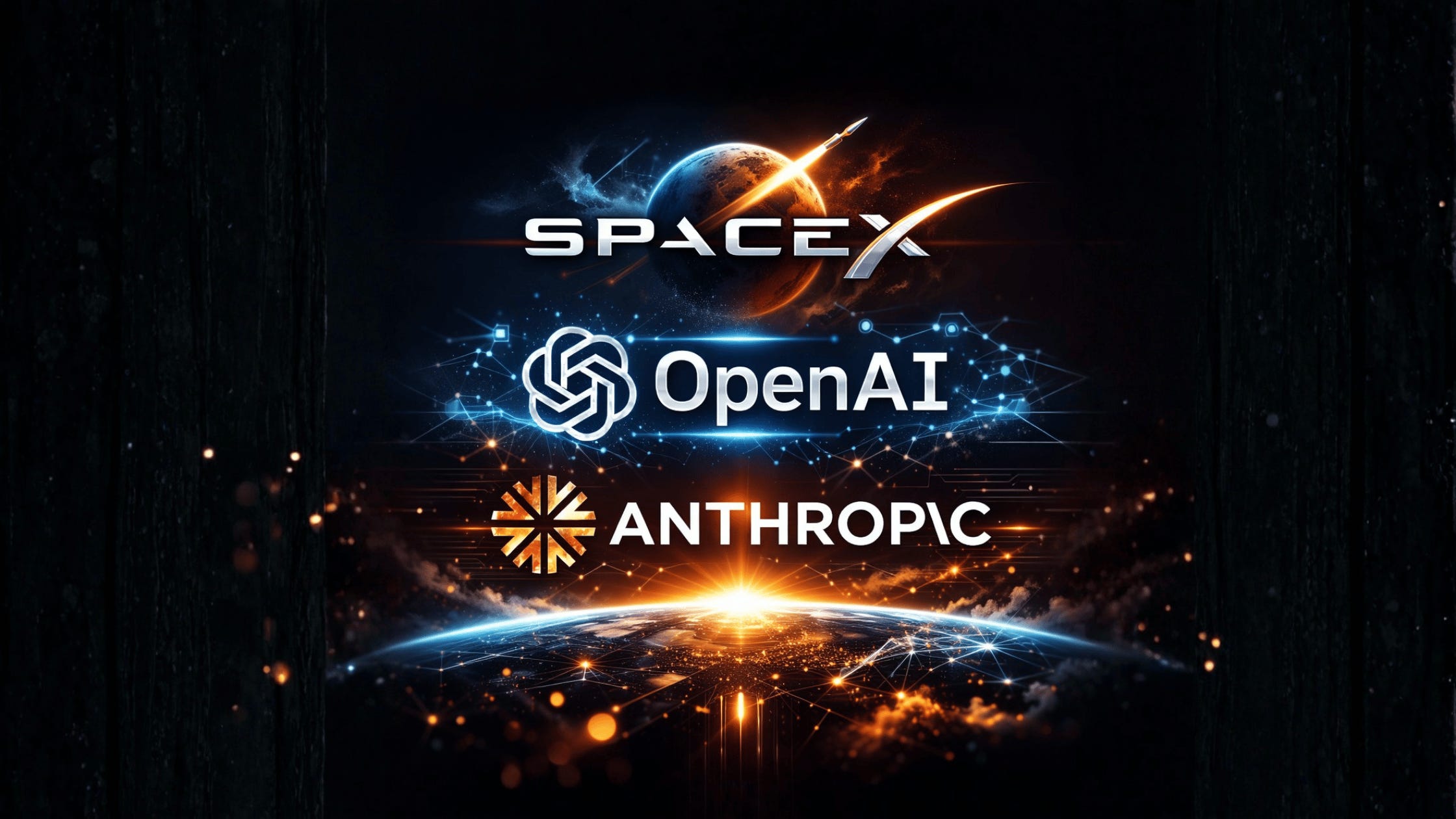
“Beyond SpaceX, two more cash-hungry companies are expected to come to market: OpenAI and Anthropic. Friedman in March declined to discuss those companies, though she has said it was a good thing the companies were looking at public markets for funding.”
“We fight for every listing, we really do,” she said. “It’s all the time.”
But SpaceX fundamentals are starker relative to OpenAI and Anthropic. And a host of potentially unseen consequences to other market participants.
“For now, the index providers and fund managers are tied together by a potentially polarizing SpaceX debut. The company is entering the market with significant losses and tight governance restrictions for shareholders. And if SpaceX follows the pattern of typical IPOs, which often fall below their offering price in the months after, the damage could ripple through a broad basket of stocks.”
“On top of that, some market participants are worried that the sheer size of the SpaceX offering could present its own complications. Healy, who had advised on the Facebook listing and later on Arm, said the newly shortened index timeframes risk dragging down other stocks in the indexes if SpaceX or other fast-tracked stocks slide after their IPOs.”
Also not helping is SpaceX’s focus on individual investors for over $30 billion plus of demand for its IPO.
“At the same time, SpaceX’s heavy allocation of shares to individual investors, who tend to be more unpredictable in trading than big investors, raises the prospect that the move will backfire by souring sentiment.”
Nasdaq is dug in on its decisions.
“Friedman has defended the benchmark changes and says Nasdaq’s index business makes decisions separately from its exchange. In an April interview with CNBC’s Andrew Ross Sorkin, she said the index business “did their work independently” when deciding to change its rules. She added that people invested in funds that track the index can sell out of those funds if they choose.”
“At the end of the day, investors can openly choose to move from one index to another,” she said.”
The whole piece is worth a full read with this ‘it’s a feature, not a bug’ narrative by its CEO, Adena Friedman. Trivia note, here maiden name is Adena Testa, something Elon might have noted early on.
Each valued at a trillion dollars over their core fundamental valuations of approximately half a billion each by traditional analysts. (Tesla trades at around a $1.5 trillion valuation vs SpaceX’s anticipated $1.75+ trillion). So two trillion of the two companies’ combined $3.27+ trillion public market valuation is “euphorically aspirational”. As I said earlier.
So the Nasdaq moves offer a powerful near-term assist to sustain these lofty numbers.
Markets Dollar bearishness is pretty high, all things considered. (ft.com) Big Tech is issuing bonds hand over fist in 2026, (axios.com) Shrinking share...
The Art of Spending Michael and Ben talk with Morgan Housel, author of “The Art of Spending Money.” (podcasts.thecompoundnews.com) Ted Seides talks with...
Here’s a preview of what we’ll cover this week: Macro: Physical Oil Is Pricier Than Paper Oil; German Inflation Tells Something; The Housing Trap; UAE...