Much in the way that siblings turn into such different people, these two companies are on such different trajectories in the same industry today. Especially as both siblings are growing up almost to the same scales, OpenAI last at a $500 billion valuation vs $300-350 billion for Anthropic. And with starkly different business models.
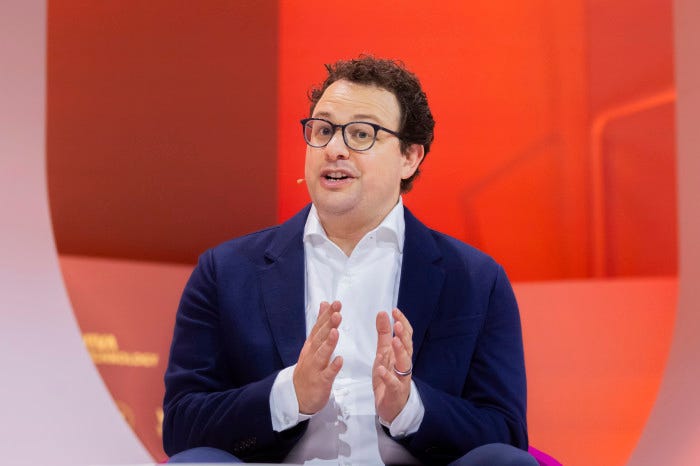
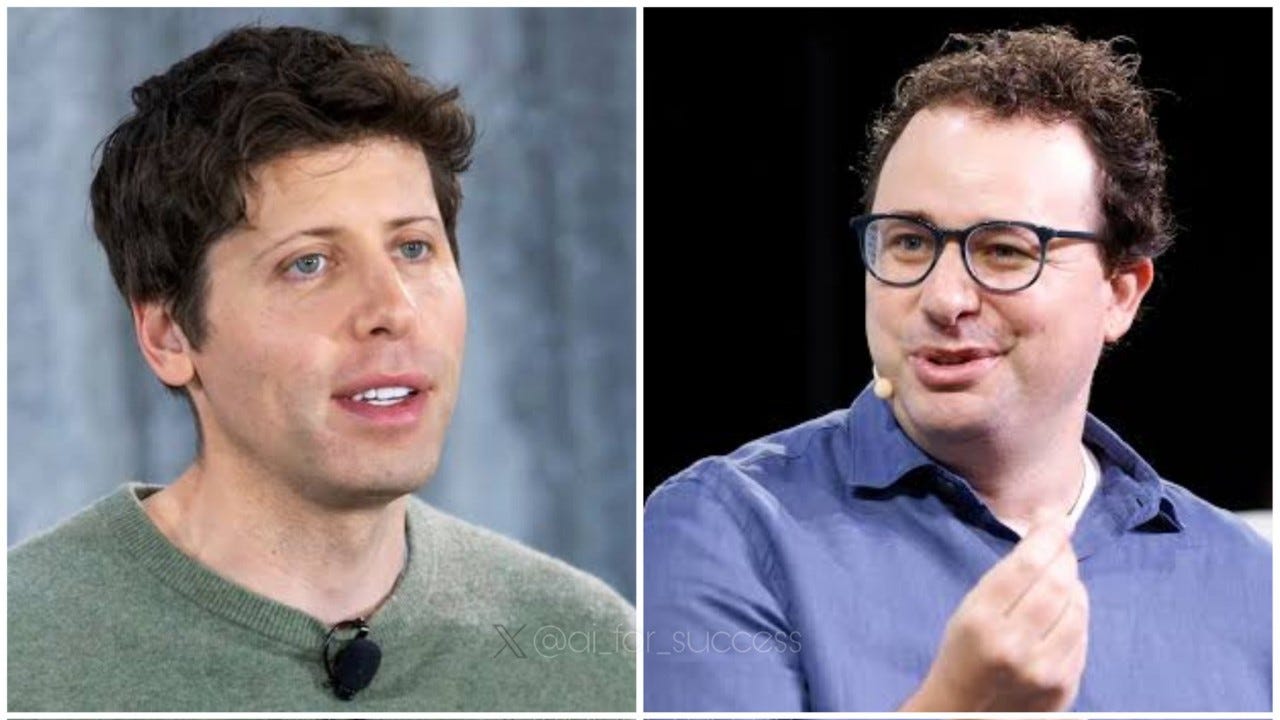
“To a casual observer, OpenAI and Anthropic might have appeared—until recently—to be the Uber and Lyft of the AI world, with Anthropic the distant rival to the dominant OpenAI. That feels to be less the case nowadays. In fact, Anthropic—with its disciplined focus on serving businesses and expectations it will turn a profit several years before OpenAI does—is starting to look like a surer bet. Anthropic CEO Dario Amodei’s appearance at The New York Times’ DealBook summit on Wednesday demonstrated why. Amodei came across as thoughtful in his approach to risk management, unlike an unnamed other person who, as Amodei put it, “constitutionally just wants to YOLO [You Only Live Once] things.” (For more on the contrast between the two, check out this article.)”
“YOLO is the perfect description of OpenAI CEO Sam Altman’s growth strategy. The latest example was Thursday’s Wall Street Journal report that Altman had explored the idea of OpenAI buying control of a rocket company. Why stop at rockets? What about cars? Consider that in the past couple of years, Altman has expanded OpenAI’s purview from running the hugely popular ChatGPT to include designing its own chip, building data centers, designing AI-specific devices, developing hardware and software for robots, expanding ChatGPT into shopping, launching a web browser and a search engine, investing in a company affiliated with one of his main backers, Thrive, and partnering with a bunch of other companies to make ChatGPT a kind of superapp.”
‘“All this comes before OpenAI gets anywhere close to making money or finding a way to pay for the $1.4 trillion in commitments it has taken on to get enough computing capacity to run ChatGPT as it grows. It seems predictable, then, that as part of the “code red” Altman declared this week to fight an ascendant Google, he said OpenAI would delay some initiatives, as my colleagues reported.”
The recent OpenAI ‘Code Red’ comes into the comparison as well of course:
“If OpenAI investors are lucky, this code red will prove a permanent shift in strategy, where Altman decides to narrow his focus to the most important priorities, such as ensuring that ChatGPT retains its technological edge and gets to profitability sooner. That would mean ditching some of his more blue-sky projects (such as the devices). But there’s also a possibility that Altman is, to use Amodei’s word, constitutionally incapable of carrying out anything other than a YOLO-based strategy. If that’s the case, Altman might be better as OpenAI’s chair, in the role of thinking about the future, while someone with their feet on the ground actually runs the company. Perhaps OpenAI needs its own Dario Amodei.”
OpenAI is of course likely thinking along similar lines, but their plans have less public visibility and definition to date. But both siblings are the ones to watch as far as the US end of this AI Tech Wave is concerned. A Bigger Picture to keep in mind as we focus on AI in 2026 and beyond. Stay tuned.
(NOTE: The discussions here are for information purposes only, and not meant as investment advice at any time. Thanks for joining us here)
Good evening. Welcome to Trends with No Friends. FOR THOSE JUST JOINING US, HERE’S AN OVERVIEW Stocks were split. Every major index inched higher. The...