
AI: OpenAI beats Meta to acquire OpenClaw. RTZ #1000

Before I get started with Tuesday’s AI topic, I’d like to thank you all for being part of this AI: Reset to Zero (AI-RTZ) journey. Especially today, as it crosses the 1000th daily post mark discussing this AI Tech Wave thing.
Sincerely appreciate your being part of this marathon to date.
It’s been a labor of love on my end, allowing me to put in writing the analytical work I’ve devoted to tech waves large and small, for over three decades.
As I’ve long said, everything done professionally to date, has been a dress rehearsal for the AI quest ahead.
Finally, a milestone like this sometimes merits a change. It starts with this post in a narrative built with fewer links and quotes to distract from a quick read.
There’ll be more direct summaries of ‘hot takes’ on the AI matter at hand. Preferably summarized in fast-read and hopefully fast-digested bullets. A list of sources at the end for further exploration as needed.
As usual, your support, feedback, likes, and subscribes are always appreciated. Here and for AI Ramblings, the podcast edition of AI: RTZ. Here is the YouTube version of that link, if preferred.
With that, let’s get going on today’s topic.
And the topic is OpenAI’s Sam Altman beating Meta’s Mark Zuckerberg to acquihire open source OpenClaw’s solo founder Peter Steinberger. OpenClaw, the lobster themed company formerly known as Clawdbot, Moltbot, and a few other names in between. OpenAI to its credit, has been focused on AI Agents as Assistants for a long time.
The hottest AI startup since ChatGPT itself over three years ago, measured again in exponential developer attention and adoption globally. Measured in meaningful millions of developer engagement and experimentation.
This time in the white hot area of AI Agents, the third step in OpenAI’s long-charted roadmap to AGI artificial general intelligence).

As I’ve long discussed, AI Agents thus far have been more scifi inspired ideas implemented by software companies. I’ve discussed them as ‘machine to machine’ (m2m) AI ‘bots’ bent on proactively executing bottoms-up, user bidding on the fly.
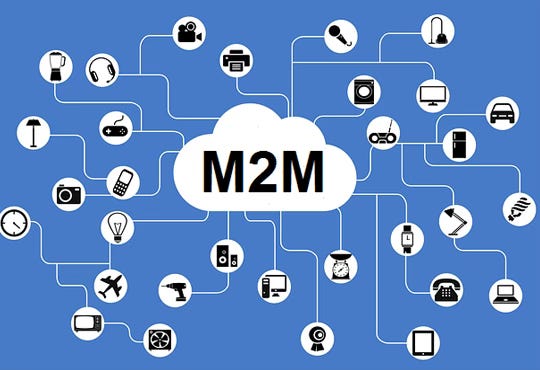
But their implementations by companies to date have focused first on preserving their business advantages over user utility. So that means they’ve been vertical silos with enterprise software companies like Microsoft, Salesforce et al. And barely usable consumer agents artifacts at other AI software companies.
Until Peter Steinberger, a veteran software engineer and founder, spent a good chunk of last year dreaming up something he wanted to use. Agents that lived locally on his machine, and did things around his daily habits, needs, priorities and most importantly, data. He developed something he was happy with and released it on Github (owned by Microsoft) in November 2025. Ironically, the month that OpenAI released ChatGPT three years prior to the month.
Fittingly, three months later, his newly renamed OpenClaw is now part of OpenAI, with a green light from Sam Altman to both use ‘Open’ in the new name, AND keep an open source version in a separate foundation.
While Peter Steinberger of course, also part of the commercial side of OpenAI. Now a for profit behemoth, heading for an IPO later this year worth almost a trillion dollars.
From my perspective, there are at least five reasons this event is notable at this point in the AI Tech Wave. Here they are in no particular order.
-
Locally customizable, bottoms-up, AI Agents: OpenClaw’s success in the briefest amounts of time is vivid proof that users Local AI Agents that they can craft to their particular data and needs, and under their control. Not a centralized entity out there feeding them stuff under their own ‘for you’ algorithmic feeds. Today it’s done on local computers (Apple Mac Minis are in hot demand by developers everywhere trying out OpenClaw in big numbers). Very soon it’ll likely be on mobile devices, iOS, Android and beyond.

-
Open Source turbo-charges Developer Improvements: Here too, Peter’s success proves out that in early days, no one individual or company has all the best ideas. It’s an organic, iterative process. The global developer community typically swarms around new open source software environments, and rapidly comes up with thousands leading to millions of uses the original developers haven’t thought about. All Organic. All Cambrian. Until of course, evolution leads to the few uses and applications that typically make the biggest market share gains. For an ever diminishing set of consolidating players seeking commercial dominance. But it can lead to wide and deep software markets that help run the world’s tech infrastructure. Think Linux and Apache servers as just two of so many examples.
-
AI Agents are intelligence ‘token burning’ machines: The AI industry has been desperately seeking the next big thing after AI chatbots that could be the application platform for AI uses that could use up all the capacity being built up by hundreds of billions of annual AI Data Center spend by the tech industry. AI Agents were the theoretical possibility. Especially with voice and video modalities built in. OpenClaw’s organic explosion validates this from theory to possible reality at scale. This is exciting. Not just for OpenAI, but for all the tech and AI companies. OpenClaw’s organic traction points to a never ending engine to use all that AI data center capacity. Bottoms up for billions of users, one user at a time.
-
AI Agents will absorb Apps as we know them: In a world of truly useful bottoms up AI Agents, websites and apps as we know them today, both on the web and mobile will change. Something I’ve written about a lot in the context of AI Agents and Browsers. OpenClaw’s Command Line Interface, ‘CLI’ driven, organic use by developers is showing this in action. Yet, it means big, unsettling changes in the current way the internet works both technically and financially. But it will likely lead to a net increase in global total addressable markets. Yes, after disrupting a range of current business models and companies. Everyone will have to adopt and adapt. Small or Large.

-
A new Application Path for AI Wearables: This alternate way of using AI Agents portends novel ways to use AI Wearables next. Be it OpenAI’s creations with Jony Ive, or Apple’s fleet of wearables and other devices, Meta’s smart glasses, Google’s ever changing device families and beyond. We’ve always known AI and AI Agents have a multi-modal future with voice, images and videos. Now, a flotilla of personal AI Agents, created bottoms-up for individual users, and controlled by them, offers a whole universe of applications. Far beyond sterile singular ‘wake’ words like Hey ‘Siri’, ‘Gemini’, ‘ChatGPT’, and beyond. The OpenClaw approach could means billions of names and personalities for AI Agents as there are users.


I’ll stop at these five. Will have a lot more to say in future posts.
It’s critical to emphasize that most of the above won’t happen before a whole host of safety, security, trust and privacy issues are solved with the current version of OpenClaw. And AI in general like hallucinations, prompt injections, self-evasion, and much more. Developers worldwide have their hands full on this AI front alone. Despite their overwhelming excitement over AI Agents today.
Another caveat is that despite all the developer excitement, OpenClaw is NOT sentient. And it’s not ‘thinking’ as understood for humans. Or in its current state, even doing AI ‘Reasoning’. It’s executing inputs and outputs from messaging systems like Slack, Telegram, iMessage etc., to users and other agents via gateways. And it’s doing it on scheduled timers in loops.
That’s what make it seem ‘proactive’. It’s cleverly designed software. But it’s got a LONG way to go to be the ‘do everything’, ‘understand everything’, ‘really know its users’ type of AI Agent/Assistant software most users think of via scifi (think Ironman ‘Jarvis’). Even with the current developer excitement. Again, it’s important not to anthropomorphize and project human emotions onto it. Even AI and software developers are prone to do so.
But OpenClaw does energize software developers to re-think AI Agents. While having have doing so playing with the software.
And with OpenAI’s resources, OpenClaw will improve. As will other systems inspired by its current viral success with developers. It is an accelerating catalyst towards new, horizontal, open source AI Agent approaches.
This development also means new implications for all the other big tech players who don’t get to work with Peter and OpenClaw as part of their organization like OpenAI.
Particularly Anthropic, which otherwise has had a flawless set of executions of late. They let this one slip away, despite OpenClaw leveraging its core Claude technologies and name, until it didn’t. Also big implications for Meta, Google, Apple, and Elon’s xAI in particular.
All for later posts and podcasts. Stay tuned.
Additional Links:
-
OpenAI Sam Altman’s announcement on OpenClaw.
-
OpenClaw’s Peter Steinberger announcement and post.
-
Implicator on how it all went down and how it works.
-
Peter’s Lex Fridman podcast presaging this development.
-
Implicator on Why Europe Lost OpenClaw to the US.
(As a historical note, I’ve been analyzing this AI Agents tech opportunity since being the lead research analyst for the General Magic IPO in 1995 at Goldman Sachs. Highly recommend the documentary on how aspirations met reality then. Kudos to Founder/CEO Marc Porat and the pioneering tech team back then. Today’s events are a testament on how old tech ideas never die. They just come back with new technology waves):
(NOTE: The discussions here are for information purposes only, and not meant as investment advice at any time. Thanks for joining us here)