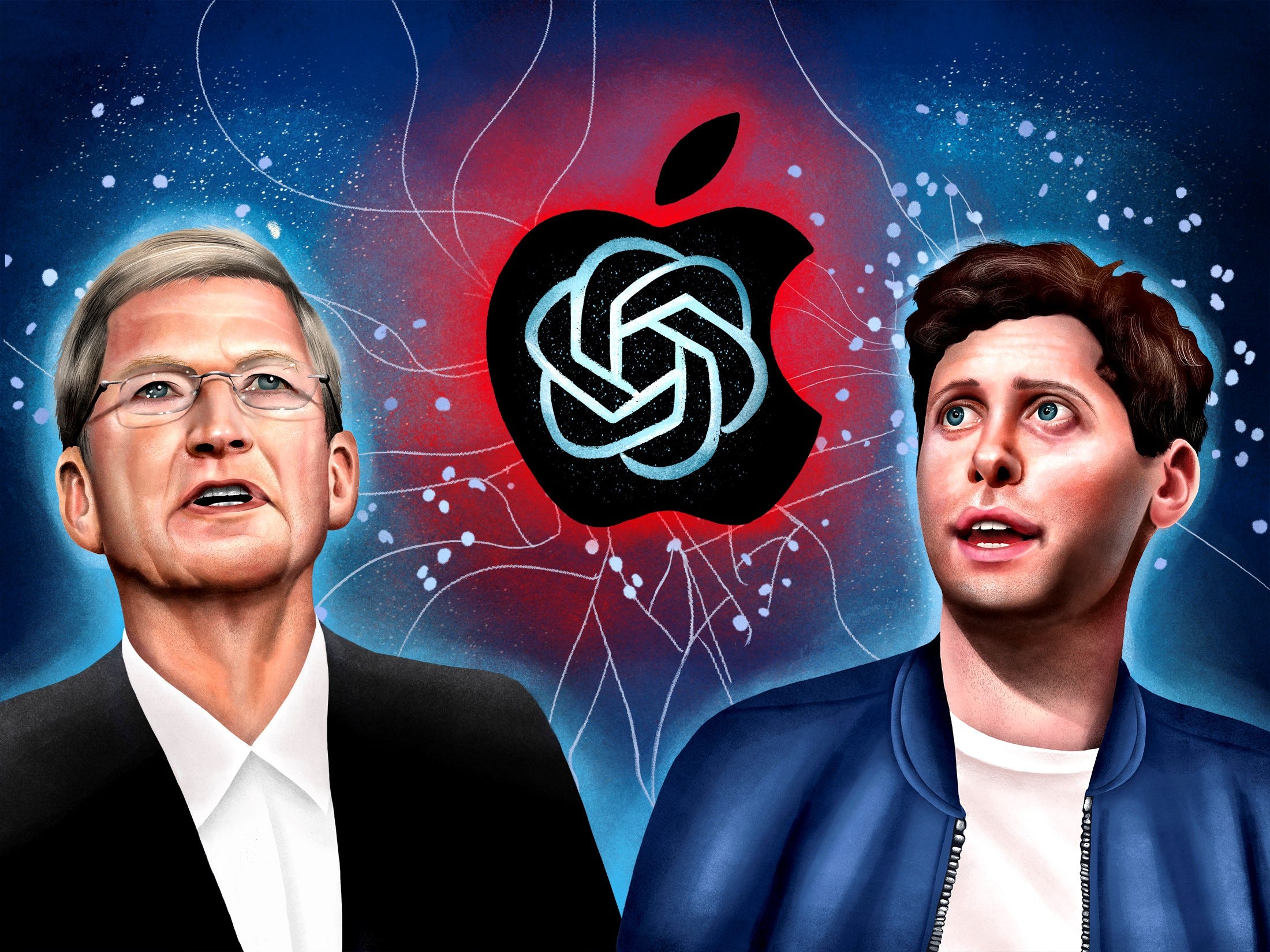
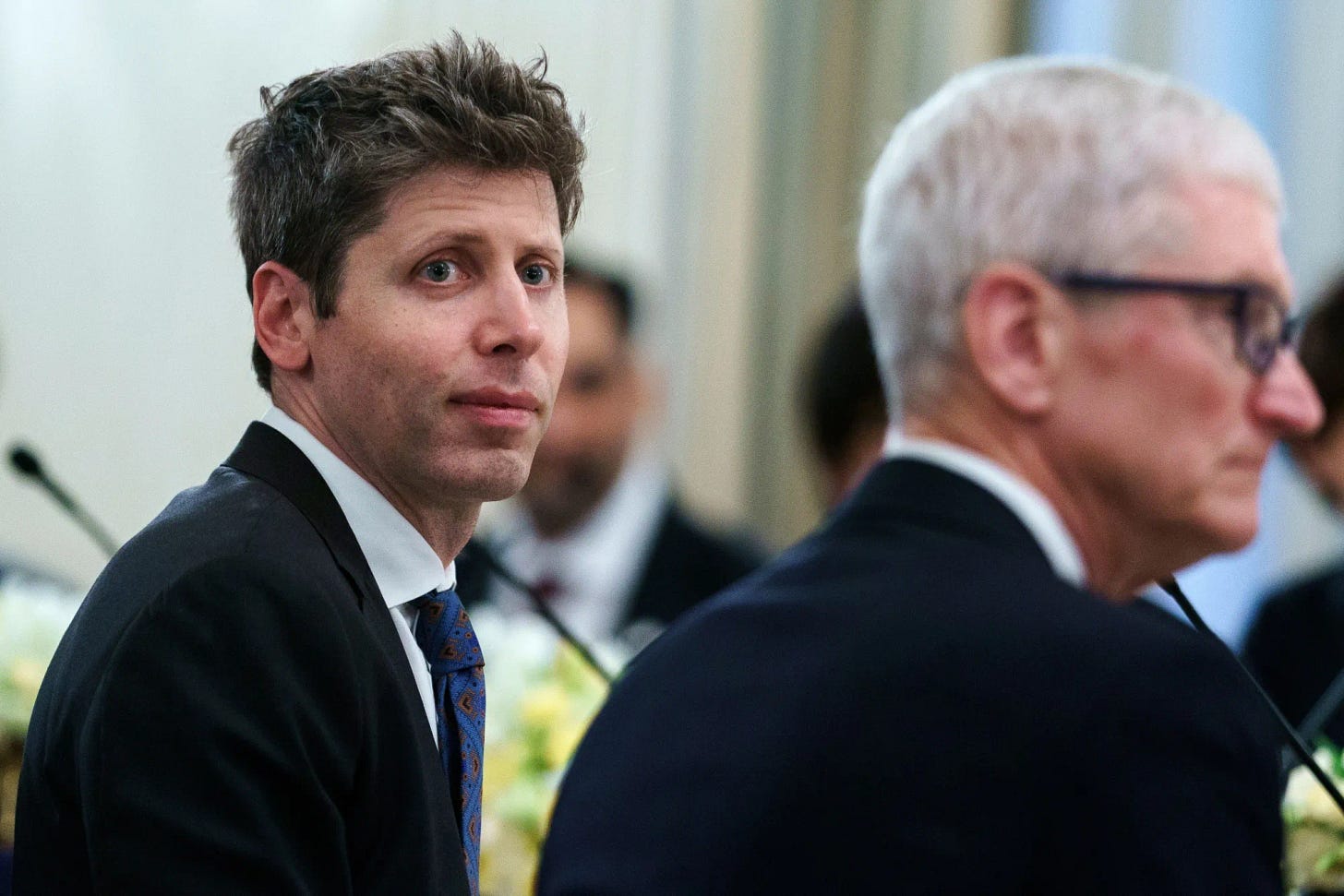
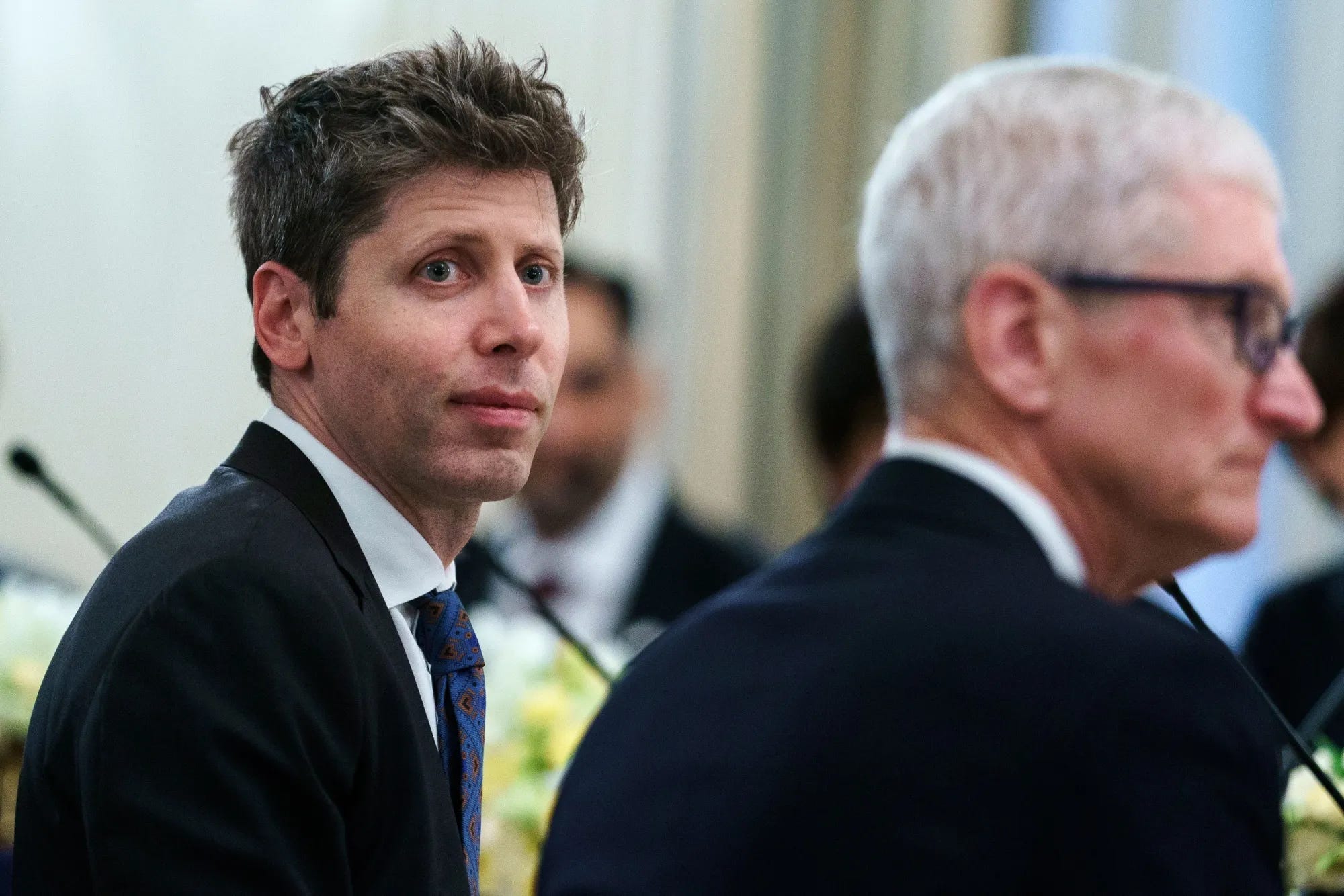
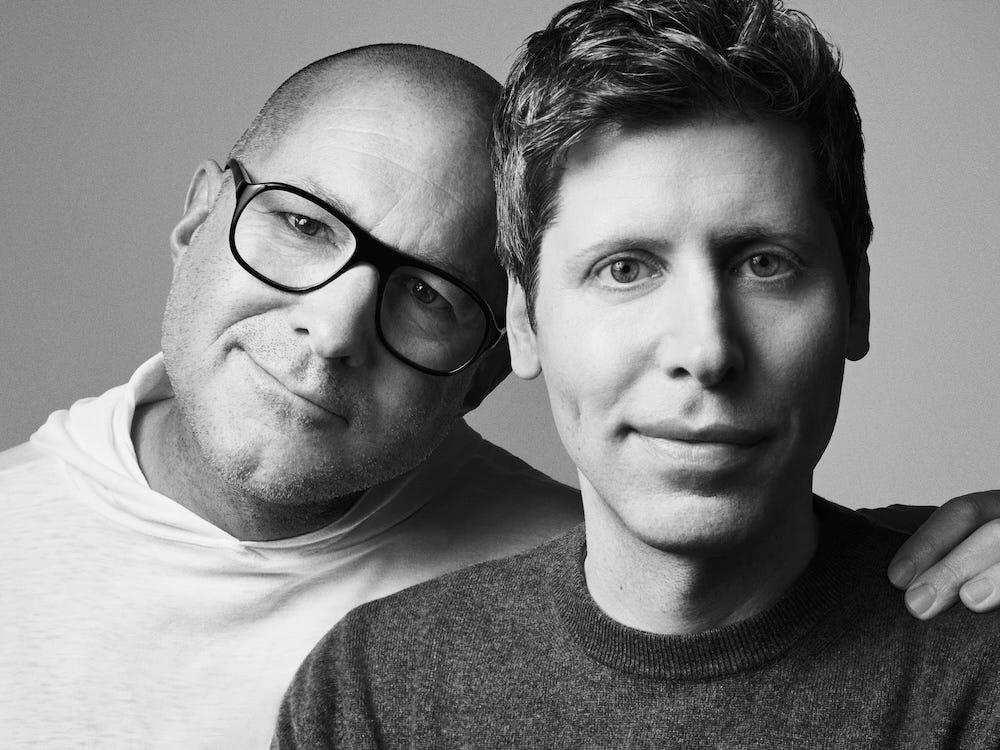
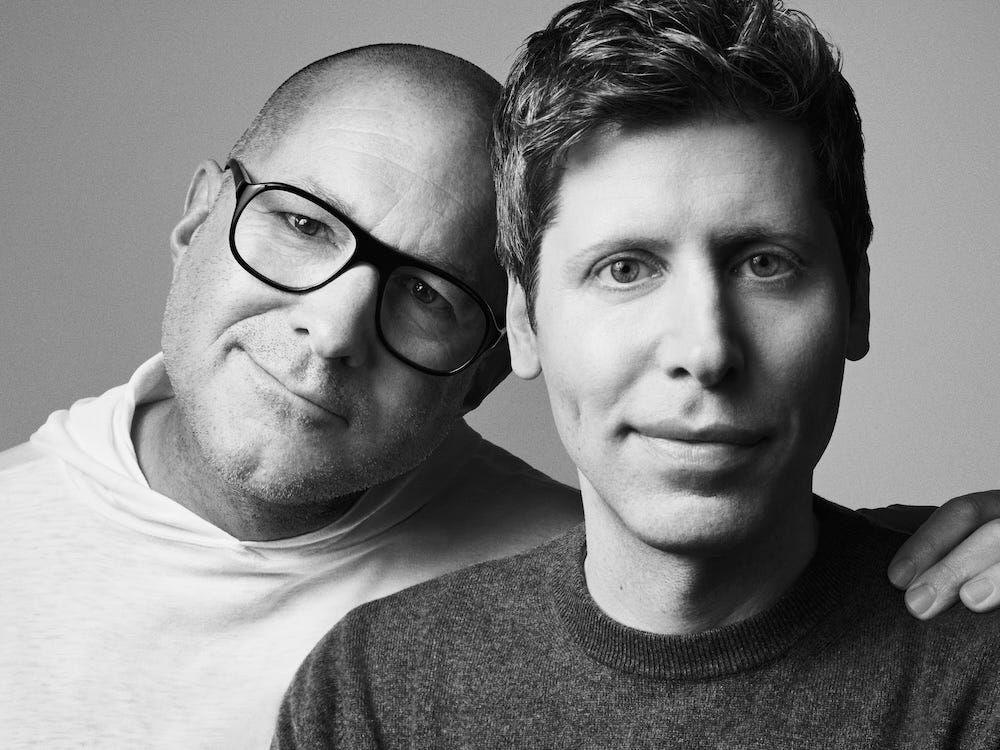
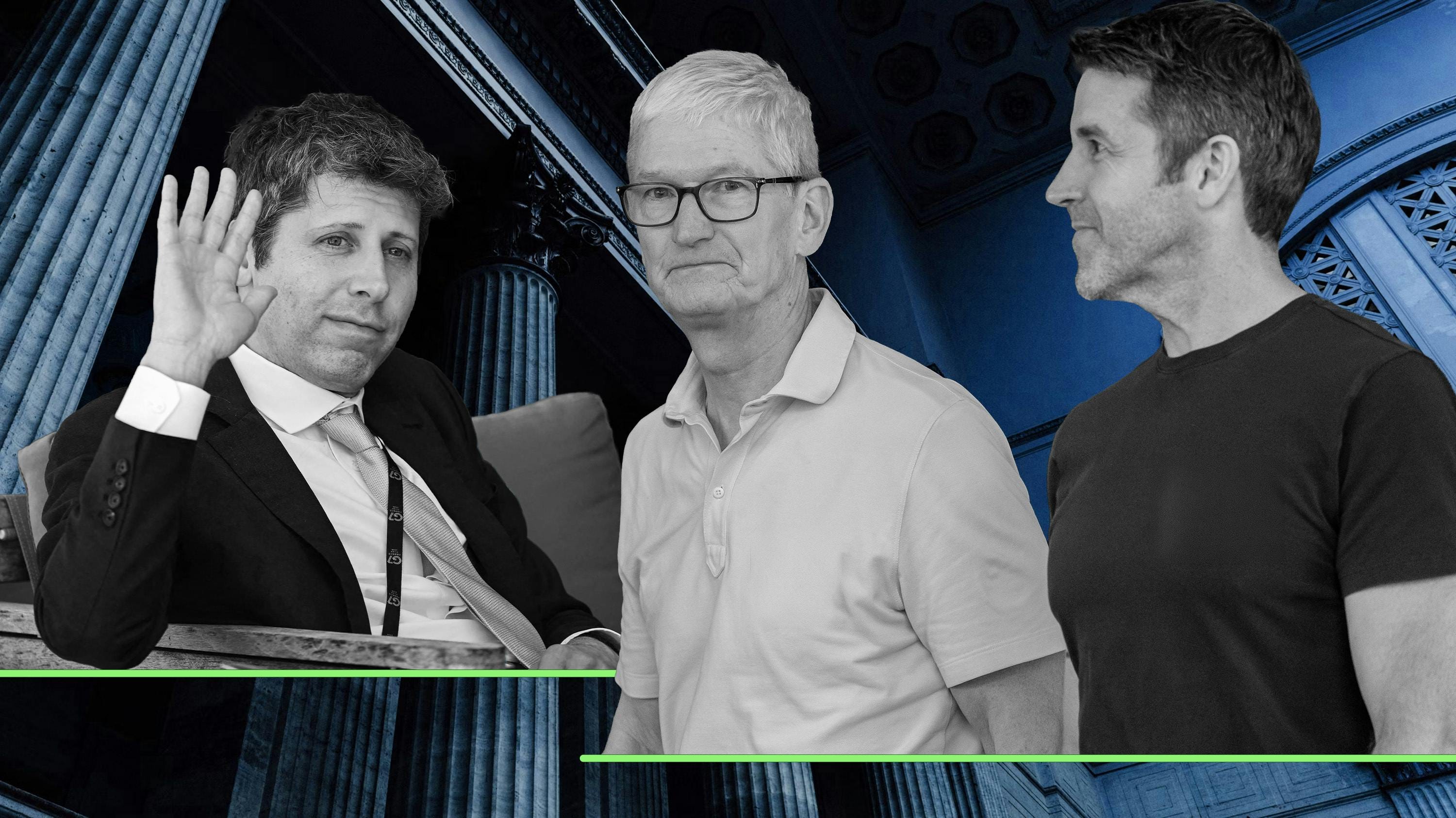
Fundamentally changing the relationship between Tim Cook and team vs Sam Altman, Jony Ive and team in ‘what could have been’.
After all, every silicon valley entrepeneur aspires to have the originality and creativity of THE Steve Jobs.
A set of charges around stealing and copying, are likely to leave a long trail of reputational nightmares for anyone aspiring to AI Devices and Wearables greatness ahead. Especially OpenAI that’s built it reputation on original inventions in AI.
“Apple Inc. filed a lawsuit against OpenAI, alleging that the company encouraged prospective employees to study confidential Apple materials and bring hardware components to interviews.”
“The lawsuit claims that Chang Liu, a former iPhone engineer, left Apple with a company-issued MacBook and knowledge of a software bug that gave him access to internal file servers, which he used to download confidential information while working at OpenAI.”
“OpenAI responded to the lawsuit, stating that it has “no interest in other companies’ trade secrets” and remains focused on building innovative technology, while Apple alleges that OpenAI’s hardware business relies on misappropriated trade secrets.”
The details are dramatic enough for a book or movie some day.
“When iPhone engineer Chang Liu quit for a job at OpenAI’s nascent hardware division, Apple Inc. says he left with more than just years of experience.”
“According to a lawsuit filed Friday, Liu departed with three things: a company-issued MacBook he never returned, a close relationship with an Apple employee who continued sharing internal information, and, most significantly, knowledge of a software bug that gave him ongoing access to internal file servers.”
“LOL, I found out I can access the [network storage], so funny,” Liu wrote to his former Apple colleague, Alyssa Peng. He then, Apple alleges, used that access to download presentations, hardware designs, manufacturing details and testing procedures — all while already working at OpenAI.”
“When Liu discovered the bug, Peng stepped in to help, according to the suit. She replied, “I’m ready,” and eventually helped obtain more information through her own laptop. A few months later, in April, Peng herself left for OpenAI’s growing hardware division.”
This apparently was not a one-off, but a flood. With seeming intent from the beginning.
“She joined more than 400 other former Apple employees drawn by the opportunity to work on next-generation devices designed to replace the two-decade-old iPhone — with salaries and stock options that trumped Apple’s less dazzling pay packages.”
“The episode is one of many that Apple says illustrate a “systematic effort to acquire, retain and use” its confidential information to help OpenAI replicate its decades of work building the world’s most successful consumer electronics business.”
“The 40-page lawsuit alleges that OpenAI encouraged prospective employees still at Apple to study confidential materials before interviews and brazenly bring hardware components and prototypes to so-called show-and-tell sessions at OpenAI’s offices.”
Uncharacteristically, OpenAI founder/CEO Sam Altman has been silent on the topic, as has been numbr two Greg Brockman. Only a terse x/twitter response by a communications functonary.
“In response to the lawsuit, OpenAI said it has “no interest in other companies’ trade secrets.”
“We remain focused on building innovative technology that empowers people everywhere,” a spokesperson for the San Francisco-based company said.”
The broader question of course is around the broader implications for OpenAI. Especially for its own AI devices and possible an AI Smartphone.
“The lawsuit was filed after months of simmering tension between Apple and OpenAI — partners that have increasingly become rivals. Both companies are gunning for the nascent AI device market, a category that’s poised to reinvent the way consumers use technology.”
There is anothr prominent ex-Apple, now OpenAI executive named in the lawsuit:
“At the center of the rift is Tang Tan, a former Apple executive who had overseen the design of the iPhone, smartwatch and several other products. He told his bosses in late 2023 that he was leaving for a new gig — an opportunity that eventually became the chief hardware officer job at OpenAI.”
“At the time, there were few signs that his departure would end in a courtroom battle. In a rare move, Apple allowed him to stay on through February 2024, letting him manage a transition that required a revamp of the hardware division.”
“Behind the scenes, however, Tan had already begun working with former Apple design head Jony Ive and OpenAI Chief Executive Officer Sam Altman on an ambitious new hardware venture. Their aim was to create a new category of AI devices that could one day challenge the iPhone itself.”
Tan was a co-founder of the company with Jony Ive, sold later to OpenAI for $6.5+ billion in stock. So the ‘fruit of the poisoned tree’ go back before OpenAI was in the picture.
“Tan and Ive helped found io Products, a startup that OpenAI acquired last year for $6.5 billion. They teamed up on the venture with Evans Hankey, Ive’s successor as Apple’s industrial design chief, and Scott Cannon, a former manufacturing manager who left the tech giant in 2010.”
“Apple was quickly alarmed by OpenAI’s recruiting drive, which included poaching senior hardware and design leaders and ravaging several teams across its engineering organizations.”
Lot of data seemingly garnered by Apple since the beginning of these transitions of key people.
“The practice continued as recently as June, when OpenAI lured away Apple’s smart glasses chief. That executive, Paul Meade, was quickly shown the door at Apple and not given the opportunity to stay on for a transition period, according to people with knowledge of the matter.”
“To Apple, the talent search looked like an attempt to recreate the iPhone maker’s product-development machine inside OpenAI. “OpenAI’s nascent hardware business now rests on the shakiest of foundations, rotten to its core by its illegal reliance on misappropriated trade secrets,” Apple said Friday.”
Also some insight into the key party’s proclivities within Apple:
“Tan was famous for taking risks at Apple and “flying very close to the sun” during his 25-year career, according to someone who worked with him. “Tang is well known for moving fast, playing fast and loose and breaking things,” said the person, who asked not to be identified while discussing former colleagues.”
“He made his name leading the design of early Mac laptops and iPods before taking charge of the product design function for the original iPhone. Tan oversaw the entire iPhone design team by 2011 and then led the Apple Watch design work. By the time he left, he was one of Apple’s top executives.”
The imperatives to succeed were high of course once OpenAI and Ive’s team merged. With feverish global aspirations and hype.
“OpenAI, meanwhile, had committed billions of dollars to its hardware effort and was racing toward an initial public offering. Nevertheless, the startup had little to show beyond concepts and early prototypes when io was acquired, according to people with knowledge of the matter. At the time, the company was still scrambling to settle on a compelling product strategy, they said.”
“These days, OpenAI is working on an AI-powered smartphone replacement, though its first product may be something simpler, the people said. The company has explored concepts ranging from earbuds and smart glasses to AI-enhanced speakers. Apple, for its part, is developing a new lineup of home devices, camera-equipped AirPods, glasses and other wearables.”
Apple for its parts indicates it didn’t want to take things this far.
“Apple said that it tried to resolve the dispute before filing the suit, including by contacting the AI company in February. It said it told OpenAI of its concern that confidential Apple information had made its way there and asked the company to both investigate the issue and stop it from happening. The startup never responded, Apple alleges.”
And indications are that the people involved were also not on good terms with Apple’s new incoming CEO John Ternus, in September.
“The lawsuit also underscores Tan’s strained relationship with John Ternus, his former boss and Apple’s incoming chief executive officer. Most of OpenAI’s Apple recruits came from Ternus’ hardware engineering division, and some designers had backed Tan over Ternus for the top hardware job in 2021.”
“Tan, who Apple portrays as orchestrating the effort to obtain confidential information, is alleged to have used interviews with prospective employees as information-gathering sessions about upcoming Apple products.”
The details in the lawsuit are vivid indeed.
“In one instance, Apple says an employee acquired information about a project just hours before meeting with Tan for a job interview. “Then, in the interview, Mr. Tan solicited more information about that same Apple project. This has become an established pattern,” according to the lawsuit.”
“Once employees sign on to work at OpenAI, they are encouraged to send information before resigning from their Apple devices to their personal email accounts to use later at the AI startup, the iPhone maker alleges. OpenAI, the complaint says, distributes “a checklist that Tang put together” that helps new employees evade detection from Apple’s security teams.”
“Apple also alleges that Tan went as far as asking prospective hires to bring prototypes to job interviews. This included batteries, logic boards and other components, the complaint says.”
“At least one Apple worker who applied to OpenAI was concerned about the practice, saying he was “surprised people have brought” unreleased hardware to job interviews. He said he “didn’t know we could take those from the office.” In many cases, they couldn’t.”
The broader point from this story to date is that this is a serious move by Apple from a former valued partner. And Apple doesn’t react well long-term to these sort of ‘first blood’ events. Recall the Steve Jobs reaction to former Apple board member, and then Google CEO Eric Schmidt, who left as Google went onto launch Android smartphones against the iPhone in 2007. The adjective then was ‘going thermonuclear’.
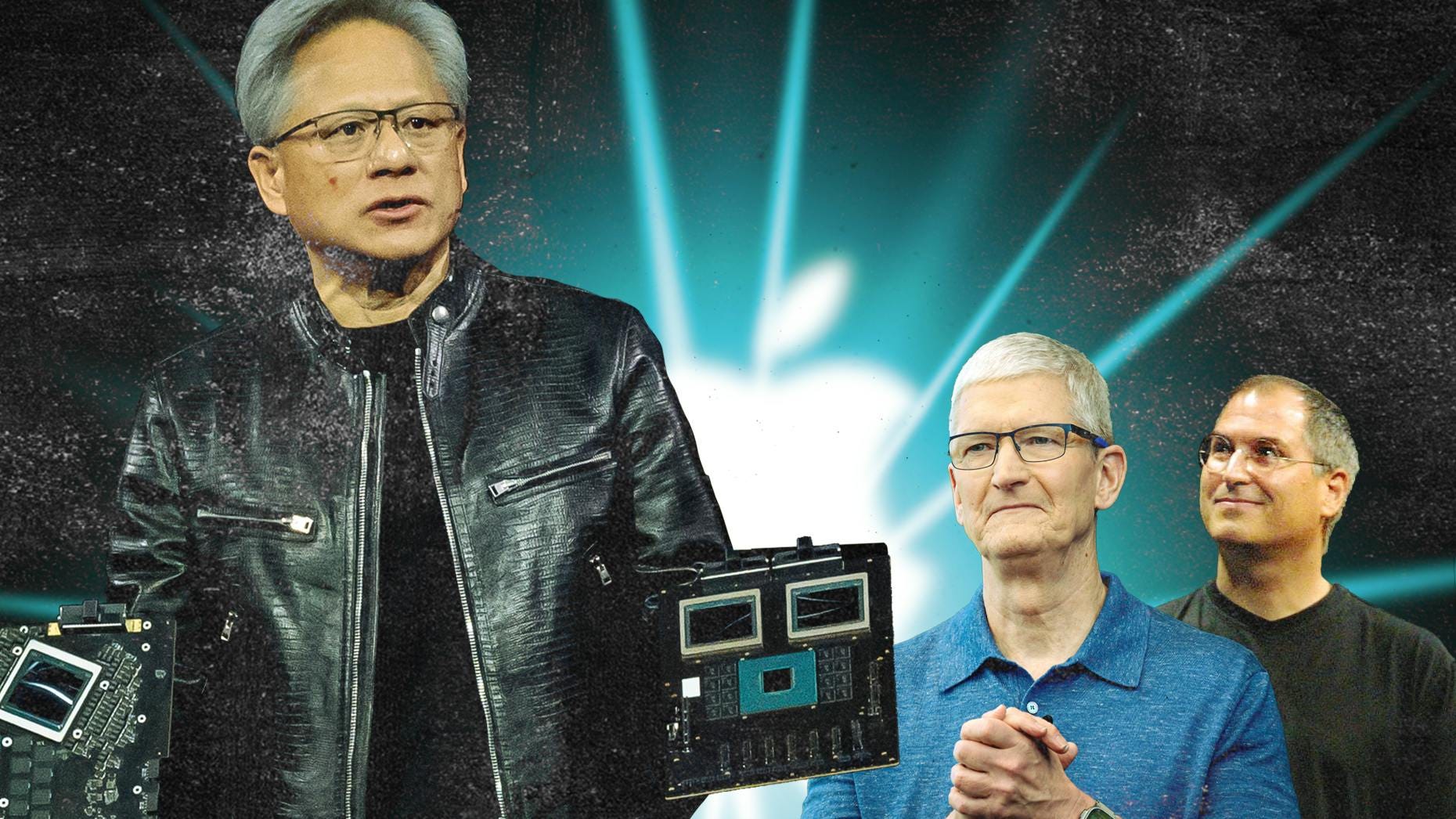
And Apple holds grudges for a long time. As per the history behind the still frayed relationship between Apple and Nvidia. Ironically, also over a ‘copying’ beef against Steve Jobs’ Pixar Studios. As the Information recounted recently in “How Apple Deeloped an Nvidia Allergy”:
“In 2001, for example, the two companies forged a major partnership when Apple included Nvidia’s chips in its Macs to give the computers better graphics capabilities. At the time, Jobs told a packed audience at an event in Tokyo that they had a “great relationship.”
“Behind the scenes, though, their dealings were tense. In a meeting around that time between Jobs and a senior Nvidia executive, the Apple CEO remarked that Nvidia products contained technology copied from Pixar, the computer animation studio Jobs then led and had a controlling stake in.”
“The Nvidia executive pushed back on the idea, saying Nvidia held more graphics patents than Pixar and should sue the animator instead. For the remainder of the meeting, Jobs pretended the Nvidia executive was no longer in the room, according to a person who witnessed the incident.”
View the video of this post on YouTube here. __ New Blog Post: The Best Time to Diversify __ The most important charts and themes in markets and investing…...