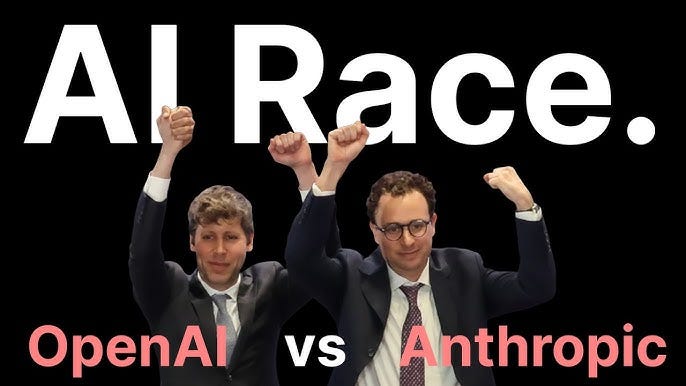
And public investors, especially institutional ones are assessing its public prospects in the context of available data and valuation parameters. And OpenAI after it’s last funding round at a post-money valuation of $840 billion, would need to trade post-IPO above a trillion dollar cap on a sustained basis, to be deemed even a moderately successfull IPO. Up against incumbents like Google and others.
“OpenAI faces investor skepticism over its long path to profitability.”
“Company’s projected $850 billion valuation appears rich to investors.”
“One investor asks why pay more than Nvidia’s valuation”
“OpenAI is likely at least six months away from going public, and possibly longer. But as the company takes steps toward an initial public offering, investment banks trying to get a piece of the business are contacting public market investors to gauge how they’re thinking about OpenAI’s prospects as a public company, said one person who has been on the receiving end of the outreach.”
And they lay out their key takeaway:
“The mood is mixed. Investors expect the company to raise tens or potentially hundreds of billions of dollars in its initial public offering, meaning it could easily eclipse even Saudi Aramco’s blockbuster IPO in 2019, which brought in over $25 billion. But many public market investors—even those who are bullish on OpenAI’s favorable position in the competitive landscape of AI—are somewhat skeptical. We spoke to 11 of them, the majority of whom don’t own equity in OpenAI already.”
“Several expressed wariness about the offering, partly because plentiful financial data on the company’s performance won’t be available until it files to go public and partly because they are concerned about OpenAI’s ability to turn a profit in the long term. The ChatGPT creator has projected it will continue to burn cash until at least 2030.”
Then come the relative valuation assessments:
“The $850 billion valuation at which the company is finalizing a funding round from investors including Nvidia, Amazon and Softbank looks rich, and it’s likely its bankers will price its IPO at an even higher figure. At $850 billion, OpenAI is valued at 28 times its projected 2026 revenue. Nvidia, in comparison, trades at a multiple of 12 times forward sales. (The $850 billion figure includes the money being raised).”
““While I do believe OpenAI is a great company, and they really have a strong moat, I just don’t think that whatever valuation is out there on day one is going to be a value for investors,” said Bob Lang, founder of trading firm Explosive Options.”
Indeed, public markets mean investors with opposing views can execute on their assessments as well:
“Some investors say they are eager to short OpenAI’s stock, thinking the public market won’t be tolerant of its long path to profitability.”
“Investment manager and high-profile short seller Jim Chanos argues that Nvidia sets the valuation benchmark for investing in AI companies, including OpenAI. Nvidia has “got the monopoly for the most part, and they’re growing rapidly,” Chanos said. “They have massive margins. They have cash flow to burn. So why would you pay a higher valuation for OpenAI?”
“Chanos says there isn’t enough financial information available about OpenAI to analyze the company. But once it files publicly for its IPO, “you’ll get a much fiercer debate in the public markets about—is this winner-take-all, or is this a market that will be split up like cloud? Or is it like search, where one firm became the standard and kept it for years?” Chanos said. “Right now, it looks like the models keep leapfrogging each other.”
“On top of that, investors are questioning whether the money OpenAI raises from its IPO will be enough to sustain it until it’s profitable, or whether it will need to raise more in the future, which could dilute existing shareholders.”
Wall Street is already writing their opinions on OpenAI as a private company relative to its peers:
“In a note in January about OpenAI’s advertising rollout, which got underway last month, JPMorgan Chase analysts said the company was still in a good position to retain users of ChatGPT while putting ads in the chatbot because of its strong brand. But they also noted that client sentiment on OpenAI “has been mixed following recent spending announcements” for chips and data centers.”
Of course, many institutions will invest if only to have a position in a broader portfolio:
“OpenAI’s IPO valuation is crucial to many investors’ attitudes. Mark Malek, chief investment officer at wealth management firm Siebert Financial, said he’d consider adding OpenAI to his portfolio after the IPO even though he “wouldn’t expect them to be significantly profitable” anytime soon because of the company’s rapid expansion.”
“However, he says he would limit the size of that position if the shares are too expensive. That’s similar to how Malek says he approached building a stake in enterprise software and services firm Palantir, which has been growing much faster than most of its peers but trades at a whopping 49 times forward sales.”
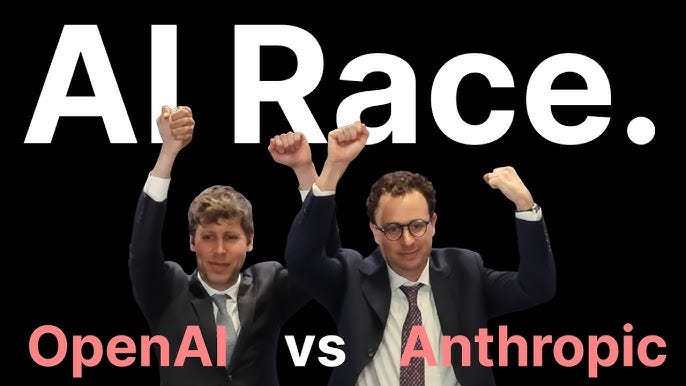
“Another risk is competition from Anthropic, whose business is surging as much as OpenAI’s, buoyed by Anthropic’s success in selling AI tools such as Claude Code to other businesses. At Morgan Stanley’s annual technology conference this week, Anthropic CEO Dario Amodei said the company had more than doubled its annualized revenue run rate, to $20 billion. Anthropic recently raised money at a valuation of $380 billion.”
“One potential point in Anthropic’s favor is that it projects it will spend much less than OpenAI on costs to train and run its AI models over the next several years, The Information reported in November. Some investors are beginning to think Anthropic’s business might be more profitable than OpenAI’s in the long run, given its success in selling to enterprise customers willing to pay a premium for AI.”
“As Anthropic also plans to go public, it could end up diverting investor attention and enthusiasm away from OpenAI.”
So there’s that.
The whole piece is worth a closer read for more details.
But the handicapping of the IPOs has begun in earnest.
Even it OpenAI doesn’t debut until the end of the year this AI Tech Wave. Stay tuned.
(NOTE: The discussions here are for information purposes only, and not meant as investment advice at any time. Thanks for joining us here)
That which we call QE by any other name would smell as sweet. I think if Shakespeare were reincarnated as a Fintwit luminary, that’s how he’d rewrite...
Podcasts Barry Ritholtz talks with Jordan Grumet about when to fire yourself as your financial advisor. (ritholtz.com) Christine Benz and Amy Arnott talk...