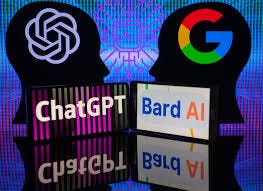
“OpenAI CEO Sam Altman declares ‘code red’ to improve ChatGPT.”
“The company is preparing to release a new reasoning model that scores well against Google’s Gemini 3.”
“The code red also involves making improvements to OpenAI’s image-generating AI.”
“OpenAI CEO Sam Altman on Monday told employees he was declaring a “code red” to marshal more resources to improve ChatGPT as threats rise from Google and other artificial intelligence competitors, according to an internal memo.”
“As a result, OpenAI plans to delay other initiatives, such as advertising, Altman said.”
““We are at a critical time for ChatGPT,” he said.”
“OpenAI hasn’t publicly acknowledged it is working on selling ads, but it is testing different types of ads, including those related to online shopping, according to a person with knowledge of its plans. Millions of people already use ChatGPT to search for products to buy.”
“Altman said the code red “surge” to improve ChatGPT meant OpenAI would also delay progress with other products such as AI agents, which aim to automate tasks related to shopping and health, and Pulse, which generates personalized reports for ChatGPT users to read each morning.”
“In a call with OpenAI investors last month, CFO Sarah Friar alluded to a slowdown in ChatGPT growth, though it wasn’t clear what growth metric she was referring to, according to a person with knowledge of her remarks.”
“ChatGPT’s performance will impact OpenAI’s ability to raise another $100 billion or so to weather the significant cash burn the company has projected. The company projected this summer that while it burns tens of billions of dollars to develop new technologies and power ChatGPT and other products in the coming years, the chatbot will generate about $10 billion in revenue this year from subscriptions, $20 billion next year and roughly $35 billion in 2027. (It launched just three years ago.)”
“OpenAI’s code red represents a role reversal from three years ago, when Google began its own “code red” to respond to the threat ChatGPT posed to Google Search. Google later launched its Gemini chatbot, which still lags OpenAI in terms of user numbers, but there are signs it may be catching up. Google said in October that Gemini has 650 million monthly active users, up from 450 million monthly active users in July, though it’s still a far cry from the user figures OpenAI has disclosed for ChatGPT.”
“Google also has launched “AI mode” in Google Search, which essentially turns the search app into a chatbot akin to ChatGPT.”
OpenAI still has its metrics of AI leadership to frame its current position:
“For its part, OpenAI estimates ChatGPT handles 70% of the world’s AI “assistant activity” and 10% of “search activity,” ChatGPT leader Nick Turley said in an X post Monday night.”
“Altman said Monday in an internal Slack memo that he was directing more employees to focus on improving features of ChatGPT, such as personalizing the chatbot for the more than 800 million people who use it weekly, including letting each of those people customize the way it interacts with them.”
And then some specific areas of focus for improvements:
“Altman also said other key priorities covered by the code red included Imagegen, the image-generating AI that allows ChatGPT users to create anything from interior-design mockups to turning real-life photos into animated ones. Last month, Google released its own image generation model, Nano Banana Pro, to strong reviews.”
“Altman said other priorities consisted of improving “model behavior” so that people prefer the AI models that powers ChatGPT more than models from competitors, including in public rankings such as LMArena; boosting ChatGPT’s speed and reliability; and minimizing overrefusals, a term that refers to when the chatbot refuses to answer a benign question.”
“Altman’s code-red declaration comes as new models from competitors including Google and Anthropic have been met with especially strong praise from app developers.”
And some immediate timelines:
“Altman said OpenAI is planning to ship a new reasoning model next week that is “ahead of [Google’s] Gemini 3” in OpenAI’s internal evaluations but the company had more work to do on improving the ChatGPT “experience.” Reasoning models spend more computing power to produce better answers, powering ChatGPT’s Thinking mode and features such as Deep Research.”
“OpenAI, which in recent weeks has appeared to fall behind Google in AI development, is fighting back with a new large language model codenamed Garlic.”
“Last week, OpenAI’s chief research officer Mark Chen told some colleagues about the new model, which was performing well on the company’s evaluations, at least when compared to Gemini 3 and Anthropic’s Opus 4.5 in tasks involving coding and reasoning, according to a person with knowledge of the remarks.”
“The news comes as OpenAI grapples with the success Google has enjoyed with its new Gemini 3 model.”
And despite the update release in the near-term, expect the fuller response by OpenAI, Garlic and beyond, to go into next year:
“OpenAI has already moved on to developing an even bigger and better model, thanks to the lessons it learned with Garlic this time around, Chen said.”
“Of course, we have no idea how real-life developers will react to Garlic once it’s out in the wild. As we’ve seen time and time again, it’s one thing to perform well on evaluations and another to excel in real-life applications like coding or data analysis. The reactions to GPT-5 were a good example of this.”
“It’s also the job of leaders like Chen to be OpenAI’s biggest cheerleader internally, especially during a period of relative adversity.”
“Garlic still has to go through many steps before release, including post-training (in which the model is shown more curated data to learn about specific fields like medicine or law or how to better respond to chatbot users), other testing and safety evaluations.”
“If and when it’s released, Garlic will give us another helpful data point on whether AI improvements are plateauing or if there are competitive advantages left for AI developers to attain that can’t be quickly replicated by competitors in a matter of months.”
So this ‘Code Red’ is at least a multi-month reality within OpenAI. Even as its manages it long-term AI plans. AGI or a close facsimile:
Also worth a read is the WSJ’s take on the situation, in particular, because this Code Red is apparently the final upgrade in its internal rating system:
“OpenAI earlier declared a “code orange” in its effort to improve ChatGPT, the memo said. The company uses three different color codes—yellow, orange and red—to describe the varying levels of urgency needed to tackle problems, according to people familiar with the matter.”
That’s one grade system Colonel Jessup in ‘A Few Good Men’ wouldn’t have externally admitted to as well.
Another reason its notable OpenAI Founder/CEO Sam Altman using ‘Code Red’ as an internal management tool in this AI Tech Wave . Stay tuned.
(NOTE: The discussions here are for information purposes only, and not meant as investment advice at any time. Thanks for joining us here)
Listening The Longform Podcast is calling it quits. (defector.com) A list of some of the most popular (and influential) podcasters. (vulture.com) Economy...