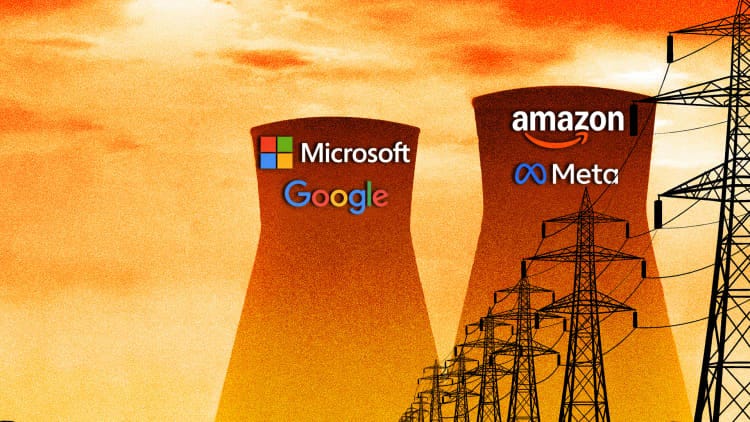
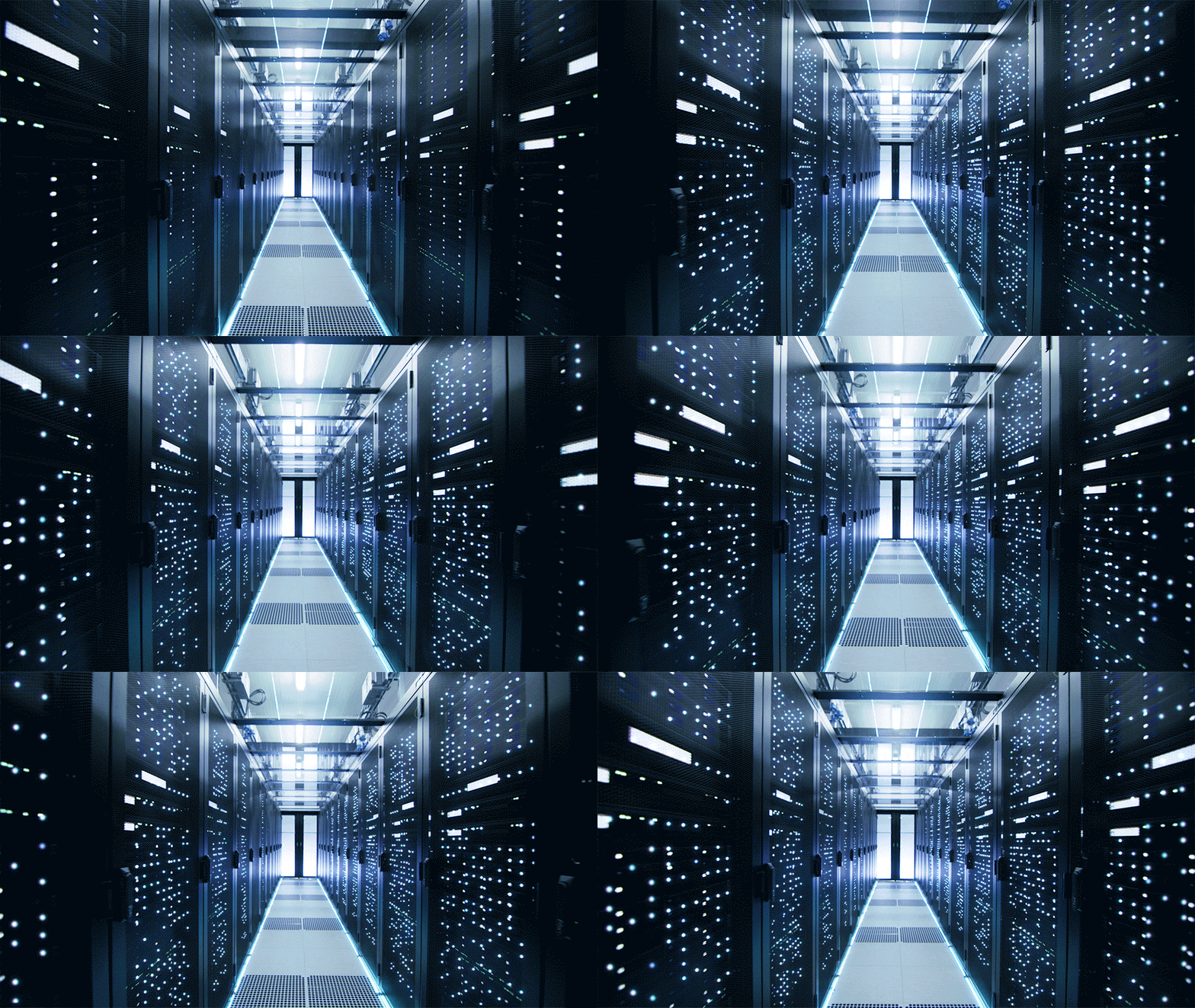
We’re ending the year with a hundred billion or more in spending per company. And deals lined up for OpenAI alone over a trillion dollars. For both the data centers and the power to get them going. And investors have been piling in for both the debt and equity to finance them. With palpable FOMO to boot.
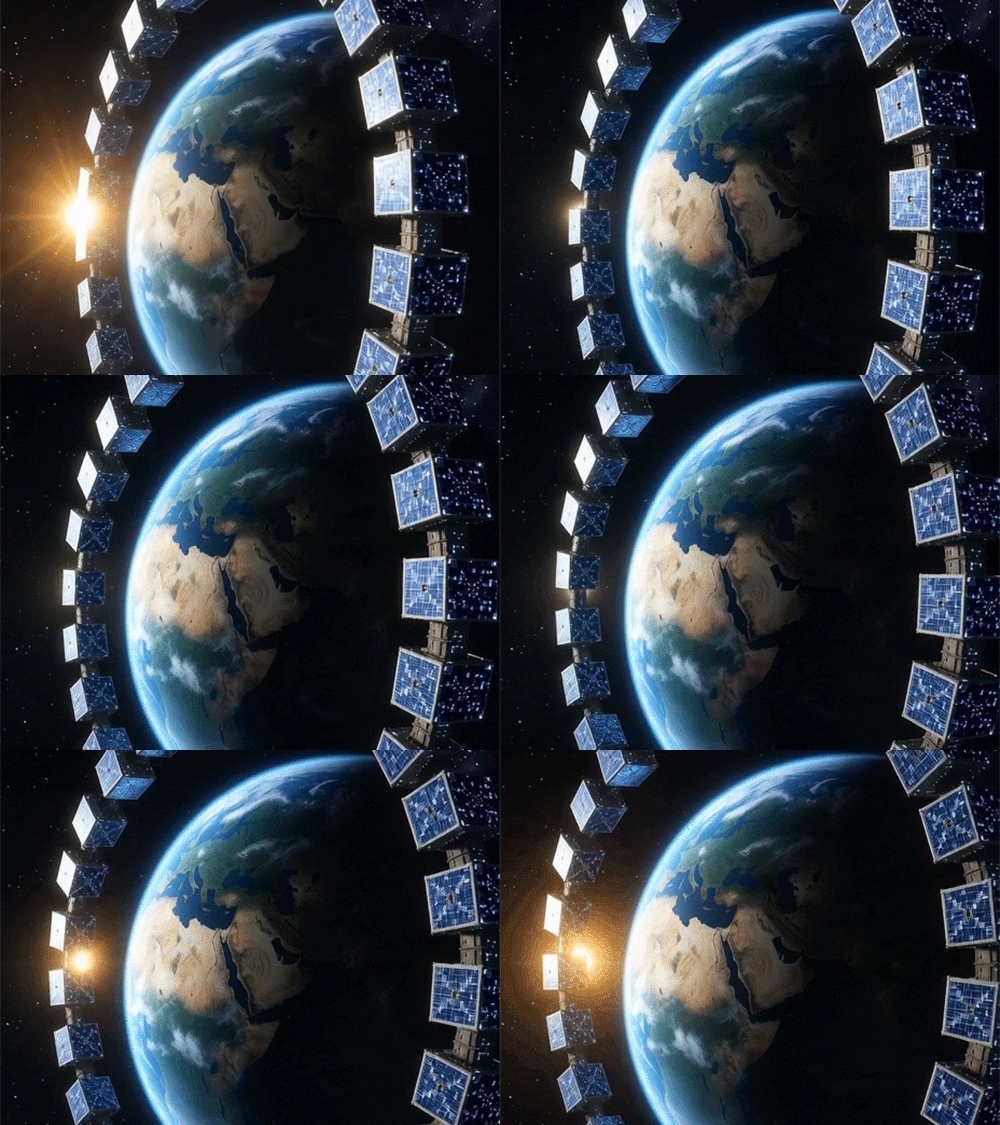
Now the enthusiasm to build them is shifting to Space of course. Partly because Elon Musk is talking about it. Fusing two of the hottest areas in the markets, AI and Space, to get to AI Space Data Centers. A thing for 2026 and beyond.
Also because three of the biggest IPOs expected in that time frame are of course for Elon’s SpaceX (trillion dollar plus expected valuation), OpenAI ($500 billion+), and Anthropic ($350 billion+). More than the market cap of most European public markets.
As someone who’s professionally analyzed data centers for over three decades, and helped bring public some of the leading data center companies in the nineties at Goldman Sachs, I feel empowered to weigh in here. As someone who has also closely followed the current AI Data Center infrastructure industry, let me the first to say that this new area of Space AI Data Centers has a lot of viability issues to be figured out and demonstrated. The technical challenges are enormous with lots of science to be developed. Not to mention the the ultimate economic viability of the ideas.
Lots of need here to see if the baby can flop in the right direction to even crawl. Before envisioning how the walking and running goes.
But that isn’t going to slow down the building enthusiasm for the emerging sector. The story line being developed on the rapid improvement in launch economics, the abundance of sustained and perpetual solar power in space, combined with the sub-zero temperatures to cool the AI GPU chips. So far so good.
The cons of the idea are substantially larger, not the least of which are radiation impact on electronic circuits, and the difficulty of maintaining, repairing, and upgrading the equipment in space. Just to start. But those are for now being treated as minor details.
“It’s not just because of the SpaceX IPO. AI companies are getting impatient with building data centers on Earth, or at least in the U.S.”
“AI industry leaders are championing space data centers amid Earth-based challenges.”
“U.S. data centers are facing power shortfalls and community opposition.”
“Space data centers promise free solar power and natural cooling, advocates say.”
“Every so often, prominent figures in tech begin amplifying the same topic so energetically that it makes you wonder if they’re all on the same group chat (or if the hive mind from “Pluribus,” the Apple TV+ sci-fi show, is a real thing). One such moment occurred this past week, when it became hard to escape the deafening online chatter about data centers in space.”
“That was in large part thanks to Elon Musk, who began promoting the concept through a series of posts on X. It isn’t just Musk hyping the concept, though. Amazon executive chair and founder Jeff Bezos and former Google CEO Eric Schmidt have both been big believers for a while. Nvidia CEO Jensen Huang has also jumped on the bandwagon.”
“Last month, Google, one of the biggest cloud providers, said it plans to launch prototype satellites by 2027 to see how its AI chips, called tensor processing units, perform in space. And this week, a space data center startup, Starcloud, said it had trained the first large language model in space aboard a demonstration satellite outfitted with an Nvidia graphics processing unit.”
Minds were blown:
“On one hand, this is an exhilarating vision, especially if you’re a sci-fi nerd. But there’s also a more pessimistic interpretation of the sudden enthusiasm of so many smart, powerful AI barons for sticking data centers in space—namely, they don’t think the U.S. can meet the compute needs of the AI industry on terra firma. That makes sense, as we’ll explain. First, though, we should acknowledge that some of the proponents of data centers in space—Musk in particular—have other agendas.”
And a look at the underlying agendas:
“As we first reported 10 days ago, Musk’s rocket company, SpaceX, is currently eyeing the second half of next year for an initial public offering. SpaceX already had a good story to tell investors—about the dominance of its rocket-launching business and Starlink satellite internet service. Adding the idea that SpaceX could accelerate the launch of data centers into space allows the company to tap into the mother of all investor narratives, AI—just as Musk has sought to do with his other public company, Tesla, through initiatives like its Optimus humanoid robot.”
“To say that the vision of orbiting data centers has its skeptics would be a radical understatement. Radiation will cook their AI chips, these critics say. Servicing them when they malfunction or replacing the chips when they’re obsolete will be, shall we say, interesting.”
““I have no idea how sending things to space is cheaper than building them on the ground, but [I] have also never built a data center,” one space company executive said this week via text when asked for his stance on space data centers.”
But Confidence can go a long way in this game:
“Still, Musk and others seem very confident that they are inevitable. The reason they most commonly cite is the free, uninterrupted solar power and cooling that space provides, which could theoretically make the operational costs of a space data center much lower than on Earth. Also, it’s getting cheaper to transport objects into space.”
And an examination of the one plus point that Elon’s SpaceX is a leader in, launch economics:
“Currently, the cheapest way to lob something into orbit is on board SpaceX’s Falcon Heavy rocket, at a cost of about $1,500 per kilogram, according to estimates from the Center for Strategic and International Studies. That figure has fallen dramatically from past decades on an inflation-adjusted basis, thanks to the reusability of SpaceX’s rockets.”
“Launch costs are likely to fall even further, which could make the expense of transporting loads of GPUs and solar arrays into orbit more economically viable. By some estimates, the cost of launching payloads into orbit aboard Starship, SpaceX’s gargantuan new rocket, could drop to as low as $100 per kilogram in a few years. SpaceX still has a lot of kinks to iron out with that rocket, though.”
With other world class tech entrepreneurs and centi-billionaires in the game:
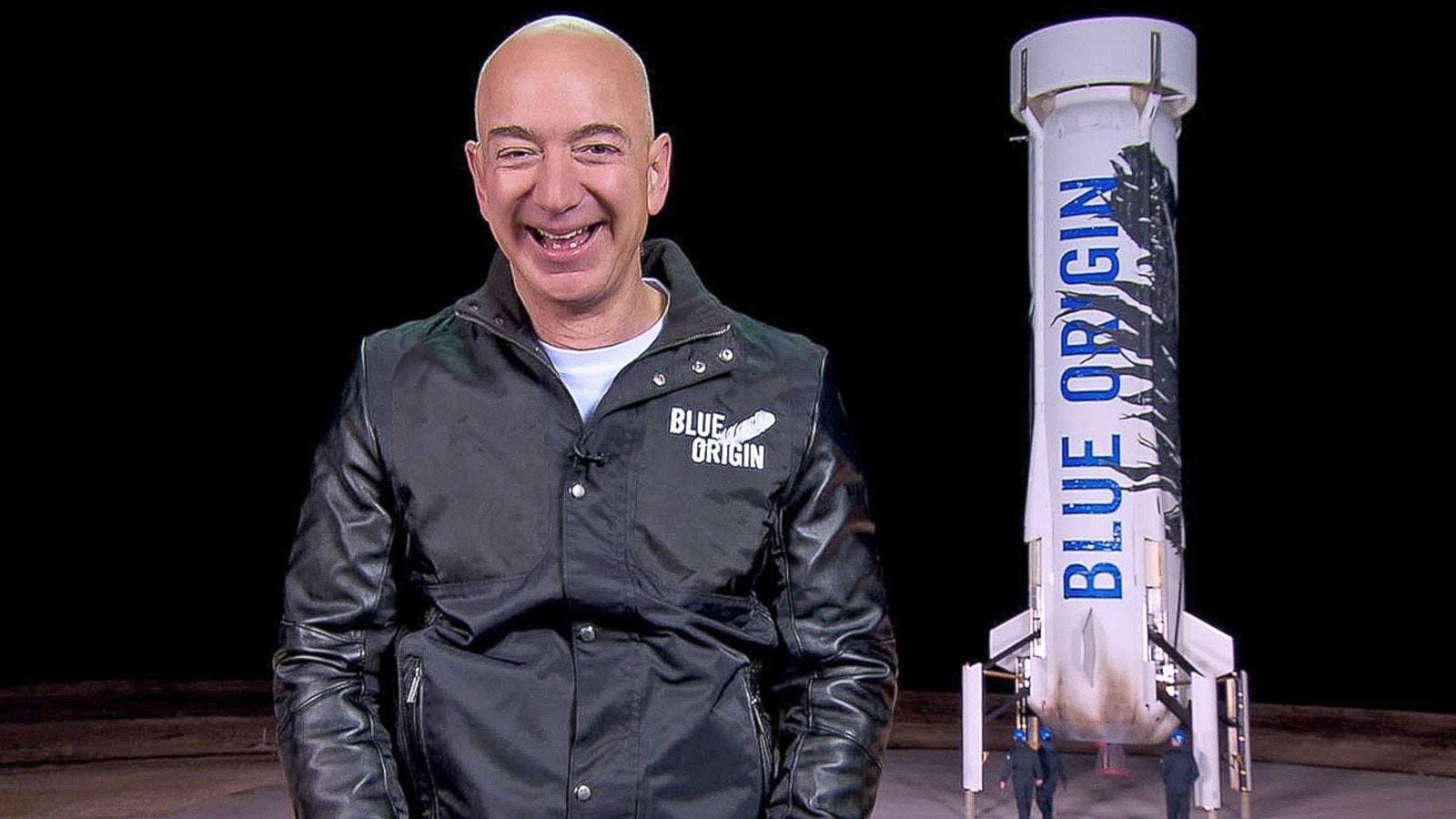
“Competition from Jeff Bezos’ Blue Origin and other rocket startups could further drive down launch costs. Blue Origin successfully delivered payloads into space last month on New Glenn, its new reusable rocket, and it has a team working on space data centers, according to a person with knowledge of the matter (The Wall Street Journal previously reported on the effort).”
“My estimate is that the cost-effectiveness of AI in space will be overwhelmingly better than AI on the ground,” Musk said last month at a conference.”
And the ultimate NIMBY argument as a bumper sticker:
“‘At the end of the day, people don’t want these data centers in their backyards.’
“Think about that for a minute. If Musk is sincere, his statement says a lot about the costs and obstacles to building data centers on Earth—or at least in the U.S. and other Western nations—not just the benefits of and falling barriers to shooting them into space.”
With an underlining of one of the biggest headwinds to AI Data Centers, an extraordinary, exponential need for Power at Scale:
“In the U.S., one of the biggest impediments to building data centers is the surging demand for electricity. In a recent report, Morgan Stanley said U.S. data centers could fall 20% short of the power they need over the next several years as a result of exploding AI growth. The Department of Energy has warned that without meaningful new sources of power, a mismatch in electricity supply and data center–led demand could lead to many more blackouts by 2030. (China, in contrast, is bursting with cheap electricity, deepening fears in the U.S. that its biggest AI rival has the upper hand.)”
“And then there’s the grassroots AI backlash percolating in some communities, including those who worry the facilities will spike their electricity bills, divert their water and blight their landscapes. A report earlier this year from Data Center Watch, a research project run by AI intelligence company 10a Labs , found that bipartisan opponents have blocked or delayed $64 billion in U.S. data center projects.”
Then repetition of the key advantage in Space for the closing lines:
“Space data centers, in theory, can sidestep those hassles through what Baiju Bhatt, a co-founder of Robinhood, calls “infrastructure bypass.” Bhatt is now CEO of Aetherflux, a startup that announced plans this week to launch its first orbital data center satellite in 2027. He says data centers can take years to build in the U.S., between permitting, construction and securing of power to meet the facility’s needs. And then there are the NIMBY-related delays.”
“At the end of the day, people don’t want these data centers in their backyards,” said Bhatt. “We need to find an alternative to building so many power plants in places [where] people live.”
There you have it. The case for AI Data Center in Space in a nutshell bullish narrative. To join the list of other ‘hot’ areas of tech today: crypto, quantum computing, humanoid robots, self driving auto fleets and more.
All with their own AI enhanced narratives. Folded into the broader narrative for the AI Tech Wave. To be pitched further in 2026 and beyond.
Imagining the walking and the running way before the crawling. Stay tuned.
(NOTE: The discussions here are for information purposes only, and not meant as investment advice at any time. Thanks for joining us here)
January 2025 The S&P 500 returned 2.78% in January 2025. (on.spdji.com) Major asset class performance for January 2025. (capitalspectator.com) Finance...
Oracle’s move off OpenAI Contracts: Oracle (48), led by founder Larry Ellison (81), added half of ten year old OpenAI’s $500 billion recent valuation this...