
AI: ‘RAMageddon’ Lobbies DC, & Apple vies for China CXMT. AI-RTZ #1175


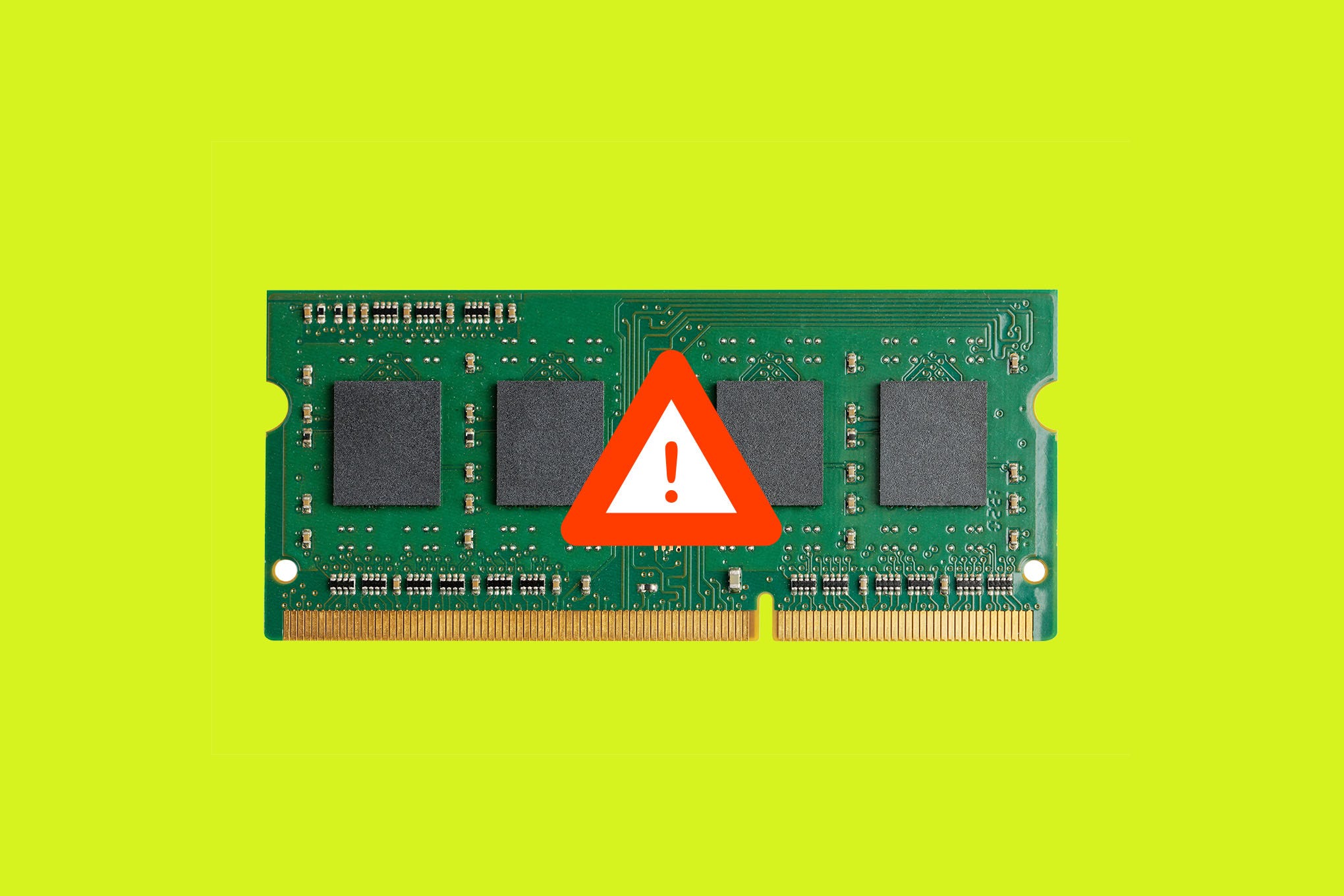
We have tracked ‘RAMageddon’, the AI-driven global memory crunch, since it turned existential for the smaller tech players, and through yesterday’s demand-side look at compute prices.
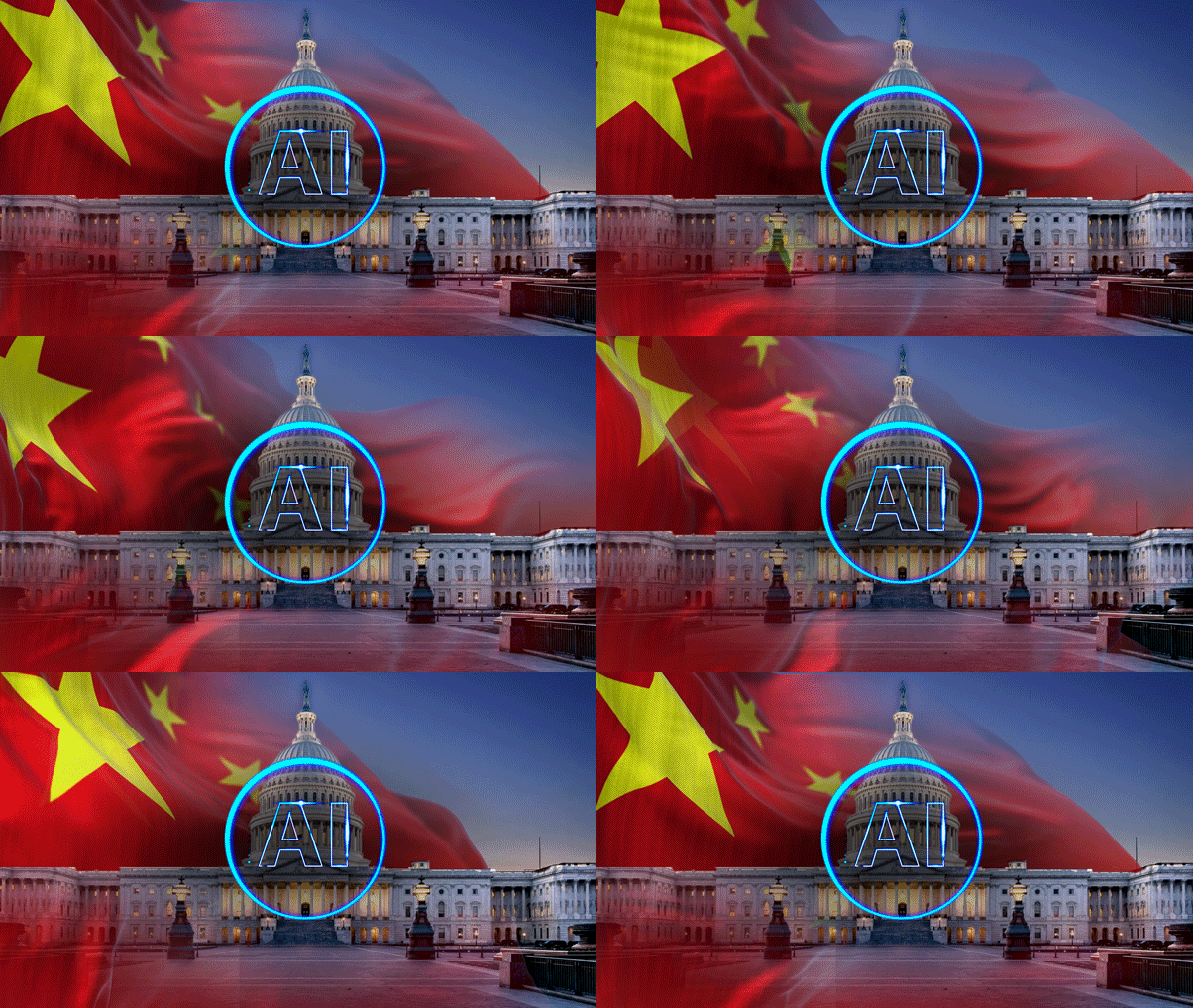
Today the story arrives where every scarce commodity story eventually arrives: lobbying with big steps in Washington DC. The NY Times in “AI-Driven Chip Crunch Leads to New Rush of Lobbying in Washington”, states:
“As data centers gobble up memory chips, other industries that need the components, including electronics companies like Apple and medical device makers, are asking for government help.”
Key driver of course is that the memory chip shortage has opened a whole new front of corporate lobbying in DC, and Apple sits squarely in the middle of it.
The crunch goes to Washington
The numbers driving the panic: memory prices have quadrupled over the past year as AI data centers hoover up the world’s DRAM. The lobbying coalition now asking the government for help spans medical device makers, car manufacturers, and consumer electronics companies led by Apple.
Their proposed remedies run from conventional to strikingly interventionist: making broader chip allocation a condition of CHIPS Act money, or invoking the Korean War era Defense Production Act to force memory makers to supply industries beyond AI. A group of trade associations warned Treasury Secretary Bessent and Commerce Secretary Lutnick in June of ‘risks to large parts of the economy’ from an ‘urgent imbalance’ in the memory market.

Tim Cook, on last month’s earnings call, put it in his own memorable terms:
“We’re in what I would characterize as a 100-year flood on the memory pricing, with exponential increases in memory prices.”
The White House is squeezed from both sides. It has struggled to convince Americans that inflation is under control, and memory is now feeding it, with KPMG’s chief economist noting the AI boom ‘is bidding up costs elsewhere’.
But diverting memory away from AI data centers undercuts the administration’s whole priority of keeping the US ahead of China in AI. So far, no intervention.
And note Micron’s double game, which we flagged back in June. The sole US memory maker is pledging over 250 billion dollars to domestic capacity and lobbying for another CHIPS-style infusion, faster permitting, and relaxed environmental rules. It is ALSO pushing for more restrictions on its Chinese competitors, arguing that buying from China would hurt US production. That is a self-motivated incumbent working the referee: every CXMT chip kept out of Apple’s supply chain is pricing power for Boise.
Apple goes to China, carefully
Which brings us to the other big story this weekend. The WSJ reports Apple has been testing memory chips from China’s CXMT across product lines including iPhones and MacBooks, and has held early talks about using them in devices sold in China, while seeking the White House’s blessing to avoid political blowback. Export rules bar the technical back-and-forth Apple needs for its usual custom parts, but off-the-shelf CXMT chips and price negotiations are permitted. HP and Acer are already shipping CXMT memory in devices sold outside the US.
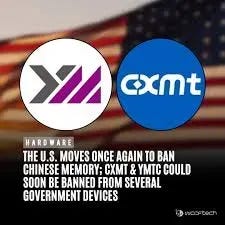
We wrote in June that CXMT and Yangtze (YMTC) were the obvious relief valves for Apple, Microsoft et al, and that the US was hamstringing itself on memory supply by keeping them fenced off. Apple tried the YMTC route once before, in 2022, and had it quashed by lawmakers.
Now the economics are forcing the question again, and CXMT is no longer a curiosity: it is the fastest-growing DRAM supplier in the world, with quarterly revenue up more than 8x in a year, 7 percent of global DRAM revenue share, a Shanghai listing that makes it mainland China’s most valuable listed company at around 520 billion dollars, and plans to more than double capacity by 2028. The catch: its capacity is maxed out this year, and its priority customers are ByteDance, Tencent and Xiaomi.
Why Apple needs the valve, in one number: the iPhone 18 Pro’s bill of materials is set to surge roughly 38 percent on memory costs, per TrendForce today. Memory has gone from about 10 percent of a flagship phone’s BOM to 34 percent in a year, heading toward 40 percent by early 2027, on memory prices up five to sevenfold since early 2025. Even Apple, running the most resilient supply chain in the business, has already raised Mac, iPad and iPhone prices 15 to 25 percent, and TrendForce expects it to eat gross margin to soften the next round. The rest of the industry has it worse: smartphone shipments fell 11 percent last quarter, and some Android mid-range lines are heading for negative gross margins

The bipartisan wall
Here is the unfortunate item for US Tech in the anchor piece above worth underlining: the resistance to Chinese memory is BIPARTISAN. In July, a bipartisan group of senators urged Apple to commit to never using Chinese memory.
The same month, Representatives John Moolenaar, Republican of Michigan and chair of the House Select Committee on China, and George Whitesides, Democrat of California, jointly urged Commerce to put CXMT on the entity list and to prohibit American companies from buying from listed firms, writing that dependence on Chinese memory makers creates ‘an unacceptable risk’ to national, economic and supply chain security.
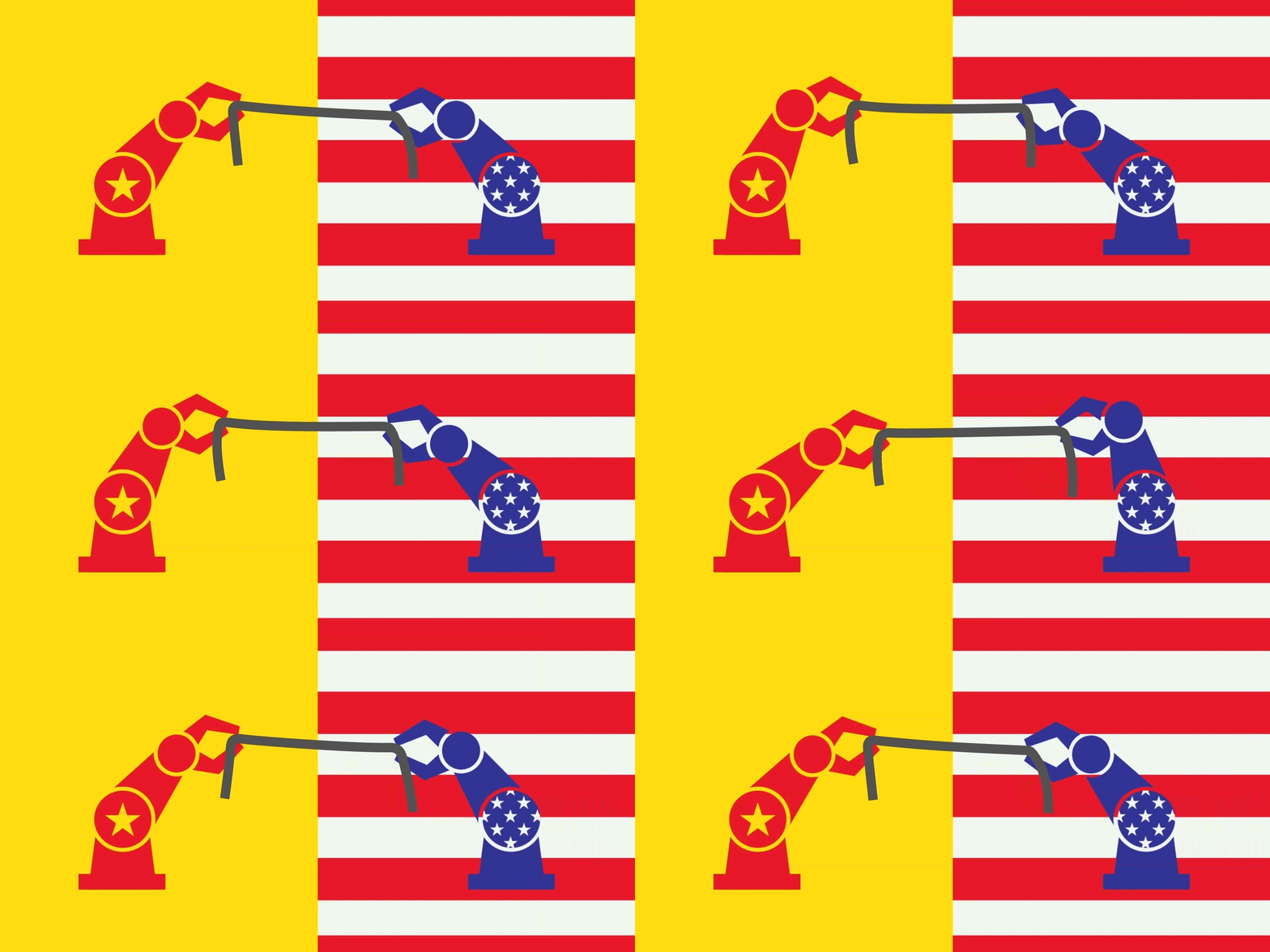
In a Washington that agrees on almost nothing, keeping Chinese memory out of American devices unites both parties. ‘Chip War’ author Chris Miller adds the standard caution: orders from marquee US buyers could lock in Chinese market share and long-term dependency.
The headwinds are real, and worth stating plainly. But our general position, argued at length on America’s 250th birthday, is that working WITH China beats not working with China, even when the two are at cross-purposes. The US and USSR ran wheat deals and Apollo-Soyuz at the depths of the Cold War. A genuine supply crisis, with MRI machines and cars in the queue behind iPhones, is precisely when trade logic should get a hearing over embargo logic. And note the irony the critics raise: China is short on memory too. Both sides are constrained. That is usually where deals get made.
The chessboard before September 24
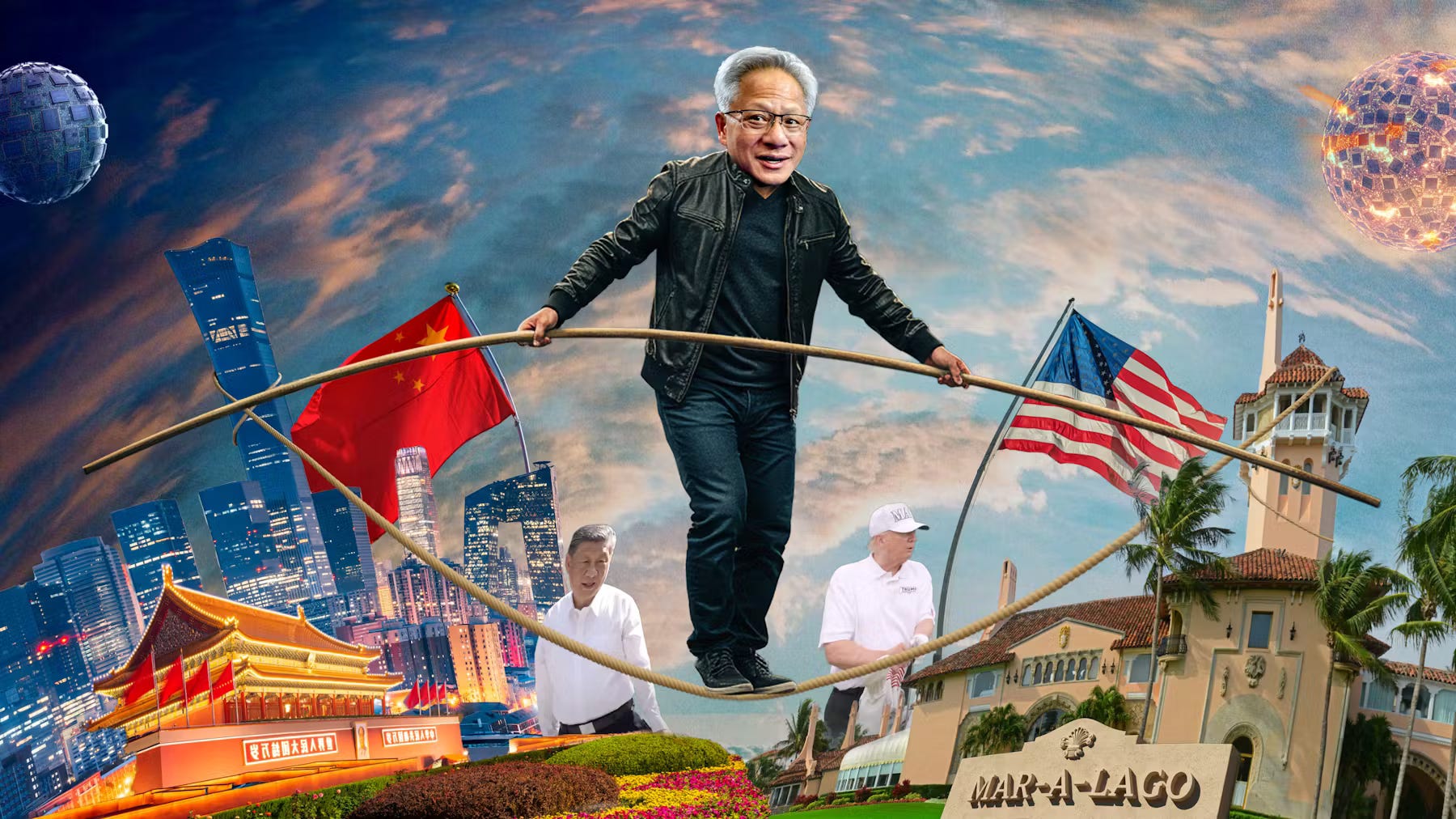
All of this is theater and chess moves ahead of a date: Xi comes to the White House around September 24, the second Xi/Trump meeting of the year, whose stage-setting we covered last month. Every move above is a card being accumulated: entity-list threats from Congress, China’s rare-earth precedent from last year, CXMT’s capacity as leverage, Apple’s request for a ‘blessing’ as a potential deliverable. Expect memory, alongside the open source AI question, to be on the table when the two sit down.
Apple’s ‘Avengers’ style opening
Which suggests the play Apple has not yet run. Jensen Huang just assembled an ‘Avengers’ coalition of 37 founding partners on China open source AI, uniting the industry against a policy wall.
Apple could do exactly that on memory. A DC Comics style ‘Justice League’ of US Tech memory interests. It’d be quite the collection of companies tech and otherwise. At least equal to the 37+ companies Nvidia’s Jensen Huang was able to assemble for his Marvel style ‘Avengers’ coalition for open source AI software.

The coalition already exists informally: the medical device makers, the carmakers and the electronics companies are all lobbying the same buildings for the same chips. Formalizing a memory buyers’ alliance, with Apple’s convening power at the front, would change the ask from ‘let Apple buy Chinese chips’ to ‘let the American economy clear its memory bottleneck’. Much harder to refuse.
And the man for the job is Tim Cook, not yet Jeff Ternus. The CEO transition is activated, but ‘Tim Apple’ Cook, soon ascends to Apple board chairman, and remains the Chief Apple political operator of record.
His track record in this White House is unmatched: the 24-karat gold-based ‘Made in USA’ trophy he presented in the Oval Office came alongside a 100 billion dollar manufacturing pledge, and won Apple its exemption from the 100 percent chip tariffs. If anyone can get a CXMT blessing priced into the September theater, it is Tim, running one more supply chain masterclass on his way out.
My take
The bipartisan wall in the DC ‘RAMageddon’ lobbying fight is real and holds in the near term: CXMT on the entity list is a live risk, not a tail risk.
But the economics for US interests grind the other way. Memory stays short into 2027 and beyond, as we have long argued, the BOM math gets uglier every quarter, and the practical middle path is already legal: off-the-shelf Chinese memory in China-sold devices, coalition pressure for more, and September 24 at the White House, as the venue where some of it gets horse-traded. Lots of opportunities for Tim Cook level lobbying.
An impact of the AI Tech Wave worth tracking into this Fall. Stay tuned.
(NOTE: The discussions here are for information purposes only, and not meant as investment advice at any time. Thanks for joining us here.)