“SK Hynix CEO expects industry’s worst memory supply crunch in 2027”
“CEO sees demand outstripping supply beyond 2030”
“CEO says U.S. is among candidates for future wafer fab plant”
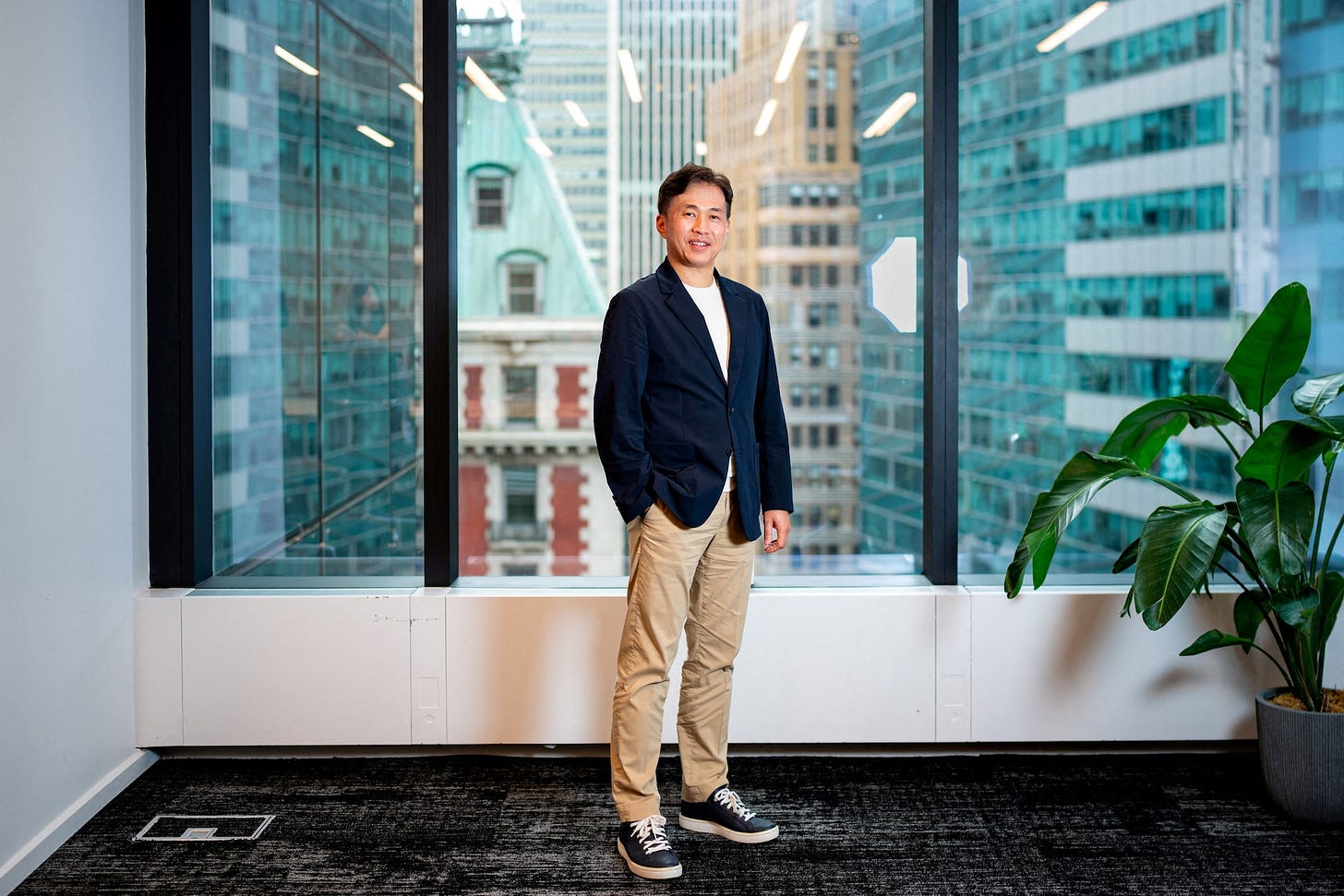
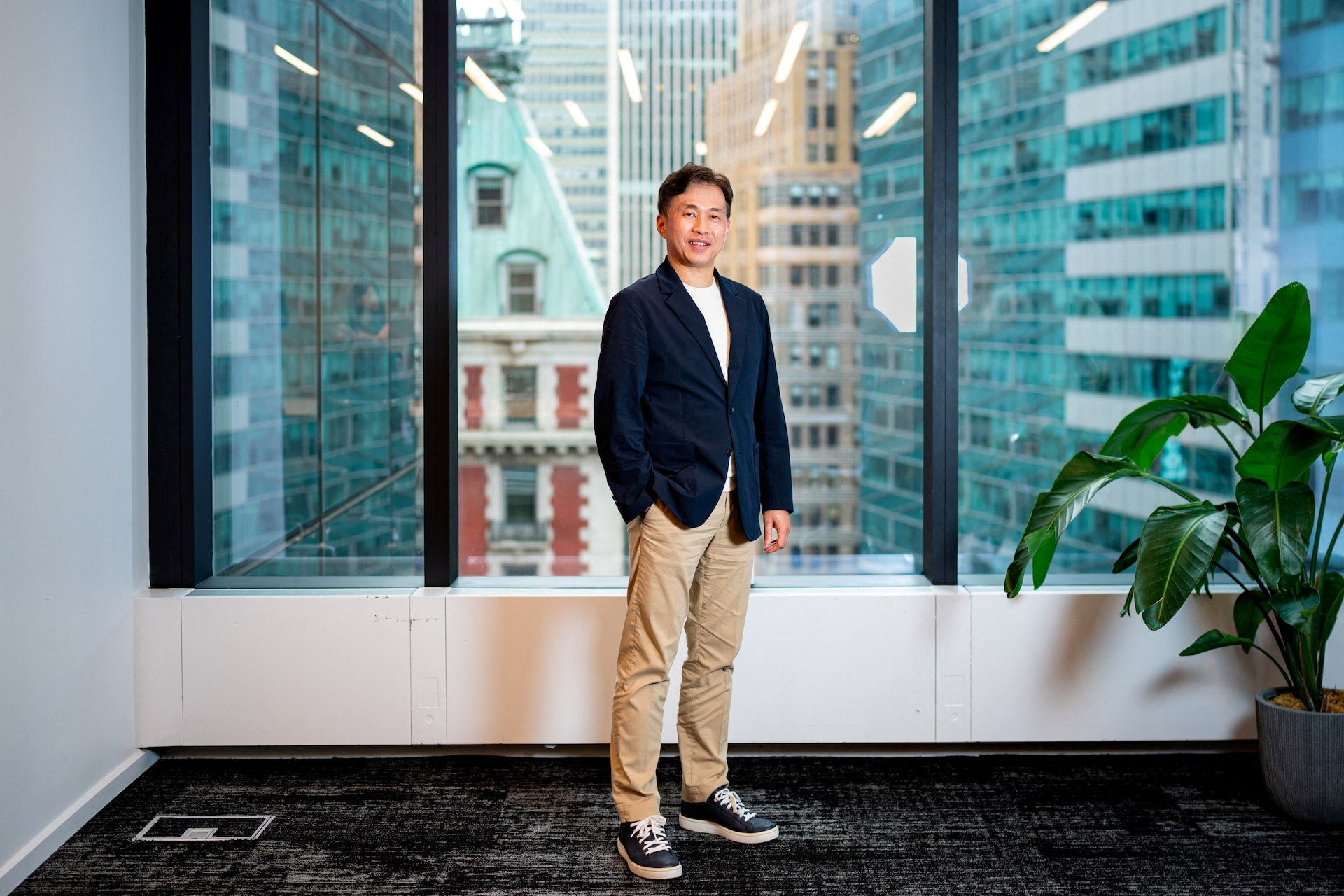
“SK Hynix Chief Executive Kwak Noh-jung said the global memory industry is heading for its worst-ever supply shortage in 2027, forecasting that demand for memory will continue to exceed the company’s ability to produce it well into the next decade despite aggressive capacity expansion.”
“We forecast that next year will be the worst year in the industry’s history from the supply perspective,” Kwak told Reuters in an interview on Friday, the day the South Korean memory chipmaker began trading on Nasdaq.”
The trillion plus dollar company in South Korea had finished a successful launch of US ADRs trading on the NASDAQ, to the tune of almost $27 billion. Proceeds of course to be invested in new chip factories and equipment. The stock is trading under the ticker symbol SKHY this week.
“Our customer demand continues to go up, while our capacity has limitations,” he said. “We still forecast that customer demand will remain higher than our supply capacity even beyond 2030. But we are doing our best to solve the problem.”
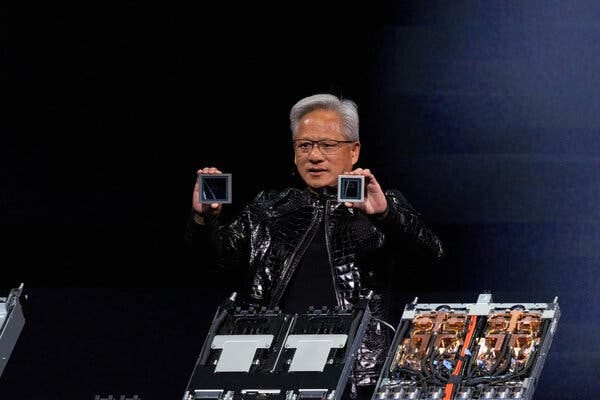
“Kwak’s comments follow a stellar debut for the South Korean chipmaker which has become a pivotal company in the AI supply chain by taking the lead in the development of high-bandwidth memory (HBM) used in Nvidia (NVDA.O), chipsets.”
“Shares of SK Hynix were up 13.3% at $168.85 on the Nasdaq on Friday afternoon.”
SK Hynix joins the plethora of global companies looking to expand supply, which will take years and of course tens of billions of dollars.
“He said the company would prioritize locations that can provide sufficient land, electricity, water and skilled workers at competitive manufacturing costs.”
“If those conditions are met, the U.S., Japan and Southeast Asia are all under consideration,” Kwak said. “Nothing has been decided yet. We are evaluating which location can provide the greatest business advantage.”
Beyond expanding overseas, SK Hynix’s main factories are in Icheon, where it is headquartered, and Cheongju, and it is also building a sprawling facility in the city of Yongin.
The two South Korean memory horsemen now account for over half the South Korean stock market valuation. Driven of course by the incessant demand for ‘high bandwidth memory’ (HBM) and DRAMs for AI Data Center installations in the trillions.
“Both SK Hynix and Samsung Electronics are participating in a plan by the South Korean government to double the country’s memory chip production capacity within five years. That includes investment of 400 trillion won ($266 billion) each for chip production facilities in the southwest of the country.”
“The plan has rattled some investors, however, who worry it could expose the firms to greater risk should a downturn occur.”
And of course these companies are doing the politically right thing by investing some of those mega-funds in the US.
“In the U.S., it is investing around $4 billion to build an advanced chip packaging factory in Indiana. It is also investing $10 billion to develop an AI solutions company in the U.S., aiming to find new AI growth engines.”
“Even so, there is some speculation that the AI investment cycle is approaching a turning point, which has been responsible for the recent drag on chip shares.”
Markets of course do what they do best…get excited a lot, then worry a lot…rinse, repeat.
I wrote about that excursion to China just a few days ago.
“Industry executives and analysts, however, argue that memory supply continues to lag demand.”
“Nvidia Chief Executive Jensen Huang said last month that shortages of AI memory would continue for several years due to strong demand, adding that SK Hynix would remain the company’s largest memory supplier.”
Wall Street of course has taken note of all this and then some.
“UBS likewise expects the global DRAM industry to remain undersupplied until at least the second quarter of 2028.”
“Similarly, Bank of America remains constructive on the AI investment cycle, estimating that global hyperscaler capital expenditure will reach about $851 billion this year and $1.15 trillion next year, supported by strong cloud backlogs, improving returns on AI investment and growing demand for compute-intensive AI applications.”
And the numbers are getting larger. Driven by Nvidia and others.
“The bank said the roughly $244 billion raised by leading hyperscalers this year largely reflects balance-sheet optimization rather than signs of funding stress, arguing that capital remains readily available to support continued infrastructure investment.”
“The optimistic view was reinforced on Thursday, when Micron said it plans to invest more than $250 billion in the United States through 2035, up from the $200 billion plan it announced last year, citing surging demand for memory chips in the AI era and President Donald Trump’s push to strengthen domestic semiconductor manufacturing.”
“SK Hynix has been one of the biggest beneficiaries of the AI boom, thanks to its big bets on HBM, once scorned but now seen as canny. Operating profit hit a record 47 trillion won ($31 billion) in 2025, double what it made the year before and coming back from an operating loss in 2023.”
“The company’s shares have also soared. While concerns about the sustainability of the AI share rally have resulted in an 18% slide for SK Hynix shares in the past two weeks, they are up more than sevenfold over the past 12 months.”
The whole piece is worth a full read for more details.
But the Bigger Picture this AI Tech Wave is that we’re going to need a whole different set of mechanisms to cope with the memory chip realities for a few years to come.
Three things in particular to re-anchor our exptectations on how tech will NOT work for us for a few years, as it has for decades thus far:
SHRINKING GLOBAL GADGET PIES: By gadgets I mean everything electronic: from computers to smartphones, to every new invention driven by the exploding, Moore’s Law driven supply chains that allowed incomprehensible innovations in new ways to do things with ever changing software. In this case, ever changing probabilistic AI software, fused with deterministic ‘traditional’ software we’ve used for decades. Drones could be made cheap starting almost a decade ago because of the burgeoning smartphone component ecosystem. Gave the world DJI in China and Skydio in the US. Especially out of Shenzhen in China. Now all that will slow down and shrink. Lower default RAM and DRAM options in gadgets old and new, will mean just fewer units in everything. And that is just beginning to happen. It’s here to stay for a few years. Shrinking global pies all around.
FAR LESS BOUNTIFUL GLOBAL PARTS BINS: By this I mean a meaningful dent on the organic, ground up innovation in new ways to build things ni the ‘Physical World’ with AI in mind this AI Tech Wave. Especially relative to prior tech waves. That hasn’t yet sunk in for most companies large and small. We have OpenAI, Meta, Elon’s SpaceXAI, Snap and others far smaller in the Kickstarter worlds, are racing ahead with their AI Devices and gadget plans, they’re like WIle E. Coyote, running off the cliff with gadget plans going as fast as they possibly can. But they’re like WIle E. Coyote running fast with the ground having slipped away. And that is a steep change from the way it’s been for decades.
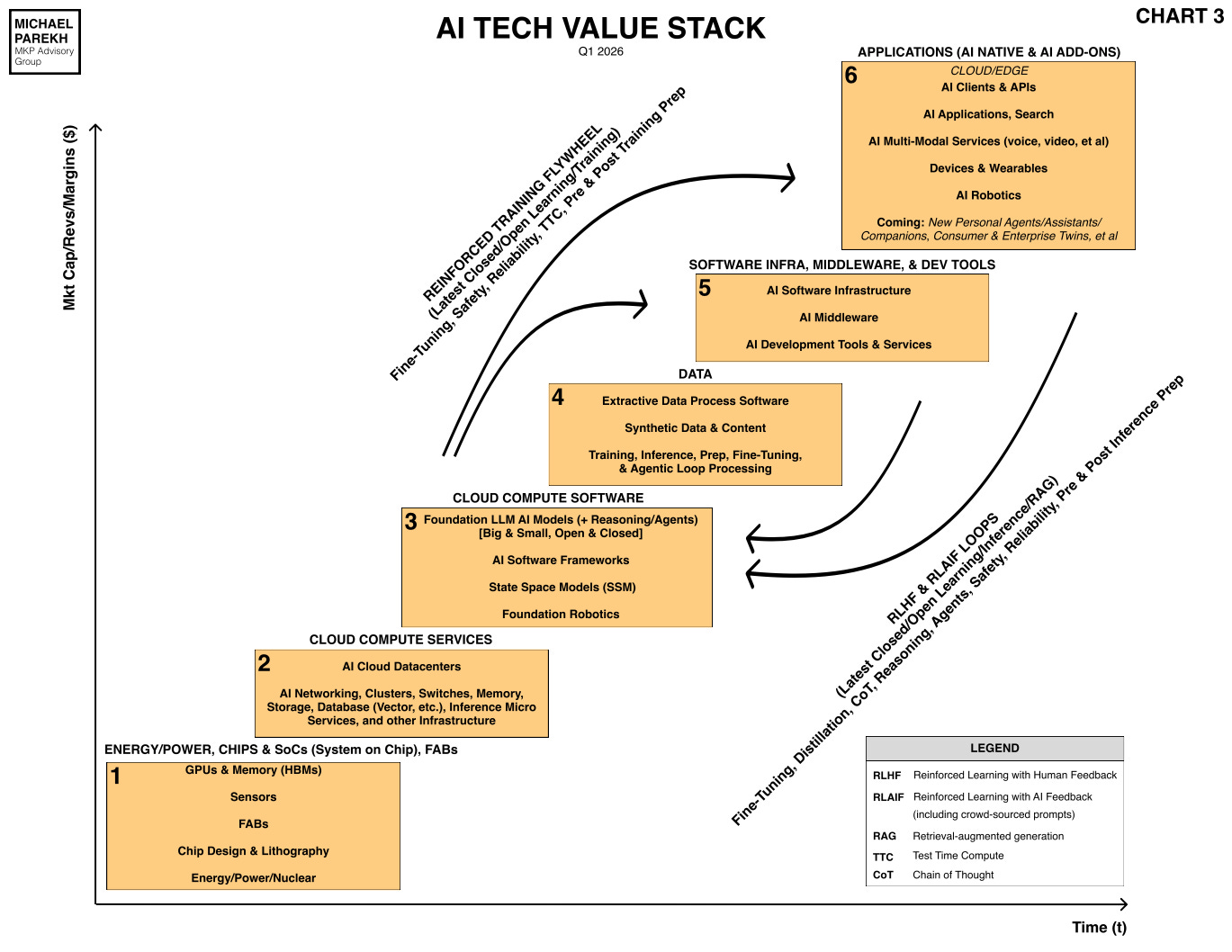
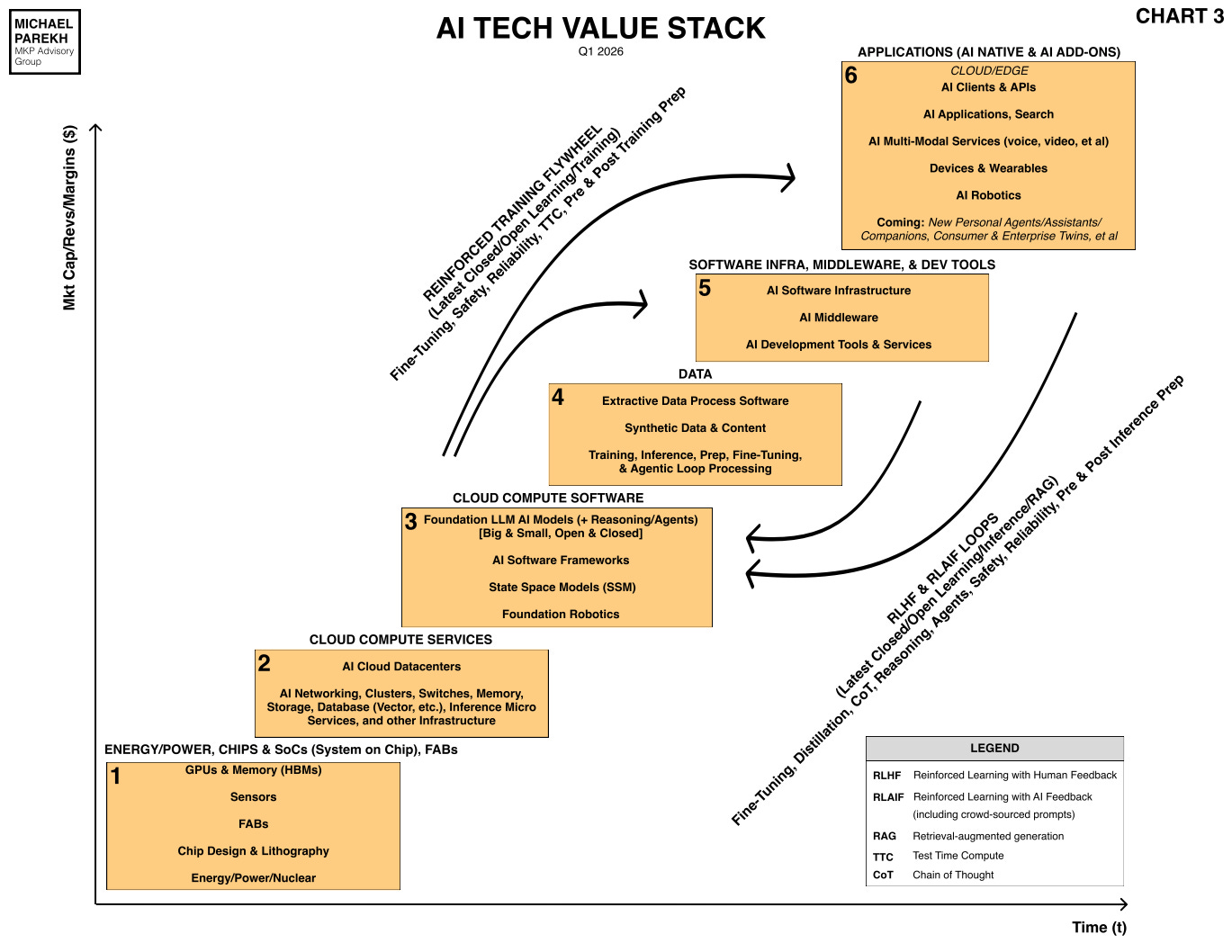
3. WE NEED TO DO FAR MORE WITH FAR LESS AGAIN: This reality is one of the hardest to yet hit. Most of the development assumptions baked into our DNA is that we can always develop software assuming there will be more chips and hardware to make it all happen at the local level. But when the RAM one assumes in a base device, does not go up like clockwork from 8GB to 16 to 32 and beyond in local gadgets, computers and laptops, something fundamental breaks in how the applications are desigend and delivered, in the mainstream Box 6 in an AI Tech Stack. Or in this case, are delayed being delivered for years. Shrinking the total addressable markets (TAM) that night have been.
We are back at making applications work in the 640k RAM barrier in the MS-DOS era of the mid 1980s IBM/Microsoft early PC era. Yes, that’s a LONG time ago. Most Gen Z AI developers have no idea what I’m talking about. But it’s time to dust up on old history, and get ready for a new reality. History is heavily rhyming again. They’ve already started in China spurred on by the US tech curbs to China. It’s partly what gave the world DeepSeek I discussed last January of 2025. They creatively figured out back then how to do far more with far less. And they’re doing it now at scale.
These three points above are just the beginning of the implications of ‘RAMageddon’ being here to stay. And I’ll have a lot more on all this in future posts and podcasts.
But I wanted to get this off my chest on a Sunday, as we absorb these flood of daily changes underway at breathtaking speed. Hope it helps provoke some thoughts and feedback that you all can share.
In the meantime, I also just wanted to make sure these new big tech names like SK Hynix, CXMT and others are as familiar to us as the Mag7s for the last few years.
Let’s do our best thinking through ‘RAMageddon’ as a guest here for a while. Stay tuned.
(NOTE: The discussions here are for information purposes only, and not meant as investment advice at any time. Thanks for joining us here)
Keywords AI, 2025, surprises, overhyped, products, services, trends, technology, predictions, year in review Summary In this episode of AI Ramblings,...