For providing critical inputs into the global AI sausage making machine. This is of course beyond the core LLM AI companies like OpenAI, Anthropic and others. But GLASS is the other critical input for AI going forward, and that is the Bigger Picture I’d like to unpack this Sunday. It connects and enables everything that goes through all the stacks of the AI Tech Stack.
“Everyone told the company to sell its unprofitable fiber-optic business. Now that division is powering its stock to all-time highs.”
“The company that once made glass bulbs for Thomas Edison lost money on fiber-optic cables for nearly 20 years.”
“Now, in the global race to build enough computing power for a future driven by artificial intelligence, Corning’sGLW cables have become the connectors of choice. The Cinderella story for a relatively unflashy but high-tech component has been a boon to the 175-year-old company, and a lesson in how being willing to lose money on new ideas for a long time can pay off.”
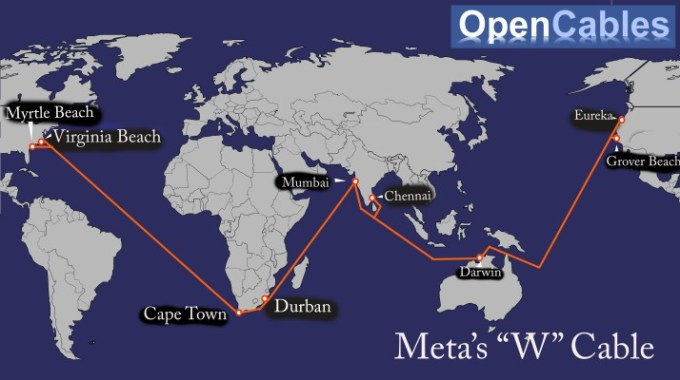
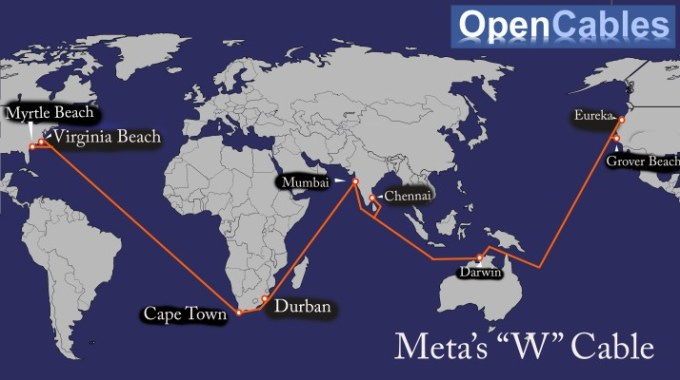
“Corning stock is hovering around its all-time high, boosted by a recently announced $6 billion deal with Meta to supply fiber-optic cable for the company’s rapidly growing array of AI data centers. Corning said it is in talks with others for more such deals. It’s also working on what could be its next big act—fiber that goes inside servers, instead of just connecting them to each other.”
“Corning’s cables are suddenly in demand because of physics: Data can be sent far more quickly and with less energy using light (which is made of photons) than with electricity (made of electrons). The cables themselves often contain dozens or hundreds of flexible, ultrathin glass fibers to carry signals.”
“Until recently, fiber optics have primarily been used to connect nodes of the internet—sometimes spanning thousands of miles underground and beneath the waves.”
“Over even short distances, transmitting data with photons is three times as efficient as electrons,” says Wendell Weeks, Corning’s chief executive since 2005, who came from the fiber-optic division. “And over long distances, it’s more like 20 times.”
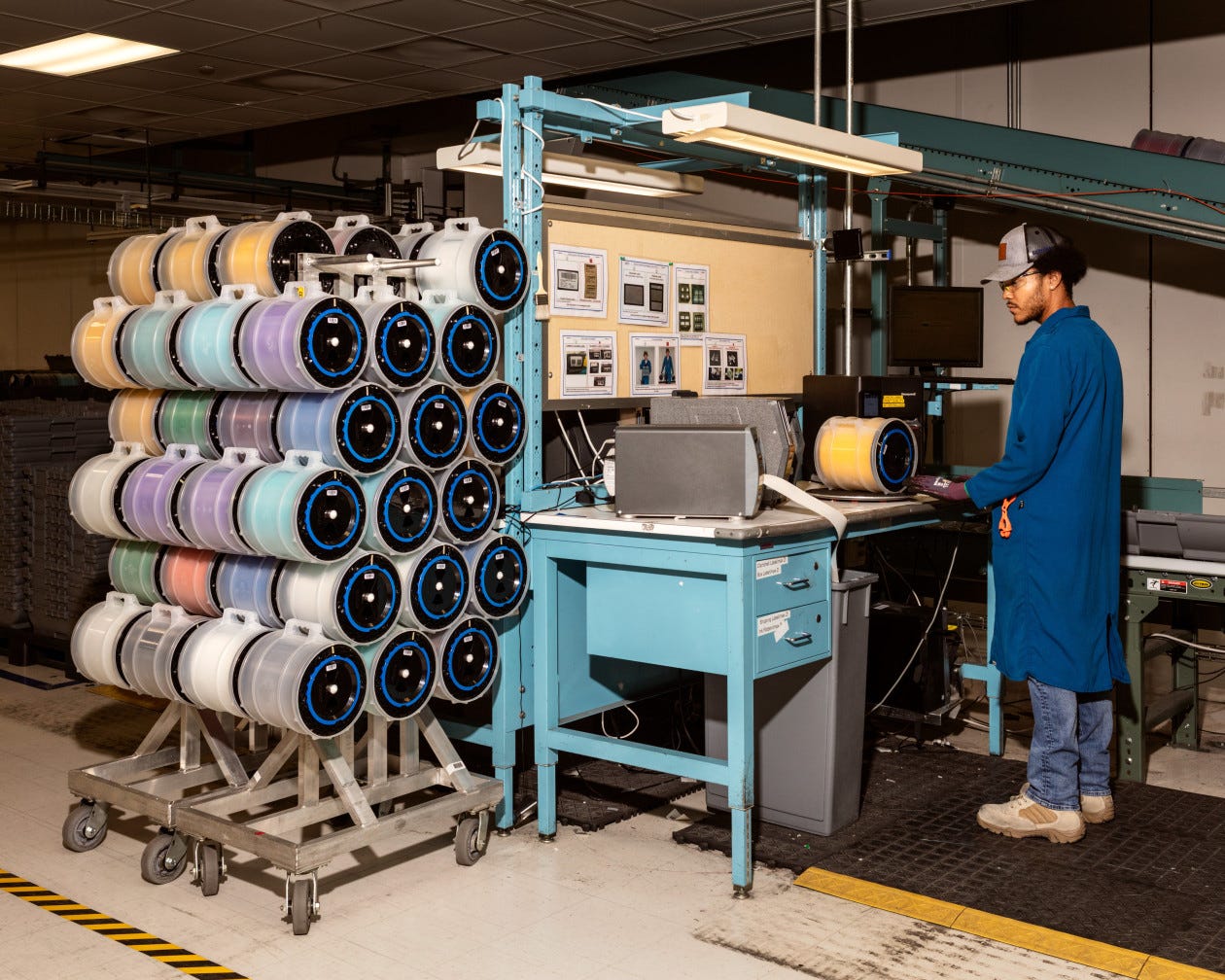
“About half of Corning’s manufacturing remains in the U.S., a feat, given how many others have offshored high-tech manufacturing. In a North Carolina factory, it pulls glass strands as thin as a human hair, yet upward of 30 miles long. They’re so transparent, if you filled an ocean with them, you could see straight to the bottom.”
“Corning’s success in this space wasn’t guaranteed, says Mike O’Day, who heads its fiber business. Until recently, the company was still making a product that hadn’t changed much since its introduction in 1970.”
“In 2018, Weeks and O’Day went to Dallas to tour a data center owned by Meta, then known as Facebook. They marveled at the demand for fiber-optic cabling to connect all the servers inside that giant warehouse. Facebook was using a mix of copper cables and existing fiber optics, but found both ill-suited to the task.”
“This spurred Corning’s engineers to make their cables thinner, but also tougher, so they could withstand tight bends, says Claudio Mazzali, Corning’s head of research.”
“Five years later, ChatGPT made its debut, and demand for fiber-powered data centers exploded.
“We’re thankful that we made the trip in 2018 and thankful that we made the bet,” says O’Day. At the time, they had no idea whether it would be a good investment or a dud, he adds.”
“What made Corning’s fiber reinvention possible is that the company outsources almost nothing, says Mazzali. It even designs the machines used to manufacture its optical fiber and cable.”
“Weeks says this is part of the “Corning Way.” That self-containment also applies to the workforce, says the CEO. When the company shifts direction, it reassigns engineers rather than laying them off, so they accumulate expertise over decades, across different projects. “The things our engineers do, you can’t learn them from a textbook,” says Weeks.”
“After the onset of the pandemic, Corning endured six consecutive quarters of shrinking revenue, its lengthiest drop since the 2001 telecom crash. Instead of laying off workers and shrinking factories, the company gave employees the option to take some of their compensation in stock.”
“We were probably carrying 4,000 to 5,000 more employees than our revenue could support,” says Weeks. Corning currently employs about 56,000 people worldwide.”
“Now that demand for fiber is booming, the company needs all of those workers and capacity—and more.”
“Corning is the biggest fiber-optics maker by a number of measures and has the lion’s share of the North American market. Fiber for data centers is the fastest-growing part of Corning’s revenue, says O’Day. Its continuing good fortune is contingent on big tech firms continuing to build at the rates they have indicated, say analysts.”
“The level Corning’s stock is at today is baking in everything going right, and nothing going wrong,” says William Kerwin, a senior equity analyst at Morningstar.”
“Like many providers to data centers, Corning is already selling all that it can make. “I think demand for Corning’s fiber is going to be above supply for the foreseeable future,” says Kerwin. “It’s safe to say that if they could produce more, they could ship more.” Another factor: fiber-optic installation is facing a labor shortage.”
“Whether or not the AI industry meets its targets for growth, businesses both established and emerging will continue to seek optical fiber of the caliber coming from Corning and a handful of global competitors. And Corning already has its next growth business lined up: Nvidia is exploring servers that directly incorporate the glassmaker’s “co-packaged” optics.”
“It took nearly half a century for Corning to produce a billion miles of optical fiber. The second billion took eight years, a milestone reached last year. The next billion will arrive much sooner.”
“In part, that’s because more of that fiber is making its way to the dense networks within data centers, enough to soon surpass the long-haul business in terms of miles delivered, says O’Day. And then there’s the fiber that will go inside computers.”
The whole piece is worth a full read for additional pictures and context.
But its useful to note the critical role Corning plays in this AI Tech Wave going forward.
Not a surprise, but OpenAI is showing off its coming Ads driven monetization of ChatGPT. Following in the big footsteps of course of established giants...
Apple has long been globally practical in its tech and AI commitments, constantly ‘threading the needle’ in its own ‘Realpolitik’ way through the long...