
AI: The latest engineer financial perk, AI tokens. RTZ #1033

The Bigger Picture, Sunday, March 22, 2026
The newest perk and measure of coder productivity this AI Tech Wave in the halls of tech companies and beyond, are AI ‘Token Budgets’.
The amount of AI variable cost intelligence tokens, both input and output, workers expend to augment their job productivity. And it’s rapidly becoming a ‘leaderboard’ type of job flex in some companies. Also a trend that needs to be understood as AI tools move from chatbots to AI reasoning and AI agents and beyond. It’s a useful ‘Bigger Picture’ to unpack this Sunday.

Nvidia founder/CEO Jensen Huang commented on this trend in his keynote at GTC 2026, and talked about how CEOs increasingly need to add token budgets to what they pay their engineers. Jensen discusses it as follows on the All-in podcast:
Here’s CNBC explaining the Jensen comment broader context, in “Nvidia’s Huang pitches AI tokens on top of salary as agents reshape how humans work”:
“Jensen Huang proposed giving engineers “AI tokens” in addition to their base salary.”
“Huang also envisions Nvidia will one day employ hundreds of thousands of AI agents, outnumbering its 42,000 human workers.”
“AI agents have stoked fears that they will increasingly hollow out white-collar workers.”
“The perks of working in Silicon Valley have long included high salaries. Now, some engineers may be offered a new incentive: artificial intelligence tokens.”
“Nvidia CEO Jensen Huang on Monday floated a novel compensation model that would give engineers a token budget on top of their base salary, effectively paying them to deploy AI agents as productivity multipliers.”
“Tokens, or units of data used by AI systems, can be spent to run tools and automate tasks and are becoming “one of the recruiting tools in Silicon Valley,” Huang said.”
″[Engineers] are going to make a few hundred thousand dollars a year, their base pay,” Huang said at the chipmaker’s annual GPU Technology Conference.”
“I’m going to give them probably half of that on top of [their base pay] as tokens … because every engineer that has access to tokens will be more productive.”
He’s obviously setting this up a new performance metric for CEO to gauge their engineers and eventually their employees. More token use of course is good for Nvidia, as more AI infrastructure sold across the Pareto curve.
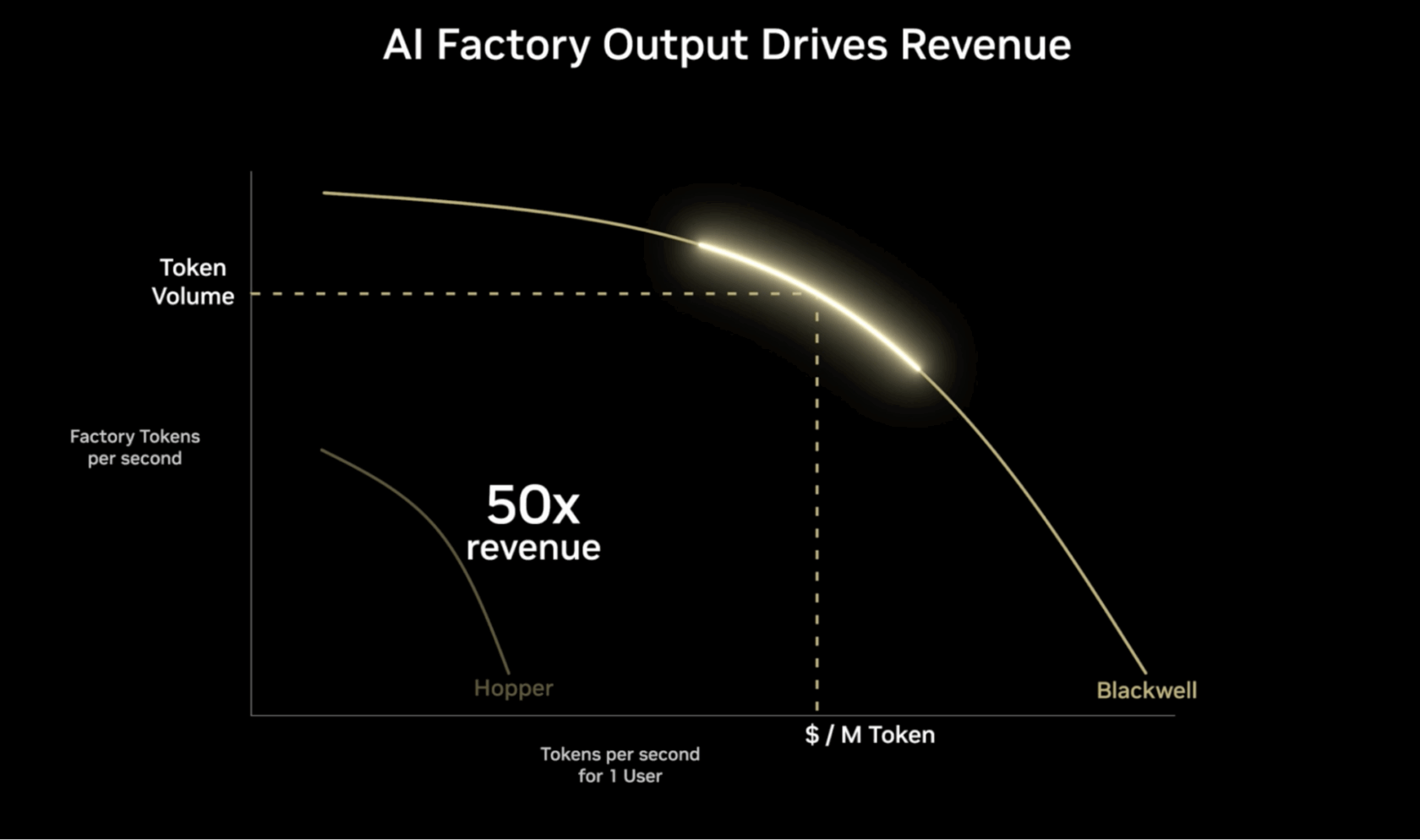
“The pitch signaled Huang’s broader vision of the workplace, in which engineers oversee a fleet of AI agents capable of completing complex, multi-step tasks autonomously with minimal user input.”
“It is a vision that Huang has been building toward publicly. Last month, he told CNBC that Nvidia’s employees would one day work alongside hundreds of thousands of AI agents.”
“I have 42,000 biological employees, and I’m going to have hundreds of thousands of digital employees,” he said.”
The next step from there of course is the perennial fear over AI leading to lost jobs for workers, a topic I’ve discussed at length.

“The comments come as concerns grow that AI agents — software systems capable of independently executing complex, multi-step tasks — will hollow out white-collar work.”
It’s a concern rippling through Wall Street in particular. CNBC continues:
“In a memo to investors, Howard Marks, founder of Oaktree Capital Management, warned of “an incredible leap ahead in AI’s capabilities” that now allows it to “act autonomously” — a distinguishing point that determines its ability to substitute human labor.”
“That difference is what separates a $50 billion market from a multi trillion dollar one,” the veteran investor said.”
“Goldman Sachs estimates AI could potentially automate tasks accounting for 25% of all work hours in the U.S., enough to fuel fears of what some have grimly dubbed a “job apocalypse.”
“The bank sees a 15% productivity boost from AI, which could lead to 6% to 7% of jobs displaced over the adoption period.”
“Risks are skewed toward greater displacement if AI proves more labor-displacing than prior technologies,” said Joseph Briggs, Goldman’s senior global economist.”

New technologies of course drive both job creation as well as job loss, creating AI resistance, as I’ve written about. CNBC sums it up this way, especially in terms of Jensen Huang’s position:
“Some 60% of today’s workers are employed in occupations that didn’t exist in 1940, Briggs said, citing a study by economist David Autor, suggesting that AI will render some roles obsolete while creating others that don’t yet exist.”
“Huang has taken an optimistic view of the impact of AI agents on the software industry, describing it as “counterintuitive.” Rather than reducing demand for software, AI agents will become its most voracious customers.”
“His logic goes: more AI agents mean more demand for the underlying software infrastructure they run on — the programs, tools, and computing resources that power them.”
“The number of C-compilers that we use, the number of Python programs that we have, the number of instances, are growing very, very fast — because the number of agents we have that use these tools are going up,” he said.
“Bruno Guicardi, president and founder of the information technology company CI&T, described the change as nothing short of a paradigm shift. “A new layer of abstraction is being created through agents,” he said.”
“Now software engineers can ‘tell’ what computers should do, not in a programming language but in plain English. Work that used to take months to be done now takes a couple of days. And we see it only accelerating from here.”
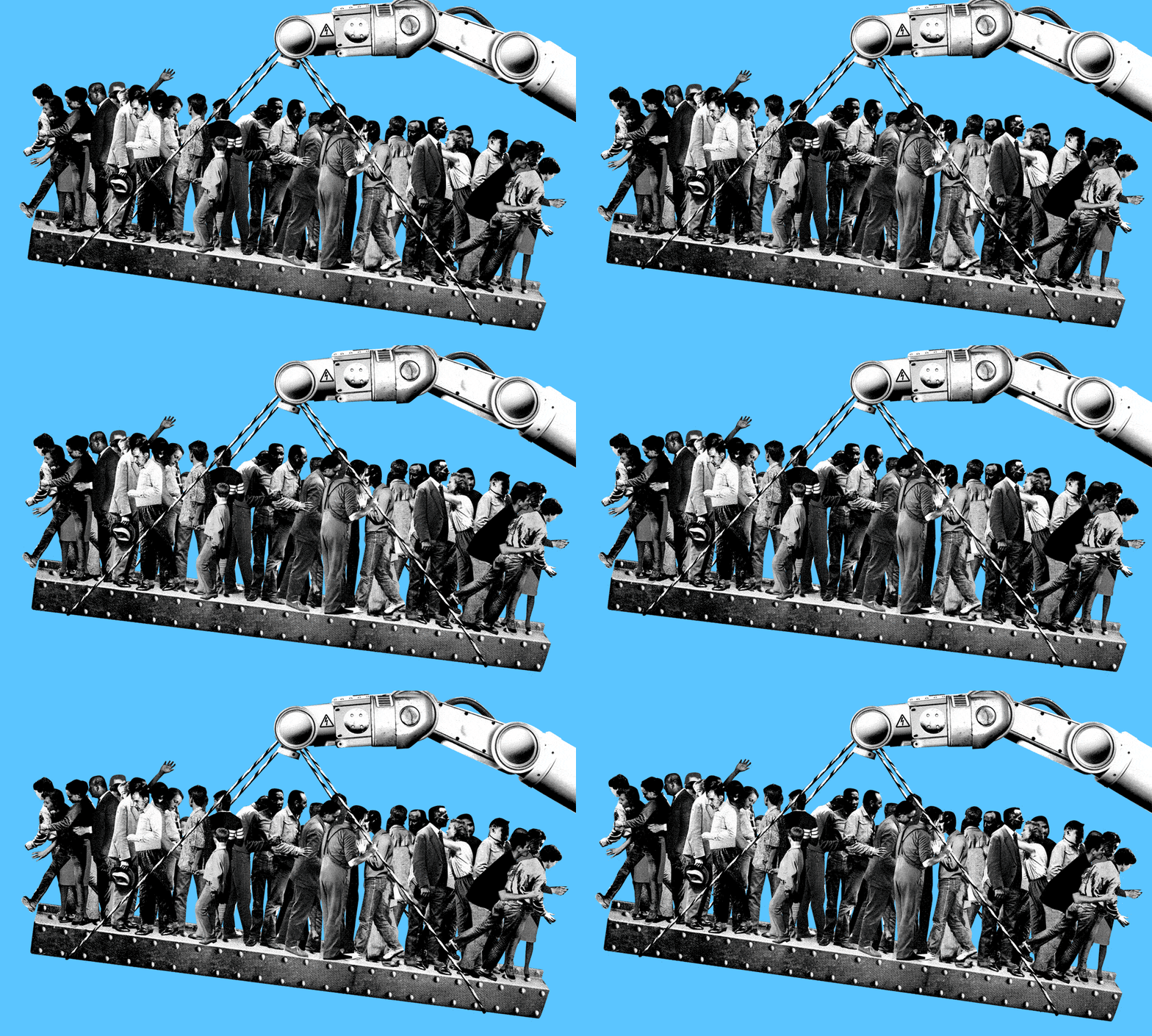
They go on to describe an AI driven ‘talent paradox”:
“The AI-fueled anxiety over labor displacement has been hard to contain, even as companies struggle to find skilled workers.”
“The job market is currently experiencing a “talent paradox” where 98% of C-suite executives expect AI to lead to headcount reductions over the next two years, while 54% cite talent scarcity as their top macro challenge, said Lewis Garrad, career practice leader at consultancy Mercer Asia.”
“Around 65% of executives expect 11% to 30% of their workforce to be redeployed or reskilled due to AI by 2026, Garrad estimated.”
The initial burden seems to fall on junior jobs:
“Entry-level jobs face the greatest risk as AI eliminates the “stepping-stone” tasks historically used to train new workers, further widening the skills gap at a time when demand for AI-literate workers is accelerating, Garrad added.”
“Roles involving data analysis, document processing, information comparison, and drafting initial reports are at risk of being “first in line” for displacement, said Andreas Welsch, founder of consultancy Intelligence Briefing and author of The Human Agentic AI Edge.”
Goldman Sachs comes out on it all as a net positive:

“Goldman’s Briggs also acknowledged the transition won’t be frictionless, even under the most optimistic scenario, anticipating a peak gross jobless rate that will increase by around half a percentage point as the job market transitions into a new era.”
“But new jobs will emerge, Briggs said, stressing that technological change has always been a main driver of job growth in the long-run through the creation of new occupations.”
“Tens of millions of people are now employed in sectors such as computing, the gig economy, e-commerce, content creation and video games — industries that were science fiction a generation ago.”
“That said, integrating AI capabilities into existing corporate workflows may ultimately prove harder than the technology itself. Roughly 80% to 85% of AI projects have failed since 2018 — a sobering statistic for an industry awash in enthusiasm, noted Intelligence Briefing’s Welsch.
“It would be undesired to have hundreds of thousands of agents that create more problems than they solve,” he said.”
Serious stuff indeed.

In the meantime, all this has even turned into a flex game amongst engineers in silicon valley. The New York Times highlights in “More! More! More! Tech Workers Max Out Their A.I. Use”, a piece worth reading in full:
“At a number of companies, employees compete on leaderboards to show how much A.I. they’re using. They’re racking up big bills along the way.”
“An engineer at OpenAI processed 210 billion “tokens” — enough text to fill Wikipedia 33 times — through the company’s artificial intelligence models over the last week, the most of any employee.”
“At Anthropic, a single user of the company’s A.I. coding system, Claude Code, racked up a bill of more than $150,000 in a month.”
“And at tech companies like Meta and Shopify, managers have started to factor A.I. use into performance reviews, rewarding workers who make heavy use of A.I. tools and chastening those who don’t.”
“This is the new reality for coders, some of the first white-collar workers to feel the effects of A.I. as it sweeps through the economy. A.I. was supposed to help tech companies boost productivity and cut costs. But it has also created an expensive new status game, known as “tokenmaxxing,” among A.I.-obsessed workers who are desperate to prove how productive they are.”
It’s the new job perk to flaunt:
“At some tech companies, including Meta and OpenAI, employees compete on internal leaderboards that show how many tokens — the atomic unit of A.I. use, roughly equivalent to a word fragment — each worker consumes, two people familiar with those companies’ practices said. Generous “token budgets” are becoming a job perk for coders, like dental insurance or free lunch, and some are spending thousands of dollars a month trying to automate as much of their own work as possible.”
The other thing to remember in all this is that the ‘token math’, looked at as both an employer cost and/or a perk, is changing fast.
AI analyst Aakash Gupta to expounds further as follows:
“The CEO of the company that made $193.7 billion selling data center hardware last year just told every CTO on Earth to spend more on data center hardware.”
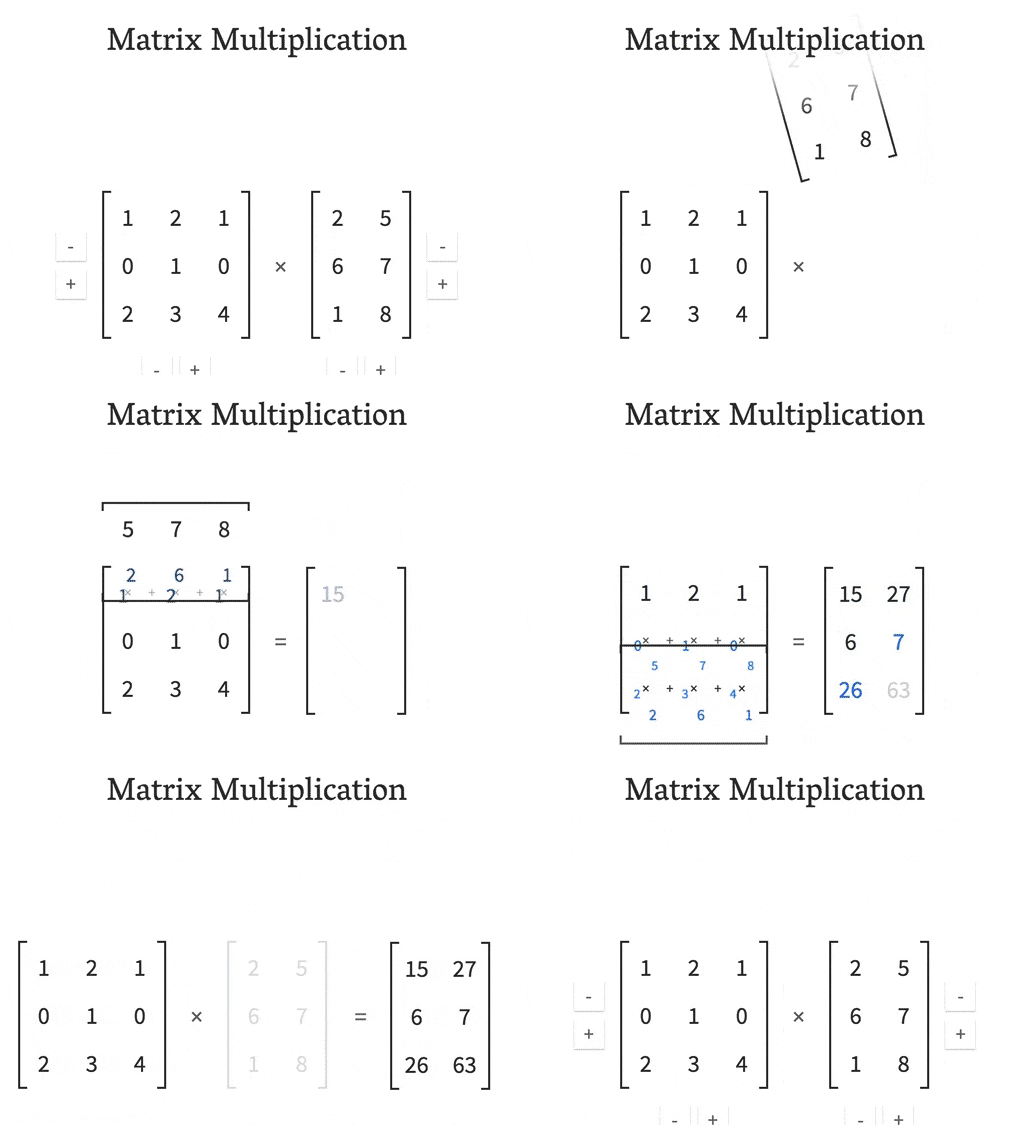
”NVIDIA drives token cost deflation from the hardware side. Blackwell delivers 10x inference throughput per megawatt over Hopper. OpenAI, Anthropic, Google, and DeepSeek drive it from the software side. Here’s what that looks like in practice:”
”March 2023: GPT-4 launched at $30 per million input tokens.”
”May 2024: GPT-4o dropped it to $2.50.”
”March 2026: GPT-5.4 is $2.50. Opus 4.6 is $5. GPT-5.4 Codex, the model engineers actually use to ship code, is $2.50/$15.”
He goes on to compare the token costs for chatbots to AI agents, off open source models like DeepSeek and others from China:
“DeepSeek V3.2 charges $0.28 per million input. Gemini Flash charges $0.15. With caching, Opus 4.6 drops to $0.50. The Stanford AI Index measured a 280x cost decrease for equivalent-quality inference in just two years.”
And the broader context of the token math:
”At $250K and today’s frontier rates, one engineer would need to consume over 100 billion input tokens per year on GPT-5.4. That’s ingesting every book ever written, several times over, per person. And six months from now, that same $250K buys twice as much. Six months after that, twice again.”
”The $250K floor is a number designed to be quoted in board decks this quarter, before every CFO realizes that the price of the thing Jensen is telling them to buy is falling faster than any technology input in history.”
$215.9 billion in revenue. 75% gross margins. And the [Nvidia] CEO just convinced an entire industry that not buying his product is a talent retention problem.”
Two opposite things can be true at the same time. AI Tokens are both a cost and a perk. And a resource that companies will need to track, manage and fruitfully deploy at scale.
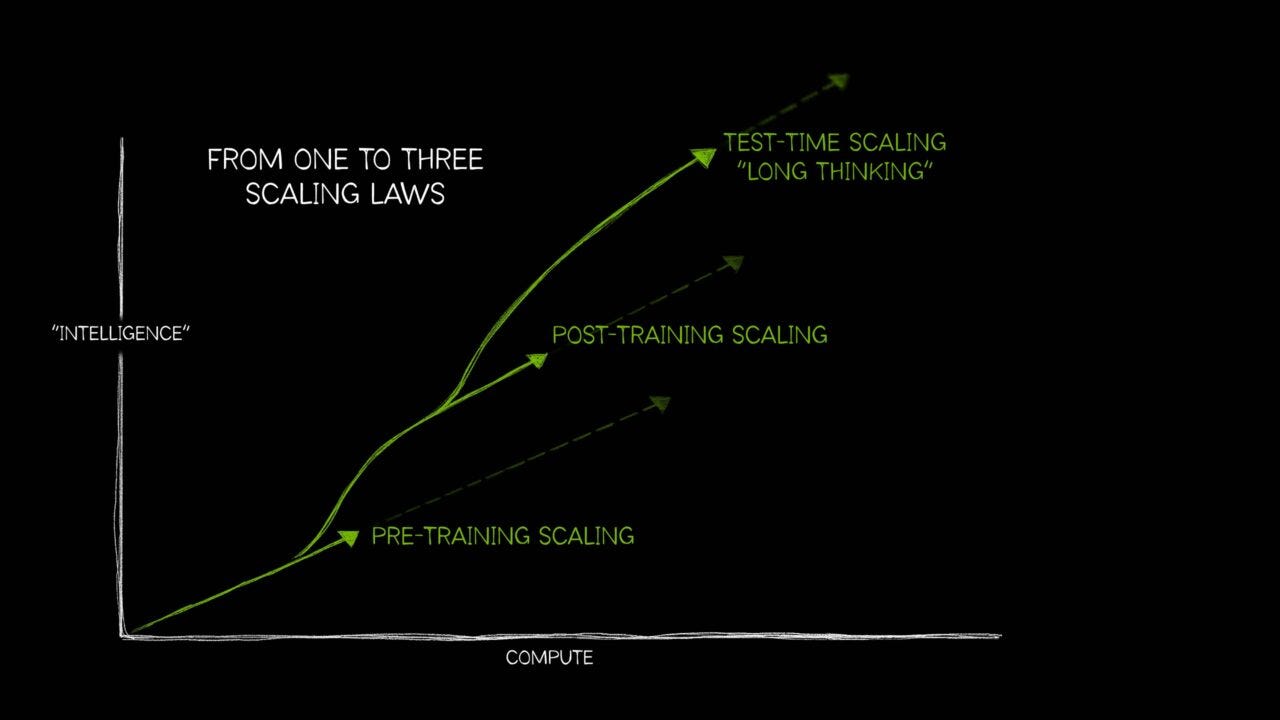
It’s the Bigger Picture to really keep in mind this AI Tech Wave, as token leadership go from being a flex for coders, to true productivity enhancers for us all. Stay tuned.
(NOTE: The discussions here are for information purposes only, and not meant as investment advice at any time. Thanks for joining us here)