“The energy dominance bulls in the Trump administration came to Houston last week to celebrate how U.S. natural gas is driving America’s lead in the AI race. But techies in from the West Coast said it’s risky to rely on natural gas alone to stay ahead.”
“The setting was CERAWeek by S&P Global, the world’s largest and most influential gathering of energy leaders. Cabinet secretaries and CEOs of drillers, utilities and pipeline operators took turns touting the importance of cheap natural gas, and the U.S.’s distance from the war-torn Middle East, in making the U.S. a haven for big AI projects.”
“The Silicon Valley bosses actually funding these projects want to hedge their bets with renewable energy, batteries and nuclear power. Even aside from climate concerns, some are worried that by the time new gas-fired power plants go into operation, gas prices could be higher, which could drive up consumer electric bills and cause a political backlash against AI.”
“I’ve been going to CERAWeek for years, and this time felt momentous because instead of the energy giants, it was big tech calling the shots on where the capital goes. You’re as likely to see Microsoft and Google and data center developers like Crusoe sponsoring talks and holding dinners in the energy capital of Houston as Chevron. (Crusoe and Microsoft, in fact, were busy wrapping up a deal for an Abilene, Texas, data center they announced Friday.)”
Then there are the disagreements despite general, high level alignments:
“Energy and tech executives have never been more aligned around the need for critical infrastructure, but their ideas sometimes clash: Take the interaction between Toby Neugebauer, a Trump acolyte who is trying to build a data center megaproject in Amarillo, Texas, and Amanda Peterson Corio, Google’s global head of energy, over what power sources the demands of AI require.”
“Neugebauer told the audience that “power at the scale that a company like Google would need” leaves only two options: gas or nuclear. Corio disagreed.”
“Even if we start building nuclear right now, it’s not going to show up for another 10 years because we’ve not invested in the jobs and the supply chain and everything we need,” she said sharply. “And if we’re just relying on gas, we’re also screwed” because of supply chain bottlenecks there, too.”
“Corio said the energy mix, including wind, solar and a novel 100-hour battery-storage power system, that Google is using for a Minnesota data center will go up faster. “We have to think differently,” she asserted. To be fair, Google also plans to use some gas, and it is supporting nuclear, including the revival of a shuttered nuclear reactor in Iowa, next-generation small reactors and even fusion. But Corio is right: New nuclear power delivery at scale is still years away.”
The tech companies are exploring lots of diverse options:
“Bobby Hollis, vice president of energy at Microsoft, told a packed crowd that there’s a perception that tech companies only care about renewables, but Microsoft has intentionally pursued a diverse mix, including nuclear, hydropower and carbon removal. It also recognizes that “fossil fuels are going to be part of our [country’s] mix that supports us for a long time.” He said to me in a separate interview that grid modernization is equally urgent. Simple upgrades such as fortified utility poles and wires that withstand storms “often aren’t as sexy” as new power plants, but they are equally important.”
“Data center developers find gas expeditious at the moment but see new options everywhere. Microsoft’s Darryl Willis heads a team that helps clients like Aalo Atomics use AI to reduce the time spent on cumbersome tasks, such as permit paperwork. “Technology can truly help us reimagine that form of energy,” he told me.”
“And depending on gas too much in coming years could backfire.”
This despite US advantages on natural gas at the moment:
“The U.S. gas market has mostly been isolated from world markets, and gas is far cheaper here than what consumers pay in Europe and Asia. That’s because those countries don’t have their own gas supplies and they have to pay up to import natural gas that has been liquefied on tankers in an expensive process and transported across oceans.”
“With the U.S. war against Iran, gas supply has become far less certain. Iran has damaged gas export facilities that may be inoperable for years. The U.S. can’t export much more now than it already does, but U.S. exporters plan to more than double the country’s liquefaction capacity by 2029. That means global buyers may compete with domestic users of American gas and bid up the price.”
“While producers can rev up production to mitigate the price increases, the shift could still change the economics of data centers that depend on gas.”
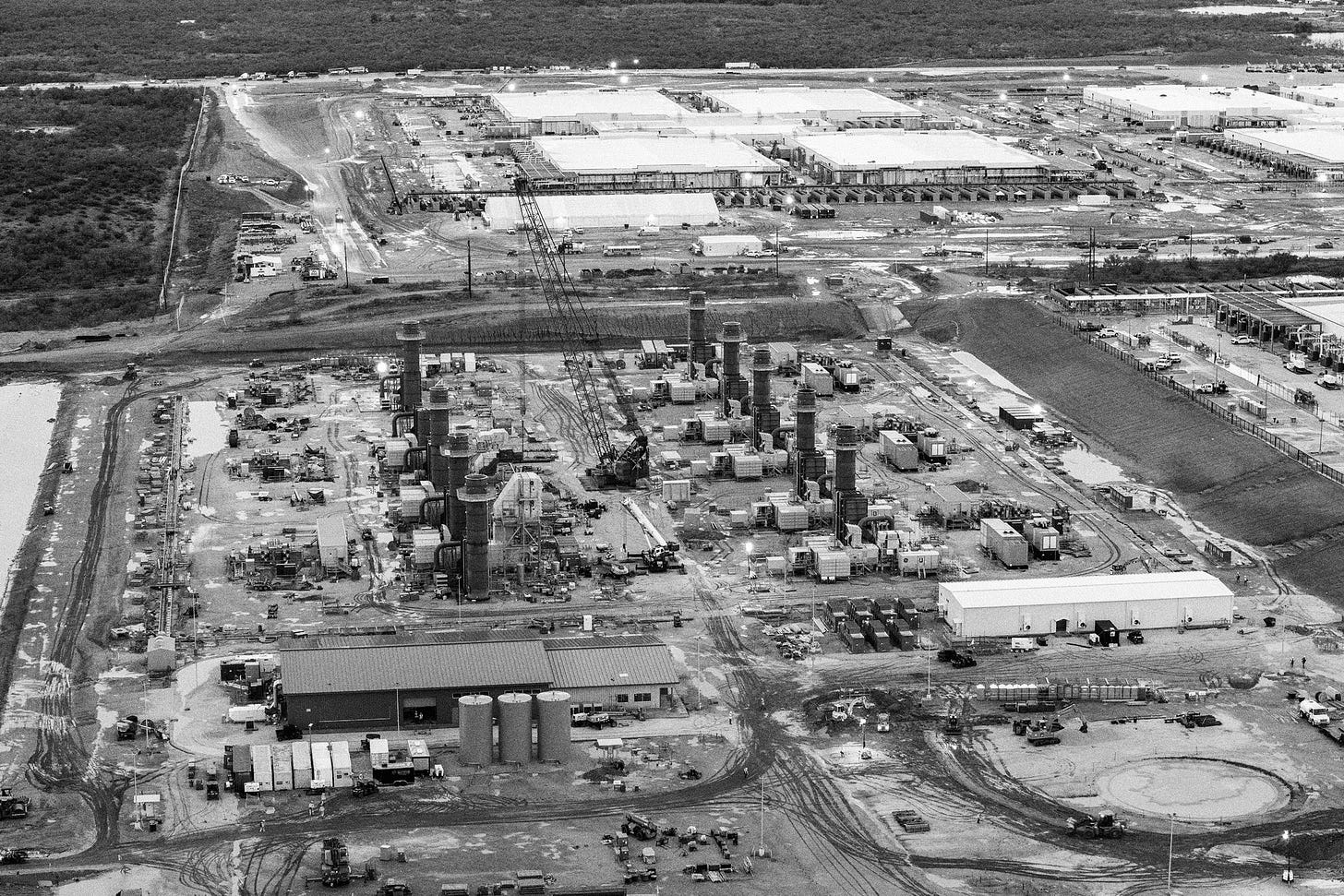
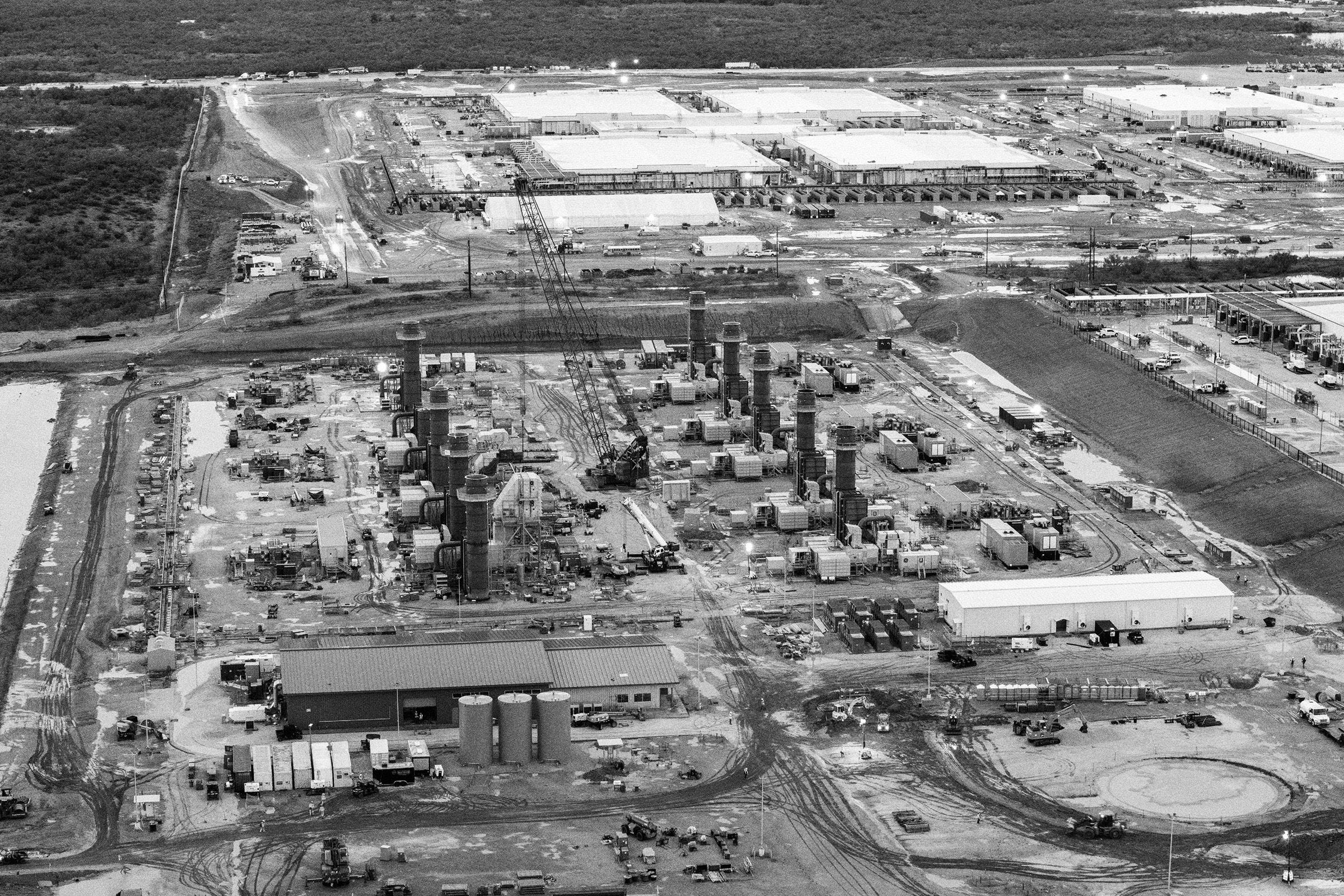
“AI developers are planning to burn gas at 75% of the power plants they’re building on their own campuses. The U.S. government is pushing for more gas usage. Right before CERAWeek, Japan and other U.S. allies announced that they will heed Trump’s call to build some of the largest gas-fired plants ever imagined for AI computing hubs.”
“Tech companies also need to hedge their bets in case Democrats retake the White House or various kinds of power and gas infrastructure get stuck in red tape.”
And it’s more mundane elements ike the transmission grids and its supply chain infrastructure.
“Increasingly, calls to diversify come from the oil patch, too. Hunter Hunt, heir to a multigenerational oil fortune and CEO of Hunt Energy, has invested in transmission, batteries and new solar technologies. Speaking at the final panel at CERAWeek, he said that the U.S. is getting far too distracted by partisan politics. “We’re fighting over everything,” he said. Adding to the energy supply with renewables and new technologies, he added, is the true definition of “wartime footing.”
The whole piece is worth a read for additional anecdotal details on key views and debates at the event.
Cresco Labs Earnings $188.2M Revs; est. $181.6M $54.8M AEBITDA: est. $43.9M $96.1M GP; est. $89.6M $27.1M OI; est. $25.3M 51.1% GM; est. 49.4% $4.9M NI;...