
AI: Weekly Summary. RTZ #1018


-
Anthropic closes OpenAI gap: Anthropic’s Claude is ‘dethroning’ OpenAI’s ChatGPT app as top US app. This despite its difficulties with the US Pentagon/DoD (see below). In addition, institutional investors are focusing on Anthropic’s revenue momentum vs OpenAI, ahead of both companies’ anticipated IPOs later this year. Key here is Anthropic’s white hot momentum with its Claude Code and CoWork products, going up against OpenAI’s well-ranked Codex offerings in partnership with Microsoft’s Copilot Github. Claude Code crossed its first annual anniversary as a multi-billion dollar product, and CoWork is seeing broader adoption as a general AI productivity tool in its short two week plus introduction. Also attractive to investors is Anthropic’s higher margin ramp vs OpenAI, despite its steep AI data center compute ramp as well. Not to mention recent investor concerns over a ‘software apocalypse’ driven by these AI coding applications. More here.


-
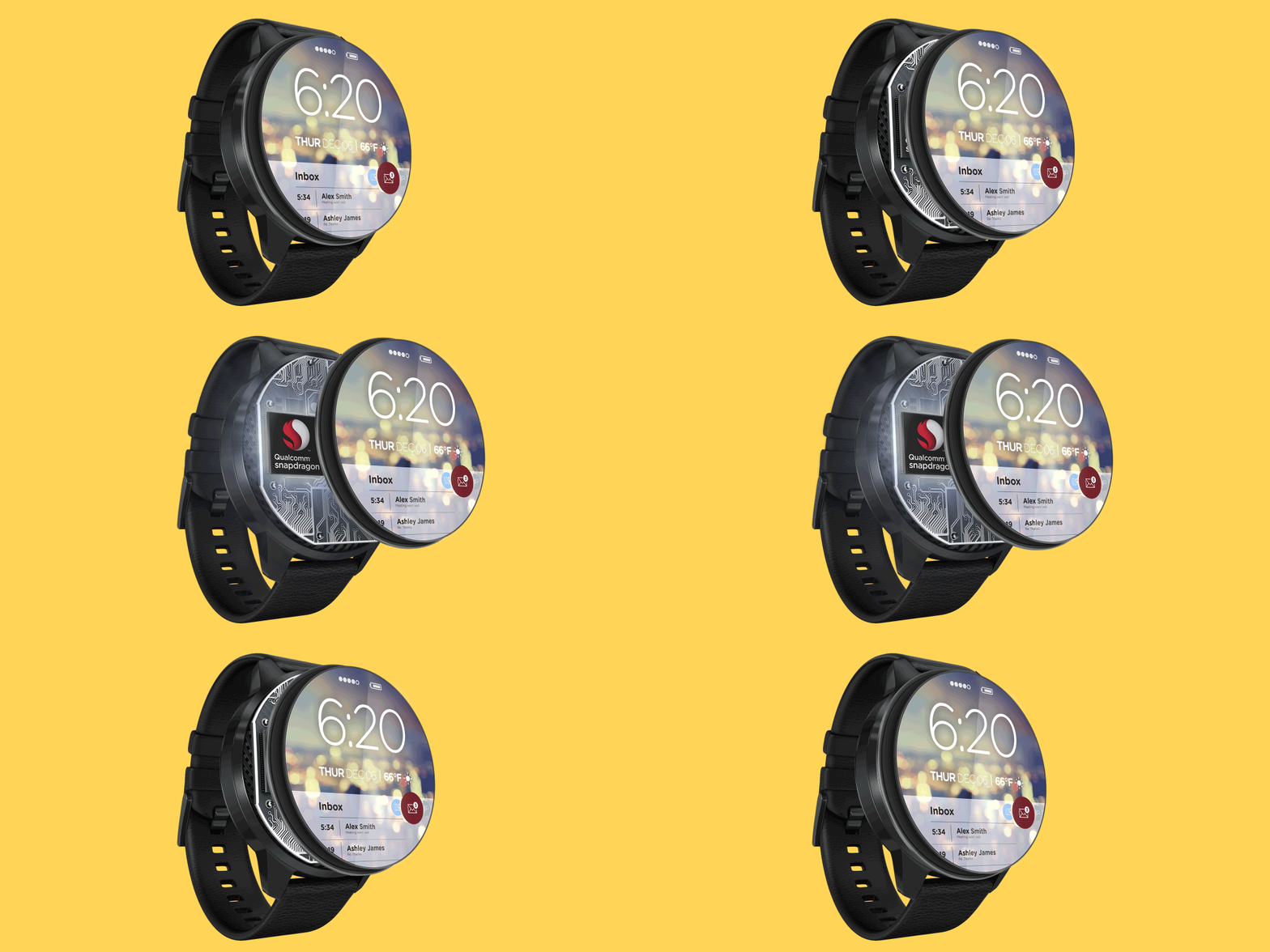
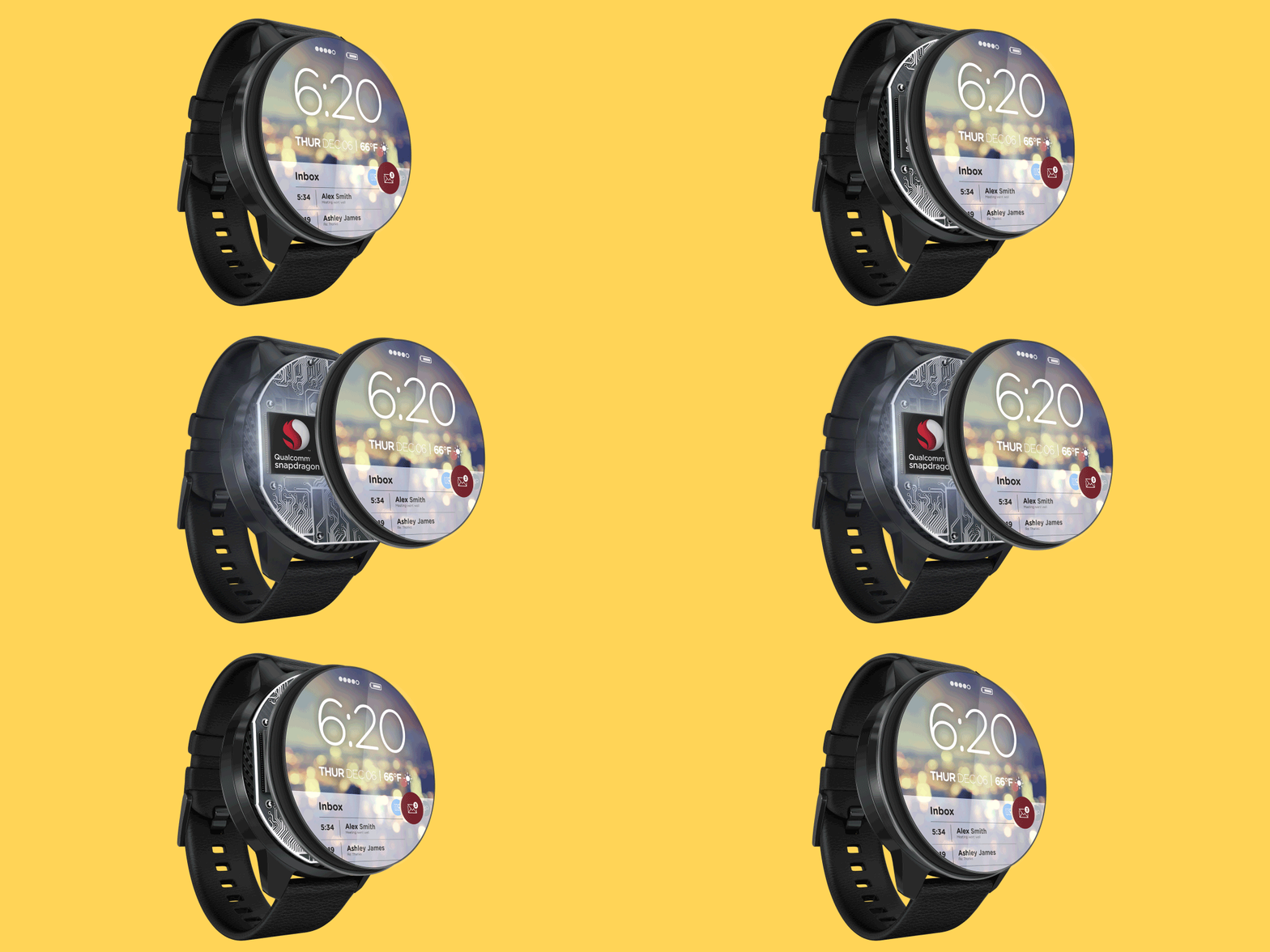
Qualcomm vs Apple on AI Wearable Chips: Qualcomm rolled out its new Qualcomm 3 nm Snapdragon Wear Elite AI chips, for smartwatches at the Mobile World Conference in Spain this week. It forms the basis of a wide range of AI wearables to come from OEM customers Google, Samsung, Motorola and many others around the world. All going up against Apple in particular, who has its own unique ‘Apple Silicon’ strategy across its computer, smartphone, tablet, and AI wearable hardware offerings. Key aspects of these chips is offering high local AI compute capabilities with low power consumption, independent of nearby smartphones. These chips are increasingly capable of running small language AI models (SLMs) locally on devices, working with private user data without having to resort to public clouds and their latency. The new Qualcomm chips offer 30% longer battery life, and 50% charge in 10 minutes. More here.
-
Meta & Google Embrace AI Reality: Both Meta and Google are accelerating their AI offerings to produce AI imagined content by their vast legions of online creators on Instagram, Facebook, YouTube, OpenAI and other social media, in both long and short form content. Of course all going up against TikTok under new management. Meta’s senior executive Adam Mosseri, who runs Instagram is now talking about this new era of social media, where abundant AI images and videos address the perennial ‘What is a Photo?’ debate amongst many users. This evolution carries broad social impact implications, as well as financial consequences for the way the existing online business models work. Also a big issue is how regulators will react to these ‘deepfakes’ across society and geographies. Samsung’s roll out of its latest S26 series smartphones emphasize this accelerating AI creation capabilities in mainstream photo and video applications. More here.


-
Apple throws down ‘Value’ gauntlet: Apple just finished rolling out its latest laptop, tablet and iphones this week focused on the ‘value’ price segment of $599, a price range it hasn’t competed in for years. As I highlighted last week, Apple is leveraging its global supply chain capabilities in the current environment of short memory and other chip supplies, to compete more aggressively for the mainstream user markets globally. These markets have traditionally been ruled in unit terms by Microsoft Windows based computers and laptops offered by hundreds of OEM partners. On the smartphone side, it’s been Google’s Android and Chrome OS offerings via OEMs in terms of hundreds of million Android phones, and a lesser number of low-priced Chromebooks. Especially focused on the US education market. A key example of Apple’s focus on this market is its new $599 Macbook Neo laptop, which comes in at $499 and lower with educational discounts. These devices are now reviewed as offering greater value than the traditional Windows and Chromebook offerings, given the current supply chain headwinds in memory and other chips for most tech hardware manufacturers. Also notable is that these Apple offerings are capable of running Apple Intelligence applications and services, especially the Google Gemini powered Siri coming out later this year. All this means Apple is in a better place in distributing AI applications to mainstream users than most of its competitors this year and beyond. And work better with the iPhones in their pocket. More here.


-
OpenAI OpenClaw ‘DeepSeeks’ China: OpenAI’s recent acquisition, open source AI Agents platform OpenClaw is making viral inroads in the tech/AI developer community in China. A reverse wave of what China’s DeepSeek open source AI models did with US developers this time last year. Developers at both the big tech and AI startup companies in China have aggressively embraced the open source OpenClaw offerings, and more importantly, their inspiration for locally run AI Agents that have the freedom to do more things proactively for the end users. Hopefully with better security and privacy safeguards. The development highlights the global nature of the developer community, which tends to gravitate to the most useful new innovations in technology, regardless of geopolitical and other non-tech issues. It’s likely that new innovations on local AI agent technologies inspired by OpenClaw in China could come back and make an impact on the US AI market in the not too distant future. It’s the way of global tech-led developer flywheels.. More here.


Other AI Readings for weekend:
-
Anthropic CEO Dario Amodei updates on Pentagon/DoD skirmish. More here.
-
Softbank adds a $40 billion loan towards its rising OpenAI stake. More here.
(Additional Note: For more weekend AI listening, here’s the latest AI Ramblings Episode 44 on topical items. This week, how Nvidia Reigns On & More).
Up next, the Sunday ‘The Bigger Picture’ tomorrow. Stay tuned.
(NOTE: The discussions here are for information purposes only, and not meant as investment advice at any time. Thanks for joining us here):
(NOTE: The discussions here are for information purposes only, and not meant as investment advice at any time. Thanks for joining us here)


