
Nvidia Reigns On, Meta-AI IPOs File, Google I/O Consumer AI Roadmap & More. AI-RTZ #1095


1. Nvidia Q1 2027 Reigns On — Sans China:
Wednesday’s earnings report from Nvidia did its now-customary thing — beat the highest analyst estimates, then raised the next quarter’s guidance even higher. Revenue grew 85% to $81.6 billion in the three months ending April 26, and management projected another 95% growth in the current quarter — the fourth consecutive quarter of accelerating sales growth. As The Information put it, “the AI boom is far from peaking.” All this without (sans) China, where another $10+ billion in revenue likely sat waiting in another universe.
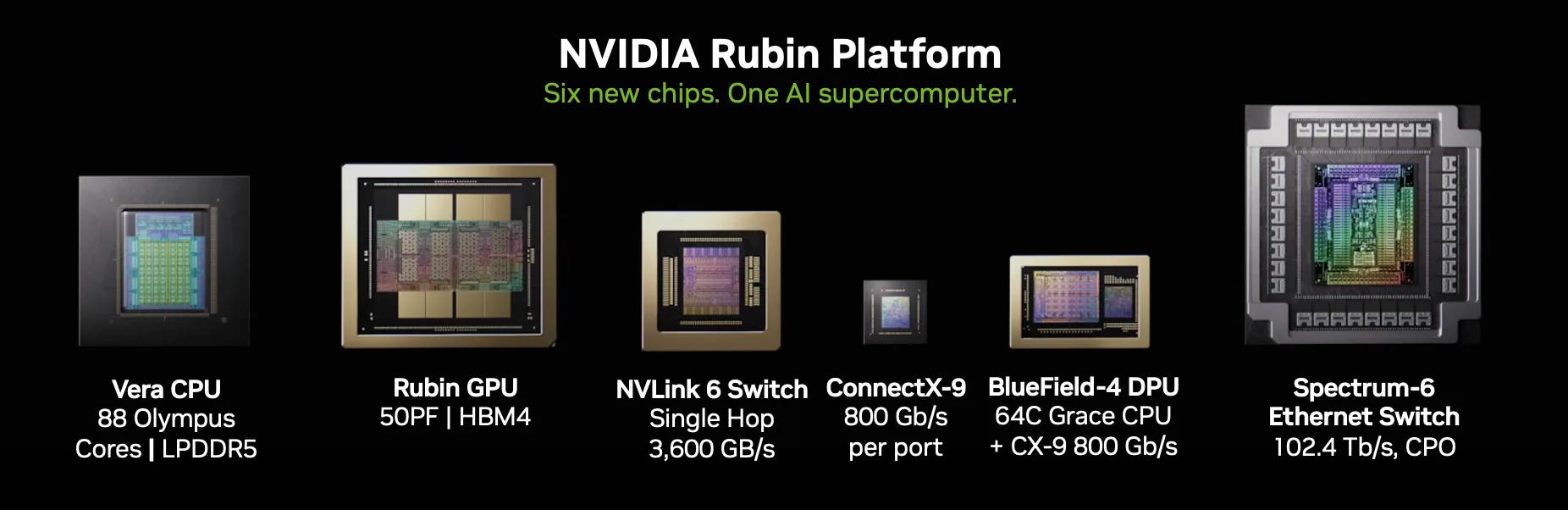
The story this quarter wasn’t just the headline numbers. It was the CPU callout — Jensen Huang flagged $20 billion in standalone CPU sales pace for the year (separate from the GPU-attached CPUs in Nvidia systems), with a $200 billion+ new addressable market sitting on the other side of the AI Reasoning and Agent transition. The Vera Rubin platform — Nvidia’s own ARM-based CPUs paired with Rubin GPUs — is now ramping for the second half of 2026, with meaningful volumes by Q1 2028. Add the 86% jump in free cash flow to $48.6 billion, $20 billion of Q1 buybacks and an authorization for another $80 billion more, and Nvidia’s $5.4 trillion market cap still trades at just 26.7x forward earnings.
It’s also the kind of quarter that makes the depreciation skeptics revisit their assumptions — rental prices for Nvidia chips that launched three to six years ago rose 15-20% so far this year. And it puts the Frenemies dynamic on full display — Anthropic was singled out as a relatively new major Nvidia customer despite running on Amazon Trainium and Google TPUs. The customers’ customers’ biggest customers are all still buying. More here.
2. Mega-AI IPO Filings Officially Begin — SpaceX/xAI, OpenAI, Anthropic:
The week the Mega-AI IPO Mega-Wave I’ve been writing about for over a year went from preview to public record.
SpaceX/xAI dropped its first round of S-1 filing detail, with Reuters reporting a target of June 11/12 pricing on Nasdaq — ahead of Elon’s birthday at the end of June. Implicator AI ran the sharpest read on the financials — SpaceX has Starlink revenue, the prospectus makes xAI the bill, $37+ billion in cumulative losses to date. The WSJ added the structural filing ‘secrets’. OpenAI confidentially filed for September 2026, as the WSJ pinned the timing and CNBC confirmed the confidential S-1 route. Anthropic is reportedly eyeing October on the back of what the WSJ called “mind-blowing growth” — nearly $11 billion in Q2 revenues and a $50 billion ARR by year-end (CNBC detail). The WSJ tied them all together in its umbrella framing piece.
The three are not equally positioned going in. SpaceX/xAI is first out of the chute on what is arguably the most narratively-driven IPO of the AI Tech Wave — Elon’s “financial anti-gravity machine” of XAI-into-Twitter-into-XAI-into-SpaceX-into-Starlink consolidation, plus insider-sale carve-outs ahead of the traditional 180-day lockup, plus Nasdaq positioning for early Passive Index inclusion. The ‘We are the Geese’ dynamic plays out for early SpaceX/xAI investors, helping Elon keep his ‘no loss’ promises despite the entity being the least well fundamentally positioned of the three. OpenAI has the most prep work ahead — especially on the consumer side vs Google Gemini, on developer/enterprise catchup vs Anthropic, and on the still-unresolved OpenAI Smartphone roadmap. Anthropic — the tortoise — is best positioned of the three on operational momentum, even though the loudest media coverage is going to the other two. More here.

3. Google I/O 2026 Cements Google’s Consumer AI Lead:
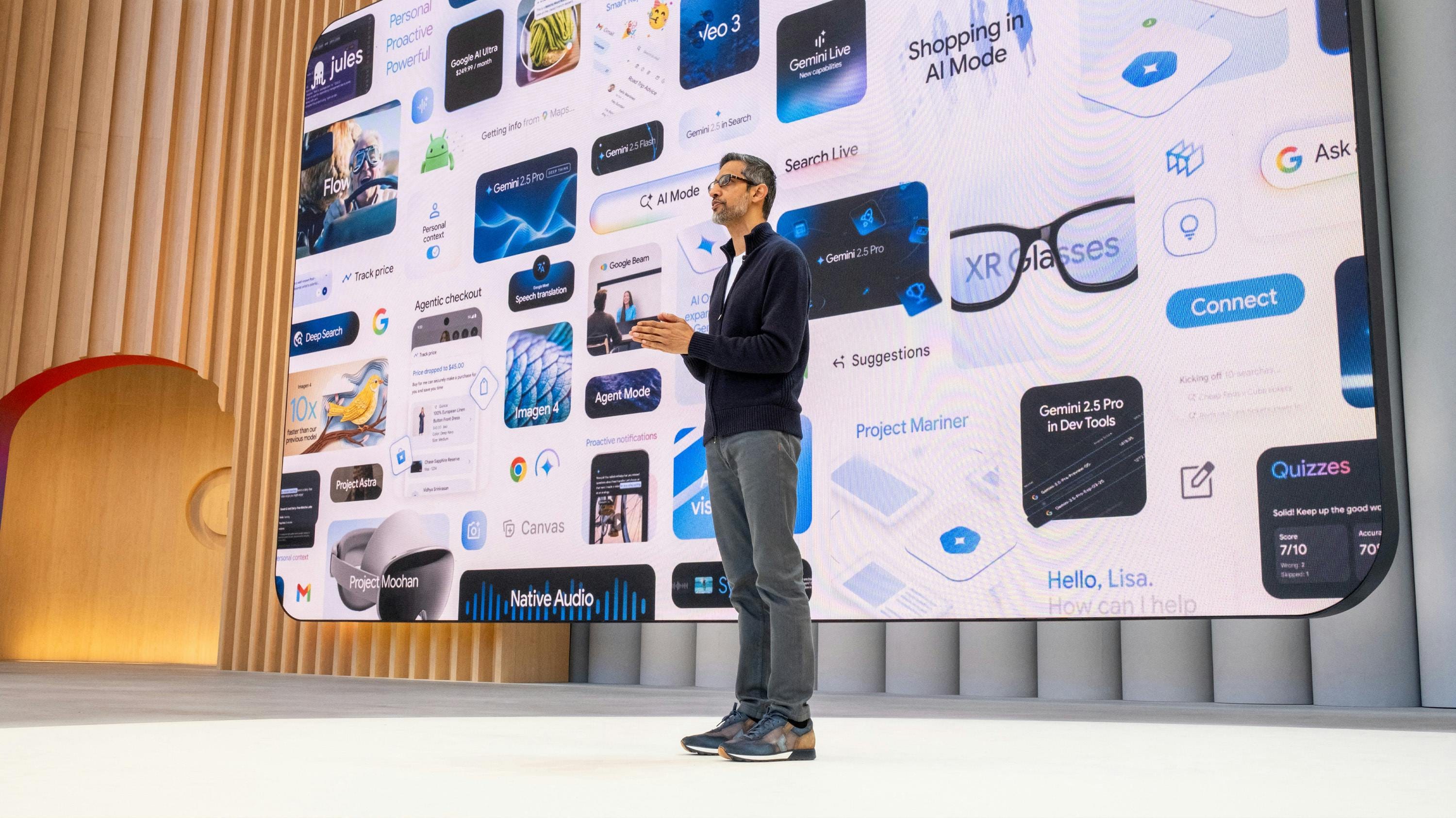
Google I/O 2026 was the inflection point: Google Gemini is becoming Google Search. And AI Search is becoming Google Search. Over 3 billion people use Google Search worldwide every day — vs roughly 900 million weekly users of ChatGPT and a comparable weekly figure on Google Gemini today. The daily-usage gap is enormous, and Google just wired Gemini directly into the same Search box those 3 billion already open every day. The NY Times framed it as the first Search box redesign in 25 years; The Verge called it the Search box that does everything.
What Google actually shipped is the four-piece consumer-AI stack — Gemini 3.5 Flash today, Pro soon going up against Anthropic 4.7 and OpenAI 5.5, paired with Antigravity 2.0 on the developer/coding side; Gemini Omni for any-to-any multimodal; Gemini Spark as the 24/7 agentic AI surface going head-to-head with Claude Code/Cowork and OpenAI’s Codex; plus a Gemini app redesign in the new “Neural Expressive” UI/UX and a DeepMind-shown “AI Cursor” on the agentic-pointer surface. Sundar Pichai dropped the headline number that got the analyst desks moving — Google is now processing 3.2 quadrillion tokens per month, up from 480 trillion a year ago and 9.7 trillion two years ago. That’s roughly 6-to-7x year-over-year acceleration on an already-enormous base, all leveraged by the immense TPU-powered Google Cloud AI data centers Google is investing roughly $190 billion in capex this year alone.
MP Take: Of the consumer-AI giants, Google is the one with both the daily-distribution surface (3 billion+ Search users) AND the model-tier vertical stack (Gemini 3.5, Omni, Spark, on TPUs). Nobody else has both. OpenAI has model momentum but no distribution surface near 3 billion. Anthropic has model quality and enterprise traction but a smaller consumer footprint. Apple has the device distribution but is using Google Gemini for the AI layer. It’s the opportunity Microsoft had vs Netscape in the 1990s Internet wave — and far more — without the regulatory issues that constrained Microsoft then. And with a market cap approaching Nvidia’s leading five-trillion-dollar number. More here.
4. Anthropic the Quiet Winner plugs on:
Three independent data points this week make the case that Anthropic — the third of the trillion-dollar IPO trifecta — is the quietest but most consistent operator going into the mega-AI IPO season.
First — the legal-environment shift. The jury delivered a verdict in Elon Musk vs Sam Altman / OpenAI after just two hours of deliberation. Musk lost on the contested counts; OpenAI won the narrow legal case. But the reading the rest of the industry missed: Axios wrote that “in Musk v Altman trial, the entire AI industry lost”, and while OpenAI was defending its legal foundations and Musk was running through years of internal discovery, Anthropic spent that same time shipping product, hiring talent, and signing enterprise deals. Net-net, Anthropic gets to skip the entire reputation-damage discount that both Musk and OpenAI now carry into the rest of 2026 — a useful PR win for Musk ahead of his June 12 IPO pricing, sure, but a structural advantage handed to Anthropic by way of the calendar.
Second — the subtle Mythos product-policy shift. The WSJ reported that Anthropic is opening up the Mythos cybersecurity surface to let Mythos users share cyber threat data with other users — a small policy shift on paper, but structurally meaningful as Mythos moves from sealed-preview into wider commercial availability. Less front-page drama than OpenAI is generating with GPT 5.5 ‘Spud’; more compounding revenue ramp.
Third — the talent flow. Uber-coder Andrej Karpathy joined Anthropic in an AI Research role — co-founder of OpenAI, former Tesla AI Director, creator of the most-watched AI educational content on the internet, including his “Let’s Build GPT From Scratch” lecture series. The structural read: Karpathy specifically did NOT join xAI and did NOT rejoin OpenAI. Talent flow is the leading indicator in this race, and Karpathy is one of the few AI researchers whose presence alone meaningfully moves a lab’s research velocity. He’s chosen Anthropic. That is a strong signal.
The two persistent issues with Anthropic remain — Dario Amodei’s anti-China lobbying posture, and his strident Job Loss Fear discussion. Both are about the public-facing voice rather than the operating layer. Anthropic the company keeps doing the right things on Research, People, Product, and Markets. Anthropic the public-facing voice — especially the CEO’s public-facing voice — keeps getting in the way of its own story. More here and here.

5. OpenAI’s Pre-IPO To-Do List — Rolling ‘Code Reds’ & Brockman Officially In:
Wired reported the latest OpenAI reorg — Greg Brockman officially takes control of OpenAI’s product strategy, in addition to his AI infrastructure work. The headline change: OpenAI is unifying ChatGPT and Codex into one core product experience, alongside the developer-facing API. Brockman’s memo to staff: “We’re consolidating our product efforts to execute with maximum focus toward the agentic future, to win across both consumer and enterprise.”
The downstream personnel changes are telling. Thibault Sottiaux — who built Codex into one of OpenAI’s fastest-growing products ever — takes over the core product and platform teams, and is one of the leaders overseeing development of OpenAI’s forthcoming “super app” that aims to combine Codex, ChatGPT, and the Atlas web browser into a unified desktop application. Nick Turley — who led ChatGPT since launch and grew it to 900 million weekly active users — moves to lead enterprise products. Ashley Alexander, a former VP of Instagram, takes over the consumer product unit. CEO of AGI Deployment Fidji Simo remains on medical leave but expects to return.
The pattern is clear. OpenAI has had several “Code Red” catalysts ahead of its IPO target — starting with the Google Gemini-driven Code Red last December, and now driven by Anthropic’s developer-and-enterprise momentum with Claude Code and Codex. The latest reorg trims the side-quests and reorients the whole company around the agentic super-app thesis — AI Reasoning, AI Agents, on the way to whatever AGI looks like down the road. And in the meantime, get to a September 2026 IPO ahead of Anthropic in October, but behind SpaceX/xAI in June. The line between consumer and enterprise — and between ChatGPT and Codex — is blurring at both OpenAI AND Anthropic at the same time. More here.
Other AI Readings for weekend
-
Mainstream US folks want less AI across demographies. Axios’s “An AI hate wave is here” lays out the polling: 70%+ of Americans think AI is moving too fast, negative views up from 34% three years ago to over 50% today. More here.
-
Amazon AWS AI Chips ramping up vs Nvidia GPUs, Google TPUs et al. More here.
(Additional Note: AI Ramblings Daily on YouTube, is now a weekday Daily podcast called AI Ramblings Daily (ARD). Different content than AI-Reset to Zero (AI-RTZ) substack, which remains a daily morning substack write-up. With now over 1080+ ‘MY TAKES’ on key AI events and issues turbulently flowing by. ARD is typically a 20 minute afternoon podcast every day, on my take on additional AI developments. Both daily substack and podcasts typically discuss different AI issues and items. There is a daily text summary of the daily podcasts here on the substack, as well as one minute YouTube ‘Shorts’ video clips on the key topics discussed. And all are free to subscribe for now. Try this week’s series with ARD Episodes
Up next, the Sunday ‘The Bigger Picture’ tomorrow. Stay tuned.
(NOTE: The discussions here are for information purposes only, and not meant as investment advice at any time. Thanks for joining us here)


