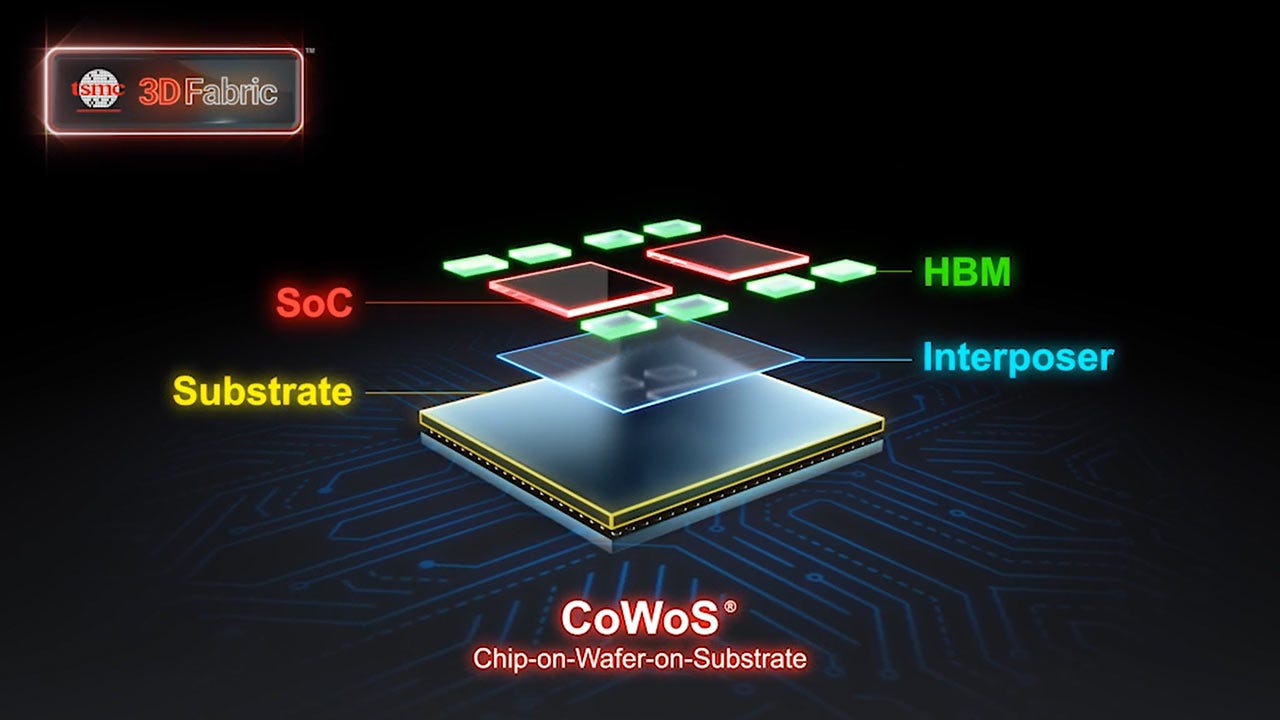
Regulars here at AI-RTZ and ARD podcast know of the long litany of AI bottlenecks this AI Tech Wave through the end of this decade at least. To the AI GPUs, AI memory,AI Data Centers and Power, AI Talent and others, add chip packaging technologies, aka CoWoS, explained below.
“Advanced chip packaging, which boosts computing power for artificial intelligence, has made the United States more reliant on Taiwan than ever.”
“Chips don’t work without packaging. The process, also called assembly, typically wraps bare pieces of silicon in protective plastic with connectors to pass signals to other chips on a circuit board.”
“These days, chips are frequently placed on an intermediary layer called a substrate, which is typically made of plastic and glass fiber and embedded copper wiring.”
These were technologies developed in the US, specifically at places like IBM, then sub-contracted to Asia, to do the then low cost, low margin work of assembling the substrates to acts as communication bridges between the chips themselves.
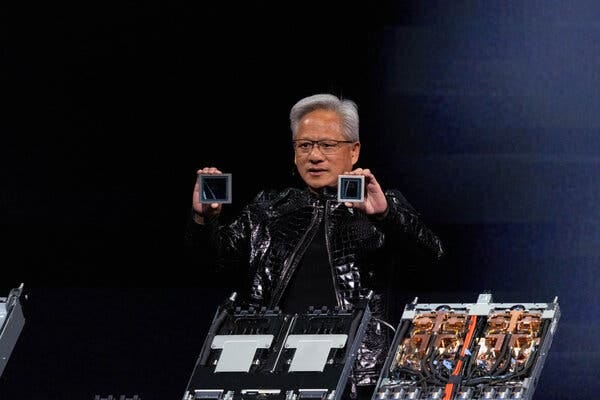
“TSMC offers advanced packaging called CoWoS, short for chip on wafer on substrate. Nvidia’s new Rubin processor, for example, uses CoWoS to bundle two large A.I. chips with eight stacks of high-speed memory that each contain 12 chips, amassing 336 billion transistors in one package. By 2029, TSMC predicts a 48-fold boost in computing transistors per package compared with 2024.”
And it’s the new bottleneck in AI systems of all types, be they for Nvidia, or the entire universe of big tech companies needing AI chips and systems for all sorts of things going forward.
“Taiwan Semiconductor Manufacturing Company, which makes cutting-edge chips for Nvidia and other A.I. leaders, also packages nearly all of them. Its key suppliers and partners are mainly in Taiwan, too, facing the same threat from China that caused U.S. policymakers to funnel billions of dollars into boosting domestic chip fabrication.”
“TSMC is already struggling to catch up with A.I.-driven orders. Its CoWoSproduction is about 30 percent short of demand, estimated Handel Jones, an analyst at International Business Strategies, who said TSMC accounted for about 95 percent of all advanced packaging.”
“You can’t make them without advanced packaging,” said Mark Gardner, an Intel vice president and general manager for packaging and testing. “We’d be in a very different place in the A.I. world without it.”
““All I see is demand continuing to go higher and higher,” said Kevin Zhang, a TSMC senior vice president. “It is certainly going to cause a lot of constraints.”
“And costs remain high. An advanced chip package may cost $500, said Jan Vardaman, president of the research firm TechSearch International. Simpler packages may cost closer to $40, industry executives said.”
“Some chip start-ups are deliberately avoiding designs relying on CoWoS, which can require months to design the required interposer.”
“The packaging bottleneck has become a hot topic in Silicon Valley as TSMC has struggled to keep up with demand.”
The whole piece is worth a full read, particularly on the historical ins and outs of how the US lost its opportunity to build these technologies here vs Asia. And how it’s still behind the curve on that front.
Today of course is Thanksgiving, and I wish you all the best enjoyment of this Holiday with your family and friends. And I’m thankful you’re taking the time...
Softbank Founder/CEO Masayoshi Son is one of the iconic investors of previous technology waves, from the PC, to the Internet and beyond over the decades....
View the video of this post here. Join me for a fast-paced, 30-minute webinar with YCharts on Wednesday, July 9th where we’ll break down the key market...